

Sweet Home Stories
- Reviews
- 4.4
- Version
- 1.4.5
- Installs
- 10,000,000+

Screenshots
 Analysis by Frivlyz
My first impression is that Sweet Home Stories is less interested in telling children what to do than in giving them a home to play in. The rooms and family create a familiar setting, and the pleasure comes from choosing what happens next: a meal, a bit of tidying, or a made-up afternoon at home. I like that relaxed invitation, especially for children who enjoy pretending rather than chasing scores or completing a series of challenges.
A home that gives play its shape
The game’s domestic setting does useful work. A kitchen, bedroom, and backyard suggest different kinds of play without requiring a complicated tutorial or an elaborate story to explain them. Children can connect familiar objects with everyday activities, then change the meaning by inventing their own scenes. A chair can be part of a family meal one moment and the centre of a pretend story the next.
That makes it a good fit for short, open-ended play sessions. If a child has a few minutes before dinner, they can start a small scene and leave it there; there is no plot they need to remember or mission that must be finished. For a longer session, the rooms provide enough prompts to move between activities. The trade-off is that children who want a clear objective, a win condition, or a sense of progression may find this kind of play too loose.
Art direction and a gentle pace
The welcoming household gives the game a coherent mood: cosy, bright, and everyday rather than dramatic. Its strongest design choice is that the setting stays understandable. Children can look at a room and quickly decide what sort of pretend activity belongs there, while the family makes those activities feel social. The result is not a complex simulation of running a household; it is a small stage for storytelling.
The pace follows that idea. There is no need to rush through a morning routine or turn chores into a timed test. I find that useful for imaginative play, because a child can pause to rearrange a room, repeat an action, or change the story halfway through. It also means the game is not the best match for someone seeking fast reactions or increasingly difficult levels. Here, the appeal is choosing and repeating actions at the player’s own rhythm.
What the interactions teach
Tap-responsive objects give children a simple way to explore cause and effect: try something, see what happens, and decide what to do next. The everyday context can also prompt conversations about routines. A grown-up might ask what the family could eat for breakfast, or what usually happens before bedtime, without turning play into a lesson. That is a more convincing educational strength than expecting the game to teach a formal subject on its own.
One useful way to play together is to let the child lead while an adult asks occasional open questions: “What is happening in this room?” or “Who needs help next?” That keeps the story theirs and gives the adult a natural way to join in. I would not treat the game as a substitute for real practice with chores, cooking, or daily self-care; it can represent those routines, but pretend actions and real responsibilities are not the same thing.
Gaming Stories You May Enjoy

Dancing Road Turns Short Breaks Into a Test of Rhythm and Timing

Super Stylist Makes Every Outfit a Test of Taste and Patience

Dominoes on Your Terms: Who Should Play and Who Should Pass

Pokémon GO Makes the Familiar World Feel New

Chess.com Turns Rematches Into Rivalries, but Community Has Its Costs

Archery Battle 3D Review: Sharp Aiming, Unclear Feedback
Welcome to Your New Home
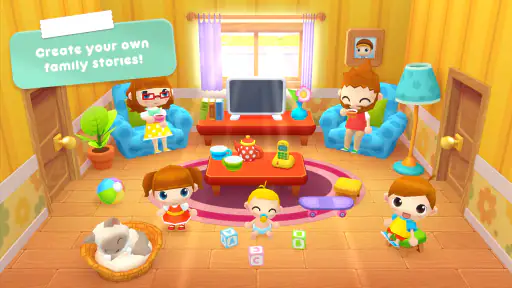
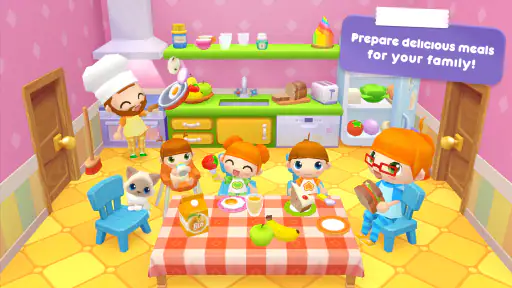
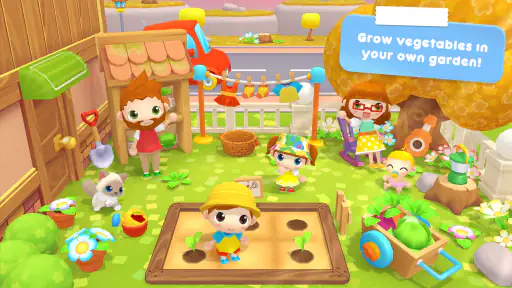
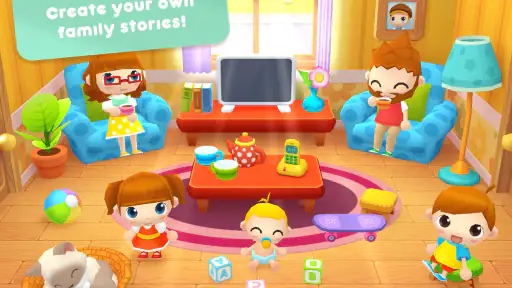
Once you open Sweet Home Stories, you’re greeted with a vibrant and inviting home setting. It feels like stepping into a cozy neighborhood right from your screen. The app offers a house full of interactive rooms, each buzzing with activity and waiting for your imagination to take charge. From making breakfast in the kitchen to playing in the backyard, the possibilities are endless. It’s literally a playground for your creativity!
Interactivity at Its Best
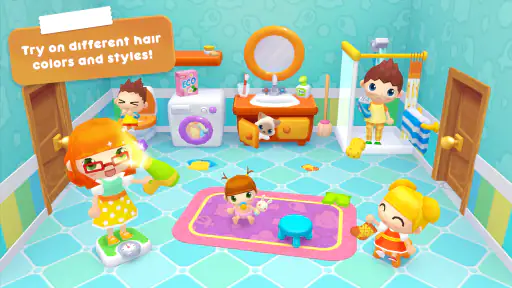
One of the coolest features is the interactive objects. Just tap on anything, and it comes to life. You can turn on the TV, water the plants, or even help the little characters brush their teeth. It’s like the app is encouraging you to touch and explore every corner, which is fantastic for keeping you engaged. I spent an embarrassing amount of time just reorganizing the rooms and rearranging the furniture – it’s strangely satisfying!
That freedom to poke around is also a practical starting tip: give a child time to discover the household at their own pace instead of demonstrating every interaction for them. A small surprise from tapping an object can become the start of an entire pretend scenario. If you are joining in, try suggesting a setting rather than prescribing a sequence—for example, “It’s a rainy afternoon at home”—and let the child decide what the family does. This keeps the play flexible and avoids turning the game into a checklist.
Educational and Fun
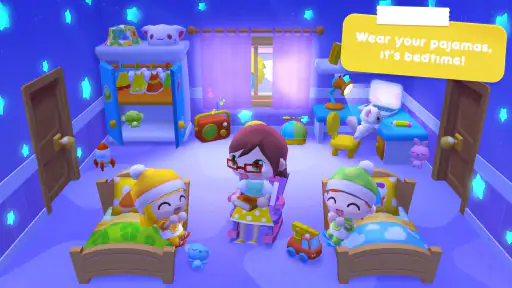
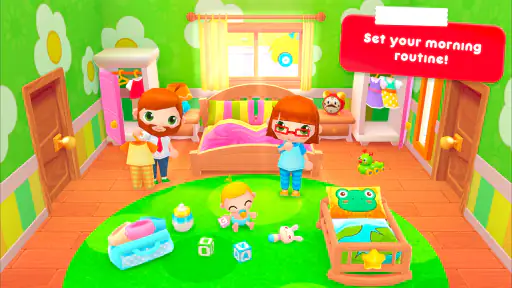
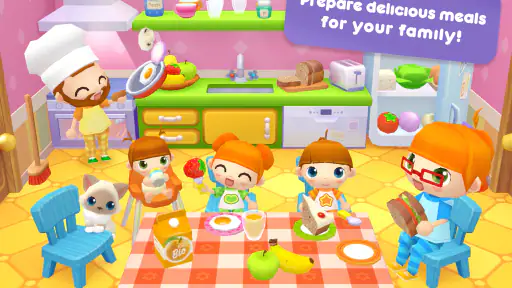
What makes Sweet Home Stories stand out is its educational angle. While it’s easy to get lost in play, the app subtly teaches kids about daily routines and responsibilities. You can guide characters through their morning rituals, help them cook meals, or even put them to bed. It’s a gentle nudge towards understanding the importance of routines and chores, wrapped in a fun and engaging package.
In an everyday situation, I can see it working well during a quiet stretch at home: a child plays out getting ready for the day while a parent prepares breakfast nearby. The game gives the child something familiar to act out, and the adult can connect the pretend sequence to the real morning without demanding that the child follow the game exactly. It may also help a younger player find words for ordinary activities—getting dressed, eating, or settling down—though the value depends on an adult’s conversation and the child’s interest.
Perfect for Kids
Parents, if you’re worried about screen time, rest easy. This app is designed with kids in mind, offering a safe and ad-free environment. It’s perfect for children aged 2 to 8, and trust me, it’s a relief to find something that’s both entertaining and educational. Plus, there’s no rush or competition here – just pure, unadulterated fun.
For a parent deciding whether to try it, the basic practical picture is straightforward: it is a free educational game from SUBARA, with an Everyone content rating, and it has a 4.4 average from around 94 thousand ratings. It has passed 10 million installs, which suggests that this style of open-ended home play has found a broad audience. The game first appeared on February 24, 2017, and its current version is 1.4.5; it requires Android 7.0 or later. Those details make it easier to judge device compatibility, but they do not change the central question: will your child enjoy making up scenes without being guided toward a fixed goal?
The game is free to start, with in-app purchases listed at $1.99 to $2.99 per item. I would keep that in mind before handing a device over, especially if a child can reach purchase controls. An adult can check the purchase settings on the device and explain in simple terms that not every on-screen option is part of the free experience. This is a sensible precaution for any children’s game with optional purchases, and it avoids interrupting play later with an unexpected decision.
There is also a difference between a child who likes role-play and one who wants constant new prompts. Sweet Home Stories is strongest when the player supplies the ideas: setting up a family scene, moving between rooms, or giving characters a small daily task. A child who prefers guided puzzles, explicit learning exercises, or clear rewards may be happier with a structured educational game. Likewise, if the goal is a fast, competitive game to fill a short wait, a quiet digital household may feel too slow. I would choose it for imaginative play, not for drilling facts or testing reflexes.
Where it fits among children’s games
Compared with a conventional educational app built around questions and right-or-wrong answers, this game gives more space to pretend and less formal feedback. Compared with a toy-house or dollhouse game, its appeal is the convenience of having the household on a screen and being able to explore its interactive objects. Neither comparison makes it better for every child. A physical dollhouse offers hands-on play away from a screen, while a lesson-focused app is usually a clearer choice when a parent wants practice with a particular skill. This one sits in between: familiar domestic play with a light learning angle.
Its open format also has a small but meaningful limitation: the child may need an adult to help turn repetition into a fresh story. If the same room and actions have become familiar, a simple change of premise can renew interest—pretend the family is preparing for a guest, or imagine everyone is getting ready for bed after a busy day. That kind of prompt is more useful than asking the game itself to provide a new objective. For independent play, the child’s own ability to invent scenarios matters more than the educational label.
Sound, mood, and the right expectations
The household atmosphere is the main draw, so I would judge the experience by whether a child settles into its setting and enjoys the small interactions, rather than by how much content they can finish. The calm domestic premise supports unhurried play, and the familiar activities make it easy to dip in and out. Sound is part of how a game like this establishes its mood, but I would not choose it expecting a music-led experience or a dramatic soundtrack; the reason to stay is the playful household and the stories a child invents around it.
That expectation also helps answer a common practical question: does it work for a child who wants to play alone? It can, particularly if they already enjoy imaginative role-play and exploring objects. A younger child may get more from it with an adult nearby to name activities or help start a scenario. Either way, I would treat it as a shared or solo play option, not as a guarantee that every child will remain absorbed without support.
Another useful trade-off is that its familiar routines can make it approachable, but they may not interest children who want unusual settings, fantasy characters, or a strong narrative arc. The home is a strength when a child likes everyday pretend play; it is a limitation when they want surprise and escalation. Before installing, I would think about what the child actually chooses during free play: arranging a pretend meal points toward a good fit, while repeatedly asking “What do I do now?” suggests they may prefer a game with clearer direction.
In conclusion, Sweet Home Stories is more than just a game; it’s a delightful, interactive experience that blends creativity, play, and learning. Whether you’re organizing a family dinner or setting up a playdate in the living room, every interaction feels meaningful. It’s a must-have app for parents looking to offer their kids a wholesome and imaginative digital experience. So, why wait? Dive into the world of Sweet Home Stories and watch as your little ones create their own adventures!
My recommendation is more specific than calling it a must-have: I would try it for a child who enjoys making up family scenes and exploring familiar rooms, especially when a calm, flexible activity is welcome. I would skip it for a child who needs clear goals, fast pacing, or formal lessons to stay engaged. If the child starts inventing what happens next, the game is doing its best work; if they need the app to keep supplying instructions, another kind of play may be a better choice.
Sweet Home Stories Pros and Cons
Pros
- Engaging interactive environment
- Educational for young children
- Colorful and appealing graphics
- User-friendly interface
- Encourages creativity and role-play
Cons
- Limited free content
- In-app purchases can be pricey
- May require parental guidance
- Occasional technical glitches
- Requires internet connection
Frequently Asked Questions
What is Sweet Home Stories and who is it suitable for?
Sweet Home Stories is an interactive app designed for children aged 2 to 8 years, focusing on creativity and role-playing. It allows kids to explore and interact with a virtual house and its family members, fostering imagination and language skills. The app is suitable for parents seeking a safe, educational play environment for their children.
Are there any in-app purchases or ads in Sweet Home Stories?
Sweet Home Stories is a premium app with a one-time purchase fee, ensuring a safe and uninterrupted experience for children. There are no in-app purchases or advertisements, which means parents don’t have to worry about unexpected costs or inappropriate content popping up while their kids are playing.
What educational benefits does Sweet Home Stories offer?
Sweet Home Stories offers numerous educational benefits, such as enhancing vocabulary, social skills, and problem-solving abilities. Through role-playing different scenarios, children learn to communicate and express themselves better. The app encourages interactive storytelling, which is crucial for developing creativity and cognitive skills in young children.
Can Sweet Home Stories be played offline?
Yes, Sweet Home Stories can be enjoyed offline, making it a perfect companion for travel or situations where internet access is limited. Once downloaded, all features are accessible without the need for an internet connection, ensuring that children can play and learn anytime, anywhere without interruptions.
Is Sweet Home Stories safe for my child to use?
Sweet Home Stories is designed with child safety in mind, featuring a secure, ad-free environment. The app content is age-appropriate, and it doesn’t collect personal data, ensuring a safe experience for young users. Parents can be assured of the app’s commitment to providing a secure and educational play space.


