

Super Bobby's Dream World
- Reviews
- 4.7
- Version
- 1.8.7.185
- Installs
- 1,000,000+

Screenshots
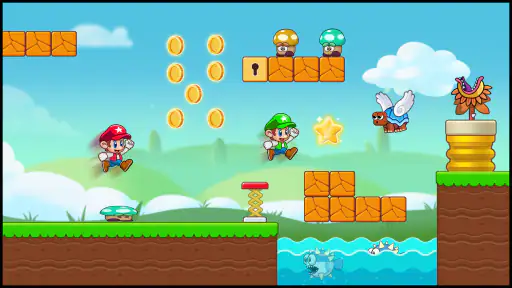
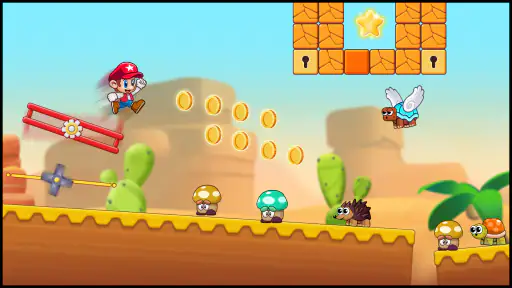
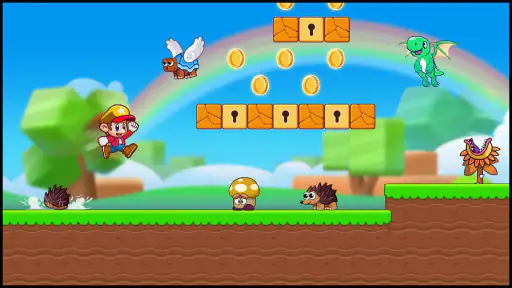
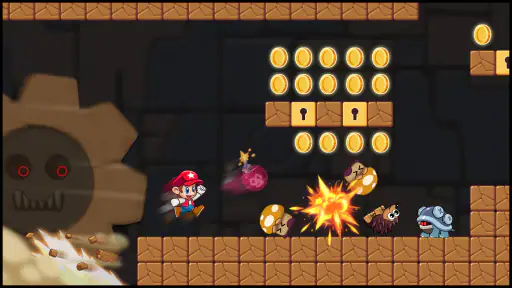
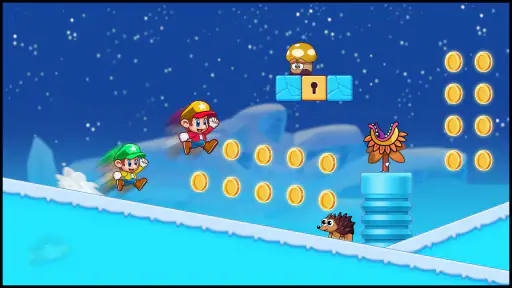
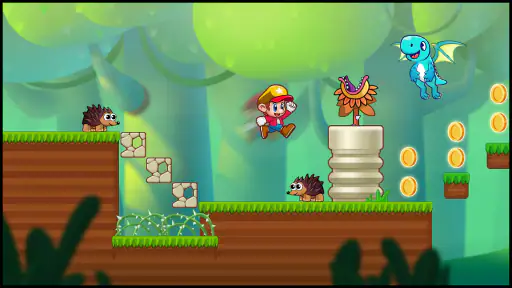
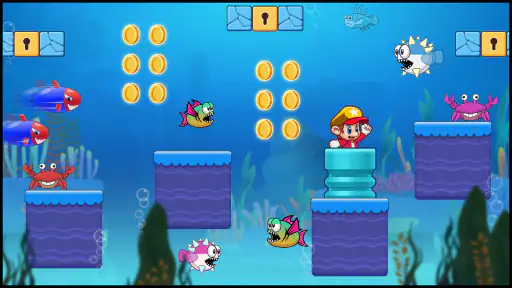
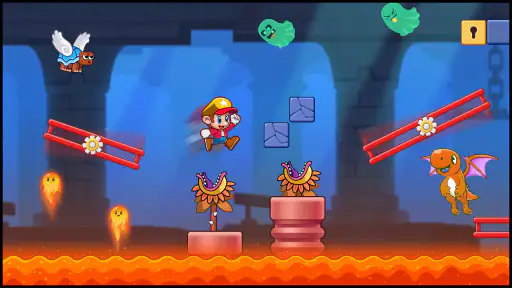
 Analysis by Frivlyz
I found Super Bobby's Dream World most enjoyable as a quick, friendly adventure game that fits naturally into a shared phone or tablet. The basic idea is easy to understand: guide Bobby through a colorful journey and help rescue the princess. That simple goal makes it approachable when someone hands you the device and wants to play immediately, but the game still asks for enough attention to keep the experience from feeling like a completely passive time-killer.
In my experience, its strongest quality is accessibility. I did not need a long explanation before starting, and the adventure framing gives each short play session a clear purpose. It is the kind of game I could imagine opening while waiting for an appointment, passing to a younger relative during a quiet moment, or playing together with another person nearby who enjoys watching and commenting. It is free to download, although optional purchases range from $1.99 to $9.99 per item, so a shared device deserves a little preparation before anyone starts tapping through purchase screens.
How the adventure works on a shared device
When I think about Super Bobby's Dream World on a shared phone or tablet, I focus less on who gets the longest turn and more on keeping the handoff friendly. A quick spoken recap of the current goal can help the next player pick up the adventure without turning progress into a competition. That practical routine also raises a broader question: what kind of play does this simple rescue journey suit best?
A simple game to pass between people
Super Bobby's Dream World works well in a household because the premise is immediately readable. One person can play while another watches, offers suggestions, or takes over after a difficult section. That handoff is more comfortable than it would be in a complex role-playing game that requires remembering a large inventory, a complicated story, or a long chain of objectives. Bobby's rescue mission gives the session a recognizable direction even when playtime is brief.
I especially like this format for a shared tablet in a living room. A child can try a section, an older sibling can demonstrate a movement or route, and a parent can remain involved without needing to become a full-time player. The game does not need to be treated as a serious group activity; its value is that it creates an easy point of contact. Someone can play for a few minutes, stop, and let someone else continue without the entire household having to schedule a long session.
That convenience also reveals a limitation. A game designed for quick handoffs can feel less satisfying to someone looking for deep character development, elaborate strategy, or a large world to study over many hours. I would choose this adventure for approachable entertainment, not as a substitute for a demanding platformer or a story-heavy console game. Its appeal is in the immediate journey rather than in requiring a large personal commitment.
What happens when several people use the same installation
Before sharing the device, I would agree on a simple turn-taking rule. The most practical approach is to let one person finish a meaningful section before handing over the controls, rather than switching after every mistake. That keeps the flow intact and reduces the temptation to blame the next player for a failed attempt. It also makes progress easier to follow when several people are watching.
Gaming Stories You May Enjoy

Dancing Road Turns Short Breaks Into a Test of Rhythm and Timing

Super Stylist Makes Every Outfit a Test of Taste and Patience

Dominoes on Your Terms: Who Should Play and Who Should Pass

Pokémon GO Makes the Familiar World Feel New

Chess.com Turns Rematches Into Rivalries, but Community Has Its Costs

Archery Battle 3D Review: Sharp Aiming, Unclear Feedback
I would not assume that every player has a separate identity or independent progress space. If the same installation is being used by different members of a household, I would treat the visible game progress as shared unless the game itself clearly offers another arrangement. That means a child should not begin a new attempt over someone else's progress without checking first. This is a small habit, but it prevents the most common frustration with games played on one family device: the argument over who changed what.
The same caution applies to purchases. Because the game is free but includes paid items, I would keep the device owner's purchase rules clear before handing it over. A child may understand that the game costs nothing to install and still not understand that an item inside the game can create a charge. The safest household routine is to ask before any purchase and keep the account holder involved, rather than relying on an excited player to interpret every prompt correctly.
Setup that keeps the experience comfortable
The game supports devices running Android 6.0 or later, which makes it accessible to many older phones and tablets still used around the home. I would still install it on the device that will actually be shared and test the controls before inviting several people to play. This is less about technical tinkering and more about avoiding a disappointing first session caused by a cramped screen, awkward grip, or a device that is already struggling with other tasks.
For a household, the best setup is a stable surface and a clear agreement about who holds the device. A tablet placed flat on a table may be easier for a younger player to see, while a phone is more convenient for individual play. If people are watching, a larger screen helps everyone follow Bobby's movement, but it also makes accidental interruptions more likely if the device is passed around constantly. I prefer one player at a time with the others giving advice from beside them.
I would also avoid starting a session when the device owner needs the phone for an urgent call or message. That sounds obvious, but shared gaming becomes much smoother when the player knows how long the session can last. A short, agreed window encourages focused play and makes it easier to stop without an argument. The game is well suited to this approach because its premise does not require a household to reserve an entire evening.
Coordinating progress without turning it into a chore
One useful trick is to create a spoken checkpoint routine. Before handing over the device, the current player can say what they are trying to do next and what caused trouble on the previous attempt. That tiny explanation helps the next person continue intelligently instead of repeating the same mistake. It is particularly useful when an adult and child are taking turns, because the adult can offer guidance without simply taking control away.
I also recommend separating advice from criticism. In an adventure game built around movement and timing, a spectator may notice a safer approach, but constant instructions can make the person holding the device nervous. Letting the player try first, then offering one specific suggestion, usually creates a better shared experience than narrating every tap. The game becomes a cooperative conversation rather than a test supervised by the loudest person in the room.
When several people care about the same progress, taking a quick mental note of the last completed point can help. I would not promise that every household will have a formal save or profile arrangement that supports individual records, so a simple spoken handoff is the dependable option. If preserving personal progress matters greatly, I would use a device dedicated to one player instead of treating the game as a communal file.
Age context and household trust
The Teen content rating matters when deciding who should play without supervision. I would not interpret that label as a complete description of every moment in the game, but I would use it as a reason for an adult to preview the experience before giving it to a younger child. The rescue story may sound broadly family-friendly, yet the official age context is the better starting point for a household decision than the cheerful title alone.
For teenagers and adults, the game is easy to recommend as a casual adventure. For younger children, I would play alongside them first and pay attention to how they handle the controls, the pace, and any purchase prompts. That approach is more useful than assuming that a bright presentation automatically makes a game suitable for every age. It also gives the adult a chance to decide whether the game feels appropriate for that particular child.
Trust is important because the game is often most tempting when a player is already excited about rescuing the princess. I would explain the difference between continuing the adventure and buying something before the first shared session begins. Clear expectations work better than a vague warning after a purchase screen appears. If the device belongs to a child but the store account belongs to a parent, the account holder should remain the person who approves spending.
The developer is DHZ SOFT, and the game has built a substantial audience: it has passed one million installs and holds a 4.7 average from around 33 thousand ratings. Those figures suggest that the straightforward adventure format has found plenty of players, but popularity does not remove the need for household judgment. I would still base the decision on the actual player, the shared device, and the family's comfort with the Teen rating and in-game spending.
Where it stands beside other adventure choices
Compared with a large open-world adventure, Super Bobby's Dream World is easier to pick up and less demanding to explain. You are not asking a first-time player to learn a complicated map, manage a deep build, or remember a long plot before having fun. That makes it a useful choice for casual sessions and shared play, especially when the audience includes people with very different gaming experience.
Compared with a purely endless runner, the rescue objective gives the experience a stronger sense of direction. An endless runner can be excellent for chasing a high score, but it may feel repetitive when someone wants a small story-like purpose. Here, the journey toward rescuing the princess provides a reason to continue beyond the next reflex challenge. The trade-off is that players who prefer score chasing, competitive leaderboards, or highly repeatable runs may find a more specialized runner better suited to them.
Compared with premium games that ask for payment before downloading, the free entry point makes this one easier to try on a household device. That convenience comes with a responsibility: optional purchases mean the total cost can depend on player choices. I would recommend it to someone who wants to test an adventure without paying upfront, but I would not describe it as the ideal choice for a family seeking a completely purchase-free environment.
Practical strengths that are easy to miss
One non-obvious strength is how well the game can function as a conversation starter between players with different skill levels. A more experienced player can demonstrate a section, then let the newer player repeat it while explaining the decision. That turns a failed attempt into useful feedback instead of wasted time. In a shared household, this makes the game more engaging than simply passing around a device with no interaction.
A second strength is the flexibility of its commitment level. I would use it in two different ways: as a short solo diversion when I have only a few minutes, or as a longer sequence of handoffs when other people are nearby. Those are not identical experiences. Solo play emphasizes control and personal rhythm, while shared play emphasizes observation and coordination. The same adventure supports both without requiring a separate multiplayer arrangement.
A third insight is that the free download changes how I would evaluate the game. I would not begin by asking whether it replaces a premium adventure with a much larger scope. I would ask whether it gives enough immediate enjoyment to justify its place on a device, while keeping optional spending under control. For a casual player, that is a fair test. For someone who wants a complete, uninterrupted experience with every element available from the start, a paid alternative may be more comfortable.
The current version is 1.8.7.185, so I would check that the installed copy is up to date before judging performance or controls. I would also leave enough free storage and close unrelated apps on an older device. These are sensible preparation steps rather than promises about how the game behaves on every phone. The minimum operating system is Android 6.0, which gives it a practical advantage for households using an older spare device instead of a newer personal phone.
Who should play, and who should look elsewhere
I would recommend this game to players who enjoy light adventure, clear goals, and the satisfaction of helping a character through a rescue mission. It is a particularly good fit for someone who wants a free starting point, prefers learning by trying, or likes discussing a game while another person plays. Teenagers can enjoy it independently, while adults may appreciate its low barrier to entry when introducing a less experienced player to mobile adventures.
I would be more cautious about recommending it to someone who expects a deep narrative, complex customization, or a carefully structured multiplayer experience. It is also not my first choice for a child who should have access only to content with a younger age designation. In that situation, I would choose a game whose age context is a closer match, rather than trying to make this one fit through assumptions.
Players who dislike in-app purchase prompts should also think carefully before installing it. The free entry point is attractive, but the presence of paid items can change the household experience when a device is shared. If the goal is a game that can be passed around with no discussion of spending, another title with no in-app purchases would be a better match, even if it costs money at the beginning.
My household verdict
After using Super Bobby's Dream World, I see it as a practical casual adventure rather than a grand replacement for every other game in the genre. Its strongest use is a shared, low-pressure session where one person plays and others encourage, advise, or take a turn. The rescue premise is easy to communicate, the free download lowers the risk of trying it, and the game can fit both short solo moments and relaxed household handoffs.
My recommendation comes with clear boundaries. I would preview it for younger players because it carries a Teen rating, keep the account holder responsible for purchases, and avoid assuming that different household members have fully separate progress. With those expectations in place, the game becomes much easier to enjoy without the avoidable arguments that can surround a shared device.
My final take is that this is best for approachable adventure sessions, not for players demanding depth or a completely purchase-free experience. DHZ SOFT has made a game that is easy to invite someone into, and its strong player response reflects that accessible appeal. I would install it on a shared tablet for occasional family play, but I would choose a more specialized or premium alternative for a serious long-term gaming project.
Super Bobby's Dream World Pros and Cons
Pros
- Simple controls make it easy for younger players to pick up.
- Bright cartoon visuals give the game a cheerful
- family-friendly style.
- Short levels work well for quick gaming sessions.
- Collectibles add a little extra motivation to replay stages.
- Offline play makes it convenient when you have no internet access.
Cons
- Some levels can feel repetitive after extended play.
- Difficulty may be uneven
- with occasional sudden challenges.
- Frequent ads may interrupt gameplay for free users.
- The story is fairly limited and offers little character development.
- Progression can feel shallow once most basic abilities are unlocked.
Frequently Asked Questions
What is Super Bobby's Dream World about?
Super Bobby's Dream World is a colorful platform adventure in which you guide Bobby through imaginative worlds filled with obstacles, enemies, coins, and collectible items. The main objective is to reach the end of each stage safely while timing jumps, avoiding hazards, and discovering hidden areas. Its simple controls make it approachable, although later levels require faster reactions and more careful planning.
Is Super Bobby's Dream World suitable for children?
The game is generally suitable for children and casual players because its presentation is bright, cartoon-like, and easy to understand. However, some stages can become challenging, particularly when enemies and moving obstacles appear together. Parents should also review the app-store age rating, advertising, and any optional purchases available on the device before allowing younger children to play.
Does Super Bobby's Dream World require an internet connection?
Super Bobby's Dream World may be playable without a constant internet connection, which is convenient for short sessions while traveling or when mobile data is unavailable. Nevertheless, certain features, such as advertisements, updates, analytics, or possible rewards, may require connectivity. For the most accurate experience, install the latest official version and check its store description and permission details.
Are there advertisements or in-app purchases in Super Bobby's Dream World?
Depending on the version and platform, Super Bobby's Dream World may include advertisements or optional in-app purchases. Ads can appear between stages or after completing an attempt, while purchases may offer convenience items, extra content, or an ad-free experience. Before downloading, check the official Google Play or App Store listing, and use device purchase restrictions if children will play.
What should I know before downloading Super Bobby's Dream World?
Before downloading, confirm that your phone or tablet meets the required operating-system version and has enough free storage for the installation and future updates. The game is best suited to players who enjoy straightforward platforming rather than complex role-playing systems. Also verify the developer, ratings, privacy information, and permissions so you download the legitimate version from an official store.


