

Stick War: Saga
- Reviews
- 4.4
- Version
- 2025.4.1331
- Installs
- 10,000,000+

Screenshots
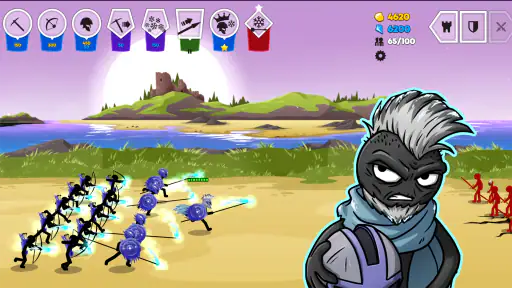
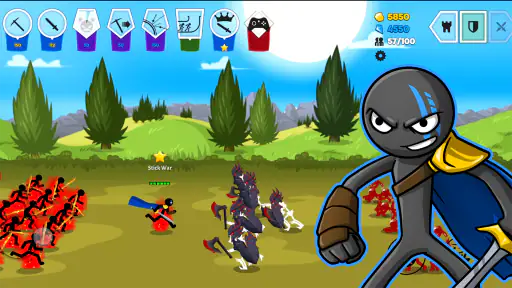
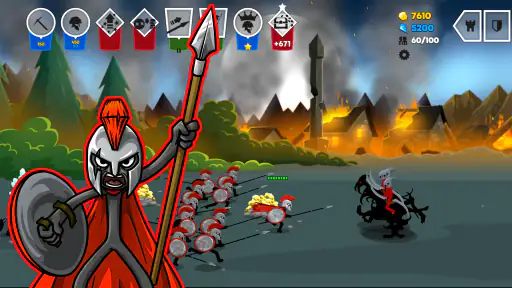
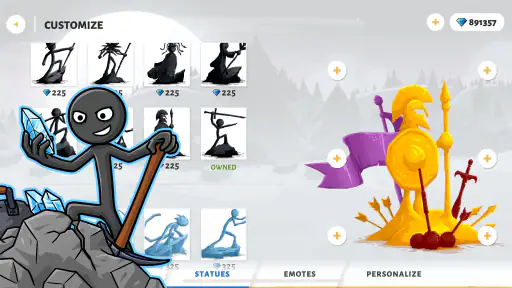
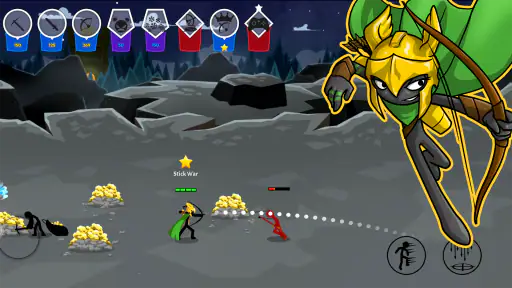
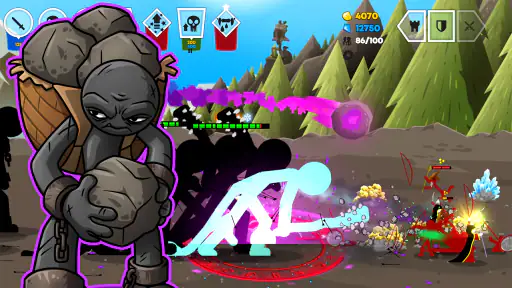
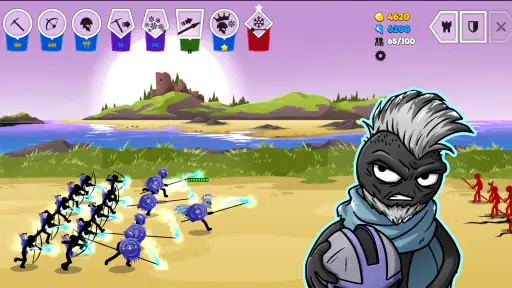
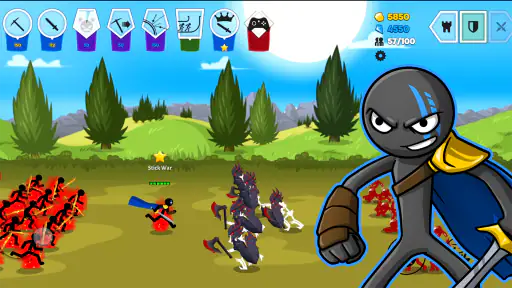
 Analysis by Frivlyz
If you're anything like me, you're probably on the hunt for a game that not only entertains but also challenges your strategic mind. Well, let me introduce you to Stick War: Saga, a game that might just be the perfect blend of fun and strategy. Now, I’ve spent some quality time with this app, and I’m here to spill the beans on what makes this game tick.
Small goals that make each battle matter
What gives a strategy game staying power is not only the size of its battles, but whether I can find a useful decision to make each time I pick it up. Here, the appeal is in shaping an army and deciding how to use it, rather than treating every encounter as a matter of sending units forward. The early learning curve is approachable, but the central question soon becomes more interesting: what should I build, and when should I risk an attack?
For a new player, I’d recommend treating the opening stretch as a chance to learn the relationship between gathering resources and fielding troops. It is tempting to focus on building a larger force as quickly as possible, but that can leave you without the flexibility to respond when a fight develops differently than expected. I get more from pausing to consider what the enemy’s approach demands, then choosing a measured response instead of committing every available resource to one plan.
That makes the game a good fit for someone who enjoys setting a short-term objective inside a match: build a stable economy, hold position long enough to strengthen the army, or test whether a particular unit mix can break through. These goals are satisfying because they give a battle shape even when victory is not immediate. If you prefer games where progress comes mainly from fast reflexes or a constant stream of new equipment, this more deliberate decision-making may feel slow.
Progress you can feel through better decisions
Progress here is not just about reaching a later point; it is also about recognizing why a previous plan failed and making a sharper choice next time. A close defeat can still be useful if it shows that I expanded too carelessly or sent the wrong force into a difficult engagement. That kind of learning is a strong reason to replay a match, because improvement can come from understanding the battlefield rather than simply repeating the same actions.
One practical habit is to change only one part of a strategy after a loss. If I alter my resource gathering, army composition, and timing all at once, I cannot tell which adjustment helped. Keeping the next attempt focused makes the result easier to read and turns a frustrating setback into a small experiment. It is a simple approach, but it suits a game where planning matters more than tapping quickly.
There is a trade-off: players who want clear, frequent rewards may find this kind of progress less immediately visible than a game that constantly hands out new gear or levels. The payoff is more personal. When a plan works because I noticed a pattern and adapted, the win feels earned. I would choose this style when I have the patience to think through a match, not when I want a rapid sequence of obvious unlocks.
Gaming Stories You May Enjoy

Dancing Road Turns Short Breaks Into a Test of Rhythm and Timing

Super Stylist Makes Every Outfit a Test of Taste and Patience

Dominoes on Your Terms: Who Should Play and Who Should Pass

Pokémon GO Makes the Familiar World Feel New

Chess.com Turns Rematches Into Rivalries, but Community Has Its Costs

Archery Battle 3D Review: Sharp Aiming, Unclear Feedback
Challenge, pacing, and knowing when to stop
The challenge is most enjoyable when I treat each battle as a series of decisions rather than a race to overwhelm the opponent. A sensible approach is to secure the resources needed to keep options open, then commit to a push when the army is ready. Rushing can be exciting, but it can also leave too little room to recover if the first attack stalls. On the other hand, waiting indefinitely is not a strategy either: it gives up initiative and can make a match drag.
This creates a useful pacing choice for different moods. If I have a few spare minutes, I can focus on the immediate question of whether to defend or press forward. If I have longer, I can pay closer attention to how my economic choices affect the size and timing of later attacks. The game’s strategic rhythm rewards concentration, so I would not pick it for a moment when I expect to be interrupted every few seconds.
Multiplayer adds another reason to think beyond a familiar routine: a human opponent may not follow the pattern I expect. A plan that works against a predictable approach can be exposed when someone responds differently, so flexibility matters. I find it useful to enter a match with a preferred opening but not treat it as a script. If the situation changes, adapting is more valuable than stubbornly following the original plan.
That same competitive element will not suit everyone. Players who mainly want a relaxed, solo experience may prefer a strategy game built around a campaign they can tackle entirely at their own pace. Those who like testing their decisions against another person, by contrast, have a reason to keep refining their approach. The best choice depends on whether competition feels energizing or like pressure.
Immersive Gameplay
The first thing that struck me about Stick War: Saga is its immersive gameplay. You know how sometimes you just want to dive into a game and forget the world exists? This game does that. It’s a strategic stick figure game where you control an army and aim to conquer the enemy’s territory. The animations are simple yet engaging, and the stick characters are surprisingly expressive, making for a truly captivating experience.
Strategy at Its Core
What sets this game apart is its emphasis on strategy. It’s not just about attacking; you need to plan your moves meticulously. You get to control every aspect of your army, from mining for resources to choosing which units to deploy in battle. Trust me, the thrill of plotting your moves and then watching them unfold successfully is unparalleled. You’ll find yourself constantly adapting your strategy to outwit your opponents, and that’s where the real fun lies.
User-Friendly Interface
Another highlight is the user-friendly interface. Navigating through the game is a breeze, which is a huge plus for me. I hate it when I have to spend ages figuring out how to play. With this game, everything is intuitive. The controls are straightforward, and the tutorial does a great job of getting you up to speed without overwhelming you with information.
Making a match fit an ordinary day
In everyday use, I’d reach for this when I have enough attention to follow a battle, rather than as background entertainment while doing something else. For example, on a quiet break, I can decide on a simple aim for the session—try a more cautious opening, or see whether an earlier attack is worth the risk—and then judge the result. That gives a short play session a purpose even if I do not want to spend the whole evening gaming.
A useful way to keep the experience from becoming repetitive is to avoid using one opening every time. I like to think of an initial plan as a starting point, then make a deliberate change when the opponent or battle calls for it. This keeps the strategic layer active and helps me learn which choices are robust, rather than mistaking one lucky result for a reliable tactic. It also makes repeat play feel like practice instead of simply grinding through the same actions.
Compared with many strategy games that emphasize a long campaign, base-building across extended sessions, or complicated menus, this one puts the focus on controlling an army and making battlefield decisions. That is its clearest appeal: the theme and core choices are easy to grasp, while the outcome still depends on judgment. The reverse is also true. If you want a deep management simulation with extensive systems to organize outside battles, a different strategy title may be a better match.
Who will enjoy it—and who may not
I’d recommend it to players who like compact, readable battles and want their choices about resources and units to matter. It can also suit someone new to strategy games: the premise is easy to understand, and the tutorial helps make the first steps less intimidating. A returning strategy fan may enjoy it for the same reason, provided they are happy to focus on tactical choices rather than expecting a sprawling, highly detailed simulation.
I would be more cautious about recommending it to someone who dislikes competitive play, dislikes making decisions under pressure, or wants every session to deliver a visible new reward. Multiplayer strategy can involve learning from losses, and that learning is not always as immediately satisfying as unlocking something. Nor is this my first choice for a player seeking a quiet story-led game with little opponent interaction. The key question is whether you enjoy improving through decisions and rematches.
The game is free to download, with in-app purchases ranging from $0.99 to $114.99 per item. I’d approach those purchases as optional spending rather than assuming they are necessary to enjoy the strategic core. If you are sensitive to in-game purchase prompts, it is sensible to check the available purchase choices before settling in. The age guidance is Everyone 10+, which gives families a useful starting point when deciding whether the game suits a younger player.
What to expect before installing
Max Games Studios makes this strategy game for Android, and its current version is 2025.4.1331, with Android 7.0 or later required. It has an average rating of 4.4 from around 43,000 ratings, alongside 975 written reviews, and has passed 10 million installs. Those figures suggest a sizeable audience, but I would still judge it by the kind of play it offers: strategic army control, resource gathering, and multiplayer competition.
One practical question is whether it is a good choice for a very brief session. It can be, if you are willing to focus on one battle and accept that a thoughtful match may need more attention than a quick arcade round. Another is whether you need to be an expert before starting. I do not think so: the straightforward controls and tutorial help with the basics, while the challenge comes from refining choices over time. For someone who wants to play casually, that is welcoming, though the competitive side may still reward patience.
For players weighing it against another mobile strategy game, I’d decide based on the kind of planning they want. Choose this if the attraction is directing a stick-figure army, balancing resource gathering with deployment, and adapting to an opponent. Choose a more campaign-focused alternative if you mainly want a guided sequence of solo missions, or a deeper management game if your favorite part is building and maintaining systems over long stretches. It is not a universal substitute for every strategy game, and that focus is part of what makes it distinctive.
Endless Replayability
Let’s talk about replayability. One of the things I love about Stick War: Saga is that it’s not a game you’ll grow tired of easily. With various modes to explore and different strategies to try out, you can play this game over and over again without getting bored. Whether you’re a casual gamer or a hardcore strategy fan, there’s always something new to discover.
I’d qualify that enthusiasm by saying replayability depends on how much you enjoy experimentation. Repeating a strategy without learning from the outcome can make any competitive game feel stale. Here, the better reason to return is to test a different balance between gathering resources and fielding units, or to respond to an opponent in a way your previous plan did not. If that process sounds enjoyable, there is room to keep improving; if you need a steady stream of new content to stay interested, the core loop may feel narrower.
My progression verdict
As a progression experience, this game works best when I measure success by better decisions and more controlled battles, not by expecting every session to end with a major unlock. Its goals are most satisfying when I set a modest objective, learn from what happens, and carry that lesson into the next match. The challenge comes from balancing patience with action, while multiplayer gives that balance an unpredictable test.
That makes it a strong pick for thoughtful players who like strategy that is easy to approach but asks them to adapt. It is less suited to anyone who wants a purely relaxing game, a long solo campaign as the main attraction, or constant rewards with little effort. I’d give it a try if directing an army sounds fun, but I’d go in ready to learn through experimentation rather than expecting every win to come quickly.
In conclusion, if you’re looking for a game that’s both entertaining and strategic, look no further than Stick War: Saga. It’s a game that promises hours of fun while keeping your brain engaged. So go ahead, download it, and prepare to immerse yourself in the stick-figure world of strategy and conquest. Happy gaming!
Stick War: Saga Pros and Cons
Pros
- Engaging and strategic gameplay.
- Variety of units and upgrades.
- Smooth and intuitive controls.
- Offline play available.
- Great graphics and animations.
Cons
- Ads can be intrusive.
- In-app purchases can be expensive.
- Requires strategic thinking skills.
- Limited multiplayer options.
- Some levels are quite challenging.
Frequently Asked Questions
What is Stick War: Saga about?
Stick War: Saga is a strategic mobile game where players control an army of stick figures. The game focuses on building units, mining resources, and conquering enemy territories. Players must manage resources wisely, develop strategies, and combat opposing nations to achieve victory. The game offers various modes, including campaign and multiplayer, providing a diverse gameplay experience for strategy enthusiasts.
Is Stick War: Saga free to play?
Yes, Stick War: Saga is free to download and play. However, it does offer in-app purchases that allow players to enhance their gaming experience. These purchases can range from cosmetic items to more substantial game upgrades. While the game can be enjoyed without spending money, purchasing items can expedite progress and provide additional customization options.
What are the system requirements for Stick War: Saga?
Stick War: Saga is available on both Android and iOS platforms. For Android users, the game typically requires Android version 4.4 or higher. iOS users should have iOS 9.0 or later installed on their devices. The game is optimized for both smartphones and tablets, ensuring smooth gameplay across devices with these specifications.
Can I play Stick War: Saga offline?
Stick War: Saga offers both online and offline gameplay modes. The single-player campaign can be played offline, allowing users to enjoy the game without an internet connection. However, for multiplayer modes and certain features, an internet connection is required. This flexibility makes it convenient for players to enjoy the game anytime, anywhere.
How does multiplayer work in Stick War: Saga?
In Stick War: Saga, the multiplayer mode allows players to compete against each other in real-time battles. Players can challenge friends or random opponents globally. The matchmaking system ensures balanced gameplay by pairing players with similar skill levels. Multiplayer mode adds an exciting competitive edge to the game, encouraging strategic thinking and quick decision-making.


