

Stardew Valley
- Reviews
- 4.6
- Version
- 1.6.14.10
- Installs
- 1,000,000+

Screenshots
 Analysis by Frivlyz
I tend to enjoy role-playing games most when they give me room to set my own pace, and Stardew Valley is especially good at that. A day can be spent tending a small plot, getting to know the people around town, or heading somewhere more dangerous to gather resources. The appeal is not simply that there is always something to do; it is that I can choose a direction without feeling pushed along a single storyline. On mobile, that makes it easy to settle into a brief visit or let a quiet stretch of play grow into a longer session.
What the $4.99 purchase means
This is a paid game, priced at $4.99, rather than a free download with an optional purchase mentioned here. I see the cost as a straightforward decision: you are paying upfront for a substantial, open-ended role-playing experience. If you are looking for something you can try at no cost before deciding, that is not the arrangement. But if you already know you like farming games, gentle exploration, and long-term character progression, the one-time price may feel easier to judge than a game whose value depends on repeated small purchases.
It is rated Everyone 10+, and ConcernedApe is the developer. The Android release arrived on Mar 13, 2019; its current version is 1.6.14.10, and it requires Android 5.0 or later. The game has a 4.6 average from around 177,000 ratings, with over 1 million installs. Those figures suggest a well-established audience, but they cannot tell you whether its unhurried routine suits your own taste. I would use them as context, not as a substitute for thinking about how you like to play.
A farm that becomes a whole routine
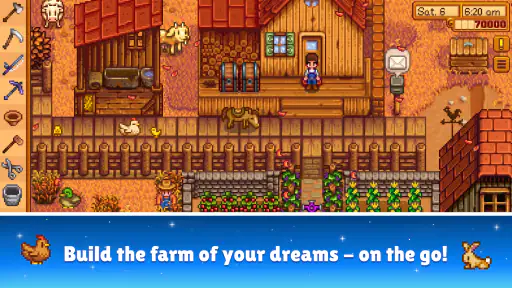
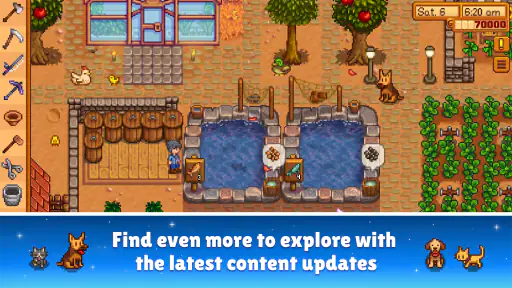
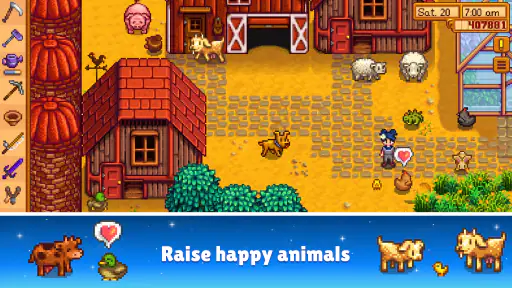
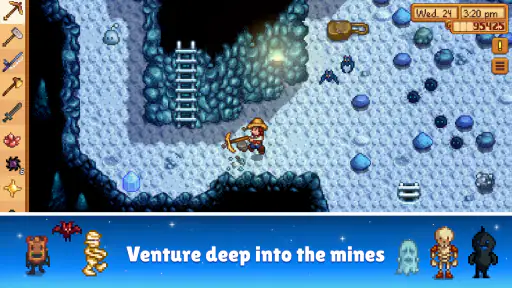
When you first boot up Stardew Valley, you might feel a bit overwhelmed by the sheer number of things you can do. But don't worry, it all starts with inheriting your grandpa's run-down farm. From planting seeds to raising animals, you’ll quickly find yourself immersed in the daily rhythm of farm life. The game doesn’t rush you. Instead, it lets you decide how you want to spend your days. Maybe you'll focus on creating the ultimate crop empire, or perhaps you'll explore the mysterious mines for precious ores and gems. The choice is yours, and that's what makes this game so enchanting.
Choosing a useful focus
That freedom can be a strength and a source of friction. At the start, it is tempting to treat every activity as equally urgent, then feel behind when the day ends. I get more from the game when I pick one practical aim for a session: clear a small area, tend the crops I already planted, or gather materials for a particular improvement. This keeps the farm from becoming a list of chores and helps me notice progress. It also makes the game friendlier to short mobile play, since I can pause after completing a modest task rather than trying to solve the whole farm at once.
A useful habit is to think one in-game day ahead before spending energy on optional errands. If the next day calls for planting or harvesting, I prioritize that work; if not, I can use the time for exploration or social visits. Seasons matter, so planning around them is more helpful than buying or planting impulsively. I would not try to maximize every crop, relationship, and resource from the beginning. The game is more satisfying when a missed opportunity becomes a lesson for the next season instead of a reason to restart.
Building Relationships
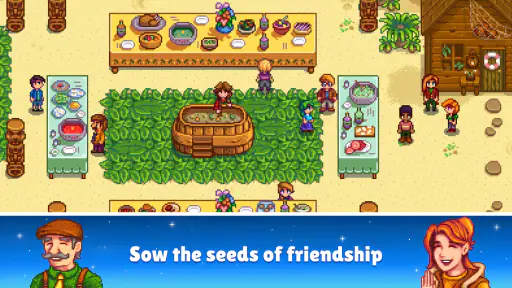
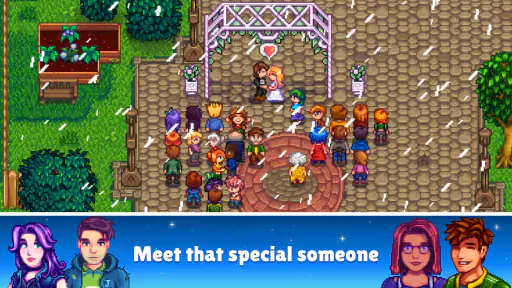
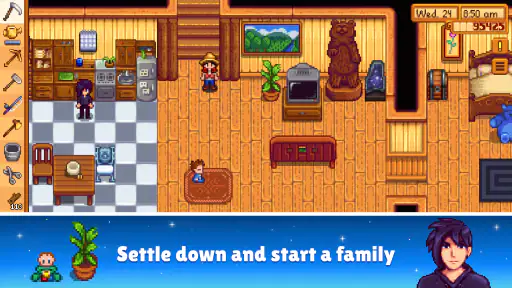
One of the standout features of the game is the ability to build relationships with the townsfolk. Each character has their own unique personality, likes, and dislikes. It's like living in a small town where everyone has a story to tell. You can even find love and start a family, which adds a heartwarming layer to the gameplay. This aspect of the game really shines, as it encourages you to engage and connect with the virtual community.
Gaming Stories You May Enjoy

Dancing Road Turns Short Breaks Into a Test of Rhythm and Timing

Super Stylist Makes Every Outfit a Test of Taste and Patience

Dominoes on Your Terms: Who Should Play and Who Should Pass

Pokémon GO Makes the Familiar World Feel New

Chess.com Turns Rematches Into Rivalries, but Community Has Its Costs

Archery Battle 3D Review: Sharp Aiming, Unclear Feedback
For me, the social side works best when it is part of the daily route rather than a separate project. I might stop to speak with someone while passing through town, then remember a preference or a routine the next time I have something suitable to share. That small amount of attention makes relationships feel more personal than simply checking off a menu. The trade-off is that players who want every character’s story immediately may find the gradual pace slow. I would let the friendships develop alongside farming instead of turning them into another deadline.
Exploring the Seasons
The change of seasons in Stardew Valley isn't just a visual treat; it significantly impacts your farming strategy. Each season brings new crops, festivals, and challenges. Winter, for instance, might halt your farming activities, but it gives you the perfect opportunity to focus on mining or fishing. This dynamic makes every in-game year feel fresh and keeps you on your toes as you plan your next move.
The seasonal cycle gives the game a natural way to change your priorities, but it also means that rushing through a day without thinking can have consequences for your plans. I find it helpful to keep a simple mental note of what I want to do before a season turns: use the remaining days for crops that fit the calendar, then shift attention to other activities when the weather changes. This is not a game I would recommend to someone who dislikes planning or who wants every action to have an immediate payoff. Its satisfaction comes partly from seeing a decision pay off over time.
How it feels on a phone
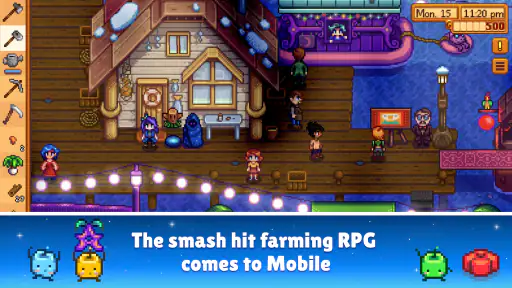
On a small screen, the appeal is clear: the game’s everyday structure suits picking it up when I have a little free time, and its pixel-art presentation keeps the world readable and distinctive. Still, a phone is not the same as a larger display or a traditional controller. Busy moments can ask for more attention than a quick glance, and touch input may take adjustment if you are used to playing this kind of game elsewhere. I would try the controls patiently at the start, especially before taking on a task where movement and timing matter.
Mobile play is a good fit if you like to make steady progress in short bursts, but it is less ideal if you want a hands-off game to tap through while distracted. The day-based rhythm can make it tempting to squeeze in one more task, and a session can run longer than intended. I treat a day’s end as a natural stopping point when I need a clear boundary. That approach keeps the relaxed quality intact instead of turning play into a hurried race to finish everything before putting the phone down.
Multiplayer and solo expectations
Stardew Valley also offers a multiplayer mode, which is fantastic if you want to share the farming experience with friends. Whether you're cooperating to build a thriving farm or just hanging out in the virtual world, playing with others adds a new dimension to the game.
If you are choosing it mainly for multiplayer, check that the way you plan to play matches the available mobile experience before buying. The game is enjoyable as a solo routine too, so I would not consider playing alone a compromise; it simply changes the focus from coordinating plans to following your own. Friends who enjoy setting shared goals may get more from a cooperative session, while someone seeking competitive matches or fast rounds should look elsewhere in the role-playing category. This is a slower, more personal kind of adventure.
Where it sits among role-playing games
Compared with many role-playing games built around combat, a tightly guided plot, or constant character upgrades, this one puts more weight on managing a place, choosing how to spend each day, and becoming part of a town. The mines add exploration and danger, but they do not erase the quieter routines that define the experience. I would pick it over a more linear RPG when I want room to experiment and return to familiar characters. I would choose a story-led alternative instead if I need a clear sequence of missions or a faster-moving narrative.
It also differs from a simple farming or idle game because the farm is only one part of a larger life. Crops, resource gathering, relationships, and seasonal changes pull against one another for your attention. That variety is why I think the purchase can deliver lasting value to the right player. The same variety can feel like clutter to someone who wants a single mechanic repeated in a calm loop. Before buying, ask yourself whether you enjoy deciding what to do next; that question matters more here than whether you like the idea of farming in the abstract.
Who will get the most from it
I would recommend it to someone who likes gradual goals, cozy settings, and games that reward returning to a familiar world. It is particularly appealing if you enjoy making your own priorities: improving the farm, exploring, or getting closer to the townspeople. A realistic way to play is to open it during a quiet break, finish a manageable in-game day, and leave with one idea for next time. That creates a satisfying sense of continuity without requiring a long session every time.
I would be more cautious if you want a quick, highly directed adventure, dislike repeating daily routines, or feel stressed by choices that have to be planned around a calendar. The game can also be a poor fit if touch controls are a deal-breaker for you or if the main reason for buying is a specific multiplayer setup you have not checked. Its gentle tone does not mean every moment is effortless: organizing a farm and deciding how to use limited time are central parts of the experience. Players who enjoy that light management will likely see the trade-off as the point.
Getting started without turning it into work
My practical advice is to resist the urge to optimize everything on the first day. Begin with a small patch of farm, learn how the day’s rhythm feels, and expand when you have a reason to do so. Keep a loose priority for the current season, but leave room for an unexpected conversation or a trip to explore. If you are unsure whether to spend a day on farming or mining, choose based on what your next goal actually needs rather than assuming one activity is always best. This makes each choice easier and prevents the many options from becoming overwhelming.
For relationships, simple consistency beats trying to meet everyone at once. For farm work, modest plans are easier to maintain than a layout that demands constant attention. And when a season changes, treat it as a chance to shift gears rather than evidence that you played incorrectly. These are small approaches, but they help preserve what I like most about the game: the feeling that progress belongs to me, not to a checklist imposed from outside.
The Verdict
In conclusion, Stardew Valley is more than just a farming simulator. It's a slice-of-life game that beautifully captures the essence of small-town living. With its charming graphics, relaxing gameplay, and the freedom to play at your own pace, it's no wonder this game has captured the hearts of so many. So, if you're looking to escape the hustle and bustle of modern life and lose yourself in a quaint, pixelated paradise, Stardew Valley might just be the game for you. Trust me, once you start, you’ll find it hard to put down!
My buy-or-skip verdict is simple: at $4.99, I think it is worth considering if you want a paid, self-paced role-playing game with farming, exploration, and community life woven together. Skip it if you need a free way to sample a game, prefer a brisk campaign, or dislike managing several slow-building goals. For me, its value comes from returning to the farm and choosing a different small purpose each time, not from racing toward an ending. If that kind of steady, personal progress sounds inviting, this is an easy recommendation; if it sounds like another set of chores, your money is better spent on a more focused game.
Stardew Valley Pros and Cons
Pros
- Engaging farming simulation gameplay.
- Rich storytelling and character development.
- Vibrant pixel art graphics.
- Multiplayer mode for cooperative play.
- Regular updates and community engagement.
Cons
- Time-consuming for casual players.
- Limited tutorial for beginners.
- Occasional bugs and glitches.
- Repetitive tasks may become tedious.
- In-game purchases can be pricey.
Frequently Asked Questions
What platforms is Stardew Valley available on?
Stardew Valley is available on a variety of platforms including Android, iOS, Windows, macOS, Linux, PlayStation, Xbox, and the Nintendo Switch. This wide availability means you can enjoy the farming simulation game on your preferred device. Each version offers a similar experience, though controls and some features may vary slightly.
Is there multiplayer support in Stardew Valley?
Yes, Stardew Valley includes multiplayer support. You can invite up to three friends to join your farm online, allowing for collaborative farming experiences. On most platforms, you can play online with friends, but note that local multiplayer is not supported on mobile versions, which might limit some cooperative play options.
What are the main activities in Stardew Valley?
In Stardew Valley, players engage in a variety of activities such as farming, fishing, mining, foraging, and building relationships with townsfolk. The game offers a rich, open-ended environment where managing your farm and participating in seasonal festivals are key. Each activity helps players build skills and contribute to their farm’s success.
Are there in-app purchases in Stardew Valley?
No, Stardew Valley does not include in-app purchases. Once you purchase the game, you have access to all content without additional fees. This makes it a great value for players who prefer a complete game experience without the worry of microtransactions affecting gameplay or progression.
How does the game handle updates and new content?
Stardew Valley regularly receives updates that include new content, bug fixes, and improvements. These updates are typically free and add features such as new crops, events, and quality of life improvements. The developer, ConcernedApe, has been committed to enhancing the game since its release, ensuring a fresh experience for returning players.


