

SpongeBob Adventures: In A Jam
- Reviews
- 4.6
- Version
- 2.35.1
- Installs
- 10,000,000+

Screenshots
 Analysis by Frivlyz
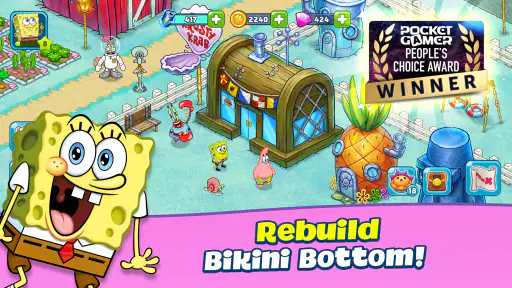
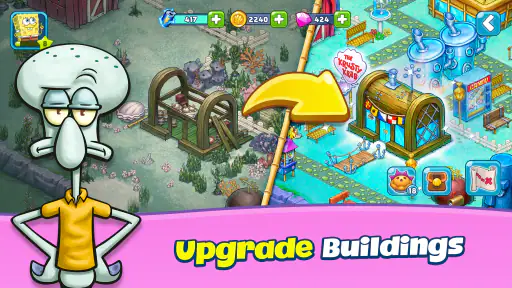
I went into SpongeBob Adventures: In A Jam expecting a light cartoon game, but I found something a little more involved: a relaxed town-building and exploration experience wrapped around SpongeBob’s familiar world. Its main appeal is not demanding reflexes or complicated strategy. Instead, it asks you to rebuild, collect, explore, and gradually make the underwater setting feel more complete. That makes it easy to pick up for a short session, while the steady stream of tasks gives it enough structure to become a regular habit.
This is a free simulation game from Tilting Point, rated for Everyone. It has attracted a 4.6 average from around 130 thousand ratings and passed 10 million installs, which fits its broad, accessible design. I can see why it reaches beyond dedicated simulation fans: the presentation is colorful, the objectives are usually clear, and the SpongeBob setting gives ordinary building tasks more personality. Still, the free-to-play structure matters, and anyone looking for a completely open-ended sandbox or a fast action game may find its rhythm too slow.
How the current game feels to play
I focus on what makes a short visit feel worthwhile: choosing one clear objective before I start, then checking what it needs so I don’t spend resources casually. That simple pause can make the rebuilding loop feel more intentional, especially when I only have a few minutes. Next, I look at the settings that help keep play comfortable and purchases deliberate.
A gentle mix of rebuilding and exploration
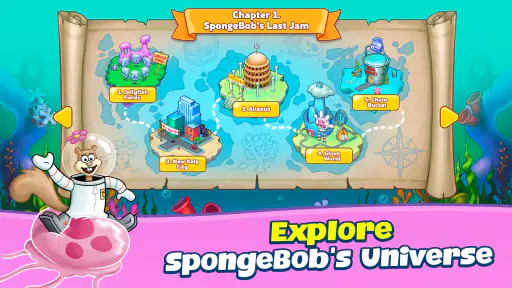
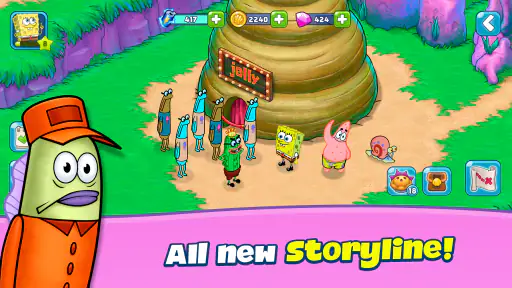
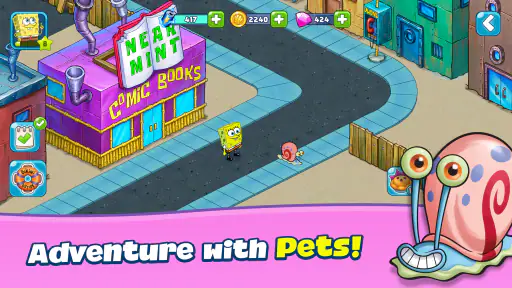
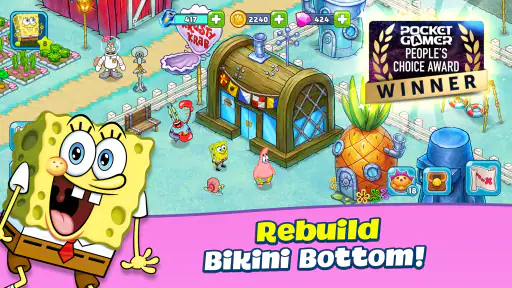
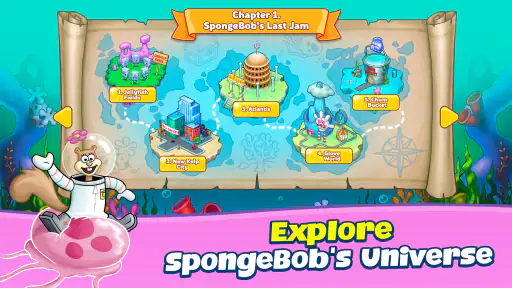
The basic loop is easy to understand. I move through familiar-looking areas, complete objectives, gather what I need, and use those rewards to continue restoring the world. The simulation side comes from managing progress and developing locations, while the adventure side keeps the experience from becoming a static decoration screen. The result feels closer to a guided journey through a cartoon town than to a traditional management spreadsheet.
That balance is one of the game’s strongest choices. I am rarely left wondering what the next useful action should be, but I also do not feel that every minute is controlled by a timer or a complicated menu. When I only have a few minutes, I can complete a small task and stop. When I have more time, I can follow several objectives, look around the available areas, and decide which upgrade or activity deserves attention next.
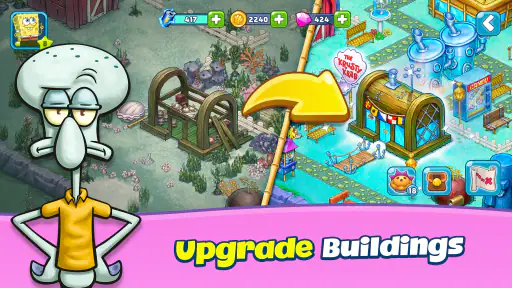
The SpongeBob license is not just a label placed over a generic builder. The setting gives the rebuilding work a clear emotional reason: I am helping restore a recognizable world and its characters’ surroundings. That makes collecting and construction feel more rewarding than they would in an anonymous town. Fans will notice the familiar tone immediately, while younger players can understand the goals without needing a long tutorial.
Why the pace works for everyday play
I think the best way to approach this game is as a small daily routine rather than one long campaign session. For example, I can open it during a lunch break, finish a couple of available tasks, collect completed rewards, and close it without losing the sense that I made progress. Later, I can return when I have more time and continue exploring. That structure suits a phone much better than a game that expects uninterrupted attention.
Gaming Stories You May Enjoy

Dancing Road Turns Short Breaks Into a Test of Rhythm and Timing

Super Stylist Makes Every Outfit a Test of Taste and Patience

Dominoes on Your Terms: Who Should Play and Who Should Pass

Pokémon GO Makes the Familiar World Feel New

Chess.com Turns Rematches Into Rivalries, but Community Has Its Costs

Archery Battle 3D Review: Sharp Aiming, Unclear Feedback
The trade-off is that progress can feel measured rather than immediate. A player who wants to build a complete area in one sitting may become impatient, especially when the next step depends on gathering enough resources or completing another requirement. I found the slower pace comfortable when I treated it as a casual game, but less satisfying when I approached it with the expectation of rapid expansion.
There is also a useful distinction between playing for the story-like journey and playing for optimization. If I focus on finishing objectives and enjoying the characters, the game feels forgiving and pleasant. If I start worrying about the fastest possible route through every upgrade, the free-to-play design becomes more noticeable. In other words, it rewards a relaxed mindset more than a competitive one.
The interface is approachable, but not completely frictionless
The controls are designed for touch, so most actions feel natural on a phone. Tapping a location, selecting a task, and collecting a reward are simple enough for younger players or anyone who does not usually play management games. The visual feedback also helps: completed activities and available actions are generally presented in a way that makes the next step understandable.
Where the interface can slow me down is in the amount of checking involved. As the world develops, I need to pay attention to several locations and objectives rather than follow one uninterrupted path. That is not a serious problem, but it means the game is more enjoyable when I take a moment to review what is available instead of tapping quickly through everything. Players who dislike menus, repeated collection, or task tracking may find this less appealing than a straightforward platform game.
One practical habit helped me: I try to collect rewards with a purpose in mind instead of immediately spending everything. Holding back some resources gives me more flexibility when a new requirement appears. That small change makes the progression feel less restrictive and reduces the frustration of reaching an interesting objective without the materials to act on it.
What the recent version means for players
I treat a version update as a good moment to revisit my routine rather than assume the game has changed its core style. I check that the game still runs comfortably on my device, then settle back into the familiar cycle of exploring, gathering, and rebuilding. With that baseline in mind, it’s easier to see which repeatable habits save time and where the game’s limits remain.
Version 2.35.1 and the game’s mature shape
The current version is 2.35.1, and the game originally arrived on September 26, 2023. That places it beyond the novelty stage of a brand-new release. From a player’s perspective, the important point is that this is an established mobile game with a developed identity rather than an experiment still trying to decide whether it wants to be an adventure, a builder, or a character-focused collection game.
I would not interpret the version number alone as a promise of a particular feature or major redesign. What it does tell me is that the experience has moved through multiple iterations and is being presented as the current form of the product. For someone deciding whether to start now, that is reassuring in one sense: the core structure is clear. At the same time, a new player should not assume that every future update will transform the way the game works. The safest expectation is continued refinement around the existing formula.
The game requires Android 8.0 or later, so compatibility is reasonably broad for many Android users, though anyone with an older device will need to check before planning to play. On iOS, the sensible approach is equally practical: verify that the device and operating system meet the current store requirements before downloading. Because this is a colorful 3D-style mobile experience with persistent progression, an older phone may also feel less comfortable than a newer one even when it technically supports the game.
How the established design affects returning users
For existing players, the main advantage of the current state is familiarity. Once I understand how objectives, exploration, and rebuilding connect, returning to the game feels straightforward. I do not need to relearn a completely different system every time I open it. That consistency is valuable in a casual title because the game can become part of a routine without demanding the mental effort of a large strategy game.
The downside is that long-term players may notice the repetition more clearly than newcomers. The first hours benefit from discovery: new areas, new tasks, and the pleasure of seeing the world take shape. After that, the enjoyment depends more on whether I like the daily rhythm itself. If the satisfaction of incremental construction has worn off, the familiar SpongeBob presentation may not be enough to keep the experience fresh.
New players should also be aware that starting later does not automatically make the game feel like a complete, traditional console adventure. It remains a mobile progression game. I can make meaningful progress, but I am still working within the boundaries of objectives, resources, and unlocks. That is ideal for someone who enjoys gradual development. It is less suitable for someone who wants to wander anywhere immediately and interact with every part of the world without restrictions.
Where the free-to-play model becomes visible
The game costs nothing to download, but it includes optional purchases ranging from $0.49 to $119.99 per item. That wide range is important context for families and for anyone trying to keep a strict entertainment budget. I can play without treating purchases as mandatory, but the presence of paid options means the experience is built around a commercial progression model rather than a one-time purchase.
My advice is to decide on a personal rule before starting. I would either play entirely without buying or set a small, fixed limit and avoid making spontaneous purchases when a task feels slow. This is especially useful on a shared family device, where a child may understand the game’s goals but not the real-world cost of pressing a purchase button. The Everyone rating describes the content audience, not a guarantee that the progression will suit every family’s spending preferences.
The most useful free-to-play tip is to separate impatience from necessity. When I feel tempted to spend because an activity is taking time, I ask whether the purchase changes what I can do or simply lets me reach the next step sooner. If it only saves waiting, closing the game and returning later is often the better choice. That approach preserves the relaxed nature of the game and prevents the economy from controlling the session.
What the game still does not fully solve
The biggest gap is depth for experienced simulation players. This is not the kind of builder where I can design a complex economy, create elaborate production chains, or make many meaningful strategic decisions about the entire town. Its systems are intentionally approachable, and that makes it welcoming, but it also limits the challenge. Players coming from deeper city-building games may find the choices too guided.
There is a similar limitation for action fans. Exploration gives the game movement and variety, yet it does not turn the experience into a fast platformer or combat-focused adventure. If I want precise controls, constant danger, or skill-based levels, I would be better served by a dedicated action game. Here, exploration mainly supports the progression loop rather than replacing it.
The other gap is long-session variety. The game works well in short visits because its tasks are easy to understand and its world is pleasant to revisit. During a long uninterrupted session, however, the repeated pattern of checking objectives, gathering rewards, and advancing construction can become predictable. I would recommend alternating it with another game rather than expecting it to provide endless variety in one sitting.
It is also worth being realistic about the audience. SpongeBob fans who enjoy seeing a familiar world rebuilt are the clearest match. Casual players who want a calm mobile activity are another strong fit. Someone who dislikes licensed games, avoids all free-to-play economies, or needs a highly demanding simulation should probably skip it. A premium game with a single upfront price may be a better choice for the second group, while a deeper builder will suit the third.
What I would watch as the game continues
For future updates, I would pay attention to whether new content broadens the types of decisions available or mainly adds more tasks within the same pattern. More areas and characters can keep the setting attractive, but lasting value depends on whether they also create fresh reasons to explore and plan. The strongest updates would preserve the easy entry point while giving established players something more substantial to master.
I would also watch how the balance between free progress and paid acceleration develops. A healthy casual experience should let patient players continue enjoying the world without feeling constantly pushed toward purchases. Since the game already offers items across a broad price range, transparency and restraint will matter to families and long-term users. The more comfortable the free path feels, the easier it is to recommend the game without qualifications.
Finally, device performance and ease of use remain worth monitoring. A game built around colorful environments and repeated touch interactions should stay comfortable on supported hardware. Improvements that reduce unnecessary navigation, make objectives easier to track, or help returning players see what matters first would improve the experience without changing its personality.
My recommendation for the right player
I enjoyed SpongeBob Adventures: In A Jam most when I treated it as a friendly, ongoing project rather than a game I needed to finish quickly. The rebuilding gives each visit a visible purpose, the exploration prevents the town-management elements from feeling completely static, and the SpongeBob theme adds charm that a generic simulation would not have. Its current 2.35.1 release presents a clear, approachable version of that formula.
I would recommend it to SpongeBob fans, families looking for an Everyone-rated game, and casual players who like collecting, unlocking, and improving a world over time. I would be more cautious with players who want deep strategy, uninterrupted action, or a purchase-free experience with no temptation to speed things up. For those people, a premium adventure or a more serious simulation may be a better match.
My final view is positive, with one condition: play it at its intended pace. The best experience comes from enjoying small improvements instead of trying to rush the entire world into completion. Keep purchases under control, save resources thoughtfully, and use short sessions to your advantage. Approached that way, this free simulation game is a cheerful and accessible way to spend a few minutes at a time, while still offering enough exploration and progression to give those visits a satisfying sense of purpose.
SpongeBob Adventures: In A Jam Pros and Cons
Pros
- Colorful SpongeBob-themed world with familiar characters and locations.
- Simple touch controls make it accessible for younger players.
- Many decorative items allow creative customization of your island.
- Regular tasks provide clear goals and a steady sense of progress.
- Lighthearted dialogue captures the humor of the original series.
Cons
- Energy limits can interrupt play during longer building sessions.
- Some upgrades and resources require considerable waiting time.
- Progress may feel repetitive once the main areas are restored.
- In-app purchases can speed up progress or provide extra resources.
- The game requires an internet connection for most features.
This Game in Other Languages
Frequently Asked Questions
What is SpongeBob Adventures: In A Jam?
SpongeBob Adventures: In A Jam is a casual adventure and farming game set in the SpongeBob SquarePants universe. Players help SpongeBob rebuild Bikini Bottom after a disaster involving jelly, explore familiar locations, gather resources, complete quests, and interact with recognizable characters. The game combines story-driven missions, decoration, crafting, and light resource management in a colorful, cartoon-style experience.
How does the gameplay work in SpongeBob Adventures: In A Jam?
The game is built around completing tasks, collecting materials, and restoring different areas of Bikini Bottom. You can grow crops, craft useful items, expand locations, decorate buildings, and unlock new parts of the map as the story progresses. Character requests and timed activities provide additional goals, while exploration lets you discover resources and rewards. Its controls are simple and designed for touchscreens.
Is SpongeBob Adventures: In A Jam free to download and play?
SpongeBob Adventures: In A Jam can generally be downloaded and played for free, but it includes optional in-app purchases. These purchases may provide premium currency, energy, resource packs, or faster progress. You can enjoy the main adventure without paying, although waiting timers and limited energy can make progression slower. Parents should review purchase settings before allowing children to play.
Does SpongeBob Adventures: In A Jam require an internet connection?
An internet connection is typically recommended or required for important parts of SpongeBob Adventures: In A Jam, including loading game content, synchronizing progress, receiving events, and processing purchases. Offline access may be limited and should not be assumed for every feature. If you plan to play while traveling or without mobile data, check the current store listing and test the game before relying on offline play.
Is SpongeBob Adventures: In A Jam suitable for children?
SpongeBob Adventures: In A Jam is presented with bright visuals, familiar characters, and accessible gameplay that can appeal to younger players and families. However, it may contain advertisements, optional purchases, energy systems, and prompts encouraging continued play. The recommended age rating can vary between Android and iOS, so parents should check the listing for their region and use device-level parental controls where appropriate.


