

Spirit Island
- Reviews
- 3.8
- Version
- 3.3.3
- Installs
- 100,000+

Screenshots


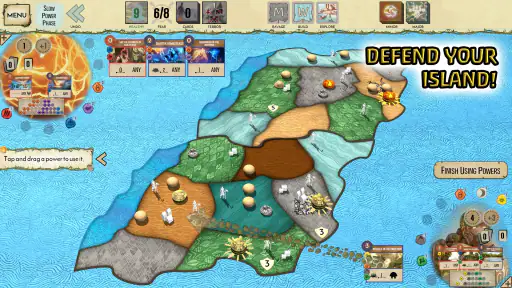

 Analysis by Frivlyz
I usually approach digital board games with one question: does the screen make the tabletop experience easier, or does it simply move the same work onto a phone? Spirit Island convinced me that its strongest idea is worth the move. This is a cooperative strategy game in which the players defend an island from settlers, and the important part is not just defeating enemies. It is coordinating different powers, reading a changing board, and deciding which problems can safely wait.
That focus makes the game feel very different from a typical mobile board game. I am not competing against friends around a score track, and I am not building a quick engine that reaches its payoff in a few minutes. I am trying to protect a living island while several threats develop at once. The result is thoughtful, demanding, and occasionally stressful in a good way.
Why the cooperative defense is the real attraction
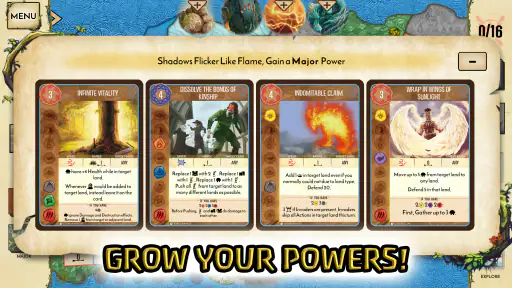
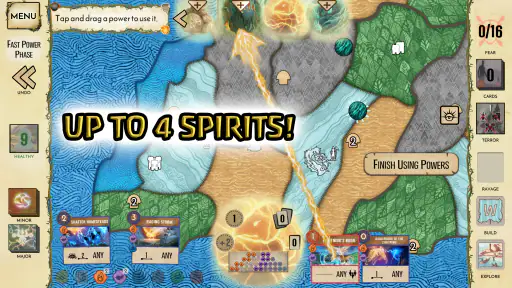
The central capability is shared decision-making. Every player controls a spirit with its own way of influencing the island, while the group works toward a common objective. One spirit may be better at pushing danger away, another may handle a particular kind of threat, and another may need time before its abilities become truly effective. The interesting decisions come from combining those roles rather than treating each turn as an isolated move.
In my experience, this creates a stronger sense of responsibility than most casual board games. A move that looks excellent for my spirit can still be wrong for the island if it leaves another region exposed. I have to consider what my teammate can do, what the next danger might be, and whether using a powerful ability now will leave me without a useful answer later.
The game rewards coordination more than individual cleverness. That is its defining strength, but it also explains why it is not an ideal choice for everyone. If you want a relaxed game that can be understood immediately, this will probably feel heavy. If you enjoy planning several steps ahead and discussing imperfect options with other people, the cooperative structure has a lot to offer.
Handelabra Games handles the adaptation with a clear sense of purpose. The digital format is especially helpful when the physical version would require constant checking, moving pieces, and resolving several effects in the correct order. I still need to think carefully, but I spend less time managing the board and more time deciding what I actually want to do.
How a turn feels when the island starts to change
The first few turns can seem deceptively manageable. I look at the board, notice a few troubled areas, and imagine that I can solve everything with the right combination of powers. Then the pressure spreads. Settlers build up, dangerous areas become harder to stabilize, and a decision that seemed harmless earlier starts limiting the choices available later.
Gaming Stories You May Enjoy

Dancing Road Turns Short Breaks Into a Test of Rhythm and Timing

Super Stylist Makes Every Outfit a Test of Taste and Patience

Dominoes on Your Terms: Who Should Play and Who Should Pass

Pokémon GO Makes the Familiar World Feel New

Chess.com Turns Rematches Into Rivalries, but Community Has Its Costs

Archery Battle 3D Review: Sharp Aiming, Unclear Feedback
This is where the app’s cooperative design becomes practical rather than theoretical. I am not simply asking, “What is my strongest move?” I am asking, “Which threat should I handle, which one can my teammate cover, and what consequence are we willing to accept?” That conversation is often more valuable than the action itself.
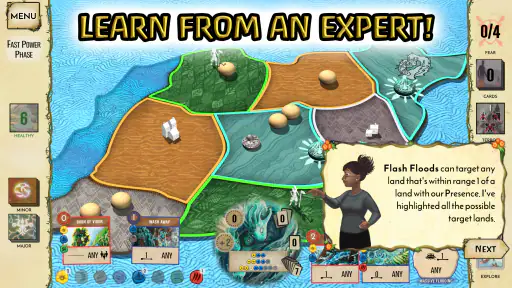
The interface also changes how I learn the game. In a physical session, a new player may pause while everyone checks a card or remembers a rule. On a device, the flow is more contained, so it is easier to experiment without feeling that the whole table is waiting for me. I still had to learn the logic of the game, but the digital presentation reduced some of the bookkeeping that normally gets in the way.
One useful habit is to stop treating every damaged area as an emergency. My first instinct was to clear the most visible problem immediately. That often produced a short-term improvement while leaving a more dangerous chain of effects untouched. A better approach is to identify which regions are likely to create the next wave of trouble and spend actions there before the board becomes crowded.
Another practical lesson is to discuss intentions before committing to them. Cooperative games can suffer from one player taking over, especially when that player understands the rules first. Here, the number of interacting choices makes that approach unreliable. I found that saying what I hoped to accomplish, rather than dictating every move, led to better plans and gave other players room to use their spirits properly.
The best everyday use case
The strongest scenario for me was a quiet evening with someone who already enjoys complex board games but does not want to set up a large physical table. We could focus on the island, pause to reconsider a plan, and continue without losing pieces or searching through a box. The digital format made a substantial difference when we wanted a serious cooperative session without the preparation that usually comes with one.
It also works well for players who like solo strategy but want more than a simple puzzle. Controlling multiple spirits adds mental work, yet it lets me explore combinations and understand how different abilities support one another. I would not call it a lightweight solo pastime. It is better suited to a player who enjoys studying a position and accepting that a failed attempt can teach more than an easy victory.
For a group of friends, the game is most enjoyable when everyone is willing to communicate. It is not the kind of title I would casually recommend for a mixed group of people who have never played modern board games. The rules and decisions can make a first session slow, and a player who dislikes discussing strategy may feel buried under the choices.
A realistic example is a group meeting after work with only a limited amount of energy left. If everyone wants a quick, cheerful round, I would choose something simpler. If the group wants to settle in, compare plans, and gradually understand why the island is getting worse, this is a much better fit. The game asks for attention, but it gives that attention somewhere meaningful to go.
Where the digital version helps and where it gets in the way
The biggest advantage is reduced administration. A digital board can keep the current state visible and make a complicated cooperative system less physically awkward. That matters because the game’s challenge comes from the decisions, not from remembering where every piece belongs. I appreciated being able to concentrate on priorities instead of repeatedly reconstructing the state of the island.
The tradeoff is that a screen can make a dense board harder to absorb at a glance, particularly on a smaller phone. On a large tablet, the experience feels more comfortable because I can inspect the whole situation without constantly shifting my attention. On a phone, I found myself checking details more deliberately. That is manageable, but it makes the game feel less immediate than a broad tabletop layout.
The interface is also not a substitute for understanding. Automation can help resolve actions, but it cannot tell me which region matters most or whether I am spending a valuable ability too early. New players should expect to learn through mistakes. The game’s difficulty is not a flaw, although it can be frustrating if I approach it expecting the app to guide me gently from one obvious choice to the next.
There is also a social tradeoff. Playing digitally is convenient, but it does not recreate the physical experience of sitting around a table with a large board in front of everyone. If the tactile side of board gaming is the main reason I enjoy the hobby, the app will feel like a compromise. If the planning is what I care about, removing setup and bookkeeping is a fair exchange.
The game is free to download, with optional in-app purchases ranging from a few dollars to the mid-twenties per item. I would approach those purchases as a commitment question rather than an automatic requirement: first decide whether the core style suits you, then consider whether you want to expand your experience. The free entry point makes testing the rhythm less intimidating, while the purchase range means it is sensible to think about how deeply you expect to play.
Who gets the most from the strategy
I would recommend this game most strongly to people who enjoy cooperative board games, asymmetric roles, and difficult decisions with no perfect answer. It is especially satisfying if you like discussing priorities with another player and watching a plan develop over several turns. The game gives each decision weight, so careful players have plenty to analyze.
It is also a good choice for someone who owns the physical game but wants a more convenient way to practice. The app can make it easier to revisit the system when there is no room for a full setup. I found that digital play was useful for learning the relationship between different kinds of powers and for recognizing when an apparently urgent problem was actually a distraction.
I would skip it if I wanted a fast filler, a purely competitive match, or a game that can be enjoyed while half-watching television. The cooperative format requires attention from everyone, and the difficulty can expose players who prefer a clear path to victory. It is not a background game, and it does not try to be one.
The age rating is Everyone, but that should not be confused with effortless play. Younger players may be able to engage with the theme and basic objective, yet the deeper strategy can still be demanding. I would choose it for a family only when the group already enjoys discussing rules and making shared plans rather than expecting a simple pick-up-and-play experience.
The app has an average rating of 3.8 from around one thousand ratings, and it has passed the hundred-thousand-install mark. Those figures suggest a meaningful audience, but they do not change my main conclusion: the right question is not whether it is broadly popular, but whether you enjoy its particular kind of pressure. The game is at its best when its complexity feels like an invitation to think, not an obstacle you are trying to escape.
What to know before downloading
The game was released on December 14, 2020, and the current version is 3.3.3. It runs on Android 7.0 or later, which makes it accessible to a wide range of devices. I would still favor a larger screen when possible, because the board state and the number of decisions are easier to read when they are not compressed into a small display.
Before starting, I would set aside time for a proper learning session rather than judging it after a rushed opening. The early experience can feel confusing because the game asks me to understand both my own spirit and the island’s developing problems. Once those systems begin to connect, the decisions become more satisfying and the cooperative element becomes much clearer.
A good beginner workflow is to choose a manageable spirit, explain the group’s general plan out loud, and focus on preventing the next serious escalation instead of trying to repair everything. I also recommend reviewing the board after each major phase and asking what new problem has appeared. That small pause prevents the common mistake of continuing with the previous plan after the island’s priorities have changed.
Players who are worried about making the wrong choice should remember that experimentation is part of the appeal. I made inefficient moves while learning, but those mistakes showed me how quickly a temporary solution could create a larger problem. The game becomes more enjoyable when I stop expecting perfect play and start treating each session as a lesson in timing, cooperation, and risk.
My recommendation after spending time with it
Spirit Island is a demanding but rewarding board game adaptation built around one excellent capability: making players solve a shared crisis together. Its strongest moments come when two spirits combine their strengths, accept that one area must wait, and prevent a chain of trouble that was not obvious a turn earlier.
I like it because the challenge feels connected to the theme. The island is not just a board filled with targets; it is a problem that changes in response to what I do. That makes success feel earned and failure feel informative. The app is less appealing when I want speed, simplicity, or a strongly social tabletop atmosphere, but it is a compelling choice when I want deep cooperative planning without physical setup.
Handelabra Games’ version is worth trying for thoughtful players who are prepared to learn gradually. I would recommend starting with a patient friend or using solo play as a way to understand the flow, then returning to cooperative sessions once the priorities feel more natural. If you enjoy winning by coordinating imperfect answers rather than finding one obvious move, this is a board game I would gladly recommend.
Spirit Island Pros and Cons
Pros
- Deep cooperative strategy with strong replay value.
- Asymmetric spirits make every playthrough feel distinct.
- Excellent solo mode with meaningful tactical decisions.
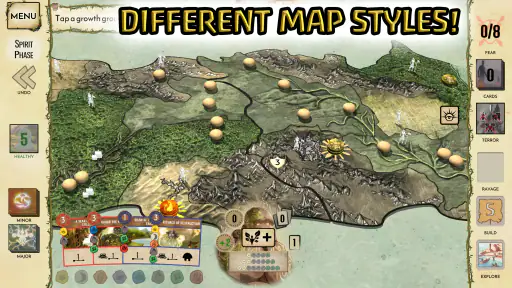
- Rich theme and artwork capture the island’s atmosphere.
- Frequent expansions add new spirits
- adversaries
- and scenarios.
Cons
- Steep learning curve can overwhelm newcomers.
- Long setup and play sessions may not suit casual players.
- Many rules and effects require frequent reference checks.
- High difficulty can feel punishing without careful planning.
- Performance may slow during complex late-game turns.
Frequently Asked Questions
What is Spirit Island, and how does the mobile version work?
Spirit Island is a cooperative strategy board game adapted for Android and iOS devices. Players control powerful nature spirits defending an island from invading colonists, using unique abilities and carefully planned combinations. The digital version handles rules, enemy actions, effects, and turn progression automatically, making the complex tabletop system easier to learn while preserving its strategic depth and cooperative gameplay.
Can Spirit Island be played offline?
Spirit Island generally supports solo play and may allow certain content to be accessed without a constant internet connection, depending on the device version and installed updates. However, online features, account services, purchases, synchronization, or multiplayer options may require connectivity. It is recommended to launch the game once while online and check the store listing for the latest offline and network requirements.
Does Spirit Island support solo and multiplayer gameplay?
Yes, Spirit Island is designed for both solo and cooperative play. You can control one or more spirits by yourself, or play with other people through supported multiplayer features. Solo sessions are especially enjoyable because every spirit has a different role, but managing several boards can be demanding. Multiplayer availability and connection methods can vary between Android and iOS versions.
Is Spirit Island suitable for beginners in strategy games?
Spirit Island can be enjoyed by beginners, but it is not a simple or casual strategy game. New players must learn spirit powers, invader phases, fear effects, blight, growth choices, and timing rules. The tutorial and guided introduction help considerably, although the first few games may feel overwhelming. Players who enjoy thoughtful planning and gradually improving will likely appreciate its learning curve.
Does the Spirit Island app include all tabletop game content?
The mobile adaptation includes the core Spirit Island experience, but the exact amount of content depends on the edition, platform, and downloadable expansions available in the app. Some spirits, scenarios, adversaries, and promotional material from the physical board game may be sold separately or introduced through updates. Before downloading, check the current store description and in-app purchase section to understand what is included.


