

Spider Solitaire Classic
- Reviews
- 4.7
- Version
- 1.7.1
- Installs
- 10,000,000+

Screenshots


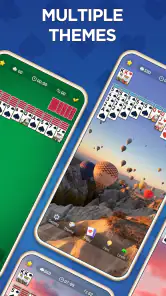
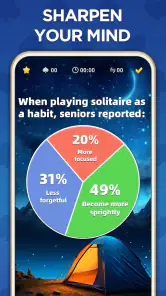
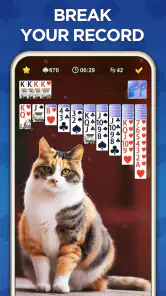


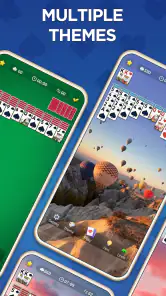
 Analysis by Frivlyz
Spider Solitaire Classic is the kind of card game I open when I want something familiar, quiet, and easy to understand within a few seconds. It is a free card game from Game Maker Ltd., built around the classic Spider Solitaire format rather than a large story, competitive ladder, or complicated collection system. That focus is its main appeal: I can start a round quickly, think through a few moves, and stop when I have finished or when my attention has moved elsewhere.
My first impression was that the game understands the value of restraint. The setting is not trying to distract me with an elaborate fictional world. Instead, the cards are the world. The table, the arrangement of suits, the movement of stacks, and the gradual clearing of the layout create the visual language. That makes the experience feel more like a digital card table than a conventional adventure game, which is exactly the right direction for this type of solitaire.
For a casual player, the entry point is straightforward. For someone who already knows Spider Solitaire, the attraction is the familiar decision-making: uncovering hidden cards, building descending sequences, and deciding when to move a group or expose a new card. The game’s store presence is substantial, with a 4.7 average from roughly 25 thousand ratings and more than 10 million installs. Those figures suggest that its simple approach has reached a broad audience, although popularity alone does not make every session satisfying.
A quiet card table with a clear visual language
I find the appeal of this card table begins with how little it asks of me before a round can make sense: the layout is the puzzle, and each move changes what I can see and do next. In this section, I’ll look at how that clear presentation supports careful play, then turn to the more practical question of what makes a familiar Spider layout rewarding over time.
The first few rounds
What works best here is the immediate relationship between the layout and the player’s attention. A good solitaire interface should let me see what matters without making me search for basic information, and Spider Solitaire Classic is designed around that need. The cards occupy the center of the experience, so the visual hierarchy naturally points toward possible sequences, blocked columns, and opportunities to reveal hidden cards.
I also appreciate how the classic subject matter gives the game a stable identity. There is no need for a character, map, or narrative explanation to tell me what I am doing. The table itself communicates the rules. That makes the game particularly suitable for short breaks, because I do not have to remember a storyline or rebuild context after leaving it for a while.
The art direction creates a calm mood rather than an energetic one. That may sound obvious for solitaire, but it affects how long I am willing to play. The absence of visual noise makes it easier to stay with a difficult layout, especially when I am comparing several possible moves. I can treat a round as a small concentration exercise instead of a burst of entertainment that demands constant stimulation.
Gaming Stories You May Enjoy

Dancing Road Turns Short Breaks Into a Test of Rhythm and Timing

Super Stylist Makes Every Outfit a Test of Taste and Patience

Dominoes on Your Terms: Who Should Play and Who Should Pass

Pokémon GO Makes the Familiar World Feel New

Chess.com Turns Rematches Into Rivalries, but Community Has Its Costs

Archery Battle 3D Review: Sharp Aiming, Unclear Feedback
Why the setting matters even without a story
Spider Solitaire Classic does not need a dramatic setting to feel coherent. Its setting is a controlled workspace: cards are dealt, columns are manipulated, and completed sequences disappear from the active problem. That structure gives the game a satisfying sense of order. Each cleared sequence feels like the table becoming less crowded, not because of a narrative reward, but because the visual problem has genuinely been reduced.
This is also where the game differs from many modern card alternatives. A collectible card game usually surrounds its mechanics with characters, effects, progression systems, and a larger competitive framework. A solitaire app has a different responsibility. It should make the board readable and the pace comfortable. This title stays close to that purpose, which is a strength for players who want cards without a larger commitment.
The trade-off is that the atmosphere may feel too plain for anyone who expects a strong theme. If you want animated opponents, changing locations, or a sense of travel between matches, this is not the right kind of card game. Its visual identity is deliberately narrow. I see that as a benefit when I want calm concentration, but as a limitation when I am looking for spectacle.
The small visual choices that affect play
In a Spider layout, visual clarity is not merely decoration. It influences whether I can quickly distinguish a useful move from a tempting mistake. Descending runs need to be easy to follow, and face-down columns need to remain visually separate from the cards I can already use. When the board reads clearly, I spend my mental effort on planning rather than interpreting the screen.
One useful habit is to pause before making an attractive move. A long descending sequence can look productive, but moving it may block access to a hidden card or consume a space that would be more valuable later. The uncluttered presentation helps me inspect the whole table before committing. I find this especially important in Spider Solitaire, where a move can improve one column while quietly damaging the overall arrangement.
Another practical tip is to treat empty columns as strategic resources, not just empty decoration. Creating one can give me room to move a larger sequence, but filling it too quickly may remove that flexibility. The game’s visual simplicity makes this easier to notice because the open space is immediately visible. That is a subtle strength of the format: the board shows the cost of my choices without needing a separate explanation.
Sound, silence, and the rhythm of a round
The sound design matters in a game that may be played repeatedly, even when it is not the main attraction. Spider Solitaire Classic is best understood as a low-pressure experience, so its audio should support the movement of cards rather than compete with it. I approach each round with the expectation of a measured rhythm: inspect the layout, make a move, check what changed, and continue.
That rhythm is one reason the game fits everyday situations. I can play while taking a short break, waiting for an appointment, or winding down before bed. A round does not require the same emotional investment as a multiplayer match, and I do not feel pushed to react instantly. The pacing leaves room for thought, which is more important here than dramatic sound effects or rapid animation.
I would not choose this game if I wanted a soundtrack-driven experience. Its mood comes from the act of arranging cards, not from a rich audio landscape. Players who prefer their games to provide constant feedback, music, and spectacle may find the presentation understated. For me, that restraint is usually welcome, particularly when I play with the sound lowered or off and want the layout to remain the focus.
How the pace changes with the layout
Although the basic action is familiar, the emotional pace of a round can change significantly. At the beginning, I am usually surveying possibilities and looking for ways to expose hidden cards. In the middle, the game becomes more deliberate because every open space and movable sequence matters. Near the end, clearing a complete run can create a noticeable release of tension as the table becomes easier to manage.
This gradual change gives the game more texture than its simple rules might suggest. It is not fast in the way an arcade card game is fast, but it is not static either. The pace comes from the changing number of available choices. When the board is crowded, I feel cautious; when several columns open up, I can experiment more freely.
My advice is not to judge a round too early. A difficult opening does not always mean the layout is hopeless, and a promising start can still collapse if I move cards without preserving flexibility. The best sessions come when I accept the game’s slower rhythm and use each move to improve the next decision rather than chasing immediate progress.
Where the mechanics fit the mood
Spider Solitaire Classic works because its mechanics and atmosphere point in the same direction. The game asks for planning, but it does not present planning as pressure. The card layout gives me a contained problem, and solving it produces a quiet sense of progress. That combination makes it suitable for players who enjoy logic but do not necessarily want a puzzle game filled with timers, lives, or escalating visual effects.
The classic rules also make the game easy to return to after a long gap. I do not need to relearn a character build or remember a complicated set of abilities. The challenge is in recognizing patterns and preserving options. For an experienced solitaire player, that familiarity is comforting. For a newcomer, the format is approachable enough to learn through repeated play, provided they are willing to think a few moves ahead.
There is a useful distinction between relaxing and effortless. This game can feel relaxing because the pace is under my control, but a serious Spider layout still demands attention. If I play carelessly, I can create a blocked arrangement that is difficult to recover from. That is part of the appeal for me: the game offers a calm surface while still rewarding disciplined decisions underneath.
The free price makes it easy to try without a purchase commitment. In-app purchases range from $0.99 to $9.99 per item, so anyone considering optional spending should keep that in mind before playing regularly. I would approach those purchases as convenience choices rather than a reason to download the game. The core attraction is the card table itself, and a player should decide whether the basic experience is enjoyable before paying for anything additional.
Who will get the most from it
I think this game is a strong fit for someone who wants a familiar solo card activity that can be played in small pieces. It suits people who enjoy sorting, planning, and gradually reducing a complicated layout. It is also a sensible choice for players who dislike competitive pressure, because the experience is centered on personal decision-making rather than an opponent’s turn or a public ranking.
It can work well as a daily mental reset. For example, I might open it during a lunch break, play until I have made a few thoughtful moves, and close it without feeling that I have abandoned a larger campaign. Later, I can return to the same kind of challenge without needing to reconstruct a fictional setting. That low commitment is one of its most practical qualities.
The Everyone content rating also makes the game broadly accessible as a family-friendly card experience. That does not mean every player will enjoy it equally. Younger players who expect constant action may find the deliberate pace slow, while adults who want a quiet routine may appreciate exactly that quality.
Who should choose another card game
I would point someone toward a different option if they want social play, competitive matchmaking, or a strong progression system. Spider Solitaire Classic is not appealing because it simulates a full card-game community; it is appealing because it gives one person a focused table. Players who need new opponents, changing decks, or a narrative reason to keep playing may quickly feel that the format is too contained.
I would also be cautious about recommending it to anyone who finds repeated solitaire layouts monotonous. The core loop intentionally remains close to the traditional game. That consistency is useful for relaxation, but it also means the experience does not transform into something dramatically different after a few sessions. If variety is your main requirement, a broader collection of card games may be a better match.
Another trade-off is attention. The game is easy to start, but the best results come from slowing down and considering consequences. Someone looking for a game that can be played almost automatically may become frustrated when a careless move leaves the board in a poor position. It is casual in presentation, not necessarily mindless in practice.
Practical details before installing
Game Maker Ltd. released the game on September 1, 2021, and the current version is 1.7.1. It supports devices running Android 6.0 or later. Those details make it a reasonable candidate for many older Android phones, although the actual comfort of play will still depend on screen size and how easily the card columns can be read.
The free installation lowers the barrier to testing it for yourself. I would begin with a few sessions rather than deciding after one quick round, because the appeal is tied to the game’s rhythm and to whether you enjoy its particular level of simplicity. If the quiet layout feels comfortable, the title has enough familiar structure to become a dependable short-session game.
Its audience size reinforces that this is not an obscure experiment. It has passed 10 million installs, and the review volume is around 2.1 thousand. I would still treat those figures as context rather than proof that it will suit every player. Solitaire preferences are personal: some people want a bare table, some want extensive customization, and others want a competitive card environment.
My final view of the atmosphere and play
What stays with me is the coherence between the game’s presentation and its mechanics. The cards provide the setting, the uncluttered table supports concentration, and the measured pace lets each decision breathe. There is no need for a larger fictional world because the changing arrangement of columns supplies enough structure for a satisfying session.
The strongest reason to try it is the balance between a calm mood and genuinely thoughtful card play. I can use it as a short distraction, but I can also engage with it more seriously by protecting empty columns, exposing hidden cards carefully, and resisting moves that only look helpful in the moment. Those habits give the familiar format more depth than a quick store summary would suggest.
My honest recommendation is therefore specific. Choose Spider Solitaire Classic if you want a free, accessible solo card game with a restrained visual identity and a pace that leaves room for planning. Skip it if you need social competition, dramatic presentation, or constant novelty. For me, it succeeds not by expanding Spider Solitaire into something unrecognizable, but by keeping the table readable and letting the quiet satisfaction of solving the layout do the work.
After spending time with it, I see Spider Solitaire Classic as a dependable companion for small pauses rather than a game I would play for spectacle. Its mood is modest, its rules are familiar, and its best moments come from turning a crowded arrangement into an orderly one. That is a narrow goal, but it is handled with enough clarity and patience to make the game worth keeping around.
Spider Solitaire Classic Pros and Cons
Pros
- Simple rules make it easy for beginners to learn quickly.
- Classic card design provides a familiar
- distraction-free experience.
- Multiple difficulty levels offer a challenge for different skill levels.
- Short games are convenient for quick breaks or casual play.
- Undo options help correct mistakes without restarting the game.
Cons
- Higher difficulty levels can feel frustrating without careful planning.
- Gameplay may become repetitive after extended sessions.
- Some versions include ads that interrupt the playing experience.
- Limited social features make it less appealing for competitive players.
- Small cards may be difficult to read on compact phone screens.
Frequently Asked Questions
What is Spider Solitaire Classic, and how is it played?
Spider Solitaire Classic is a single-player card game based on the traditional Spider Solitaire rules. The objective is to arrange cards in descending order within the tableau, from King down to Ace, and complete full suited sequences to remove them from the board. Depending on the selected difficulty, you may play with one, two, or four suits, making the game suitable for both beginners and experienced players.
Can I play Spider Solitaire Classic without an internet connection?
In most cases, Spider Solitaire Classic can be played offline after installation, which makes it convenient for travel, commuting, or areas with limited connectivity. Basic gameplay generally does not require an account or continuous internet access. However, certain features—such as advertisements, cloud synchronization, online statistics, updates, or optional rewards—may require a connection depending on the specific version installed.
Is Spider Solitaire Classic free to download and play?
Spider Solitaire Classic is typically available as a free download, allowing users to enjoy the main card game without paying an upfront purchase price. The free version may include advertisements, optional in-app purchases, or premium features such as ad removal, extra themes, hints, or advanced statistics. Before downloading, it is worth checking the store listing for the exact pricing and purchase conditions.
What difficulty levels and features does Spider Solitaire Classic offer?
The game commonly includes several difficulty options based on the number of suits used. One-suit mode is the easiest and is useful for learning the rules, while two-suit and four-suit modes require more planning and are considerably more challenging. Depending on the edition, players may also find hints, undo moves, automatic card placement, daily challenges, score tracking, customizable card designs, and different backgrounds.
Is Spider Solitaire Classic suitable for beginners and older devices?
Yes, Spider Solitaire Classic is generally approachable for beginners because its rules are easy to learn, and many versions provide hints, undo controls, and simple tutorials. The game usually has modest hardware requirements and should run smoothly on many modern Android and iOS devices. Nevertheless, compatibility, performance, screen layout, and available features can vary, so checking the app’s minimum operating-system requirements is recommended before installation.


