

Sort Match:3D Goods Master
- Reviews
- 4.7
- Version
- 1.3.7
- Installs
- 1,000,000+

Screenshots
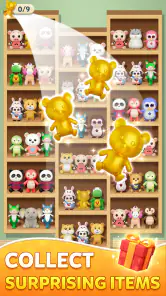
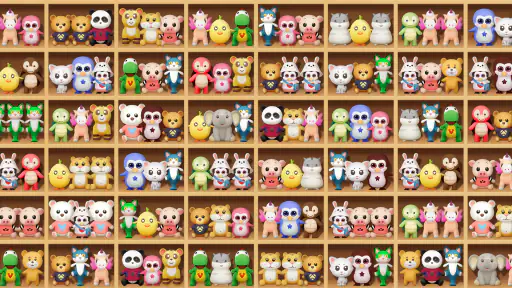
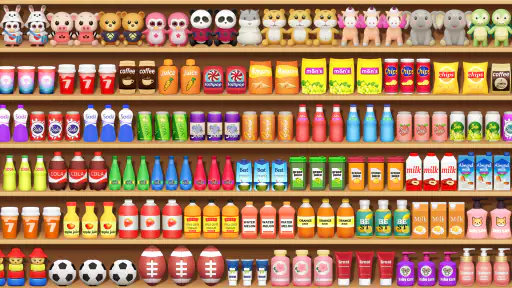
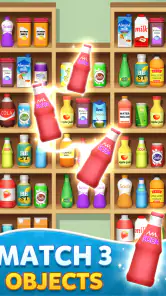
 Analysis by Frivlyz
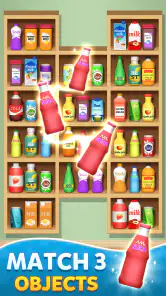
I find it easiest to judge a sorting game by what happens when I pick it up for a few minutes in the middle of an ordinary day. Sort Match: 3D Goods Master has an immediately understandable premise: look over a group of three-dimensional goods and sort matching items. That makes it approachable when I want a small puzzle rather than a long game session, though the simple starting idea can become more demanding as a level fills with objects. Its appeal is not just tidying things on screen; it asks me to notice similarities, keep track of what I have already moved, and choose a sensible order for clearing the clutter.
Readable at a glance, with a learning curve underneath
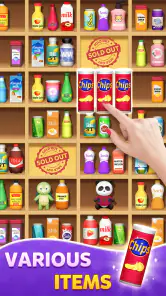
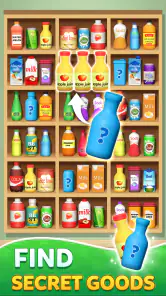
The first impression is bright and busy in a cheerful way. The goods are presented as 3D objects, so I can inspect their shapes and colors instead of relying on a word label. That visual approach gives the sorting task a pleasant, hands-on quality, but it also means the screen can ask my eyes to do more work than a flat list puzzle would. When several objects crowd together, a quick glance may not be enough; I have to pause, compare details, and make sure I am selecting the item I intend.
The interface feels straightforward to me, and the basic action is easy to grasp without a lengthy explanation. That is helpful for someone who wants to start playing right away, including a casual player who does not regularly play puzzle games. At the same time, understanding the gesture is not the same as finding every round effortless. The challenge comes from the arrangement and recognition of the goods, so I would expect the game to suit people who enjoy looking closely and making small decisions rather than players who want an entirely automatic, no-attention activity.
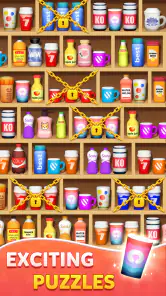
There is a useful distinction between a game that is easy to enter and one that stays easy. The opening levels offer a gentle way to understand the sorting rhythm, while later play can ask for more care. I like that kind of gradual demand in a casual game, because it gives a familiar action room to remain interesting. If you prefer a fixed, unchanging pace, however, the growing challenge may be less relaxing than the colorful presentation suggests.
Touch, sound, and different ways of playing
Moving the objects gives the puzzle its physical feel. I find dragging and dropping more engaging than tapping through a multiple-choice question, because each choice has a visible result on the play area. The sound effects add feedback when a match is made, which can make a successful move feel clearer and more satisfying. They are part of the game’s sensory character rather than a requirement for understanding the basic sorting idea: the visual change after a move still matters.
That interaction is also where individual comfort can vary. A player who enjoys direct touch control may find the motion intuitive, while someone who has difficulty with precise dragging, tires easily, or prefers to make choices without manipulating small objects may find it less comfortable. I would approach a difficult level at a relaxed pace and avoid treating every move as a race. For a player who is sensitive to bright color or sound, the lively presentation could be more stimulating than a muted, minimalist puzzle. These are practical differences in fit, not claims about formal accessibility features.
Where it fits into a real day
I can see myself opening it while waiting for food to arrive, taking a short break between tasks, or unwinding when I want something more active than scrolling but less demanding than a long strategy game. The clear sorting goal makes it easy to return to the central task after a distraction. Still, I would choose a quieter puzzle if I needed a low-stimulation option, and I would pick a word or number game if I wanted to practise those particular skills instead of visual matching.
Gaming Stories You May Enjoy

Dancing Road Turns Short Breaks Into a Test of Rhythm and Timing

Super Stylist Makes Every Outfit a Test of Taste and Patience

Dominoes on Your Terms: Who Should Play and Who Should Pass

Pokémon GO Makes the Familiar World Feel New

Chess.com Turns Rematches Into Rivalries, but Community Has Its Costs

Archery Battle 3D Review: Sharp Aiming, Unclear Feedback
Compared with familiar match-three games, this one puts the emphasis on recognizing and organizing goods in a 3D space rather than swapping neighboring gems on a board. Compared with a traditional jigsaw puzzle, it asks for quicker classification and object handling instead of patiently assembling a fixed picture. That difference is its strongest reason to try it: the sorting action feels concrete and immediate. It is less suitable if what you want is a deep story, a strategic campaign, or an open-ended creative sandbox.
One small way I would make the experience more comfortable is to scan the visible objects before committing to a move, especially when the arrangement feels crowded. That brief pause can reduce accidental selections and makes the puzzle feel more deliberate. I would also treat a short session as a natural stopping point rather than assuming every level needs to be played back-to-back. The game is best enjoyed as a compact attention exercise, not as a substitute for a calmer activity when my eyes or hands need a rest.
Getting Started with Sort Match: 3D Goods Master
First off, downloading and installing was a breeze. I fired it up, and I was greeted with a vibrant and colorful interface - think of it as a visual treat! The game revolves around sorting various 3D goods into their respective categories. Sounds simple, right? Well, hold onto your hats because it gets delightfully challenging as you progress.
Gameplay That Hooks You In
Now, the core of Sort Match: 3D Goods Master is all about strategy. You start with basic items, and as you level up, the game throws more complex objects your way. It’s like Tetris met a puzzle game, and they had a beautiful, addictive baby. The tactile satisfaction of dragging and dropping items into place is oddly satisfying. And let me tell you, the sound effects when you get it right are music to the ears!
The developers have done a fantastic job keeping the game challenging yet rewarding. Each level introduces a new twist, making sure you’re never bored. Remember those infuriatingly addictive games that make you say, “just one more level”? Yeah, this is definitely one of those.
Visuals and User Interface
Visually, the game is a feast. The graphics are crisp, and the 3D elements pop beautifully. The colors are vibrant, which keeps the energy up and your eyes peeled. The user interface is intuitive and user-friendly, making navigation a breeze even for someone who’s not tech-savvy.
One thing I really appreciated is the lack of intrusive ads. Sure, they pop up now and then, but they're not overbearing. Plus, there are options for in-app purchases, but you can still enjoy a full experience without spending a dime, which is always a win in my book!
Final Thoughts
All in all, Sort Match: 3D Goods Master is a delightful little gem. It's perfect for those short breaks or when you need to unwind after a hectic day. The game’s ability to challenge your brain while still being incredibly fun is a testament to its design. So, if you’re looking for a game that’s both relaxing and engaging, I’d say give this one a shot. You might just find yourself hooked!
Who will get the most from it
This is a good fit for people who like spotting patterns in everyday-looking objects and prefer a puzzle with a clear next action. I would especially recommend it to casual players who want something they can understand quickly, then approach with more care as the object layouts become trickier. It can also work as a low-commitment game to share around the household: the rules are easy to explain, and a new player can judge the basic appeal without learning a set of complicated controls first.
I would skip it if the main reason you play games is to follow a plot, build a long-term strategy, or compete against other people. The sorting loop is the point, so someone who tires of repeated object-matching may find the novelty wears thin. Likewise, if visual scanning or repeated touch gestures are uncomfortable for you, a turn-based word puzzle or a game with less direct manipulation may be a better everyday choice. A game can be simple to understand and still not suit every hand, eye, or mood.
A practical way to approach sessions
For a realistic use case, imagine opening the game during a short wait, with only enough attention for one small activity. I would begin by checking the arrangement rather than immediately dragging the first familiar object I notice. If a level feels visually dense, I would slow down, identify a likely match, and then reassess the board after the move. This is a small habit, but it helps keep the task deliberate and reduces the frustration of acting before I have properly seen what is there.
That same approach is useful when I return after being interrupted. Instead of trying to remember a whole sequence of planned moves, I can look at the current objects and make the next decision from what is visible. The game’s basic sorting premise supports that kind of restart, which is one reason it works better for brief breaks than a puzzle that depends on holding a long chain of clues in memory. I would still avoid starting a session when I need to remain fully focused on something else; even a casual game asks for attention if I want to play carefully.
What the challenge asks of you
The strategic part is modest but real: the satisfaction comes from noticing what belongs together and acting in a useful order, not from mastering a complicated rulebook. My practical tip is to distinguish between a move that is obvious and one that only looks obvious because an object caught my eye. Taking a moment to compare the goods can matter more than moving quickly. This also makes the game easier to enjoy at your own pace, whether you are playing to pass time or to give your attention a brief, structured task.
There is a trade-off in the 3D presentation. Depth and object detail make the goods feel more tangible than symbols on a flat board, but that visual richness can become extra work when items are close together or share a similar look. Players who enjoy careful visual search may see that as the puzzle’s appeal; players who want clean, minimal screens may prefer a simpler sorting game. I would choose based on whether inspecting the objects feels satisfying to you, not simply because the interface looks colorful at first glance.
Cost, age, and device basics
The game is free to download, and its content rating is Everyone, so it is positioned for a broad audience. There are optional in-app purchases, with individual items ranging from $0.99 to $99.99. I would treat those as a separate spending decision rather than something needed to understand the core appeal. If you are setting it up for a child or sharing a device, it is sensible to check purchase controls on the device before handing it over, as you would with any game that offers paid items.
Jewel Loft is the developer, and the game was released on August 6, 2024. Its current version is 1.3.7, and it requires Android 5.0 or later. The game has a 4.7 average from around 7,200 ratings and has passed one million installs, which suggests that it has found a substantial casual audience. I would read those figures as useful context, not a promise that every player will enjoy the same pace or visual style.
Inclusive verdict
My overall view is that Sort Match: 3D Goods Master is easiest to recommend to someone who likes visual sorting, direct touch interaction, and short puzzles that can become more demanding without asking for a large time commitment. Its colorful 3D goods and clear matching goal give it an identity beyond a plain list of categories, while the need to scan and move objects creates the actual work of play. That combination is appealing when I want a small, focused diversion.
It is not the choice I would make for every situation. If I wanted subdued visuals, minimal hand movement, a narrative, or a puzzle built around words and numbers, I would reach for a different kind of game. But for a player who finds arranging and comparing objects enjoyable, the straightforward entry and gradually livelier challenge make this a reasonable free game to try. I would start with a short session, notice whether the object scanning and dragging feel comfortable, and let that personal response decide whether it earns a regular place on the home screen.
Sort Match:3D Goods Master Pros and Cons
Pros
- Engaging 3D graphics enhance gameplay.
- Variety of levels keeps users entertained.
- Simple mechanics suitable for all ages.
- Offline play supported
- no internet needed.
- Free to download with optional in-app purchases.
Cons
- Ads can be intrusive during gameplay.
- In-app purchases can be costly.
- Some levels may feel repetitive.
- Limited rewards for long-term players.
- Occasional performance lags on older devices.
Frequently Asked Questions
What is Sort Match: 3D Goods Master?
Sort Match: 3D Goods Master is a fun and engaging puzzle game that challenges players to sort and match various 3D objects. The goal is to organize the items by type and category as efficiently as possible to progress through increasingly difficult levels. This game is available on both Android and iOS platforms.
How does the gameplay in Sort Match: 3D Goods Master work?
In Sort Match: 3D Goods Master, players are presented with a jumble of 3D objects that need to be sorted into their correct categories. The game mechanics are intuitive, involving dragging and dropping items into their respective slots. As you advance, the complexity increases, requiring strategic thinking and quick reflexes to succeed.
Are there in-app purchases in Sort Match: 3D Goods Master?
Yes, Sort Match: 3D Goods Master offers in-app purchases. These can enhance the gaming experience by providing additional features, power-ups, and customization options. While the game is free to download and play, some advanced levels or special items may require purchase to access. Always check the in-app purchase details before proceeding.
What are some tips for beginners in Sort Match: 3D Goods Master?
For beginners in Sort Match: 3D Goods Master, it’s essential to start with the easier levels to get a feel for the game mechanics. Pay attention to the tutorial sections as they provide valuable tips on how to sort items efficiently. Practice regularly to improve your sorting speed and accuracy, and take advantage of power-ups to tackle more challenging levels.
Is Sort Match: 3D Goods Master suitable for all age groups?
Sort Match: 3D Goods Master is designed to be family-friendly and suitable for players of all age groups. Its simple yet challenging gameplay can be enjoyed by both kids and adults alike. However, parents should be aware of the in-app purchase options and may want to set restrictions if younger children are playing.


