

Solitaire Real Money-Win Money
- Reviews
- 4.7
- Version
- 2.2
- Installs
- 1,000,000+

Screenshots
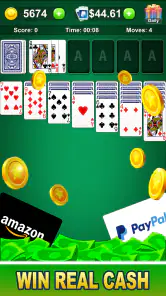
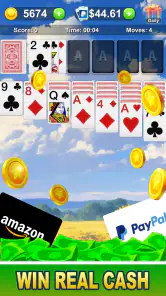
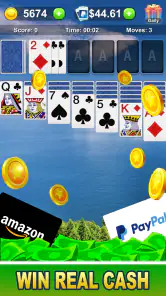
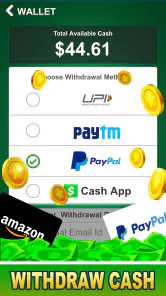



 Analysis by Frivlyz
Solitaire Real Money-Win Money is a free card game from ASDGame that puts a familiar patience-style format behind a more competitive, prize-focused presentation. I approached it expecting a quick way to play classic solitaire during spare moments, but the cash-prize angle changes how I judge the experience. The cards still need to be easy to read and the controls still need to feel dependable, yet fairness, pressure, and the way progress is presented become just as important as the layout.
My overall impression is mixed in a useful way. The game is easy to understand if you already know solitaire, and its large audience suggests that many players find the basic idea appealing. At the same time, anyone considering it should treat the prize language carefully. A free download is not the same thing as a guaranteed way to earn money, and I would not install it with the expectation of reliable income. I see it more as a solitaire game with a competitive cash theme than as a financial opportunity.
How the solitaire experience feels in everyday play
The strongest part of this game is its immediate familiarity. Solitaire does not ask me to learn a complicated rule set before I can start. I can pick it up while waiting for an appointment, during a short break, or when I want something quieter than a fast action game. That makes the title approachable even for someone who has never played a cash-oriented card game before.
In a normal solitaire session, my attention goes to the same practical questions it would in any version of the classic format: which card should move first, whether I should expose a hidden card, and how much of the available layout I should preserve for later. That simplicity is valuable on a phone because it supports short sessions. I do not need a long tutorial or a large amount of free time to understand what I am doing.
Still, the prize framing affects the mood. A traditional offline solitaire app feels almost disposable: I can restart after a poor decision and lose nothing except a little time. Here, the idea of competing for cash can make each choice feel more consequential. That may be motivating for some players, but it can also turn a relaxing card puzzle into a source of pressure.
I recommend starting with a few sessions focused only on the controls and the rhythm of play. Before thinking about prizes, check whether cards can be selected and moved comfortably on your screen, whether the layout remains readable, and whether the pace suits you. This is a practical test because the familiar rules will not compensate for awkward interaction or a presentation that makes small cards difficult to distinguish.
The game is listed as a card title, and that description fits its central appeal: it is not trying to replace solitaire with a completely new genre. Its identity comes from taking a well-known single-player format and placing it in a more competitive context. If you want elaborate deck-building, a story campaign, or deep multiplayer strategy, this is probably not the right destination.
Gaming Stories You May Enjoy

Dancing Road Turns Short Breaks Into a Test of Rhythm and Timing

Super Stylist Makes Every Outfit a Test of Taste and Patience

Dominoes on Your Terms: Who Should Play and Who Should Pass

Pokémon GO Makes the Familiar World Feel New

Chess.com Turns Rematches Into Rivalries, but Community Has Its Costs

Archery Battle 3D Review: Sharp Aiming, Unclear Feedback
What the free download really tells me
The download itself costs nothing, which makes trying the game straightforward. I can see why that lowers the barrier for curious solitaire players. However, I separate the cost of installing a game from the financial conditions surrounding prize play. “Free” answers one question about access; it does not answer every question about withdrawals, eligibility, entry requirements, or the practical route from a completed game to a cash outcome.
That distinction matters especially here because the store summary emphasizes winning cash prizes. I would never treat that wording as a promise that every player will receive money. Before committing serious time, I would read every in-game explanation connected to contests, rewards, or transactions and make sure I understand the rules in plain language. If any condition feels unclear, I would stay with no-cost play or skip the app.
The mature age label is another reason I would not recommend handing this game to a child. It is marked for users aged 17 and over, so the prize-oriented presentation should be approached as an adult decision rather than casual entertainment for younger players. Parents should also avoid assuming that a simple card layout makes the whole experience suitable for children.
One useful habit is to set a time boundary before playing. I might allow myself a few short rounds while commuting or relaxing, but I would stop when I notice that I am chasing a previous result instead of enjoying the game. That small rule protects the original strength of solitaire—calm, repeatable play—from being overwhelmed by the desire to recover a disappointing outcome.
Progress can change the way patience feels
Solitaire naturally encourages repetition. When a deal goes badly, I often want to try again because the next arrangement may be more favorable. In a standard free version, that loop is harmless for most people. In a cash-focused version, repetition can become more emotionally charged, particularly if the game presents progress or prize opportunities in a way that makes me feel close to a better result.
I found it helpful to judge a session by the quality of my decisions rather than by whether I reached a reward. That sounds simple, but it is a meaningful change in mindset. I can ask whether I planned several moves ahead, avoided wasting a useful card, and recognized when a restart was sensible. Those questions keep the game about solitaire skill instead of turning every round into a test of personal luck or persistence.
A realistic everyday scenario would be a player opening the app for five minutes during a lunch break, completing a round, and then noticing an invitation to continue toward a prize. The sensible choice is not automatically to keep going. I would first decide whether I actually have time, whether I understand the conditions, and whether continuing is entertainment I want rather than pressure I feel.
This is also where the game may not suit everyone. Players who use solitaire to unwind may prefer a version with no prize language at all. A plain offline alternative can be better when the goal is quiet concentration, unlimited casual restarts, or play without decisions involving money. By contrast, someone who enjoys a more goal-driven format may appreciate the extra tension here, provided they keep strict limits.
My practical tip is to separate practice from competition whenever the game allows that distinction. Learn the feel of the layout first, then decide whether the competitive side adds genuine enjoyment. If every round feels like an attempt to justify the previous one, the prize structure is taking over the experience, and I would step away rather than increase the commitment.
Fairness is more than having familiar rules
A recognizable solitaire layout can make a game feel fair because I understand the rules. But fairness in a prize-oriented card game involves more than knowing where cards can move. I also want clear information about how results are judged, what counts as a valid win, whether timing matters, and how any prize process works. Those details determine whether I can make informed choices rather than simply react to attractive wording.
I would pay attention to whether the game explains the relationship between ordinary play and prize opportunities before spending time or money. I would also look for a clear distinction between a skill-based result and an outcome influenced by the deal. Solitaire always contains an element of arrangement and opportunity, so a competitive format should make its expectations especially easy to understand.
My fairness test is straightforward: can I explain the rules to another player without using vague phrases? If I cannot tell a friend exactly how a round is evaluated or what a reward requires, I would not treat the experience as transparent enough for financial participation. This is not a criticism of the card rules themselves; it is a standard I apply because the game presents cash prizes as part of its appeal.
I also avoid comparing a cash-themed solitaire game directly with a normal leaderboard or achievement system. A leaderboard can provide motivation without implying that a player may receive money. Prize language raises the standard for clarity and restraint. The more a game encourages me to think about financial outcomes, the more carefully I expect to review its conditions.
For players who want competition but no monetary concern, a conventional solitaire challenge mode or a score-based alternative may be a better fit. It can still provide goals and replay value while keeping the stakes limited to personal improvement. Solitaire Real Money-Win Money is more suitable for someone who specifically enjoys the added possibility of cash prizes and is willing to examine the rules before engaging with that side.
What I would check before going further
The game was released on January 30, 2023, and its current version is 2.2. It supports devices running Android 5.1 or later, which covers many older phones. That broad compatibility is convenient, but it does not guarantee that every device will offer the same comfort. On a smaller or older handset, I would be particularly alert to card readability, touch accuracy, and general responsiveness before making the game part of my routine.
The title has reached over a million installs, with a 4.7 average from around eighty-one thousand ratings and roughly ten thousand written reviews. Those figures tell me that the concept has attracted substantial interest and that many users have rated it positively. They do not, by themselves, settle the questions I care about most: how transparent the prize process is, how smooth withdrawals are, or how the experience feels for a particular player.
I would read recent player comments with a narrow purpose rather than treating the rating as a complete verdict. I would look for recurring comments about card movement, account handling, contest explanations, and whether players felt the experience matched their expectations. A high average can encourage a trial, but it should not replace my own review of the rules when money is part of the pitch.
I would also decide in advance whether I am willing to make any purchase connected with play. The game is free to install, but I would not assume that every possible in-game transaction, entry condition, or reward path is cost-free. Before confirming anything, I would check the exact amount, what it unlocks, whether it can be reversed, and whether the action is necessary at all. If those answers are not immediately clear, I would cancel.
This is one of the most important differences between trying the app and committing to it. Playing a few free rounds can tell me whether I like the solitaire mechanics. It cannot automatically tell me whether the financial side is worthwhile. I keep those decisions separate so that enjoyment of the cards does not push me into a purchase I had not planned.
Who will enjoy it, and who should skip it
I can recommend trying it to experienced solitaire players who want a familiar card puzzle with a more competitive atmosphere. It may also suit adults who enjoy short, repeatable sessions and are comfortable treating prize play as optional entertainment rather than expected income. The simple rules make the starting point accessible, while the cash theme gives motivated players an additional reason to focus.
I would be more cautious with anyone who dislikes uncertainty around spending or who tends to continue playing after a loss. The game is a poor match for someone looking for guaranteed earnings, a completely relaxed offline pastime, or a child-friendly card app. It is also not my first choice for players who want a rich social system, collectible cards, or a long-form progression story.
For a person who simply wants to pass time with classic solitaire, I would compare this directly with a standard free solitaire app before deciding. The alternative may be less exciting, but it can be a cleaner fit if I want no prize pressure. For a person who finds ordinary solitaire too passive, this title has a clearer competitive hook. The better option depends less on the rules than on how I want the session to feel.
One non-obvious trade-off is that the familiar format can make the prize layer feel more trustworthy than it deserves to feel. Because I already understand solitaire, I may lower my guard and focus only on making good moves. I think the opposite approach is wiser: trust the card rules because they are familiar, but independently evaluate every money-related instruction.
My trust verdict after weighing the trade-offs
ASDGame’s Solitaire Real Money-Win Money succeeds at making a well-known card game easy to approach while adding a cash-prize theme that can make routine rounds feel more purposeful. I like the low barrier to trying it, the suitability of solitaire for short sessions, and the fact that the central game does not require a long learning curve. Its strong rating and large install base make it reasonable to investigate rather than dismiss immediately.
My trust is conditional, though. I would recommend it as a free trial of a competitive solitaire experience, not as a dependable money-making method. I would keep play within a personal time limit, avoid unplanned spending, and read the exact prize and transaction rules before taking any financial step. Those precautions are not unnecessary pessimism; they are the sensible response to a game whose main attraction includes cash.
If you want a familiar card game, enjoy replaying deals, and can keep prizes in perspective, this may be worth testing on a compatible phone. Start with no-cost play, learn how the layout and controls feel, and decide whether the pressure improves the experience or spoils it. If you mainly want peaceful solitaire with no financial questions attached, I would choose a conventional alternative instead.
My final recommendation is therefore measured: try the cards first, treat the cash angle as optional, and never spend simply because a round makes you feel close to a reward. That approach lets the game’s accessible solitaire foundation stand on its own while protecting you from confusing a free installation with a guaranteed financial result.
Solitaire Real Money-Win Money Pros and Cons
Pros
- Simple solitaire gameplay that is easy to learn and play casually.
- Quick rounds make it convenient for short breaks or commutes.
- Competitive leaderboards can add motivation for experienced players.
- Multiple challenges help keep the classic format from feeling repetitive.
- Clear card layouts make the game comfortable on most phone screens.
Cons
- Cash tournaments may not be available in every country or region.
- Withdrawals can require identity verification and meeting minimum limits.
- Results may depend partly on luck
- even when strategic play is strong.
- Ads or promotional offers may interrupt the free gameplay experience.
- Real-money play can encourage overspending without careful personal limits.
Frequently Asked Questions
What is Solitaire Real Money-Win Money?
Solitaire Real Money-Win Money is a mobile solitaire game built around classic card gameplay and reward-based competitions. Players generally complete timed or skill-based solitaire rounds, earn points, and may compete for prizes depending on the available tournaments and regional rules. The exact features, rewards, and eligibility requirements can vary by location, so it is important to read the in-app terms before playing.
Can I really win real money with Solitaire Real Money-Win Money?
The app may offer opportunities to win cash prizes through eligible contests, but winning is not guaranteed. Results usually depend on your solitaire performance, the competition format, entry requirements, and the number of participating players. Some features may also use virtual currency rather than withdrawable cash. Always check the current prize rules, fees, minimum withdrawal amount, and availability in your country before depositing or entering paid tournaments.
Is Solitaire Real Money-Win Money free to download and play?
The application may be free to download, but that does not necessarily mean every feature is free. Depending on the version and your location, you might find advertisements, optional purchases, virtual coins, or paid competitions. Beginners should look for free practice modes before spending money. Review the payment screen carefully, because entry fees and in-app purchases can differ from ordinary gameplay and may not always be refundable.
Is Solitaire Real Money-Win Money safe and legitimate?
Safety depends on the official developer, the app store listing, its privacy policy, and the rules governing cash competitions. Download the game only through a trusted Google Play or Apple App Store listing, and avoid unofficial APK files or websites promising guaranteed winnings. Before providing payment or identity information, verify the developer details, withdrawal conditions, customer support options, and whether real-money gaming is legally available where you live.
How do withdrawals and eligibility work in Solitaire Real Money-Win Money?
Cash withdrawals commonly require account verification, meeting a minimum balance, and using a supported payment method. Some regions may require players to meet age and location requirements, while others may not support real-money contests at all. Processing times, service charges, tax responsibilities, and identity checks can apply. Since these conditions may change, consult the app’s current withdrawal and eligibility pages before committing funds or expecting a payout.


