

Solitaire Card Game
- Reviews
- 4.8
- Version
- 2.4.10
- Installs
- 5,000,000+

Screenshots

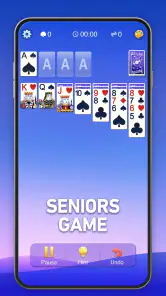


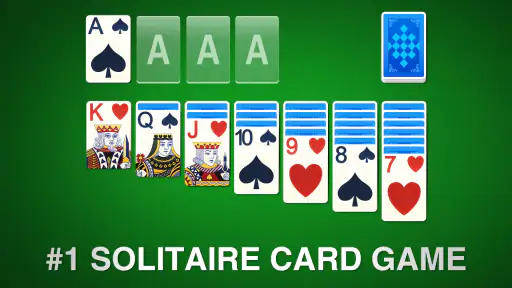
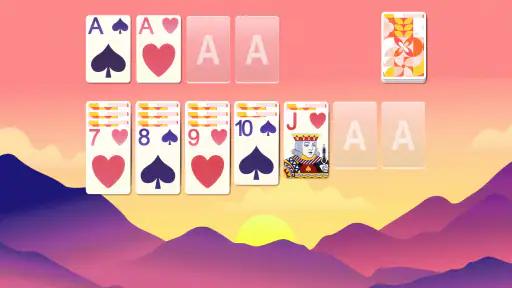
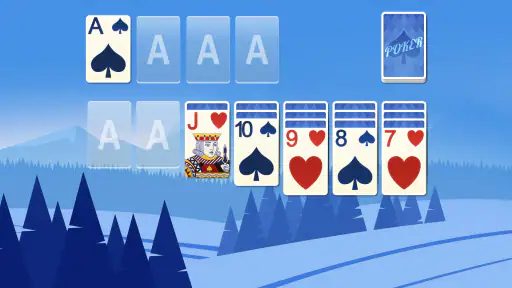
 Analysis by Frivlyz
I usually judge a solitaire game by what happens after the first few relaxed sessions. Almost any familiar card game can feel pleasant on day one, but the real question is whether it still deserves a place on your phone when the novelty has gone. Solitaire Card Game from Degoo ltd makes a good first impression because it focuses on a straightforward card-playing routine rather than surrounding the experience with unnecessary complexity. It is a free card game for Android, suitable for Everyone, and its central appeal is easy to understand: open it, choose a moment, and play a quiet round.
My experience with it is best described as calm and practical rather than exciting. This is the kind of game I would keep available for a short break, a waiting room, or an evening when I want something to occupy my hands without demanding social interaction. The offline focus is particularly useful, since it makes the game feel less dependent on a connection. That matters when the purpose is to fill a few spare minutes instead of starting a larger gaming session.
Why the first week feels so easy
The first-week appeal comes from the familiar nature of solitaire itself. I do not need to learn a fictional world, memorize a complicated control scheme, or build a collection before the game becomes enjoyable. The card format lets me begin almost immediately, which is exactly what I want from a casual title designed for short sessions. The store presents it as a Solitaire Card Game, and that simple identity is also its strongest promise: it does not ask me to become invested before giving me something to do.
That simplicity can be especially comfortable for older players or anyone who prefers traditional card games. The Everyone age rating also makes the game approachable for a broad household audience. I can imagine recommending it to a relative who wants a familiar brain exercise without the pressure of multiplayer competition. It also works for people who are returning to mobile games after a long break and would rather start with rules they already recognize.
During the first few days, the game benefits from a useful rhythm. A round can serve as a small reset between tasks, while several rounds together can provide a more deliberate mental break. I found that the best way to use it is not to treat every deal as a challenge that must be conquered. Instead, I use one session to slow down, look for patterns, and accept that a quiet game does not need a dramatic ending to be worthwhile.
The offline orientation strengthens that first impression. When I am travelling, waiting for an appointment, or dealing with an unreliable signal, an offline card game is more dependable than a title that expects constant access. It also reduces the temptation to turn a short break into a feed-scrolling session. Its most practical strength is that it turns an empty few minutes into a self-contained activity.
There is also a gentle training element in the way solitaire makes me scan the layout, weigh possible moves, and think ahead. I would not describe it as a replacement for a dedicated puzzle program, but it can still encourage attention and planning. That makes it a better fit for someone who wants light mental engagement than for someone looking only for visual spectacle or fast reactions.
Gaming Stories You May Enjoy

Dancing Road Turns Short Breaks Into a Test of Rhythm and Timing

Super Stylist Makes Every Outfit a Test of Taste and Patience

Dominoes on Your Terms: Who Should Play and Who Should Pass

Pokémon GO Makes the Familiar World Feel New

Chess.com Turns Rematches Into Rivalries, but Community Has Its Costs

Archery Battle 3D Review: Sharp Aiming, Unclear Feedback
How I would use it in an ordinary day
A realistic routine would be playing one or two rounds with morning coffee, then closing the game rather than letting it take over the day. Another useful situation is a delayed train or a long queue: the offline format means I can start without searching for a network, and the card-game structure makes it easy to stop when my turn arrives. In the evening, I might use it as a quieter alternative to competitive games, especially when I want stimulation without the emotional ups and downs of winning against another person.
One tip I found helpful is to decide in advance whether a session is for relaxation or concentration. If I am relaxing, I avoid replaying a difficult position repeatedly and simply move on when the round stops being enjoyable. If I want a little more mental exercise, I slow down before each move and consider which exposed card or empty space will give me the most flexibility. This small change makes the same basic game feel different without requiring extra systems.
Where the early appeal starts to narrow
The same simplicity that makes the game welcoming can also make it feel limited. Players looking for a large variety of modes, a strong progression system, or a social layer may find the experience too restrained. Solitaire is naturally repetitive, and no amount of convenience changes that basic truth. The first week can feel satisfying because the routine is fresh; after that, the game needs to fit naturally into a player’s habits to remain useful.
I would also be careful about expecting a deep strategy experience. The game encourages planning, but it remains a casual card title rather than a specialist training tool. If my goal were to improve at a particular competitive card game, track detailed performance, or test myself against human opponents, I would look elsewhere. This app is better understood as a dependable pastime than as a serious study environment.
What remains useful after the novelty fades
After the initial curiosity passes, the game’s value depends on whether I genuinely enjoy the repeated ritual. For me, the strongest long-term use is as a low-friction fallback. I can open it when I want a break but do not want to commit to a longer game. That role is modest, yet it is valuable because many apps are too demanding for a short pause and too distracting for a calm evening.
The free price also helps it remain easy to keep installed. I do not need to justify a purchase before finding out whether solitaire belongs in my routine. With an average rating of 4.8 from around 36 thousand ratings, it has clearly connected with a large group of players. Its reach is also substantial, with over 5 million installs, although popularity alone does not guarantee that it will suit every playing style.
Month to month, I see three kinds of recurring value. First, it is a reliable offline distraction. Second, it offers a familiar way to practise patience and visual planning. Third, it can become part of a personal wind-down routine. None of these benefits is flashy, but they are exactly the reasons a simple utility game can outlast a more ambitious title that I only open once.
The game is particularly well suited to people who enjoy repetition with small variations in decision-making. Even when the rules remain familiar, the order of the cards changes the way I approach the layout. I may play cautiously in one round and take a more speculative route in another. That modest uncertainty is enough to keep the activity from becoming completely automatic, provided I am already comfortable with solitaire.
How it compares with other ways to play solitaire
Compared with a physical deck, the app is more convenient and less vulnerable to a cramped table, misplaced cards, or a lack of space. A physical deck still feels better when I want a tactile activity, and it can be more satisfying for someone who enjoys handling cards. Solitaire Card Game wins when I want instant setup, portability, and a game that closes as easily as it opens.
Compared with a browser version, an installed game is a better fit for repeated offline use. I do not have to search for a page each time, and the experience feels more like a dedicated break than another tab competing for attention. A browser alternative may be preferable if I only play once in a while or do not want another app on my device.
Compared with larger solitaire collections, this title appeals to me when I want a focused experience rather than a menu of distractions. A collection with many variants may offer more variety and delay fatigue for experienced players. The trade-off is that extra modes can make a simple session feel less immediate. I would choose this game for a clean, familiar routine and a broader collection for exploration.
Compared with competitive card games, it is gentler and more private. There are no opponents waiting for my move, no pressure to maintain a win streak, and no need to match someone else’s pace. That is a genuine advantage for relaxation, but it also means there is less external motivation to return. Players who thrive on rankings, live matches, or changing challenges may lose interest quickly.
Keeping the habit useful rather than automatic
The best maintenance strategy is surprisingly simple: give the game a defined role. I would not use it as an endless background activity while doing other things, because that can turn a relaxing pastime into unconscious repetition. Instead, I would reserve it for a short break, a travel moment, or a screen-time transition. Setting that boundary makes each session feel intentional and helps prevent the game from becoming wallpaper on the phone.
Another practical approach is to vary the purpose of each session. One day I might focus on playing slowly and observing the layout; another day I might use a single round as a timer for a break. If the game becomes part of a bedtime routine, I would keep the session short and stop when it begins to feel like obligation. A casual app earns its place by making life easier, not by demanding daily attendance.
Because the game is free and supports older Android versions beginning with Android 6.0, it can be a sensible option for users with older devices. Its current version is 2.4.10, which gives me a clear installation reference when checking compatibility. Still, I would judge the app on the actual comfort of play on my device: card visibility, touch accuracy, and the ease of undoing or correcting a move matter more to me than a version number by itself.
Where fatigue appears over time
The main source of fatigue is repetition without a personal reason to return. If I already play solitaire every day, a basic presentation may not offer enough freshness to replace a favourite alternative. The lack of a social objective can also make the game feel disposable once I have satisfied the need for a quick distraction. This is not a flaw in the idea of the app so much as a limit of the category.
I can also see the experience becoming less satisfying when I am looking for a stronger sense of achievement. A player who wants campaigns, unlockable goals, detailed statistics, or a steady stream of new challenges may prefer a more feature-heavy solitaire product. Likewise, anyone who wants to compete with friends should choose a multiplayer card game instead. Solitaire Card Game is at its best when I want solitude, not when I want a shared event.
Another trade-off is that convenience can reduce ceremony. Shuffling a physical deck, arranging the cards, and clearing the table are part of the pleasure for some people. The app removes those small rituals, which is excellent for speed but less appealing if the tactile process is the reason I play. I would therefore keep both options in mind: the phone for portability and the physical deck for a more deliberate offline experience.
Who should install it, and who should skip it
I would recommend it to casual players, older users who enjoy familiar card rules, travellers needing an offline pastime, and anyone who wants a low-pressure way to occupy short gaps in the day. It is also a reasonable first choice for someone who does not want to pay before testing whether mobile solitaire fits their routine. The broad age rating and uncomplicated concept make the learning curve approachable.
I would skip it if I need constant novelty, multiplayer competition, a rich achievement system, or a demanding strategic challenge. Experienced solitaire enthusiasts who already know exactly which variants and tools they prefer may find a focused basic game too narrow. I would also avoid installing it merely because the rating is high; the deciding factor should be whether I enjoy repeating a quiet card routine.
For users concerned about storage or attention, the app’s real cost is not financial but behavioural. A free game can still become clutter if I never open it, and a small casual title can still become a distraction if I use it whenever I should be concentrating. I would install it, try it during a few specific situations, and keep it only if those situations recur naturally. That test is more useful than judging it from a single entertaining session.
My long-term verdict
Solitaire Card Game earns lasting space when I treat it as a dependable pocket break, not as an endlessly expanding game. Its appeal is honest: familiar card play, an offline-friendly routine, a free entry point, and enough light planning to keep a short session from feeling empty. Degoo ltd has chosen a format that can be useful precisely because it does not demand much from me.
Its limitations are equally clear. The repeated structure will not satisfy players who need social competition or constant new content, and the experience may feel ordinary once the first-week freshness disappears. I would not install it expecting a deep progression journey. I would install it because I want a calm, accessible card game that can be opened and closed around the rest of my day.
For me, that is enough to recommend it, with one condition: let the habit stay small. Use it during a commute, a waiting period, or a planned mental pause, and it remains a useful companion. Expect it to provide endless variety, and the fatigue will arrive quickly. With around 2.9 thousand written reviews alongside its broad player base, it has the kind of established appeal that makes trying it reasonable, but the final decision still comes down to whether its quiet repetition matches the way you like to spend spare minutes.
In short, I would keep it installed on a device used for travel, relaxation, or simple offline entertainment. I would not make it my only card game, and I would not recommend it to someone seeking competition or elaborate goals. For the right player, though, its restraint is the point: it gives me a familiar activity, asks for very little maintenance, and remains available whenever a few unclaimed minutes appear.
Solitaire Card Game Pros and Cons
Pros
- Works offline
- making it convenient for travel or areas with limited connectivity.
- Simple controls are easy to learn for both casual and experienced players.
- Multiple game modes provide variety beyond the classic Solitaire format.
- Hints and undo options help beginners recover from difficult moves.
- Short rounds make it suitable for quick breaks or casual play.
Cons
- Frequent ads may interrupt gameplay
- especially between completed rounds.
- Some features or card designs may require in-app purchases to unlock.
- Difficulty can feel inconsistent across randomly generated deals.
- Limited social features may disappoint players seeking multiplayer competition.
- Battery use can increase during long sessions with animations enabled.
Frequently Asked Questions
What is Solitaire Card Game, and how is it played?
Solitaire Card Game is a single-player card game based on the classic Klondike format, where the goal is to arrange cards into foundation piles in ascending order by suit, starting with the ace and ending with the king. Cards are moved between columns in descending order with alternating colors, while empty spaces can usually be filled only with kings. The app is designed for quick, relaxing sessions and is suitable for both beginners and experienced players.
Does Solitaire Card Game work without an internet connection?
In most cases, Solitaire Card Game can be played offline after installation, which makes it convenient for travel, commuting, or areas with limited connectivity. Core gameplay generally does not require mobile data or Wi-Fi. However, certain features may need an internet connection, including advertisements, cloud synchronization, online statistics, daily challenges, leaderboards, or updates. Availability can vary depending on the specific version and device platform.
Is Solitaire Card Game free to download and play?
Solitaire Card Game is commonly available as a free download, allowing users to play standard games without an upfront purchase. The free version may be supported by advertisements, and some editions can include optional in-app purchases for removing ads, unlocking card designs, accessing extra game modes, or receiving additional hints. Before downloading, it is worth checking the store listing for the current pricing, subscriptions, and purchase requirements.
What features should I expect from Solitaire Card Game?
The app typically includes familiar Solitaire features such as draw-one or draw-three modes, undo and redo controls, hints, automatic card movement, customizable backgrounds, different card faces, and personal statistics. Some versions also offer daily challenges, timed games, scoring systems, achievements, and multiple layouts. The exact feature set depends on the developer, but the best versions combine simple controls with clear animations and responsive performance.
Is Solitaire Card Game suitable for beginners and older players?
Yes, Solitaire Card Game is generally accessible to a wide range of players because its rules are easy to learn and games can be completed at a comfortable pace. Helpful features such as hints, undo buttons, larger cards, readable menus, and automatic moves can make the experience more approachable. Beginners may need a few rounds to understand card organization, while experienced players can focus on improving their time, score, and strategy.


