

Solitaire - 2026
- Reviews
- 4.7
- Version
- 1.958
- Installs
- 1,000,000+
Screenshots
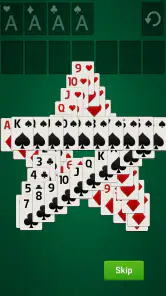
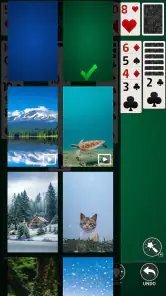
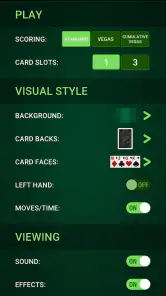
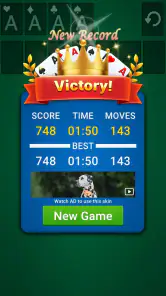
 Analysis by Frivlyz
I opened Solitaire expecting the familiar card game I could play for a few quiet minutes, and that is exactly where this title makes its strongest impression. It is a free card game from Standard Puzzle, built around classic Klondike patience rather than a complicated collection of modes or a large social system. The appeal is direct: deal a hand, make the first useful move, watch the layout change, and decide whether the next move is worth the risk.
That simplicity is not a weakness by itself. For me, it makes the game easy to understand when I want something calm between tasks. I do not need to learn a new ruleset or remember a long tutorial. At the same time, the familiar format means the quality of the experience depends heavily on how comfortable the cards are to read, how quickly I can act, and how satisfying the board feels after each decision. This review focuses on that complete loop rather than treating solitaire as just a way to fill empty time.
How a small decision turns into another round
I use the next round as a chance to test one specific adjustment, rather than replaying the same habits on a fresh layout. That might mean delaying a foundation move or saving an empty column until a useful king appears. This section looks at how small choices shape the pace of a hand, and why a quick reset can make those choices easier to notice.
The first action is almost effortless
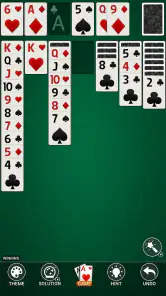
The best part of this game is how quickly it gets out of the way. I can begin with the standard Klondike objective in mind: uncover hidden cards, build descending alternating-color sequences, and move cards toward the foundation piles in order. That familiar structure matters because it lets the first action happen naturally. I look for an exposed card that can be moved, a face-down card that can be revealed, or a useful opening from the stock.
For a new player, this is a gentle entry point. The rules are recognizable, and the age rating is Everyone, so it fits a broad audience. Someone who has played patience with physical cards can understand the basic plan immediately. Someone new to the format can learn by watching how a move opens a column or creates room for another sequence. It is not a game that demands a long commitment before the first meaningful choice.
I also like that the opening decision is not completely automatic. Even when several legal moves are visible, they are not equally valuable. Moving a card simply because it can move may block a better route later. Revealing a hidden card is often more important than building a neat-looking sequence. That gives the first minute a little more thought than the relaxed presentation might suggest.
My practical advice is to treat empty spaces as valuable rather than filling them immediately. A vacant tableau column can accept only a king-led sequence, so creating one too early may leave it useless. When I pause before making a tidy move, I have a better chance of exposing hidden cards and preserving flexibility. This is a small habit, but it makes the classic layout feel more strategic.
Gaming Stories You May Enjoy

Dancing Road Turns Short Breaks Into a Test of Rhythm and Timing

Super Stylist Makes Every Outfit a Test of Taste and Patience

Dominoes on Your Terms: Who Should Play and Who Should Pass

Pokémon GO Makes the Familiar World Feel New

Chess.com Turns Rematches Into Rivalries, but Community Has Its Costs

Archery Battle 3D Review: Sharp Aiming, Unclear Feedback
Every move supplies a clear piece of feedback
The central rhythm is easy to feel: I tap or move a card, the layout changes, and the next possibility becomes visible. A successful move gives immediate visual confirmation because a covered card may be exposed, a column may become longer, or a foundation pile may advance. That feedback is the reason the game remains engaging even though the rules have been familiar for generations.
The strongest moments are not necessarily the final foundation moves. Often, the satisfying action is uncovering a card that changes the whole board. A hidden queen can make a column useful; a newly exposed low card can start a foundation; an available king can give an empty space a purpose. These small changes create a chain of decisions, and I find myself continuing because the board has just offered a new question.
There is also a useful tension between immediate progress and future access. Sending a card to the foundation can feel rewarding, but moving cards upward too quickly may remove a card that is still needed to arrange the tableau. I usually check whether a card is helping me uncover the board before I commit it to a foundation pile. That extra glance is one of the most important ways to avoid turning a promising hand into a dead end.
For players who prefer a completely passive experience, this may be more thinking than expected. Solitaire looks quiet, but a good hand asks for attention. I would not call it stressful, yet it is not just random tapping either. The game works best when I want light concentration: enough structure to keep my mind occupied, without the pressure of a timer, opponents, or a complicated campaign.
The reward is progress, not spectacle
The reward structure here comes from arranging disorder into completion. Each foundation card placed in sequence reduces the remaining work, while each revealed tableau card makes the hidden part of the puzzle more transparent. I enjoy that the reward is visible in the state of the board itself. I do not need a dramatic story beat to know that I am closer to finishing.
That makes it a good companion for short everyday gaps. I can imagine playing while waiting for an appointment, during a quiet commute when it is safe to use a phone, or after finishing a task when I want a mental reset without starting a large game. A typical session can begin with the intention of making only a few moves. Then an exposed card creates a useful sequence, the sequence opens another card, and the unfinished pattern gives me a reason to continue.
The game is also suitable for players who enjoy the tactile logic of physical cards but prefer a digital board. There is no need to shuffle, collect cards, or clear a table. The device handles the setup, while I keep the decisions. That convenience is the main advantage over a traditional deck. Compared with more elaborate digital solitaire alternatives, this approach is less distracting and easier to enter, though it may feel less rewarding to anyone looking for many different rule sets or a strong progression system.
One useful way to improve results is to delay foundation moves when they do not reveal anything new. If moving a card upward leaves the tableau unchanged, I first ask whether that card could help uncover a face-down card or build a longer alternating sequence. This is not a universal rule, because foundation progress is still necessary, but it prevents the common mistake of choosing the most obvious move instead of the most useful one.
The reset is part of the appeal
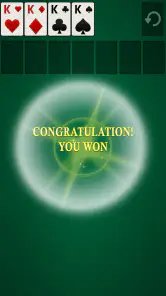
Eventually, a hand reaches one of two natural endings. I either complete the arrangement or reach a position where the remaining cards cannot be developed sensibly. In both cases, the board becomes a prompt for another round. The reset is quick in spirit: the puzzle is finished, the lesson is fresh, and I can try again without carrying a complicated failure state forward.
This is where the game feels different from a longer strategy title. Losing a hand does not require rebuilding a character, repeating a chapter, or waiting for energy. I can examine the choices that narrowed the board, start again, and test a different order. The cost of experimentation is low, which makes the game friendly to casual players who do not want a bad result to dominate their evening.
Still, the reset can feel less meaningful if I am hoping for a large sense of progression. Classic solitaire is mostly about the quality of the current hand and my decisions inside it. It does not automatically provide the kind of narrative milestones or competitive goals that a deeper card game might offer. If your ideal mobile game needs unlockable content, changing rules, or a persistent collection, this is probably too focused.
I also recommend stopping after a frustrating sequence rather than forcing one more hand. Because the next round is so easy to begin, it is tempting to chase a better result immediately. Sometimes that works; sometimes it turns a relaxing activity into repetitive irritation. Taking a short break helps preserve the main benefit of the game, which is its ability to occupy the mind without demanding much from it.
What the current package means for players
Solitaire was released on May 23, 2023, and its current version is 1.958. It requires Android 9 or later, so compatibility is worth checking before installing it on an older device. The game is free, which removes the biggest barrier for someone who simply wants to try a familiar Klondike experience without committing money first.
Its audience is already substantial, with over a million installs, and the average rating is 4.7 from around fourteen thousand ratings. Those figures suggest that the straightforward format is connecting with many players, but they do not change my main advice: choose it for the core card loop, not because you expect a broad collection of unrelated activities.
Standard Puzzle keeps the identity of the product clear. This is a card game centered on solitaire patience, and that focus is useful. I would recommend it to a player who wants an uncomplicated offline-style pastime on a compatible Android phone, a beginner learning Klondike, or an experienced player who values quick access to a familiar puzzle. The Everyone rating also makes it a reasonable choice for households looking for a simple card game rather than an action-heavy title.
I would be more cautious about recommending it to someone who wants multiplayer competition, a highly social experience, or a large set of variants. I would also point players toward a different solitaire app if their priority is an extensive statistics dashboard, tournament structure, or a very specialized visual style. Those expectations are not wrong; they simply ask for more than this focused version appears designed to provide.
Small habits that make the loop better
My first habit is to prioritize information. When I have a choice between moving an already visible sequence and exposing a face-down card, I usually favor the move that gives me new information, provided it does not consume a crucial empty space. More visible cards mean more meaningful decisions, and that tends to keep the board flexible.
My second habit is to scan the stock with a plan instead of treating every available card as an immediate answer. Before taking a card, I check whether it belongs in the tableau, helps a foundation, or merely looks convenient. A move that solves the current moment but blocks the next sequence is often a poor trade. This is especially useful when the board has several incomplete color patterns competing for the same card.
My third habit is to identify kings that can actually improve the layout. An empty column is valuable only when the king-led sequence placed there exposes useful cards or creates room for a meaningful rearrangement. Moving a king just to occupy the space may make the board look organized while reducing future options. Waiting one turn can be the better play.
Finally, I use the reset as feedback rather than as a judgment. If a hand collapses, I think about whether I committed a card too early, failed to expose a column, or used an empty space without a clear purpose. That turns repetition into practice. The next session begins for a reason: the previous layout gave me a small lesson, and the new deal lets me apply it immediately.
The overall verdict on the action-feedback-reward cycle
What keeps me returning is the clean cycle: make a move, receive a visible change, gain a little progress, reach a conclusion, and start again with a new arrangement. The reward is the growing clarity of the board, not unnecessary decoration around it. That makes the experience easy to recommend when I want a calm, familiar game that still gives my attention something to do.
The limitations are equally clear. The classic format cannot satisfy every player, and its narrow focus may feel repetitive if I play for long stretches every day. A poor decision can also make a hand feel stuck, while the low-friction restart may encourage me to repeat the same habits without thinking. The game is at its best in short or moderate sessions, where the puzzle remains refreshing rather than becoming background noise.
For me, the final judgment is positive. Solitaire succeeds because it respects the strength of Klondike: a few cards, a visible problem, and a steady stream of small decisions. The free price makes trying it easy, the familiar rules reduce friction, and the compact loop suits spare moments. I would choose it over a busier alternative when I want a dependable card puzzle, but I would look elsewhere for multiplayer play, extensive variety, or a long-term progression system.
If that sounds like the kind of game you would open while waiting, unwinding, or taking a short break, this is a sensible pick for Android 9 and newer. Start by looking for moves that reveal information, protect your empty columns, and resist the urge to send every available card upward immediately. Once the board closes in, reset without overthinking the loss. The next deal is not just another attempt; it is the part of the design that makes the whole quiet cycle work.
Solitaire - 2026 Pros and Cons
Pros
- Simple rules make it easy for beginners to start playing
- Offline access lets you enjoy games without an internet connection
- Short rounds fit well into quick breaks or daily commutes
- Multiple layouts can provide variety beyond classic Solitaire
- Relaxing gameplay works well for casual
- low-pressure sessions
Cons
- Frequent ads may interrupt play between rounds
- Some features may require in-app purchases or subscriptions
- Gameplay can become repetitive after extended sessions
- Random deals may occasionally feel unwinnable or frustrating
- Battery usage can increase during longer play sessions
Frequently Asked Questions
What is Solitaire - 2026, and how is the game played?
Solitaire - 2026 is a digital version of the classic card game commonly known as Klondike Solitaire. The main objective is to move all cards into the foundation piles, arranging each suit from Ace through King. Cards can be organized in descending order with alternating colors, while empty columns can generally be filled only with a King or a valid sequence beginning with one.
Is Solitaire - 2026 free to download and play?
Solitaire - 2026 can generally be downloaded and played without an upfront purchase, although the exact business model may depend on the Android or iOS version available in your region. Free versions may include advertising, optional in-app purchases, or premium features such as ad removal, additional themes, statistics, or special gameplay options. Check the store listing before downloading.
Does Solitaire - 2026 require an internet connection?
The core solitaire gameplay is usually suitable for offline play, making it convenient for travel, commuting, or areas with limited connectivity. However, an internet connection may still be needed for advertisements, analytics, cloud synchronization, updates, leaderboard features, or purchases. If offline access is important to you, test the game in airplane mode after installation to confirm which features remain available.
What features can players expect in Solitaire - 2026?
Players can typically expect familiar Klondike gameplay, card movement controls designed for touchscreens, undo options, hints, scoring, and the ability to start a new deal. Depending on the edition, Solitaire - 2026 may also include daily challenges, customizable card faces and backgrounds, statistics, multiple difficulty settings, sound controls, and progress tracking. Available features can vary by platform and update.
Is Solitaire - 2026 suitable for beginners and casual players?
Yes, Solitaire - 2026 is generally accessible to beginners because the rules are easy to learn and games can be played at a relaxed pace. Helpful features such as hints, undo, automatic card movement, and clear visual layouts can make the learning process smoother. More experienced players may also enjoy timed rounds, challenge modes, personal statistics, and the strategic decisions required to improve their results.


