

Smash Car: Robot Racing
- Reviews
- 4.2
- Version
- 1.5.0
- Installs
- 10,000,000+

Screenshots
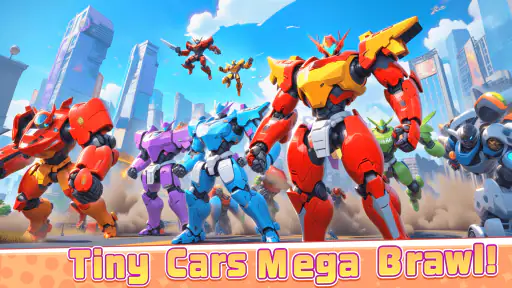
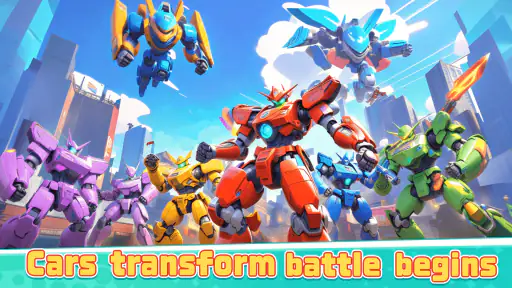
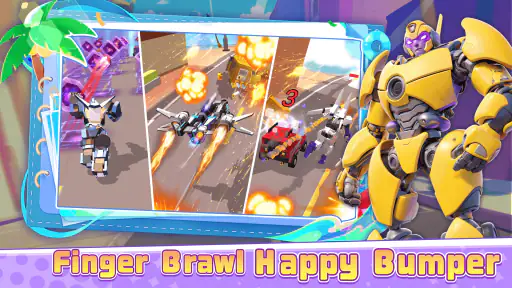
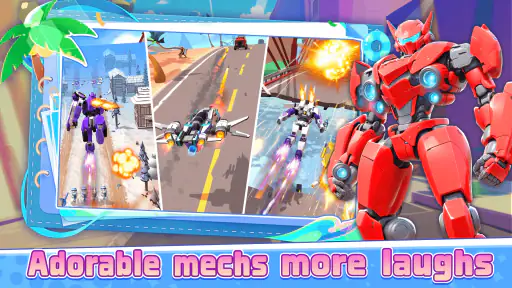
 Analysis by Frivlyz
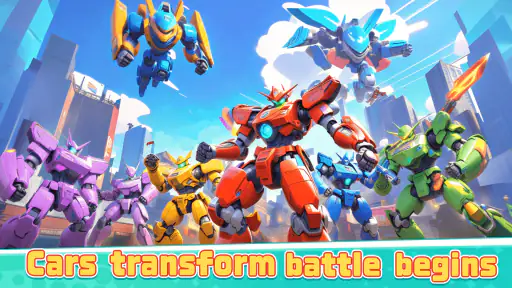
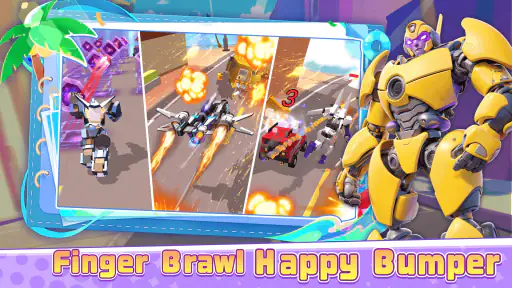
I went into Smash Car: Robot Racing expecting a quick arcade racer, and that is exactly where its appeal is strongest. The basic idea is easy to understand: drive into enemy vehicles, build Energy through aggressive play, and use that charge to trigger an automatic transformation into a more powerful robot form. It is a simple loop, but it creates a satisfying reason to keep moving instead of merely steering around opponents.
FireKula has positioned the game as a free racing title for a broad audience. It carries an Everyone age rating, runs on devices using Android 7.0 or later, and its current release is version 1.5.0. Those details matter because this is the kind of game I can imagine installing on an older spare phone or handing to someone who does not want a complicated simulation. It does not present itself as a serious motorsport experience; it is a playful collision-focused game built around immediate action.
The store shows a 4.2 average from around fourteen thousand ratings, with more than ten million installs. That level of reach makes sense once the first few races begin. You do not need a long explanation before the central mechanic becomes clear, and the transformation gives ordinary driving a small moment of anticipation. My early impression was positive, although I also noticed that the same simplicity that makes the opening enjoyable may limit how long it holds attention.
From the first races to a repeatable routine
Before I settle into a routine with this game, I pay attention to how its simple collision-and-Energy loop feels across a few sessions, not just in the first exciting race. That gives me a clearer sense of whether I’m enjoying the driving decisions or only the transformation’s initial surprise. From there, it’s easier to consider what might keep the game worth reopening.
Why the opening feels so accessible
The first-week appeal comes from the combination of driving and impact. In many racing games, the main goal is to stay clean, follow the ideal line, and avoid contact. Here, contact is part of the entertainment. I found myself thinking less about perfect cornering and more about when to commit to a collision, how to keep pressure on enemies, and whether I could charge Energy quickly enough to reach the transformation at a useful moment.
That difference gives the game a distinct personality. It is closer to an arcade toy than a traditional racing simulator. Someone looking for realistic braking, detailed vehicle tuning, or carefully modeled circuits will probably feel that the experience is too light. Someone who wants a short burst of destructive driving can understand the attraction almost immediately.
The automatic transformation is especially important because it removes one layer of decision-making while adding another. I do not have to stop and open a menu to activate the change, but I still care about the timing of my Energy gain. That makes each encounter feel more active than a simple tap-to-boost system. The useful habit is to treat collisions as a way of building toward a larger payoff rather than as isolated attacks.
Gaming Stories You May Enjoy

Dancing Road Turns Short Breaks Into a Test of Rhythm and Timing

Super Stylist Makes Every Outfit a Test of Taste and Patience

Dominoes on Your Terms: Who Should Play and Who Should Pass

Pokémon GO Makes the Familiar World Feel New

Chess.com Turns Rematches Into Rivalries, but Community Has Its Costs

Archery Battle 3D Review: Sharp Aiming, Unclear Feedback
A practical way to play during short breaks
I can see this working well in an everyday situation: I have a few minutes before an appointment, start a session, and want something that delivers action without requiring a long commitment to a story or a complex setup. The game’s concept is easy to return to after a day away because the main objective remains obvious. Drive, smash, charge, transform, and keep going.
For that use, I would play with a clear short-session goal instead of trying to force a long marathon. For example, I might focus on learning how quickly I can build Energy, then spend the next attempt paying attention to positioning. This makes the game more interesting than simply repeating collisions, because it turns each run into a small experiment.
One useful adjustment is to avoid treating every enemy as an invitation to attack immediately. Charging directly into everything can be entertaining, but it can also make the action feel random. I had better results when I looked for a moment that let me hit an opponent while preserving forward movement. That approach keeps the race feeling controlled and makes the transformation feel earned rather than accidental.
What the free entry point means in practice
The game is free to download, which makes trying it straightforward. It also includes in-app purchases ranging from $0.99 to $89.99 per item. I would keep that range in mind before settling into a regular habit, particularly if the game becomes a quick fallback whenever I am bored. A free starting point is convenient, but optional spending can change how comfortable the long-term experience feels for different players.
My advice is to decide early whether you are enjoying the driving itself or merely chasing the next improvement. If the collisions and transformations are already satisfying, there is less pressure to spend. If progress begins to feel like the main source of motivation, I would set a personal spending boundary before continuing. That is not a criticism unique to this game; it is simply an important distinction between a fun free download and a hobby that gradually asks for more attention or money.
The first signs of repetition
The novelty is strongest when the transformation still feels like a discovery. During the opening period, I enjoyed seeing how the Energy loop changed my driving choices. After that, the question becomes whether the game provides enough variation in the surrounding races to make the same loop feel fresh. Without a deeper personal objective, repeated smashing can start to blur together.
This is where expectations matter. If I approach it as a compact arcade game, repetition is easier to accept because the point is immediate amusement. If I expect a racing game to offer a long progression, extensive customization, or a constantly changing competitive challenge, the lightweight structure may feel thin. The game earns its first few sessions through clarity, not through a large amount of content.
What keeps it useful after the novelty fades
Once the main mechanic feels familiar, I look for small ways to make a return session feel deliberate rather than automatic. Setting a different focus for each attempt—such as choosing better moments to collide—can help me notice more in the same compact loop without expecting new systems. The next question is whether that self-made variety is enough to keep the game useful over time.
Building a month-to-month habit
For lasting value, I would need to create my own reasons to return. The core mechanics are clear enough to support small challenges: improve the way I approach collisions, charge Energy more deliberately, or try to finish a session without relying on reckless movement. These goals are not flashy, but they give the game a little more shape once the initial surprise of transforming has passed.
The strongest recurring use case is still short entertainment. I would not choose it as my main racing game, but I could keep it installed as a low-effort option for moments when I want something more active than a puzzle and less demanding than a full racing campaign. That niche has value. A game does not have to dominate my free time to earn a place on my phone; it only needs to be dependable when its particular mood fits.
There is also a useful contrast with conventional arcade racers. A standard racer usually rewards clean lines and speed management, while this one makes enemy contact central to the experience. Compared with a combat game, however, it keeps the controls and objective closer to racing. That middle ground is the reason I would recommend it to a friend who says they want “a racing game, but not a serious one.”
When another type of racing game is better
I would point a different player toward another option if they want realistic cars, licensed tracks, detailed tuning, or a strong sense of long-term mastery. Those features are not what makes this game appealing. Likewise, players who prefer calm driving and clean competition may dislike the emphasis on smashing enemies. The game asks me to enjoy disruption, not avoid it.
It is also not the best fit for someone who needs a rich narrative reason to continue. The appeal is mechanical: movement, collisions, Energy, and transformation. If those actions do not feel satisfying on their own, there is unlikely to be a story layer here that changes the experience for you. I would test the central loop honestly during the first few sessions rather than assuming later play will become fundamentally different.
Maintenance and the cost of keeping it installed
The maintenance burden is fairly low in one sense: the rules are easy to remember, and returning after a break does not require studying a complicated system. That makes it more convenient than many larger racing games. I can open it after several days and understand what I am supposed to do within moments.
The burden appears elsewhere, in attention and storage habits. Because the game is designed around quick action, it can become a default time filler. I would keep an eye on whether I am choosing it because I genuinely want its collision-based gameplay or simply because it is already on the screen. That distinction helps prevent a short arcade game from becoming background noise.
Version 1.5.0 is the release I considered while writing this review. For an everyday player, the practical lesson is to keep the game updated through the normal app-store process when an update is offered, especially if a device is close to the Android 7.0 minimum. I would not build a long-term routine around it on a phone that struggles with basic performance, but the broad operating-system requirement makes it accessible to many older devices.
Where fatigue begins
The main source of fatigue is the narrowness of the central loop. Smashing opponents and charging Energy are immediately understandable, but they can also become predictable. Once I know how the transformation works, the excitement depends heavily on whether the individual encounters continue to feel meaningfully different.
Another source of tiredness is the possibility of overplaying it. The game is easy to start, and that convenience can encourage repeated sessions without a clear purpose. I found it more enjoyable when I stopped after a few focused attempts instead of forcing myself to continue. Its design suits bursts of attention better than an extended evening in which I expect constant escalation.
Spending can become part of that fatigue as well. Since individual in-app purchases can reach $89.99, I would not recommend playing casually without being aware of the purchase screen and my own limits. The free entry point is a strength, but the presence of paid items means the game deserves the same financial caution as other free-to-play releases. Players who want a completely fixed-cost experience may be happier with a paid racing game that removes that question from the routine.
Small decisions that improve the experience
My first tip is to use Energy as a pacing target. Instead of driving with no plan, I would decide whether the current attempt is about charging quickly or maintaining control. That simple choice makes collisions feel intentional and helps prevent the race from becoming a series of random impacts.
My second tip is to vary the purpose of each session. One attempt can focus on aggressive attacks, while another can focus on smoother movement and better positioning. This does not add new content, but it changes what I am observing. It is a practical way to stretch the useful life of a compact game without pretending it offers the depth of a full simulation.
My third tip is to treat the automatic transformation as a turning point rather than the entire objective. I enjoyed it more when I considered what I could do with the new state, not merely whether I could trigger it. That mindset encourages better timing and gives the race a beginning, middle, and payoff, even within a short session.
Who will get the most from it
I would recommend this game to players who like colorful arcade action, quick retries, and the unusual combination of racing movement with robot combat. It is particularly suitable for people who want a game that can be understood without a tutorial-heavy commitment. The Everyone rating also makes it a reasonable candidate for a broad household audience, provided the person managing the device is comfortable with the available in-app purchases.
It may also suit someone who has grown tired of racers that punish every collision. Here, the crash is not automatically a mistake; it can be the point of the move. That reversal gives the game its clearest identity and is more valuable than any generic promise of speed.
I would skip it if my priority were technical realism, deep vehicle management, a large competitive ecosystem, or a story-driven campaign. I would also skip it if I know I dislike repeated arcade loops. The game cannot turn a preference for simulation into a preference for robot smashing, and no amount of familiarity will change that basic mismatch.
My long-term verdict on keeping it installed
After the novelty fades, Smash Car: Robot Racing remains worthwhile as a compact arcade racer, but not as an all-purpose racing replacement. Its strongest quality is the clean connection between action and reward: collisions build Energy, Energy leads to transformation, and transformation gives the run a satisfying moment of escalation. That relationship is simple, readable, and distinct enough to justify trying the game.
Its weakness is equally clear. The same focused loop can lose energy when I play for too long or expect a deep progression system. The game needs me to supply some of the long-term structure through personal challenges and sensible session limits. If I do that, it works well as a repeatable short-break game. If I need the game itself to provide constant variety, it may not hold my attention for months.
FireKula has made a free racing game that knows its best idea and puts it in front of the player quickly. The large install base and solid 4.2 average suggest that the concept connects with many people, but popularity does not remove the need to match the game with the right expectations. I would install it for quick, collision-heavy fun, not for realistic racing or an endless progression journey.
My final recommendation is conditional but positive: try it if the thought of charging a robot transformation by smashing through opponents sounds entertaining. Give it several short sessions, notice whether the driving itself remains fun after the first surprise, and decide whether the free experience feels complete enough for your habits. The lasting value is in its pick-up-and-play rhythm, not in pretending it is deeper than it is. For that specific role, it earns a place on my phone.
Smash Car: Robot Racing Pros and Cons
Pros
- Fast-paced races make short play sessions enjoyable.
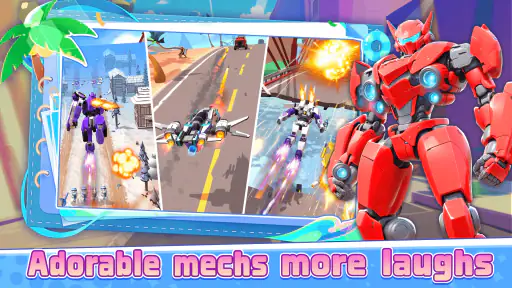
- Robot cars give the game a distinctive visual style.
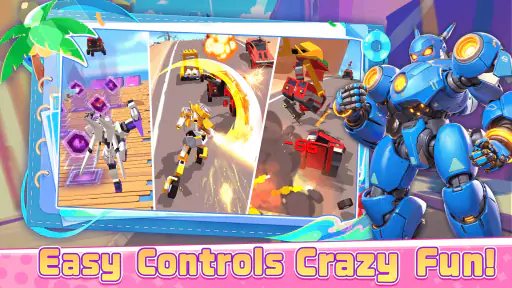
- Simple controls are easy for new players to understand.
- Vehicle upgrades add a sense of progression.
- Bright tracks and effects keep races visually lively.
Cons
- Repeated tracks can make the gameplay feel predictable over time.
- Some upgrades may require considerable grinding.
- Frequent crashes can interrupt the flow of a race.
- The small-screen controls may feel cramped on some phones.
- Performance may vary on older or less powerful devices.
Frequently Asked Questions
What is Smash Car: Robot Racing?
Smash Car: Robot Racing is an action-packed driving game that combines fast car races with robot-themed combat and destructive challenges. Instead of focusing only on finishing first, you also need to survive collisions, overcome obstacles, and use the vehicle’s strength to your advantage. Its arcade-style gameplay is designed for short, entertaining sessions and is easy to understand for casual players.
How do you play Smash Car: Robot Racing?
The main objective is to control your vehicle through obstacle-filled tracks while racing, crashing into opponents, and avoiding hazards. Depending on the level, you may need to reach the finish line, destroy targets, or remain in control after heavy collisions. The controls are generally simple, making the game accessible, although timing turns and managing movement becomes more important as the difficulty increases.
Can Smash Car: Robot Racing be played offline?
Smash Car: Robot Racing may offer playable content without a constant internet connection, which is useful when traveling or when mobile data is unavailable. However, certain features can depend on online access, including advertisements, updates, promotional content, cloud-related functions, or optional services. It is best to launch the game once while connected so that required resources can download correctly.
Is Smash Car: Robot Racing free to download and play?
The game is generally available as a free download, allowing players to try its core racing and crashing mechanics without paying upfront. As with many free mobile games, it may include advertisements and optional in-app purchases for upgrades, extra resources, or other conveniences. Players should review the store listing and purchase settings before downloading, especially if children use the device.
What devices are compatible with Smash Car: Robot Racing?
Compatibility depends on the version of the game available for your platform, as well as your device’s operating system, processor, memory, and available storage. Before installing, check the official Google Play or App Store listing for the current Android or iOS requirements. A newer device will usually provide smoother gameplay, quicker loading, and better performance during busy crash sequences.


