

Skel and Defense
- Reviews
- 4.1
- Version
- 1.2.6
- Installs
- 5,000+

Screenshots
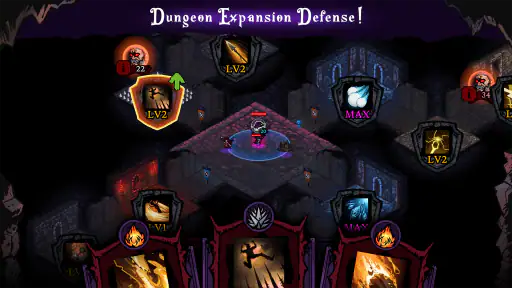
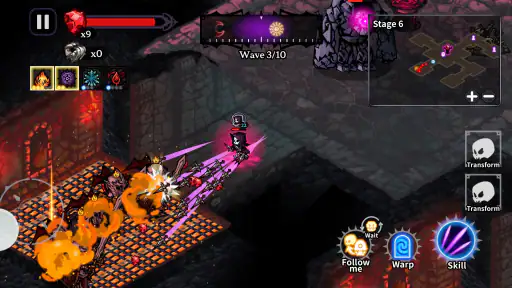
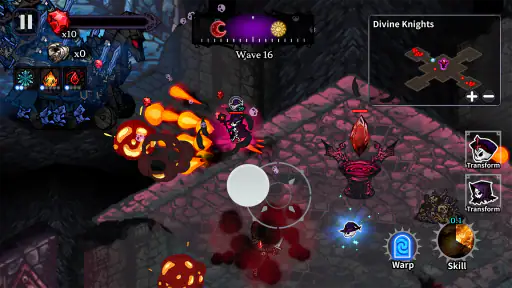

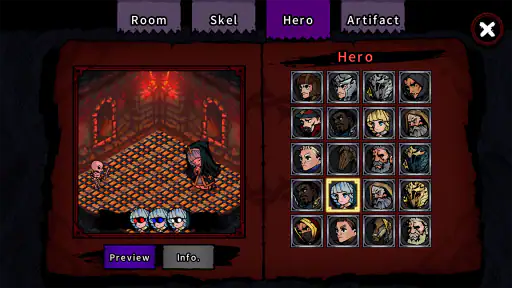

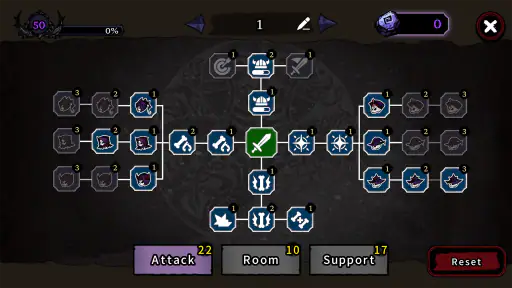
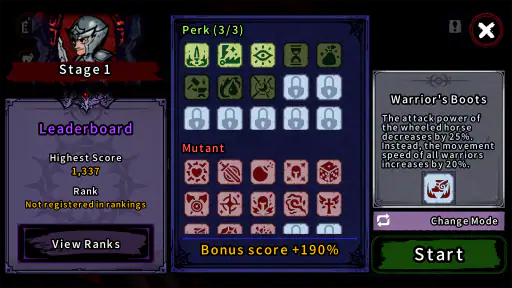
 Analysis by Frivlyz
As a role-playing game built around defending a dungeon, Skel and Defense puts a welcome spin on the usual question of how to stop a wave of enemies: instead of only strengthening a fixed line of defenses, you expand the space you control and decide how to arrange its traps. I like that this premise makes planning feel hands-on. The appeal is less about rushing through a story and more about looking at an approaching threat, considering the layout, and making a choice that might pay off later.
A different kind of defensive planning
Many games in the tower-defense corner ask players to place units along a route and improve them as the pressure rises. Here, the dungeon itself is part of the planning. Expanding it and positioning traps gives each decision a spatial consequence: a choice is not just about which defense sounds strongest, but where it can do useful work. That makes the game a natural fit if you enjoy thinking through a setup before seeing how it holds together.
I would approach each attempt as a small experiment rather than expect one perfect arrangement immediately. If a plan struggles, look at the relationship between the dungeon’s shape and the traps you chose, then change one part of the setup at a time. That makes it easier to learn from a failed defense than to replace everything at once. It is a practical way to get more from a strategy game that asks you to make decisions rather than simply watch upgrades accumulate.
How it feels to play in short sessions
The central idea suits a break in the day: open the game, think through a defensive layout, and see whether your choices can hold against invading heroes. I would not treat every spare minute as an invitation to rush. The tactical appeal depends on paying attention to where defenses go, so a calm few minutes are more rewarding than trying to make choices while distracted. If you like games you can pick up when you have a little room to think, this setup has a clear use case.
For a realistic routine, imagine having a short pause between errands or before dinner. You could use it to check your current approach, decide whether the dungeon needs a different shape, and make a considered change rather than tapping through a sequence without a plan. That kind of session is appealing precisely because the decisions are the entertainment. If you want a game that plays itself while you multitask, this is a less convincing match.
Skeletons and Strategies
At its core, Skel and Defense combines the thrill of tower defense with the charm of strategy games. Picture this: you’re in charge of an army of skeletons, and your mission is to defend your base against waves of enemies. Sounds fun, right? Well, it is! The game throws you right into the action, and it's up to you to outsmart your enemies with cunning tactics.
Gameplay that Hooks You In
Let’s talk gameplay. You start by deploying skeletons to fend off incoming attackers. Each skeleton has unique abilities, so choosing the right combination is paramount. The game doesn’t hold your hand, and that’s part of the charm. You’ll find yourself experimenting with different strategies and layouts, which keeps the gameplay fresh and exciting.
Gaming Stories You May Enjoy

Dancing Road Turns Short Breaks Into a Test of Rhythm and Timing

Super Stylist Makes Every Outfit a Test of Taste and Patience

Dominoes on Your Terms: Who Should Play and Who Should Pass

Pokémon GO Makes the Familiar World Feel New

Chess.com Turns Rematches Into Rivalries, but Community Has Its Costs

Archery Battle 3D Review: Sharp Aiming, Unclear Feedback
The levels are increasingly challenging, and you’ll need to upgrade your skeletons and defenses to survive. The in-game currency system is fair, and you can earn valuable resources by completing missions or through in-app purchases if you’re looking to speed things up.
Making choices without wasting resources
Because the game mixes unit selection with trap placement and dungeon expansion, it helps to think about the whole defense rather than treating each option as an isolated upgrade. A useful habit is to ask what problem a change is meant to solve. If enemies are getting through, consider whether the layout gives your traps a useful position, whether your chosen skeletons complement the plan, or whether an upgrade would address the weakness. Changing one thing at a time gives you a clearer sense of what helped.
That approach matters in any strategy game where resources and progression are involved. The temptation is to spend as soon as an upgrade appears, but a small reserve can give you room to respond when a later challenge exposes a weakness. I would prioritize improvements that support the way I actually play instead of trying to make every defense stronger at once. A trap-heavy layout and a plan that leans more on skeletons may call for different priorities, so there is no single spending rule that suits every attempt.
The game includes in-app purchases, but that does not mean you need to make a purchase to enjoy planning. The listed purchase range is $0.49 to $2.99 per item, while the game itself costs $2.49. I would decide whether those optional purchases fit my budget before playing, particularly if I am inclined to pay to speed up progress. If you prefer a one-time purchase with no additional spending decisions, that distinction is worth considering before you install it.
Speed, stability, and a sensible expectation
For a game centered on tactical choices, perceived speed is not only about how quickly a screen changes. It is also about whether the loop gives you enough time to understand a situation and make a choice. The premise suggests a deliberate rhythm: shape a dungeon, position defenses, and judge the result. Players who enjoy that measured decision-making may find it satisfying; anyone looking for constant action could find the pace less exciting.
I would be cautious about treating performance as identical on every phone. The game supports Android 7.0 and later, but meeting that minimum does not tell you how comfortably it will run on a particular device. Older hardware can feel different from a newer phone, especially if you tend to keep many apps open. For a more reliable test, close apps you are not using and try a short session first. That is a sensible way to judge responsiveness on your own device without assuming every player will have the same experience.
When a game session is interrupted, the practical question is whether you can return without losing the thread of your plan. I would make a mental note of what you were testing—a particular trap position, for example—before switching away. That small habit makes it easier to resume with purpose. I would not plan a long session around an assumption that every interruption will recover in a particular way; instead, start with a brief play period and see how the game behaves on your phone.
Heavy use is where the strategic design can ask more of your attention than a quick glance suggests. Comparing combinations, tracking what is failing, and considering expansion all compete for focus. If you are playing in a noisy place or while doing another task, it may be harder to notice why a defense did not work. I would save the more experimental runs for a moment when I can concentrate, and use a quieter break for a deliberate adjustment. That is a better fit for the game’s planning than making several rushed changes at once.
Graphics and Sound
Now, let’s get to the aesthetics. The graphics are vibrant and detailed, making the game visually appealing. The animations are smooth, and the game runs without a hitch, which is crucial for a seamless gaming experience. The sound effects and background music add an extra layer of immersion, pulling you deeper into the world of skeletons and battles.
The visual and audio presentation should be judged in service of the main activity: reading the battlefield and understanding how your defensive choices play out. If you prefer a game where spectacle is the main draw, the tactical loop may matter more here than presentation alone. And if you normally play with sound off, the strategic appeal does not depend on treating the music as the reason to stay. I would focus first on whether the choices and layouts keep me interested.
Who will enjoy this, and who may prefer another game
This is a stronger fit for someone who likes adjusting a defense after seeing how it performs. The dungeon-expansion angle gives the familiar defense format a more involved planning problem, while the role-playing label and skeleton theme lend it a distinct identity. If you already enjoy weighing placements and combinations, that mix is a good reason to give it a try. The developer is Buff Studio Co.,Ltd., and the game has a Teen age rating.
By contrast, players who want a fast, hands-off idle game may be happier with an alternative that emphasizes automatic progress. Someone who prefers a broad, character-driven role-playing adventure may also want a more conventional RPG, since the central attraction here is defending a dungeon rather than exploring an expansive narrative. And if you dislike retrying or revising a strategy when a challenge gets harder, the increasing difficulty may feel like friction rather than motivation.
Its place among strategy games is quite specific. Compared with a standard tower-defense title focused on building along an established path, the emphasis on expanding the dungeon makes spatial planning more prominent. Compared with a traditional role-playing game, the defensive setup is the point rather than a side activity around a long story. That trade-off is useful to know: the game may feel refreshingly focused to a player who wants tactical layout decisions, but narrow to someone seeking a large variety of activities.
The game is rated 4.1 on average from 314 ratings, with 8 written reviews and over 5,000 installs. I treat those figures as context rather than a guarantee that it will suit me. The current version is 1.2.6, and the game was released on May 6, 2024. Since the experience hinges on whether its strategy loop clicks for you, a short trial of your own play style is more informative than popularity figures alone.
Why You Should Try It
If you’re a fan of strategy games, Skel and Defense should be on your radar. It’s got all the elements that make a game addictive: challenging levels, strategic depth, and a quirky theme. Plus, who wouldn’t want to command an army of skeletons?
My recommendation is conditional but positive: give it a look if the idea of designing a dungeon defense sounds more appealing than simply collecting upgrades. Take time to test a layout, notice what fails, and adjust with a reason. Skip it if you want a story-first RPG, rapid action with little planning, or a game whose enjoyment comes mainly from passive progress. It is rated Teen, so that age guidance is another point to consider when choosing a game for someone else.
Overall, Skel and Defense is a delightful blend of strategy and fun. It’s perfect for those moments when you need a quick break or want to dive into a long gaming session. So, go ahead, give it a shot, and see if it becomes your next gaming obsession!
My performance verdict
I would think of this as a strategy game to approach at your own pace, not one whose value depends on demanding speed or nonstop spectacle. The most meaningful performance check is whether your phone responds comfortably while you make layout decisions and follow a defense. The Android minimum is 7.0, so older devices below that are not suitable; among supported phones, actual comfort can still vary. A brief first session is the sensible way to check.
For me, the main strength is the interplay between choosing skeletons, improving defenses, and shaping the dungeon. The main trade-off is that those choices require attention, and the rising challenge can make careless experimentation costly in time or resources. If you enjoy learning through deliberate adjustments, that is part of the appeal. If you want an instantly relaxing game that asks almost nothing of you, another option will probably fit better.
In the end, this is a focused pick for players who enjoy tactical defense and do not mind revisiting a plan when it falters. I would recommend trying it when you have enough attention for a few considered decisions, rather than expecting a universally smooth fit for every device or every mood. That balance—an inviting premise with a planning-heavy loop—is what makes the game worth considering, and also what makes it easy to rule out if strategy is not what you want today.
Skel and Defense Pros and Cons
Pros
- Intuitive user interface design.
- Engaging gameplay mechanics.
- Challenging levels keep you hooked.
- Regular updates with new features.
- Smooth performance on most devices.
Cons
- In-app purchases can be frequent.
- Sometimes lags on older devices.
- Limited character customization.
- Requires constant internet connection.
- Ads can be intrusive at times.
Frequently Asked Questions
What is the main objective of Skel and Defense?
Skel and Defense is a strategic defense game where players are tasked with protecting their base from waves of enemies. The main objective is to strategically place various defensive units and manage resources to withstand enemy attacks. Players must adapt their strategies as they progress through levels, facing increasingly challenging opponents.
Is Skel and Defense available on both Android and iOS platforms?
Yes, Skel and Defense is available for download on both Android and iOS platforms. Users can find the app on the Google Play Store for Android devices and the Apple App Store for iOS devices. Ensure your device meets the minimum system requirements for an optimal gaming experience.
What are the in-app purchases in Skel and Defense?
Skel and Defense offers various in-app purchases that enhance the gameplay experience. These purchases can include additional resources, unique defensive units, and special abilities. While the game can be played for free, these optional purchases can provide significant advantages and accelerate progress for those who choose to invest.
Does Skel and Defense require an internet connection to play?
Skel and Defense can be played both online and offline. While an internet connection is not required for the core gameplay, connecting to the internet allows players to access additional features such as leaderboards, achievements, and daily challenges. Offline mode ensures that players can enjoy the game anywhere, anytime.
Are there any age restrictions for playing Skel and Defense?
Skel and Defense is suitable for players aged 12 and above. The game contains mild fantasy violence and strategic elements that may not be appropriate for younger audiences. Parents are encouraged to review the game’s content and settings to ensure it aligns with their family’s preferences and values.


