

Shelter Days: Survival
- Reviews
- 4.3
- Version
- 7.0.286
- Installs
- 100,000+

Screenshots

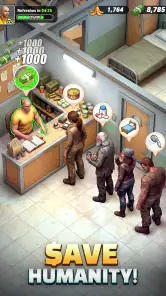
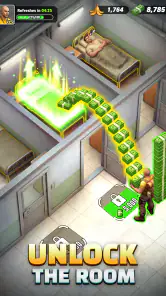


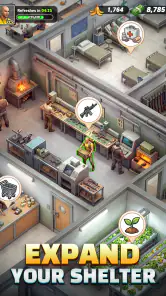

 Analysis by Frivlyz
I spent time with Shelter Days: Survival as a strategy game built around creating and managing a shelter in a dangerous survival setting. My first impression was that it asks me to think in layers rather than react to one isolated problem: keeping the shelter useful, deciding what deserves attention first, and accepting that a safe-looking plan can become fragile when resources or time are tight. That makes it more interesting than a simple construction game, but it also means the experience depends heavily on how comfortably you can read information and make decisions at your own pace.
Developed by Germer Studio, the game is free to download and aimed at a Teen audience. It has reached over 100 thousand installs and holds a 4.3 average from around 1 thousand ratings, which suggests that its central shelter-management idea has found a reasonably broad audience. I would not choose it expecting a quick action game. I would choose it when I want a survival challenge where planning, prioritising and correcting mistakes matter more than fast reflexes.
How Shelter Days handles planning, readability and everyday play
I find that planning in Shelter Days works best when I treat each visit as a quick check-in rather than an attempt to solve everything at once. I look for the decision that would make the shelter more dependable, then leave optional improvements for another session. That approach also gives me a useful way to judge readability: the clearer the information feels, the easier it is to make deliberate choices without turning everyday play into a chore.
A shelter game that rewards deliberate decisions
The strongest part of the experience is the feeling that each decision has a practical consequence. Building a shelter is not just about making a base look complete. I found myself thinking about what should be useful immediately, what could wait, and how a short-term improvement might affect the next stage of survival. That constant trade-off gives the game its identity and prevents the building layer from feeling like decoration placed on top of a generic survival loop.
This is also why I think the game works best in short, focused sessions. I can open it with one clear intention, such as improving the shelter or reviewing what needs attention, then stop before the decisions become tiring. Players who enjoy checking systems, weighing alternatives and gradually making a rough shelter more dependable will probably find that rhythm satisfying. Players looking for instant rewards or a straightforward sequence of missions may find the pace too thoughtful.
Navigation matters a great deal in a management game. I judge it less by how attractive the screens are and more by whether I can remember where to go after a break. In Shelter Days, the practical test is simple: can I return after a day away and quickly understand what I was doing, what needs attention, and which choice is most urgent? When a game asks me to manage several connected concerns, clear visual grouping is more valuable than a crowded screen full of decorative information.
Readability is part of the strategy
For me, readable presentation is not a cosmetic issue here. If labels, icons or status information take too long to interpret, I start making decisions based on guesswork rather than strategy. That can be especially frustrating in a shelter game, because a small misunderstanding can lead to a chain of inefficient choices. I recommend taking a moment to learn the visual language early instead of tapping quickly through every screen.
Gaming Stories You May Enjoy

Dancing Road Turns Short Breaks Into a Test of Rhythm and Timing

Super Stylist Makes Every Outfit a Test of Taste and Patience

Dominoes on Your Terms: Who Should Play and Who Should Pass

Pokémon GO Makes the Familiar World Feel New

Chess.com Turns Rematches Into Rivalries, but Community Has Its Costs

Archery Battle 3D Review: Sharp Aiming, Unclear Feedback
My practical approach was to pause before committing to a change and identify three things: what the action improves, what it consumes, and whether it solves an immediate problem or only prepares for later. This habit makes the game easier to follow and reduces accidental decisions. It is also useful for anyone who finds dense management interfaces tiring, because it turns an overwhelming list of options into a smaller sequence of questions.
The game is currently listed as version 7.0.286 and supports devices running Android 7.0 or later. That broad operating-system requirement makes it approachable for people who are not using a recent phone, although actual comfort will still depend on the screen size and the device’s performance. On a smaller display, information-heavy strategy screens can require more concentration, particularly for players who prefer larger text or more visual separation.
Where it fits beside other strategy games
Compared with a traditional city builder, Shelter Days feels more focused on survival priorities than on creating a large, beautiful settlement. Compared with a fast strategy game, it puts less pressure on rapid input and more on understanding the consequences of a choice. That middle position is useful: I can play thoughtfully without needing the long uninterrupted sessions that some large strategy games demand.
It is not the best alternative for someone who mainly wants a relaxed decoration tool. The survival framing gives decisions more weight, and that pressure is part of the appeal. It is also less suitable than a purely turn-based game for a player who wants every situation to wait indefinitely for them. I would describe it as a management experience with a survival mindset, rather than a calming construction sandbox.
Motor and sensory considerations during play
From an input perspective, this is more comfortable for me than a game built around constant aiming, rapid combat gestures or precise timing. Much of the appeal comes from selecting, reviewing and planning. That gives players who prefer slower interaction a fairer starting point than reflex-heavy survival titles. It does not remove every physical challenge, though. Repeated tapping, small interface elements and long periods of holding a phone can still become uncomfortable.
If touch accuracy is difficult, I would play in a stable position rather than holding the device in one hand. Supporting the phone on a surface can reduce strain and make it easier to examine information before choosing an action. I would also avoid treating every notification or available action as urgent. A slower, intentional routine is not only easier on the hands; it usually produces better shelter decisions.
For players sensitive to visual clutter, the main concern is the amount of information that a survival-management game naturally needs to present. I found it helpful to focus on one category of problem at a time rather than scanning every part of the shelter continuously. This creates a calmer mental rhythm. If a screen feels busy, reading the most urgent status first and postponing optional improvements can prevent the game from becoming visually exhausting.
Audio is not something I would make central to the decision about whether to play. The core of the game is understandable through its management choices, so I can approach it as a visual planning experience rather than one that depends on listening for every important event. That is useful in ordinary situations such as playing while commuting, waiting for an appointment or sitting in a shared room, where sound may be unavailable or unwelcome.
Playing in real-world situations
A realistic use case for me is a short evening session after work. I can check the shelter, decide which issue deserves attention, make a measured improvement and leave the game without needing to complete a long action sequence. That makes it more flexible than strategy games that punish interruption during a battle or require a large block of time to reach a meaningful stopping point.
It can also work well during travel, but I would approach it with modest expectations. A phone with a small display, changing light and frequent interruptions is not the ideal environment for careful management. I would avoid making important decisions while distracted, especially if I am switching between the game and other tasks. The game’s slower strategic character helps, but it does not make divided attention harmless.
For someone who plays with reduced visual comfort, the best routine is to increase the device’s general display readability where possible, keep the screen clean, and play in consistent lighting. These are not special game functions, but they make a meaningful difference when the experience depends on distinguishing information quickly. I would also recommend taking breaks, because the temptation to keep checking a shelter can turn a thoughtful game into a surprisingly tiring one.
Useful habits that improve the experience
One non-obvious lesson I took from the game is that the best choice is not always the most impressive upgrade. A shelter can look more advanced while still being poorly prepared for the next problem. I get better results when I judge an improvement by how many future decisions it simplifies, not by how attractive or powerful it appears at first glance.
A second useful habit is to keep a mental distinction between maintenance and expansion. Maintenance protects the progress I already have; expansion creates new possibilities but can also spread my attention too thin. When I am uncertain, I prefer stabilising the shelter before pursuing a more ambitious change. That approach is especially helpful for new players who might otherwise spend resources chasing several improvements at once.
A third insight concerns accessibility and strategy at the same time: reducing unnecessary choices can make the game more enjoyable without making it easier in a cheap way. I do not need to inspect every option on every visit. I can identify the most urgent concern, resolve or improve it, then stop. This workflow helps players who experience decision fatigue and also makes short sessions feel purposeful.
There is a trade-off in that method. If I focus too narrowly, I may overlook a wider problem developing elsewhere in the shelter. The solution is not to constantly monitor everything, which is exhausting, but to alternate between focused checks and a broader review. I find that rhythm more manageable than trying to process the entire shelter every time I open the game.
Where friction remains
The free entry point is welcome, but the game includes in-app purchases ranging from $0.99 to $199.99 per item. That is important context for anyone who prefers a completely purchase-free experience. I can approach the game without paying, yet the presence of optional purchases may affect how comfortable a player feels about progressing or resisting shortcuts. I would recommend deciding before playing whether spending is off the table, because a clear personal limit makes the experience easier to judge.
This is also a game I would skip if I dislike resource pressure. The shelter theme is not merely visual; it creates the expectation that choices have costs and that not everything can be improved at once. Players who want a forgiving building toy may prefer a more relaxed alternative. Likewise, anyone who becomes frustrated when a long-term plan needs to be revised should know that adaptation is part of the appeal here.
The Teen content rating is another reason I would consider the intended tone before recommending it to younger players. A parent choosing a strategy game for a child should look at the rating in the context of that child’s comfort with survival themes and in-app purchasing. The game may be a good fit for a thoughtful older player, but “strategy” alone does not tell the whole story about its atmosphere.
People with motor or visual limitations may still enjoy the slower decision-making, but the phone interface can remain a barrier if controls or information feel too compact. I would not describe the game as universally accessible simply because it is not reflex-heavy. Its advantages are real, especially for players who need more time to think, but comfort depends on being able to read and select the relevant options reliably.
Who should play and who should look elsewhere
I would recommend Shelter Days to someone who likes survival settings but wants the main challenge to come from management rather than constant combat. It suits players who enjoy returning to a project, noticing what has changed, and deciding which improvement will make the next stretch more secure. It is also a reasonable choice for people who want a strategy game that can fit around interruptions instead of demanding an uninterrupted competitive match.
I would point a different type of player elsewhere. If you want a purely creative builder, a faster competitive strategy experience or a game with no pressure from limited choices, this may not be the right match. The shelter concept works because it creates constraints, and those constraints can feel rewarding or restrictive depending on what you want from a mobile game.
My final view is positive but measured. Shelter Days: Survival is at its best when I treat it as a careful planning game, not as a quick distraction. Its free price makes trying it straightforward, while its survival-management focus gives it more substance than a basic construction app. Germer Studio has chosen a format that can support slower, more deliberate play, including sessions where sound is unavailable or interruptions are likely.
At the same time, the interface and decision density mean that accessibility should be judged personally rather than assumed. Players who benefit from time to think may appreciate the pace, while those who need very large controls, minimal visual information or a completely pressure-free experience may encounter friction. I would start with small sessions, use a deliberate review routine, and decide early whether the purchase model fits my boundaries. For the right player, that is enough to turn a fragile shelter into a satisfying long-term strategy project.
Shelter Days: Survival Pros and Cons
Pros
- Offline play makes it suitable for travel or areas with limited connectivity.
- Simple controls are easy to learn
- even for players new to survival games.
- Resource gathering creates a satisfying sense of progress over time.
- The compact setting keeps exploration focused and less overwhelming.
- Its tense atmosphere adds excitement without relying on complex mechanics.
Cons
- Limited locations can make exploration feel repetitive after extended play.
- Some survival tasks may become routine once you learn the best strategy.
- Progress may feel slow when essential resources are scarce.
- The interface can feel cramped on smaller phone screens.
- Players seeking deep combat or crafting systems may find it too basic.
This Game in Other Languages
Frequently Asked Questions
What is Shelter Days: Survival about?
Shelter Days: Survival is a post-apocalyptic survival game focused on managing life inside and around a shelter. You must search for useful resources, craft equipment, improve your base, and make decisions that affect your chances of staying alive. The game combines exploration, resource management, character progression, and survival challenges, so planning is just as important as reacting quickly to danger.
How does gameplay work in Shelter Days: Survival?
Gameplay generally revolves around balancing limited supplies with the needs of your survivors. You explore dangerous areas, collect materials, look for food and equipment, and return to the shelter to craft or upgrade facilities. Every trip requires preparation because health, stamina, inventory space, and available resources can limit how far you can go. Careless decisions may leave you vulnerable during future expeditions.
Can Shelter Days: Survival be played offline?
Whether the game works fully offline may depend on the version installed and the feature you are using. Core survival activities may be available without a constant connection, but advertisements, cloud saves, updates, purchases, or other online services can require internet access. Before relying on offline play, it is best to test the game after installation and review the current store description for connection requirements.
Is Shelter Days: Survival free to download and play?
Shelter Days: Survival can generally be downloaded without an upfront purchase, but free access may include advertising, optional in-app purchases, or limitations on certain resources and progression features. You can usually experience the main survival loop without paying, although purchases may speed up development or provide additional items. Check the app store listing carefully, especially if children will be using the device.
What devices are compatible with Shelter Days: Survival?
Compatibility depends on the Android or iOS version, device hardware, and the developer’s current requirements. Survival games with exploration and detailed environments may perform better on newer phones and tablets, while older devices can experience longer loading times, reduced graphics quality, or occasional performance issues. Check the official store page before downloading to confirm the required operating system and available storage space.


