

Shanghai Tile: Mahjong Match
- Reviews
- 4.8
- Version
- 1.14.1
- Installs
- 1,000,000+

Screenshots
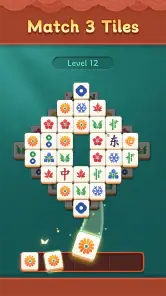
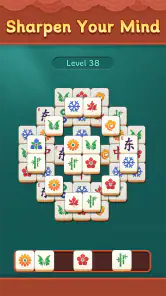
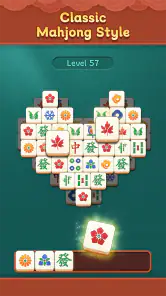
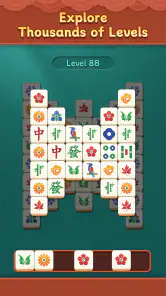
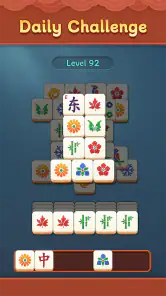
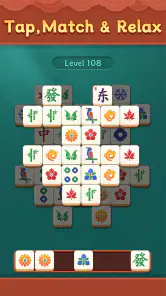
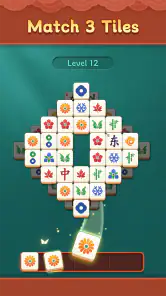
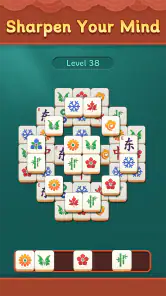
 Analysis by Frivlyz
I judge a tile puzzle by a few practical things: whether I can understand a board quickly, whether choosing a move asks me to think rather than tap blindly, and whether a short session feels complete. Shanghai Tile: Mahjong Match is aimed at that familiar Mahjong-style routine of finding matching tiles and clearing a layout. I’d consider it when I want a calm puzzle I can pick up between other tasks, rather than a game built around a long story or intense competition.
What to check before you choose
The key question is whether you enjoy scanning a crowded arrangement and weighing which pair to remove first. A match may be legal now, but taking it can expose or block options you would rather keep available. That little tension is the appeal: the game is easy to understand, yet a careless choice can make a board harder to finish. If you prefer puzzles with explicit clues, word prompts, or a steadily unfolding narrative, this kind of visual pattern-finding may feel repetitive instead of relaxing.
I’d also think about how you like to play on a phone. Tile matching works well in brief visits because the central task is clear as soon as the board appears. It does not ask me to remember a complicated control scheme. At the same time, it rewards patience: quickly tapping every pair that looks available is not always the most satisfying way to approach a layout. I get more from pausing for a moment and checking what a match might reveal or leave covered.
Where this tile puzzle earns its place
The game’s strongest case is its accessible, focused format. OPiece Studio made a puzzle that can suit someone new to Mahjong-style matching as well as someone who already knows the basic rhythm. Its Everyone age rating reflects that broad, straightforward appeal. The game is free to start, so it is easy to try without making a purchase decision first; I would still treat optional spending as a personal choice, not a requirement for enjoying the basic matching idea.
In everyday use, I can imagine opening it while waiting for an appointment or taking a quiet break after work. I would play one board with the sound low, treat the tile layout as a small concentration exercise, then put the phone away when the break ends. That works better for me than trying to turn every session into a score chase. A useful habit is to scan the whole visible board before making the first match, then look again after each pair: it helps me notice how the remaining choices have changed instead of falling into automatic tapping.
How it differs from other puzzle choices
Compared with a word puzzle, this asks me to recognize identical symbols and plan around their positions rather than retrieve vocabulary. Compared with a number puzzle, it is more about visual access and move order than calculating a sequence. Those differences matter if I’m choosing a game for a particular mood: I would reach for tile matching when I want a quiet visual task, and for a word or logic puzzle when I want a more explicit clue or a stronger sense of deduction.
It also sits apart from action-oriented casual games. There is no need to react to a fast-moving screen to enjoy the basic appeal; the pleasure comes from observing the board and deciding what to clear. That makes the format a good fit for a low-key pause, but not necessarily for someone who wants a brisk stream of changing objectives. If repeated matching is already a genre fatigue point for you, a puzzle with varied mechanics will probably hold your attention longer.
Gaming Stories You May Enjoy

Dancing Road Turns Short Breaks Into a Test of Rhythm and Timing

Super Stylist Makes Every Outfit a Test of Taste and Patience

Dominoes on Your Terms: Who Should Play and Who Should Pass

Pokémon GO Makes the Familiar World Feel New

Chess.com Turns Rematches Into Rivalries, but Community Has Its Costs

Archery Battle 3D Review: Sharp Aiming, Unclear Feedback
Playing, pacing, and deciding whether to keep it
The game is listed as a puzzle, has a 4.8 average from around 15,000 ratings, and has passed a million installs. Those figures suggest that plenty of players have found the format worth trying, but they cannot tell me whether its particular pace suits you. I would use the first few sessions to decide that for yourself: does planning a board feel pleasantly absorbing, or do the matches begin to blur together?
A more deliberate way to play
One small adjustment makes a difference: before committing to an obvious pair, check whether another available match could open up more useful choices. I do not treat every board as a puzzle that must be solved at maximum efficiency; sometimes I simply want a relaxing round. But when I hit a layout that feels awkward, slowing down and comparing the consequences of two possible pairs gives the game more texture than tapping the first match I spot.
It is also worth separating a comfortable session from a distracted one. If I am switching between messages and the game, I can lose track of which tiles I have already considered and make a move without thinking. For a quick break, I get a better experience by focusing on a single board rather than trying to play while juggling several interruptions. This is a simple trade-off: the rules are approachable, but the small strategic pleasure depends on paying at least a little attention.
What to expect from the commitment
The game is free, and its current version is 1.14.1. It runs on Android 5.0 or later, which makes it an option for a range of Android devices that meet that requirement. I would not assume that “free” means every optional extra is included at no cost; the original experience mentions in-app purchases, so anyone who prefers to avoid spending should simply be mindful around purchase prompts. The core reason to try it remains the matching puzzle, not buying add-ons.
Another reasonable question is whether it suits a complete beginner. The original experience describes a quick tutorial that explains the basic objective, so a newcomer can get oriented without needing to arrive with Mahjong expertise. Still, knowing the basic idea is different from loving the format. I would give it a few boards to see whether looking for pairs feels satisfying; if the visual scanning itself is tiring, a puzzle with fewer pieces on screen or clearer step-by-step clues may be a better fit.
Where another game may be the better choice
I would skip this one if I want a deep campaign, a strong character story, or a puzzle that changes its central rule every few minutes. The appeal here is the repeated process of examining a tile arrangement and matching identical pieces. That consistency is a strength when I want a predictable, low-pressure activity, but it can become a limitation when I am craving novelty. A broader puzzle collection or a game centered on narrative problem-solving would serve that mood better.
I would also be cautious about treating leaderboards or recurring challenges as the main reason to install it. The original experience mentions competitive and daily elements, which may give regular players another reason to return, but those are not what make the basic puzzle work for me. If I am not motivated by comparing progress or maintaining a routine, I can ignore that layer and focus on the board. Conversely, if social competition is essential, I would check whether the available competitive elements feel substantial enough for my expectations rather than assuming they will replace a dedicated competitive game.
Small decisions that improve a session
For a calmer round, I turn down or mute sound when I am in a shared space; the original experience describes soothing music and effects, but personal preference and setting matter. I also avoid starting a board when I know I only have a moment and will be interrupted immediately. Tile layouts are easier to enjoy when I can give them a few uninterrupted minutes, even though the game’s simple premise makes it approachable for short visits.
When I want more of a challenge, I make myself look beyond the first match and ask what that removal changes. That does not require a complicated system or a written plan. It is just a way to turn a familiar matching task into a small exercise in foresight. If I am tired, I do the opposite and play casually without trying to optimize every move. Letting the game serve either purpose—light concentration or gentle downtime—is more useful than expecting every session to feel equally demanding.
My recommendation
OPiece Studio’s tile-matching game is an easy recommendation for someone who likes visual puzzles, wants controls and objectives that are quick to grasp, and is happy to revisit a consistent format. It is especially suited to quiet breaks when I want to focus on one manageable board rather than commit to a long play session. The free entry point makes trying it straightforward, while the Everyone rating makes its basic premise accessible to a wide audience.
I would not make it my first choice for a player who needs a story, rapidly changing mechanics, or a demanding competitive structure. Nor would I promise that a high average rating means every player will enjoy repeated tile layouts. The deciding factor is personal: if scanning for matches and planning a few steps ahead sounds satisfying, this is worth a try; if it sounds like a task, another puzzle style will likely be a better use of your time.
Hey there! Let me tell you about my latest obsession: Shanghai Tile: Mahjong Match. I stumbled upon this gem while scrolling through the app store, and let me just say, it's been quite the delightful find. Whether you're a seasoned Mahjong pro or a curious newbie like I was, this game will have you hooked in no time.
Getting Started with Mahjong Adventure
Diving into Shanghai Tile: Mahjong Match is as easy as pie. The first thing you'll notice is the clean and vibrant interface. The tiles are beautifully designed, making it a feast for the eyes. Setting up the game was a breeze, and within minutes, I was matching tiles like a pro. The game provides a quick tutorial for beginners, which I found super helpful. It breaks down the rules and objectives in a simple way without overwhelming you. I mean, who doesn't love a game that's easy to pick up but hard to put down?
The Mesmerizing World of Tiles
Now, let’s talk about the game play. The objective is to match identical tiles to clear the board, but trust me, it’s not as easy as it sounds. Each level presents a new challenge, keeping things fresh and exciting. I found myself strategizing and planning my moves, which added a whole new layer of fun to the experience. The game offers various modes and themes, so you'll never run out of options. Plus, the soothing background music and sound effects are a cherry on top, making each session a relaxing escape.
Why You'll Keep Coming Back for More
One of the standout features of this app is its replayability. Every time you play, it's a different experience. The developers have done a fantastic job at randomizing the tile arrangements, ensuring no two games are ever the same. And if you're competitive like me, you'll love the leaderboards. There's nothing more satisfying than seeing your name climb up the ranks. The game also offers daily challenges and rewards, which are perfect for keeping the excitement alive.
Another aspect I truly appreciated was the lack of intrusive ads. While there are some, they’re minimal and don’t disrupt the game play. It’s a small detail, but it makes a huge difference in the overall experience. And for those who want to take it up a notch, there are in-app purchases available, though they’re not necessary to enjoy the game fully.
Final Thoughts
All in all, Shanghai Tile: Mahjong Match is a delightful mix of challenge and relaxation. It's perfect for unwinding after a long day or for a quick brain teaser during a break. The game’s design, combined with its engaging game play, makes it a must-try for anyone looking to dive into the world of Mahjong. So, if you're ready to embark on an addictive tile-matching adventure, give this game a whirl. Trust me, you won’t regret it!
Shanghai Tile: Mahjong Match Pros and Cons
Pros
- Engaging tile matching gameplay.
- Visually appealing graphics.
- Simple and intuitive controls.
- Variety of challenging levels.
- Free to play with optional purchases.
Cons
- Ads can be disruptive.
- Limited lives can hinder progress.
- Some levels are very challenging.
- In-app purchases can be pricey.
- Requires internet connection.
Frequently Asked Questions
What is the main objective of Shanghai Tile: Mahjong Match?
Shanghai Tile: Mahjong Match is a puzzle game where the main objective is to clear the board by matching pairs of identical tiles. The game is based on traditional Mahjong solitaire rules, and players need to strategically select tiles to remove them, aiming to clear the board as efficiently as possible.
How do the game controls work in Shanghai Tile: Mahjong Match?
In Shanghai Tile: Mahjong Match, players interact with the game primarily through touch controls. To select a tile, simply tap on it. If it matches with another free tile, both will be removed from the board. The game is designed with intuitive touch mechanics, making it easy for players of all ages to enjoy.
Are there any in-app purchases available in Shanghai Tile: Mahjong Match?
Yes, Shanghai Tile: Mahjong Match offers in-app purchases which allow players to buy additional features or power-ups. These can help enhance the gaming experience by providing hints or tools to progress through more challenging levels. However, these purchases are optional and the game can be enjoyed fully without them.
What types of levels or challenges does Shanghai Tile: Mahjong Match offer?
Shanghai Tile: Mahjong Match offers a variety of levels that increase in complexity as you advance. Each level presents a unique tile layout, requiring different strategies to solve. Players will encounter increasingly difficult puzzles, providing a challenging and engaging experience for both new and seasoned Mahjong players.
Is Shanghai Tile: Mahjong Match suitable for all ages?
Yes, Shanghai Tile: Mahjong Match is suitable for players of all ages. The game features a user-friendly interface and simple mechanics, making it accessible to children and adults alike. Its design encourages strategic thinking and problem-solving, offering a safe and educational experience for younger players.


