

Shadow Fight 4: Arena
- Reviews
- 4.7
- Version
- 1.9.40
- Installs
- 50,000,000+

Screenshots

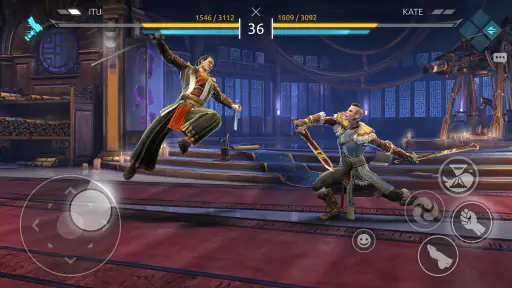

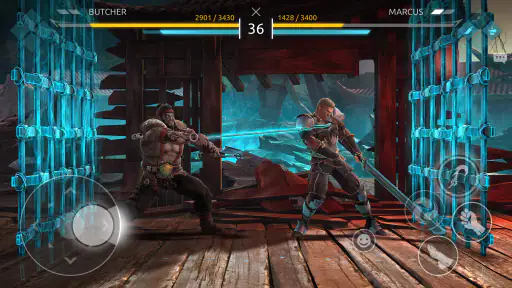
 Analysis by Frivlyz
I tend to judge a mobile fighter by whether its battles stay readable once the novelty wears off. Shadow Fight 4: Arena has a clear visual identity, but it also asks you to pay attention: a match is less about tapping quickly than noticing what the other fighter is likely to do next. That makes it a better fit for players who enjoy learning an opponent than for anyone looking for a button-mashing distraction.
Reading the fight and finding your way around
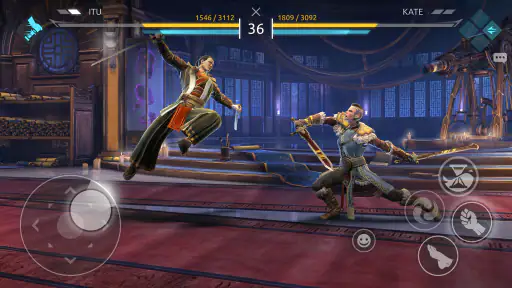
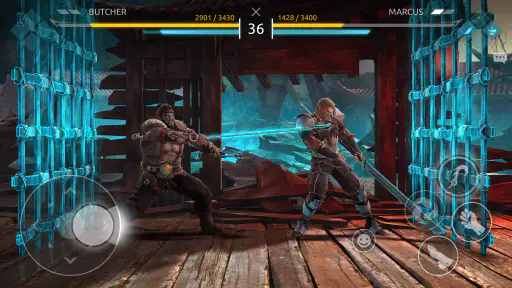
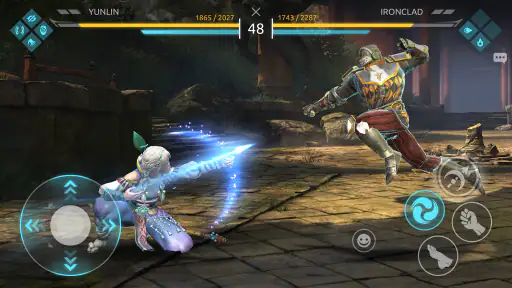
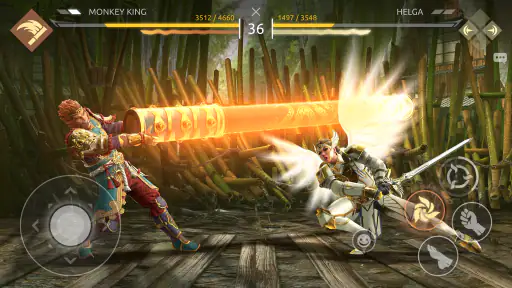
The presentation gives the combat a strong silhouette-driven look, and the arenas help make each encounter feel like a distinct bout rather than an abstract exchange of health bars. I find that style appealing, though visual flair is only useful when I can still follow the action. During a tense exchange, it helps to watch the fighters’ positions and movement instead of focusing only on effects or trying to react to every animation at once.
The interface and controls are approachable enough for a new player to begin, while the fighting itself leaves room to improve through practice. That balance matters: I can understand the basic interaction quickly, but familiarity does not instantly make decisions easy. Character choice, timing, and reading the opponent all affect how a round feels. The game’s Role Playing category label is less important in practice than its direct, match-focused fighting; I would approach it first as a competitive mobile fighter rather than expect a story-led role-playing adventure.
Our Stories on Shadow Fight 4: Arena
Ninja Turtles: Legends - A Strategic Dive Into Turtle Power
NewsWWE Champions: Strategy and Nostalgia in the Mobile Ring
NewsDancing Road Turns Short Breaks Into a Test of Rhythm and Timing
NewsSuper Stylist Makes Every Outfit a Test of Taste and Patience
NewsDominoes on Your Terms: Who Should Play and Who Should Pass
NewsPokémon GO Makes the Familiar World Feel New
NewsThere is a useful distinction between learning a character and simply sampling the roster. Each fighter has a different style and abilities, so switching constantly can make it harder to understand why a particular exchange went well or badly. I recommend staying with one choice long enough to notice its strengths, then trying another when you have a clear comparison in mind. That small habit makes experimentation more informative and less like random selection.
Motor and sensory considerations
The controls are described as intuitive, and in my experience the simple starting point is a welcome quality for a touch-screen fighting game. Still, responsive combat is not automatically comfortable for every player. A bout can demand quick attention and timely inputs, so someone who finds rapid on-screen action tiring may prefer short sessions and breaks rather than pushing through a long run of matches.
The audiovisual intensity is part of the appeal, but it can also be a lot to process when several things demand attention at once. I get more from a fight when I concentrate on the opponent’s movement and treat the soundtrack and effects as atmosphere, not cues I must react to. If you are sensitive to busy action or sound, it is worth deciding for yourself whether the presentation feels energizing or distracting; the experience will vary from person to person.
There is also a difference between understanding the controls and having the motor comfort to use them under pressure. Beginners can take time to learn without treating every early loss as a verdict on their ability. If a close match feels overwhelming, pausing between rounds or returning later is a sensible way to keep practice enjoyable. I would not recommend treating ranked progress as a reason to ignore your own pace.
Gaming Stories You May Enjoy

Chess.com Turns Rematches Into Rivalries, but Community Has Its Costs

Archery Battle 3D Review: Sharp Aiming, Unclear Feedback

Should You Switch to Geometry Dash Meltdown? A Test of Timing and Patience

Fidget Toys Trading・Pop It 3D: What Happens When the Game Stumbles

NBA LIVE Mobile Makes the Season the Main Event

Sonic Forces: PvP Battle Race - Speed and Strategy Combined
Playing in the moments your day allows
The match-based format makes the game easier to fit around a small opening in the day than a sprawling role-playing quest. For example, if I have a few minutes while waiting for a friend, I can use that time for a bout and focus on one specific lesson: whether I am rushing attacks, misreading distance, or choosing a fighter whose style suits me. That is a more useful goal than expecting every brief session to produce a win.
Because the central appeal is competing against other people, the experience is less predictable than a solitary game. Some players will want that uncertainty; others may prefer an offline activity they can stop and resume without the pressure of an opponent. I would choose a quiet, reliable moment for competitive play if interruptions frustrate you. A sudden pause can break concentration, and the game is most satisfying when you can give a match your attention.
NEKKI developed the game, which is free to download and rated Teen. Its average rating is 4.7 from around 1.6 million ratings, and it has passed 50 million installs. Those figures suggest a substantial audience, but popularity does not guarantee that its competitive rhythm will suit you. Optional in-app purchases range from $0.49 to $149.99 per item, so I would make a personal spending plan before browsing them and remember that enjoying the combat does not require treating every purchase as necessary.
Character Dynamics and Gameplay
One of the first things you'll notice about Shadow Fight 4: Arena is its impressive roster of characters. Each fighter comes with unique abilities and fighting styles, which means you can spend hours mastering different techniques. The game encourages you to experiment and find combinations that suit your play style. Whether you're a fan of quick, agile moves or prefer heavy, powerful strikes, there's a character for you.
The gameplay itself is fluid and responsive, offering a satisfying combat experience. The controls are intuitive, making it easy for anyone to pick up and start playing, yet providing enough depth for seasoned players to refine their skills. What really sets this game apart is the strategic element. It’s not just about mashing buttons; you need to think about your moves and anticipate your opponent’s actions.
Visuals and Sound Design
Visually, the game is stunning. The graphics are top-notch, with beautifully rendered characters and environments that bring the game to life. Each arena is detailed and contributes to the overall immersive experience. It's easy to get lost in the intensity of the battles, partly due to the game's exceptional sound design. The sound effects and music complement the action perfectly, enhancing the adrenaline-pumping fights.
Multiplayer Mode
Another highlight of Shadow Fight 4: Arena is its multiplayer mode. You can challenge your friends or face off against players from around the world. This mode is where the game truly shines. It's thrilling to test your skills against real opponents, and the matchmaking system works well to pair you with players of similar skill levels. Winning against a human opponent feels incredibly rewarding and adds a competitive edge to the game.
However, be prepared for some tough competition. The player base is skilled, and you'll need to bring your A-game to climb the ranks. The good news is that the game’s community is largely supportive, and there are plenty of resources available to help you improve your skills.
Matchups, practice, and expectations
Compared with a conventional role-playing game, this is a much more immediate kind of challenge: the focus is on reading a rival and improving your decisions in combat, not settling in for a long narrative journey. Compared with a simpler arcade brawler, there is more incentive to think about character choice and an opponent’s habits. If you want a relaxed game that never asks you to compete, a solo adventure or puzzle game may be a better match; if you enjoy short contests with a learning curve, this format has a clearer purpose.
A practical way to improve is to review one decision after a loss instead of trying to change everything at once. Ask whether you attacked too early, misjudged distance, or kept using the same approach after the other player adapted. Then take that one observation into the next match. This turns a frustrating defeat into a focused practice session, and it avoids the common trap of switching fighters immediately without learning what went wrong.
The game is less suitable for someone who dislikes online competition, wants a predictable difficulty level, or needs every session to be interruption-proof. Matchmaking can help find opponents at a comparable level, but it cannot make every encounter feel even or remove the learning period. I would also skip it if you mainly want a traditional role-playing experience with exploration and a story as the main attraction. The strongest reason to stay is the combat itself.
Device fit and practical limits
The current version is 1.9.40, and the minimum operating system is Android 6.0. That makes the Android requirement straightforward to check before installing, but an operating-system match alone does not tell you how comfortable a particular device will feel in fast fights. If touch controls are cramped on your screen or performance feels distracting, those practical details can matter more than the game’s broad appeal. I would try a brief session before committing to a long competitive run.
For newcomers, it helps to treat early matches as a way to learn the pace rather than proof that you must immediately climb a ranking. For experienced fighting-game players, the main adjustment is accepting the constraints of a mobile interface and learning how this roster’s distinct styles shape decisions. Either way, the most rewarding sessions are the ones where I can name what I wanted to practice before I enter a bout.
Visuals and Sound Design
Visually, the game is stunning. The graphics are top-notch, with beautifully rendered characters and environments that bring the game to life. Each arena is detailed and contributes to the overall immersive experience. It's easy to get lost in the intensity of the battles, partly due to the game's exceptional sound design. The sound effects and music complement the action perfectly, enhancing the adrenaline-pumping fights.
Multiplayer Mode
Another highlight of Shadow Fight 4: Arena is its multiplayer mode. You can challenge your friends or face off against players from around the world. This mode is where the game truly shines. It's thrilling to test your skills against real opponents, and the matchmaking system works well to pair you with players of similar skill levels. Winning against a human opponent feels incredibly rewarding and adds a competitive edge to the game.
However, be prepared for some tough competition. The player base is skilled, and you'll need to bring your A-game to climb the ranks. The good news is that the game’s community is largely supportive, and there are plenty of resources available to help you improve your skills.
Final Thoughts
In conclusion, Shadow Fight 4: Arena is a must-try for any fan of fighting games. Its combination of stunning visuals, strategic gameplay, and competitive multiplayer mode make it a standout in the genre. Whether you're looking to kill time with a few quick matches or dive deep into mastering your favorite characters, this game has something to offer. So, gear up, step into the arena, and see if you have what it takes to become a champion!
Shadow Fight 4: Arena Pros and Cons
Pros
- Stunning graphics and smooth animations.
- Diverse character roster with unique abilities.
- Engaging PvP battles in real-time.
- Regular updates with new content.
- Intuitive controls and responsive gameplay.
Cons
- In-game purchases can be expensive.
- Requires stable internet for PvP.
- Progression can feel slow without spending.
- Occasional matchmaking imbalances.
- Limited offline gameplay options.
Frequently Asked Questions
What is Shadow Fight 4: Arena?
Shadow Fight 4: Arena is a popular mobile fighting game available on both Android and iOS platforms. It continues the legacy of the Shadow Fight series by offering real-time multiplayer battles. Players can choose from a variety of characters, each with unique abilities, and engage in strategic combat to defeat opponents and rise through the ranks.
Is Shadow Fight 4: Arena free to play?
Yes, Shadow Fight 4: Arena is free to download and play. However, it does feature in-app purchases that can enhance gameplay by allowing players to buy in-game currency, unlock special characters, or acquire new skins and equipment. While these purchases can enrich the experience, they are entirely optional.
What are the system requirements for Shadow Fight 4: Arena?
For Android devices, Shadow Fight 4: Arena requires Android 5.0 and up, while iOS devices need iOS 11.0 or later. The game is optimized for smooth performance on a variety of devices but may perform better on newer models with more processing power and memory. Ensure your device meets these requirements for optimal gameplay.
Can I play Shadow Fight 4: Arena offline?
No, Shadow Fight 4: Arena requires an internet connection to play. The game is designed for online multiplayer battles, which necessitates a stable internet connection. Players can enjoy the thrill of real-time combat with friends or other players worldwide, enhancing the competitive aspect of the game.
Are there any tips for beginners in Shadow Fight 4: Arena?
Beginners should focus on mastering a few characters to understand their strengths and weaknesses. Practicing combos and timing attacks precisely can give a competitive edge. It's also beneficial to participate in daily challenges and events to gain rewards and improve skills. Patience and practice are key to progressing in the game.


