

Rush Royale: Tower Defense TD
- Reviews
- 4.2
- Version
- 30.0.108476
- Installs
- 50,000,000+

Screenshots
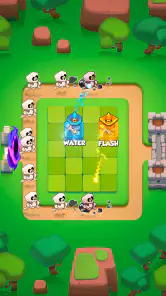

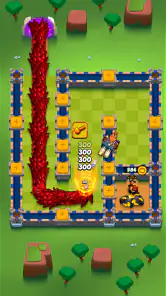

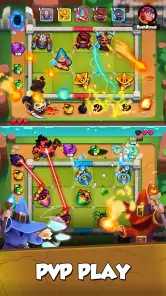
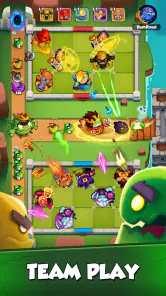
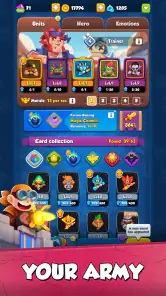
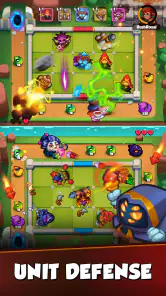
 Analysis by Frivlyz
I judge a free-to-play strategy game not only by whether its first matches are fun, but also by how it treats my time and wallet once the novelty wears off. Rush Royale: Tower Defense TD makes a lively first impression: it turns familiar wave defense into a contest of quick decisions, shifting plans, and a bit of luck. I’d recommend it to someone who enjoys tactical choices in compact sessions, but I’d go in ready for randomness and a progression loop that may ask for patience.
What the purchase details mean in practice
Rush Royale is a free strategy game from MY.GAMES B.V., with optional in-app purchases priced from $0.99 to $169.99 per item. That range matters more than a vague promise that spending is optional: the entry price is zero, but the upper end is substantial, so I’d decide on a personal spending limit before browsing any offers. I can’t infer from the price range alone what each item contains or how much it changes a match, so I wouldn’t treat a purchase as a guaranteed shortcut to better results.
The game is rated Teen. Its average rating is 4.2 from around 732,000 ratings, with about 22,000 written reviews, and it has passed 50 million installs. Those figures suggest that plenty of people have tried it, but they don’t settle whether its pace or monetization will suit you. It was released on October 26, 2020; the current version is 30.0.108476, and it requires Android 7.0 or later. I’d check that your device meets the requirement before planning to play.
Our Stories on Rush Royale: Tower Defense TD
Rush Royale: Tower Defense TD - Strategy Meets Excitement
NewsDancing Road Turns Short Breaks Into a Test of Rhythm and Timing
NewsSuper Stylist Makes Every Outfit a Test of Taste and Patience
NewsDominoes on Your Terms: Who Should Play and Who Should Pass
NewsPokémon GO Makes the Familiar World Feel New
NewsChess.com Turns Rematches Into Rivalries, but Community Has Its Costs
NewsWhere the pressure comes from
The most useful way I’ve found to approach the randomness is to avoid treating every summon as a problem to fix immediately. A new unit can complicate the board, but reacting with a merge every time may leave you without the variety you need. I try to pause long enough to ask two questions: do I need a stronger unit right now, or do I need to preserve options for the next wave? That small habit makes decisions feel deliberate instead of frantic.
This also helps explain who will enjoy the game most. If you like adapting a plan as the board changes, the uncertainty can be a source of tension rather than an annoyance. If you prefer to build a precise defense, place each tower exactly where you want it, and execute a stable strategy, a more traditional tower defense game may be a better fit. Here, you respond to the pieces you get instead of laying out a fixed maze of defenses.
A realistic use case is a short break when I have enough attention for a match but not enough time to settle into a long strategy campaign. I’d start a round only when I can stay focused through its changing decisions; it isn’t ideal background play if I want to ignore the screen. Before jumping into a competitive match, I’d also use a lower-pressure session to get comfortable with summoning and merging. That gives me room to learn how a board develops without making every uncertain choice feel like a test.
Fairness, patience, and spending
The PvP mode gives the game a sharper edge because another player is part of the comparison. I enjoy that extra pressure, but it also changes how I think about progression: losing can feel personal when the opponent seems to have a better setup. I’d avoid assuming that one defeat proves a spending gap, just as I wouldn’t assume every result comes down to skill. Random summons already make individual matches variable, and purchase prices alone don’t show how much any item affects competitive balance.
Gaming Stories You May Enjoy

Archery Battle 3D Review: Sharp Aiming, Unclear Feedback

Should You Switch to Geometry Dash Meltdown? A Test of Timing and Patience

Fidget Toys Trading・Pop It 3D: What Happens When the Game Stumbles
NBA LIVE Mobile Makes the Season the Main Event

Sonic Forces: PvP Battle Race - Speed and Strategy Combined

Unlocking the Secrets of Piano Game: Classic Music Song
My practical advice is to treat purchases as optional entertainment rather than a requirement for winning. Play long enough to see whether the basic loop stays enjoyable, then consider spending only if a specific offer appeals to you and fits your budget. The high end of the listed purchase range is a reason to be deliberate, not evidence by itself that progress is impossible without paying. If you want a game with clearly predictable progression and no purchase decisions to weigh, this may not be the most comfortable choice.
Questions worth answering before you install
Can I play without paying? The game is free to start, and in-app purchases are optional in the sense that you can download it without buying an item. I’d still separate that from the question of how quickly an individual player progresses: the listed prices don’t answer that, so I wouldn’t promise a particular pace. Is it a good fit for a newcomer? The interface and onboarding are approachable, but the strategic choices become more interesting once you learn not to merge automatically and to think about what your board may need next.
Is it suitable for someone who wants classic tower defense? Only partly. It shares the wave-defense idea, yet its summon-and-merge decisions make it less about carefully positioning fixed towers and more about adapting to a changing lineup. And is PvP essential? It is a notable part of the appeal, but someone who dislikes competition may prefer a less opponent-focused strategy game. I’d choose this one for flexible, match-by-match tactics, not for a calm puzzle or a fully controlled defense plan.
Gameplay That Keeps You Hooked
The core of Rush Royale revolves around classic tower defense mechanics, but what sets it apart is the unique blend of strategy and randomness. Instead of placing towers, you summon mighty heroes to fend off waves of enemies. The catch? You never know exactly which hero you'll summon next. This adds an exciting element of unpredictability, making each match feel fresh and engaging.
A Visual and Auditory Delight
The graphics in Rush Royale are vibrant and colorful, drawing you into its whimsical world. The characters are quirky and well-designed, each with their own unique abilities and styles. Pair these visuals with a soundtrack that perfectly complements the action, and you’ve got a game that's as pleasing to the eyes as it is to the ears.
But, it's not just about pretty graphics. The user interface is intuitive, making it easy for newbies to jump in without a steep learning curve. The game does a great job of onboarding new players, ensuring you're not overwhelmed by its features.
Strategic Depth
What I absolutely love about Rush Royale is the strategic depth it offers. Balancing between upgrading your heroes and managing resources can be quite the brain teaser. You’ll often find yourself pondering whether to merge heroes for stronger units or to maintain a diverse lineup to counter different enemy types. It’s this layer of strategy that keeps you coming back for more.
Moreover, the PvP mode adds another level of excitement. Competing against players worldwide to see who can hold off the enemy waves longer is both thrilling and nerve-wracking.
Free-to-Play, But Fair
One concern I had going into Rush Royale was its free-to-play model. However, I was pleasantly surprised. The game offers in-app purchases, but they don't feel intrusive. You can enjoy the game fully without spending a dime, although investing in some goodies can enhance your experience.
Overall, Rush Royale: Tower Defense TD is an exhilarating blend of strategy and chance, wrapped in a beautifully designed package. Whether you’re a seasoned strategist or just looking for a fun way to pass the time, this game is definitely worth a download. Give it a shot; you might just find yourself hooked!
Making each match count
There’s a useful distinction between learning what a unit does and learning when to keep it. In a game built around changing summons, recognizing the value of a mixed board is as important as chasing a stronger piece. I try to look at the whole field before merging: if several enemies are approaching and my damage is uneven, preserving different units may be safer than concentrating strength in one spot. If the board is already coping, a merge can be a considered gamble rather than an automatic move.
I also recommend paying attention to the reason a round went badly. Was the board too narrow in its options, or did I spend too long waiting for an ideal summon? That kind of quick post-match review is more useful than blaming randomness alone. It won’t remove luck from the game, but it can reveal habits I can change. This is one of the more satisfying parts of the strategy: improvement often comes from managing imperfect choices, not from discovering a single guaranteed sequence.
How it compares with other strategy games
Compared with a conventional tower defense title, where I can often plan a route and position defenses before enemies arrive, Rush Royale keeps more of the decision-making inside the match. I’m working with a changing set of summoned units rather than designing a complete layout in advance. That makes it more reactive and less like a puzzle with one carefully engineered solution. Players who enjoy drafting under pressure may find that refreshing; players who want full control over placement may find it frustrating.
It also feels different from a slower, campaign-focused strategy game. The attraction here is the repeated turn of the match: see what appears, decide whether to merge, and adjust as the wave progresses. That focus makes it easier to pick up for a short session, but it doesn’t make it an effortless idle game. I need to watch what is happening and make timely choices. If I want something I can leave running while I do other things, I’d choose a less active format.
Who should give it a try—and who may not
I’d point this toward players who like compact tactical decisions, don’t mind a changing hand of options, and enjoy measuring their choices against another player. It can also suit someone who has tried standard tower defense but wants a less rigid approach to waves. The welcoming interface makes starting less intimidating than the underlying decisions might suggest, though getting comfortable with those decisions takes more than one match.
I’d steer away from it if losing to a variable board is likely to spoil the session, if competitive comparison makes games stressful, or if you want progress to follow a perfectly predictable schedule. It is also not the best match for a player who wants to spend time arranging fixed defenses and refining a map layout. Those preferences aren’t flaws; they simply point toward a more traditional tower defense game or a quieter single-player strategy experience.
A practical routine for new players
When I’m learning a strategy game like this, I prefer to change one decision at a time. I’ll focus one session on noticing which merges leave the board too uniform, then another on spotting when I’m holding back for a summon that may not arrive. This makes it easier to connect a choice with its result. I wouldn’t try to judge the whole game from a single lucky or unlucky round, especially when chance is deliberately part of the design.
For a casual routine, I’d play when I can give a match my attention, then stop if I find myself making rushed merges just to keep up. That’s a better signal to take a break than to spend impulsively in an effort to recover a frustrating result. If I’m enjoying the decisions even when a round goes against me, the game is doing its job. If only wins feel satisfying, its competitive pressure may become tiring.
What I would keep in mind about trust
My overall view is positive, with one important qualification: I trust the game most as a free strategy experience when I treat spending as a choice and randomness as part of the challenge. Its purchase range is clear, but that alone cannot tell me whether a particular item is worthwhile or how it influences a matchup. I would make that judgment only after seeing the offer in context, and I would never treat a purchase as a reliable way to erase losses.
Rush Royale has a recognizable identity: bright presentation, wave defense, summon-driven uncertainty, and PvP tension. Those ingredients make it easy to understand why it appeals to a large audience, while also explaining its limits. It is not a pure test of carefully planned placement, and the combination of chance and competition will not suit everyone. If that trade-off sounds fun to you, I think it’s worth trying free; if you need certainty, a more controlled tower defense game is the safer recommendation.
Rush Royale: Tower Defense TD Pros and Cons
Pros
- Engaging and strategic gameplay
- Frequent updates with new content
- Vibrant and appealing graphics
- Various modes to keep players entertained
- Free to play with optional in-app purchases
Cons
- Can be pay-to-win at higher levels
- Occasional connectivity issues
- Some balancing issues among cards
- Ads can be intrusive
- Requires constant internet connection
Frequently Asked Questions
What is Rush Royale: Tower Defense TD?
Rush Royale: Tower Defense TD is a unique strategy game that combines elements of tower defense with collectible card games. Players must strategically place their heroes and defenses to fend off waves of enemies. The game is available on both Android and iOS platforms, offering a fast-paced and engaging experience for fans of strategy games.
Is Rush Royale free to play?
Yes, Rush Royale is free to download and play. However, it contains in-app purchases that allow players to buy various items, heroes, and upgrades. These purchases can enhance the gameplay experience but are not necessary to enjoy the game. Players can still progress through skill and strategy without spending money.
What are the key features of Rush Royale?
Rush Royale offers several key features, including a blend of tower defense and card collection mechanics, real-time PvP battles, and cooperative gameplay modes. Players can collect and upgrade a variety of heroes, each with unique abilities. The game also features seasonal events and regular updates to keep the content fresh and engaging.
How does the PvP mode work in Rush Royale?
In Rush Royale's PvP mode, players compete against each other in real-time battles. Each player must defend their own territory while trying to overpower their opponent with strategically placed heroes and defenses. The goal is to outlast the opponent by surviving waves of enemies and strategically managing resources and hero abilities.
Are there any tips for new players starting Rush Royale?
New players should focus on building a balanced deck of heroes, combining both offensive and defensive capabilities. It's crucial to understand each hero's abilities and upgrade them accordingly. Additionally, participating in daily challenges and events can provide valuable rewards and help players progress faster. Joining a clan can also offer strategic advice and support.


