

RollerCoaster Tycoon® Classic
- Reviews
- 3.6
- Version
- 1.2.25
- Installs
- 100,000+

Screenshots
 Analysis by Frivlyz
I like RollerCoaster Tycoon® Classic most when I treat it as a planning game rather than a quick ride-building toy. A park can look busy and still be poorly arranged, and a few thoughtful choices about paths, attractions, and spending can matter more than adding another flashy coaster. That makes it satisfying for players who enjoy weighing options and refining a plan, though it asks for more patience than a casual game built around instant rewards.
Making Room for a Better Park
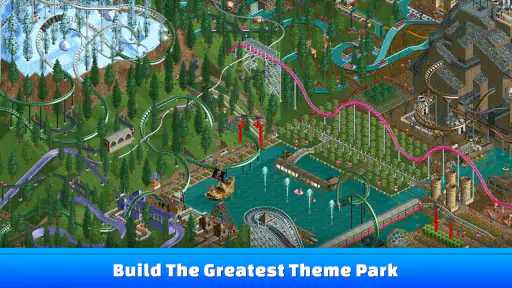
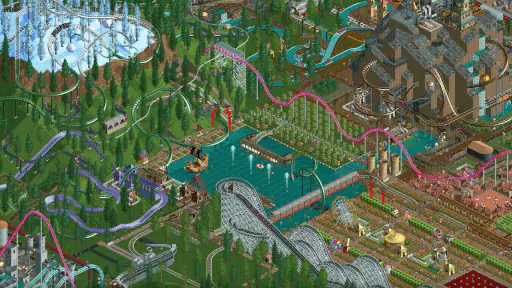
When I first launched RollerCoaster Tycoon® Classic, I was immediately transported back to my childhood days. The interface is intuitive, and the graphics, while retro, are charmingly pixelated, just like the originals. You start with a plot of land, a limited budget, and the freedom to create the amusement park of your dreams. I love how the game maintains its classic features, such as the isometric viewpoint and the ability to zoom in and out with ease.
Planning before the crowds arrive
What truly sets this app apart is its depth. You’re not just slapping down a few rides and calling it a day; you’re managing every aspect of your park. From setting ticket prices to hiring staff and even designing your own roller coasters, the game offers endless possibilities. I found myself deeply engrossed in optimizing my park’s layout for maximum efficiency and guest satisfaction.
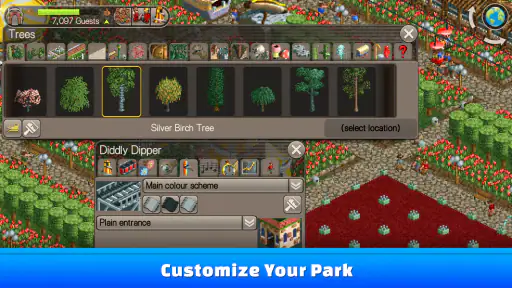
The game includes hundreds of rides, shops, and facilities to choose from, and you can even customize the color and theme of each ride. It’s like being a kid in a candy store! Plus, the game challenges you with various scenarios, each with its own objectives, which keeps things fresh and exciting.
That variety is most useful when I give myself a constraint instead of trying to build everything at once. I might focus on making one corner of the park appealing, then connect it to the entrance with a route that feels easy to follow. This gives me a chance to see how the layout works before spending heavily elsewhere. A practical habit is to zoom out regularly: close-up placement is satisfying, but the wider view makes awkward gaps and confusing routes easier to notice.
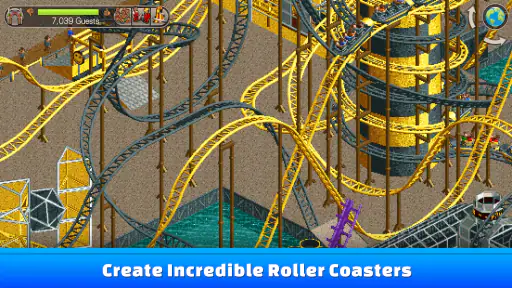
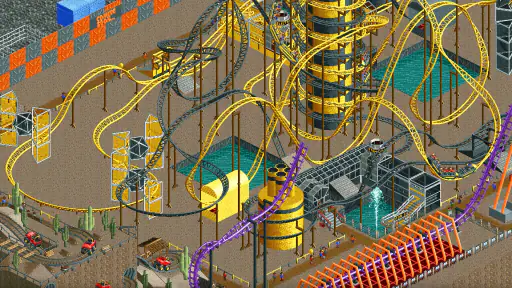
Designing a coaster is a different kind of decision from choosing a ready-made attraction. The custom option gives creative players room to experiment, but it also makes restraint valuable. I prefer to think about where the ride fits and how guests will reach it before committing to an elaborate design. A distinctive coaster can become the focus of a section, but if the surrounding area is neglected, the park may still feel unfinished. The trade-off is between spending time on a memorable centerpiece and using that same attention to make the whole park function smoothly.
When ambition meets the budget
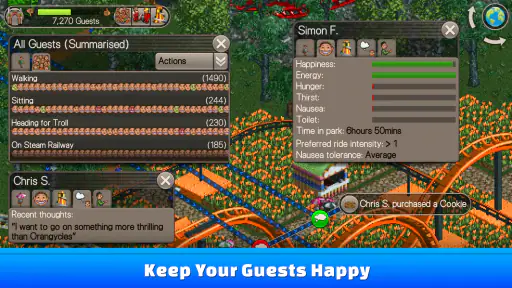
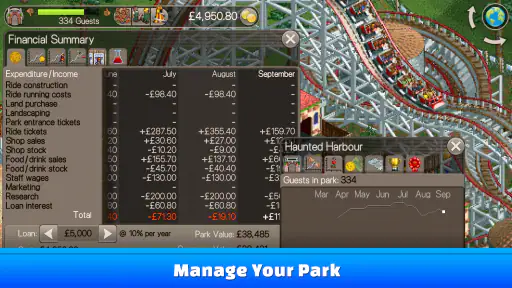
One of the most interesting aspects of the game is its strategic depth. Balancing your budget while expanding your park is no easy feat. There were moments when I had to pause and rethink my strategy to ensure my park remained profitable. I also appreciated the detailing in guest behaviors, as it allowed me to tweak my rides and facilities to better meet their needs. Watching the guest satisfaction meter rise is incredibly rewarding.
Gaming Stories You May Enjoy

Dancing Road Turns Short Breaks Into a Test of Rhythm and Timing

Super Stylist Makes Every Outfit a Test of Taste and Patience

Dominoes on Your Terms: Who Should Play and Who Should Pass

Pokémon GO Makes the Familiar World Feel New

Chess.com Turns Rematches Into Rivalries, but Community Has Its Costs

Archery Battle 3D Review: Sharp Aiming, Unclear Feedback
The key decision is not simply whether a ride is attractive, but whether building it now is worth delaying another need. A small expansion can be safer than a grand redesign when funds are tight. I try to observe what is happening after each change instead of making several expensive adjustments together; that way, if the park improves or starts to struggle, I have a clearer idea of what caused it. This measured approach is especially helpful in scenarios, where objectives give the building process a purpose beyond creating the largest-looking park.
There is a satisfying risk-and-reward rhythm here. Taking a chance on a major attraction may help a park feel more compelling, but a plan that depends on constant expansion can leave little room to correct a weak layout. I find it more rewarding to keep some flexibility in my decisions: improve a route, add a useful facility, or adjust the park’s balance before chasing another big project. The game does not turn every decision into a dramatic crisis, but its financial management gives careless expansion consequences.
For a realistic short session, I might open the game while relaxing at home, choose one section of a scenario to improve, and spend a few minutes checking whether the new arrangement makes sense from the wider view. I do not need to rebuild the entire park to make progress; a focused change, followed by watching how guests respond, is a more manageable way to play. That loop suits a quiet break, although I would not choose it when I want a game that can be enjoyed without paying attention to menus, placement, or budgets.
Learning to adapt as scenarios change
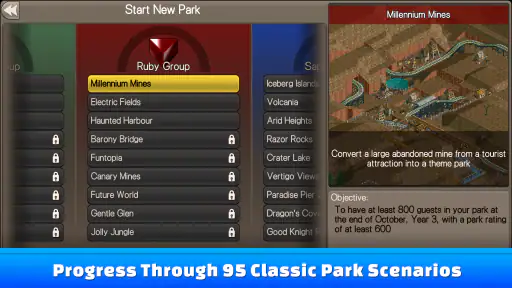
The scenario structure gives me a reason to adapt rather than repeat one perfect design. An approach that feels sensible in one park may not be the best answer in another, so I treat each objective as a prompt to reconsider priorities. It helps to make changes in stages: establish a workable foundation, check how the park is performing, and then invest in a more ambitious improvement. This also makes it easier to spot when a change is cosmetic rather than useful.
One subtle but practical choice is how often to pause and inspect the whole park. If I spend too long zoomed in on a ride, I can lose sight of the connections that make the experience coherent. Looking across the park lets me judge whether attractions, shops, and paths feel like part of one plan. On the other hand, close inspection is valuable when I am placing or customizing something specific. Switching between those views is a simple workflow, but it keeps detail work from taking over the bigger planning problem.
Players new to the series may wonder whether the retro presentation makes the game hard to read on a phone. I find the isometric view and zoom controls useful for moving between small placement decisions and broader layout checks, though the amount of management still takes some getting used to. If you are unsure whether you will enjoy that style, approach a session as a small experiment rather than expecting to master every system immediately. The game is more inviting when I let myself learn through one decision at a time.
Depth that rewards patience
As a simulation game from Atari, Inc., it leans on careful construction and management rather than fast action. Its old-school visual style is part of that appeal: I can concentrate on routes and ride placement without expecting modern presentation or a story-led campaign. Compared with many mobile simulation games that simplify building into quick upgrades, this one gives me more control and asks me to think through the consequences. That depth is a strength for patient players, but it can feel demanding if you mainly want a relaxed game that plays itself.
The game is best suited to people who enjoy arranging spaces, tracking how visitors respond, and improving a design over time. Fans of theme-park management will find a familiar kind of appeal in balancing creativity against practical needs. It is less suitable for someone who dislikes fiddly planning, wants a very short learning curve, or expects a modern-looking 3D presentation. If those are priorities, a more streamlined or visually contemporary simulation may be a better fit.
It is also a paid game: the price is $5.99, with optional in-app purchases ranging from $1.99 to $5.99 per item. I would think about that before installing, especially if I am only curious about the genre. The main attraction for me is the combination of hands-on construction and scenario-based goals, not a promise of a free, low-commitment experience. It is rated for Everyone, and its current version is 1.2.25; the minimum operating system is 7.0.
The game was released on Mar 7, 2019, and it has 100K+ installs, with a 3.6 average from around 5.8K ratings and about 1.2K reviews. Those figures suggest a well-established but not universally loved mobile release. I would read that in context: its deliberate pace and classic interface are likely to appeal strongly to some players and less to people looking for a more modern or hands-off experience.
Who should build here
For me, this is a good choice when I want a simulation that rewards attention instead of reflexes. A returning player can enjoy the familiar park-building approach, while a newcomer can use the scenarios to give each project a clear direction. I would skip it if I wanted a quick, guided game with little decision-making, or if retro visuals are an immediate turnoff. The best fit is someone happy to spend time testing an idea, noticing what is not working, and making a more considered adjustment.
In conclusion, RollerCoaster Tycoon® Classic is a must-have for anyone who loved the original games or is just looking for a robust simulation experience. It’s a game that doesn’t just rely on nostalgia but stands strong on its own merits. Whether you’re a seasoned tycoon or a newcomer, there’s something here for everyone. So, if you’re ready to unleash your inner theme park designer, give this game a whirl. Trust me, you won’t be disappointed!
RollerCoaster Tycoon® Classic Pros and Cons
Pros
- Nostalgic gameplay with classic features.
- Wide variety of roller coaster designs.
- Offline play without internet needed.
- Customizable park management options.
- Regular updates with new content.
Cons
- Graphics feel outdated compared to modern games.
- Can be complex for new players.
- In-app purchases can be expensive.
- Limited social interaction features.
- Occasional bugs and glitches reported.
This Game in Other Languages
Frequently Asked Questions
What is RollerCoaster Tycoon® Classic?
RollerCoaster Tycoon® Classic is a mobile game that combines the best features of the original RollerCoaster Tycoon® games. It allows players to design and manage their own amusement parks, complete with custom roller coasters, thrill rides, and park facilities. The game offers a nostalgic experience with enhanced graphics and new features for both Android and iOS users.
Is RollerCoaster Tycoon® Classic free to play?
RollerCoaster Tycoon® Classic is not free to play. It is a premium app available for purchase on both Android and iOS platforms. However, this one-time purchase gives players access to the full game, without any in-app purchases or microtransactions, providing a complete gaming experience without additional costs.
What are the main features of RollerCoaster Tycoon® Classic?
The game features a combination of classic gameplay elements and new enhancements. Players can create their own roller coasters, manage park resources, and make strategic decisions to achieve success. It includes scenarios from the original games, improved graphics, and the ability to save and share your park designs. The game focuses on creativity and strategic management.
Can I play RollerCoaster Tycoon® Classic offline?
Yes, RollerCoaster Tycoon® Classic can be played offline. Once downloaded and installed, the game does not require an internet connection to play. This makes it ideal for users who want to enjoy the game on the go, without relying on mobile data or Wi-Fi access. Offline play ensures uninterrupted gaming experiences.
Is RollerCoaster Tycoon® Classic suitable for all ages?
RollerCoaster Tycoon® Classic is suitable for a wide range of ages, particularly for those who enjoy simulation and strategy games. It has a PEGI rating of 3, indicating that it is appropriate for all age groups. The game's user-friendly interface and intuitive controls make it accessible for younger players while still offering depth and challenge for older users.


