

Rhythm Rush Lite-Be Piano Star
- Reviews
- 4.4
- Version
- 1.5.6
- Installs
- 10,000,000+

Screenshots


 Analysis by Frivlyz
I like music games best when they give me something to do with a song beyond simply listening, and Rhythm Rush Lite-Be Piano Star aims for exactly that kind of quick, hands-on fun. It is a free music game from Boom Studio Limited, built around tapping on-screen tiles in time with the beat. That makes it easy to understand at a glance, though getting a clean run is a different matter: once the rhythm speeds up, even a familiar tune can demand real concentration.
The basic appeal is its low barrier to entry. You do not need music lessons or a piano to start; you need a screen, a song, and a willingness to pay attention. I would reach for it during a short break or while waiting somewhere, rather than expecting a deep music-learning tool. Its strongest use is as a compact reflex challenge with a musical pulse, not as a substitute for practicing an instrument or exploring full-length tracks.
Get Ready to Tap to the Beat
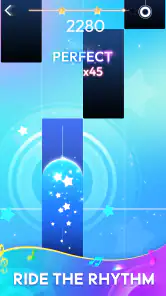
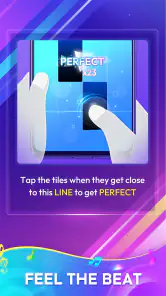
From the moment you launch Rhythm Rush Lite-Be Piano Star, you're greeted with a colorful and inviting interface. The game's concept is simple yet addictive: tap the piano tiles as they appear on the screen to the beat of the song. It's all about timing and rhythm, and as you progress, the pace picks up, challenging your reflexes and precision.
That simple loop also makes the game easy to fit around ordinary routines. I can imagine playing one round while taking a coffee break, then putting the phone away without needing to remember a complicated story or manage a long session. The trade-off is that a quick-restart style of play can encourage “one more try” when I miss a tile. If I am using it to fill a few spare minutes, I would set a stopping point before starting rather than letting a short break turn into a much longer one.
For a more comfortable first session, I would begin with a slower track and hold the phone steadily in both hands. That gives me a chance to learn how the tile timing feels before trying to chase a better score. Playing on a stable surface can also help if repeated tapping makes my grip awkward. These are small practical choices, but rhythm games are unforgiving when a hand shifts or attention wanders, and a fair test should separate my timing from avoidable handling mistakes.
Gameplay and Features
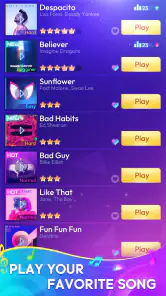
The game offers a variety of songs to choose from, spanning different genres and tempos. Whether you're a fan of classical music or prefer the latest pop hits, there's something here for everyone. Each song is divided into various levels of difficulty, allowing players to start slow and gradually build their skills. The satisfaction of hitting the right notes and achieving a high score is truly rewarding.
The store description points to Hip-Hop and EDM as the musical focus, so I would set expectations around beat-led tracks rather than a broad library covering every style. That distinction matters if song choice is the main reason you download a music game. A player who enjoys strong, clearly marked beats is more likely to settle into the timing than someone who wants a particular artist, a specific chart hit, or a wide range of acoustic genres.
Gaming Stories You May Enjoy

Dancing Road Turns Short Breaks Into a Test of Rhythm and Timing

Super Stylist Makes Every Outfit a Test of Taste and Patience

Dominoes on Your Terms: Who Should Play and Who Should Pass

Pokémon GO Makes the Familiar World Feel New

Chess.com Turns Rematches Into Rivalries, but Community Has Its Costs

Archery Battle 3D Review: Sharp Aiming, Unclear Feedback
One useful way to approach the difficulty is to treat each attempt as practice in one specific skill. If I keep missing during a faster passage, I would repeat that track at a more manageable level instead of immediately jumping to another demanding song. I would also pay attention to whether I am tapping too early or too late; changing my timing deliberately is more helpful than simply tapping harder or faster. The game’s appeal is in coordinating sight and sound, and a calmer retry can teach more than a string of rushed attempts.
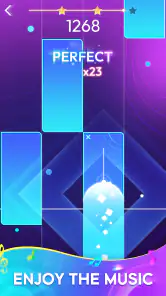
One of the standout features of Rhythm Rush Lite-Be Piano Star is its vibrant graphics and smooth animations. The tiles glide across the screen seamlessly, and the accompanying sound effects enhance the overall experience. It's not just a game; it's a visual and auditory delight that keeps you hooked for hours.
Visual clarity is especially important here because the screen is both the playfield and the source of the cues. I would play somewhere with enough light to see the tiles clearly, but avoid strong glare across the display. If I am tired or distracted, a busy visual presentation can make timing feel harder even when the song itself is not especially quick. That is a genuine trade-off of tile-based rhythm play: it asks me to follow moving shapes as well as listen to the beat, whereas a music player lets me focus entirely on the sound.
Compared with other music games, this one sits on the accessible, tap-focused side of the category. It is a better fit for someone who wants direct touch controls than for someone looking for a full rhythm setup with a complex instrument layout. Compared with simply listening to a playlist, it demands attention and turns the music into a task; compared with a piano-learning app, it is entertainment rather than a structured lesson. Knowing that difference helps avoid expecting it to teach notation, technique, or real keyboard skills.
Why You'll Love It
What makes this game particularly enjoyable is its accessibility. You don't need to be a piano prodigy to enjoy it; all you need is a sense of rhythm and a willingness to have fun. The game is designed to be user-friendly, with intuitive controls and a straightforward interface that even beginners can navigate with ease.
That accessibility does not mean every player will find it relaxing. If I am in the mood to unwind without concentrating, a tile game that asks for precise timing may feel more like a test than background entertainment. It is also a less suitable choice for someone who dislikes repeated attempts or whose main goal is to discover new music without interacting with the screen. I would choose a music-streaming app for passive listening and a dedicated rhythm game with more elaborate controls if I wanted a deeper, more demanding play experience.
A realistic routine might be to open it on a bus ride while seated, choose a track that matches my energy, and play a round or two before putting the phone away. I would avoid playing while walking, crossing streets, or doing anything that needs my attention: following moving tiles pulls focus toward the screen. For a short commute, the game can make waiting feel more active; for a noisy or crowded trip where I cannot hear the beat comfortably, the experience may be less satisfying than I expect.
The game is suitable for a broad audience: its content rating is Everyone, and the minimum Android requirement is version 6.0. It has reached over 10 million installs and holds a 4.4 average from around 8,400 ratings, which suggests plenty of people have tried it, though popularity alone cannot tell me whether its songs suit my taste. It was released on December 19, 2023, and version 1.5.6 is the current version. I would still check that my device runs the required system version before downloading.
It is also worth separating the free entry point from the possible spending. The game is free to download, while optional in-app purchases range from $0.49 to $75.88 per item. That is a broad spread, so I would not assume every purchase is a small add-on or that I need to spend to enjoy the basic rhythm challenge. I would start without buying anything, see whether I return to it, and review the purchase details carefully before confirming an item. Free access is a real advantage for trying it; paid value depends on what a particular purchase offers and how much I personally want it.
Boom Studio Limited is the developer, and the game has 92 written reviews alongside its larger rating total. Those figures offer a snapshot of public response, not a guarantee that every device, song preference, or playing style will feel the same. I would use the first few sessions to judge the practical things that matter to me: whether I can follow the tile cues, whether the music is enjoyable, and whether the pacing stays fun rather than frustrating.
One question people often have is whether this will help them learn piano. I would not download it for that purpose. Tapping tiles may sharpen attention and timing in a game context, but it is not the same as learning hand position, reading music, or practicing a keyboard. Another sensible question is whether it suits a complete beginner to rhythm games. The straightforward controls make it approachable, but the increasing pace still rewards patience; starting with easier material is a better test than judging it by a difficult first attempt.
Song preference is another deciding point. The emphasis on Hip-Hop and EDM makes the game a natural match for players who enjoy beat-driven music, while those hoping for a large, carefully curated selection across many genres may be happier with a different option. And if I am concerned about spending, I can try the free game first and treat purchases as optional rather than part of the entry price. That is the clearest way to assess value without assuming that every paid item is necessary.
Moreover, the game encourages players to improve their skills by offering achievements and rewards. As you progress, you can unlock new songs and features, providing a sense of accomplishment and motivation to keep playing. The competitive aspect, with leaderboards and the ability to challenge friends, adds another layer of engagement.
I would use those goals as motivation only if they make the play more enjoyable. Chasing a score can be satisfying, but it can also turn a casual music break into a repetitive grind if I keep replaying a section after I have stopped having fun. A good personal rule is to switch tracks or stop after a few focused attempts. That keeps the game in its best role: a quick challenge that adds an interactive beat to spare time, rather than a chore I feel obliged to complete.
The Final Note
In conclusion, Rhythm Rush Lite-Be Piano Star is a delightful game that combines music, rhythm, and fun in a neat package. Its vibrant graphics, diverse song selection, and engaging gameplay make it a must-try for anyone who enjoys music-themed games. So, if you're looking for a game that will test your timing and keep you entertained, this is it. Just remember, it's all about the rhythm!
My recommendation is more specific: try it if you want a free, easy-to-start tapping game and enjoy the kind of beat-led music it focuses on. Skip it if you want a piano tutor, passive listening, or a broader music library as your main attraction. I would begin with a no-purchase session, see whether the timing feels satisfying on my device, and only consider spending if a clearly described optional item genuinely adds value for me. For the right player, it is an appealing little test of attention; for everyone else, the same fast taps may be reason enough to choose another kind of music app.
Rhythm Rush Lite-Be Piano Star Pros and Cons
Pros
- Engaging rhythm gameplay
- Wide variety of songs
- User-friendly interface
- Minimal ads
- Offline play available
Cons
- Limited free content
- In-app purchases
- Occasional lag
- No multiplayer mode
- Basic graphics
Frequently Asked Questions
What is Rhythm Rush Lite-Be Piano Star all about?
Rhythm Rush Lite-Be Piano Star is an engaging music game that challenges players to tap on the screen in time with the rhythm of various popular songs. The game is designed to enhance your sense of rhythm and timing while providing an enjoyable experience with its colorful visuals and upbeat tracks.
Is Rhythm Rush Lite-Be Piano Star free to play?
Yes, Rhythm Rush Lite-Be Piano Star is free to download and play. However, it offers in-app purchases for players who wish to enhance their gameplay experience further. These purchases might include additional songs, ad removal, or other premium features to enrich the overall experience.
What are the system requirements for Rhythm Rush Lite-Be Piano Star?
To enjoy Rhythm Rush Lite-Be Piano Star, you need a device running Android 5.0 and up or iOS 10.0 and later. It is optimized for both platforms, ensuring smooth performance and high-quality graphics. Ensure your device meets these requirements for the best gaming experience.
Can I play Rhythm Rush Lite-Be Piano Star offline?
Rhythm Rush Lite-Be Piano Star requires an internet connection for downloading new content and updates. However, once you have your desired songs downloaded, you can enjoy the game offline. This feature makes it convenient for players who want to enjoy the game without continuous internet access.
Are there ads in Rhythm Rush Lite-Be Piano Star?
Yes, Rhythm Rush Lite-Be Piano Star includes ads as part of the free version of the game. These ads help keep the game free for all users. However, players have the option to remove ads through in-app purchases, allowing for an uninterrupted gaming experience.


