

Refind Self
- Reviews
- 4.6
- Version
- 1.1.0409
- Installs
- 10,000+

Screenshots






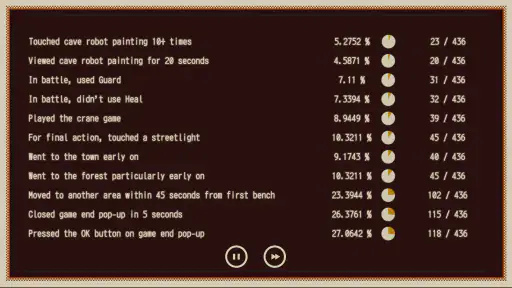
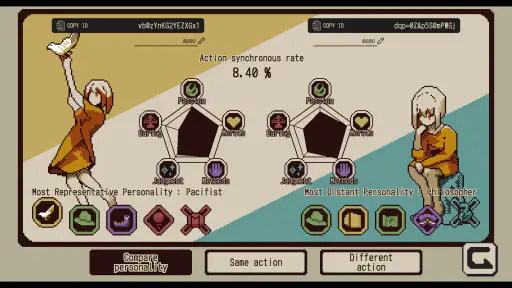
 Analysis by Frivlyz
Hey folks, have you ever felt overwhelmed by the amount of content out there on the internet? If you’re like me, you probably spend a lot of time sifting through articles, blogs, and news trying to find something that actually sparks your interest. Well, today I’m diving into an app that claims to solve just that problem – Refind Self. Let’s see if it really can help us find the content that matters.
A different kind of discovery
There is an important catch before you decide whether this game is for you: despite what the older description below suggests, Refind Self is an adventure game, not a news reader or article organizer. Its store summary calls it a personality test game, and that framing is a better guide to what you are choosing than the familiar idea of collecting links for later. I would approach it as a reflective game built around discovering something about yourself through play, rather than as a tool for managing information.
That distinction matters because it changes what a satisfying session looks like. A conventional adventure usually asks me to focus on a plot, solve obstacles, or pursue a clear destination. A personality-oriented experience has a different appeal: the interest is in the decisions I make and the impression those choices leave. I would not go in expecting a competitive challenge or a practical self-help program. The best reason to try it is curiosity about how a game can turn ordinary choices into a portrait of the player.
What to consider before starting
I would first ask myself whether I enjoy introspective experiences. If I like pausing over why I chose one option rather than another, and I enjoy discussing those choices with a friend afterward, this premise has a natural hook. If I prefer fast action, demanding puzzles, or a story whose appeal depends on a tightly directed plot, I would look elsewhere in the adventure category. A personality test can be intriguing without being a substitute for those kinds of games.
It also helps to keep expectations grounded. A game’s reading of a person is best treated as a playful interpretation, not a diagnosis or a definitive account of who they are. I would use the result as a conversation starter: “That sounds like me in this situation, but not in that one.” This makes the experience more rewarding than trying to prove that every conclusion is objectively correct. It is a small but useful shift in mindset for anyone who tends to take personality labels too literally.
Where the premise can fit into an ordinary day
Imagine having a quiet stretch after dinner and wanting something more engaging than scrolling, but not wanting to commit to a long, demanding session. A reflective adventure can suit that mood because its appeal comes from thinking through choices, not from keeping up with other players or mastering a complicated competitive routine. I would also consider sharing the experience with a friend: each person can play privately, then compare what stood out to them. The conversation may be as enjoyable as the game’s own interpretation.
That shared use comes with a trade-off. If you talk through choices with someone else while playing, you may start choosing for the sake of a reaction rather than answering naturally. For a more personal first impression, I would play alone and save the discussion for afterward. On a later run, deliberately making different choices could be interesting, but I would not assume that replaying produces a wholly new adventure or a more accurate personality reading. The point is to notice how your approach changes, not to chase a perfect result.
Gaming Stories You May Enjoy

Dancing Road Turns Short Breaks Into a Test of Rhythm and Timing

Super Stylist Makes Every Outfit a Test of Taste and Patience

Dominoes on Your Terms: Who Should Play and Who Should Pass

Pokémon GO Makes the Familiar World Feel New

Chess.com Turns Rematches Into Rivalries, but Community Has Its Costs

Archery Battle 3D Review: Sharp Aiming, Unclear Feedback
How it compares with other adventure games
Against action-led adventures, Refind Self’s apparent draw is reflection rather than pressure. Someone choosing a game for combat, dexterity challenges, or a steady stream of external objectives may be happier with another title. Against puzzle adventures, the key question is whether you want to solve a defined problem or explore what your own decisions suggest. Those are different pleasures, and neither is automatically better; the right choice depends on what you want from the time you spend playing.
It also differs from standalone personality quizzes. A quiz is usually a direct sequence of questions, while a game can make self-reflection feel more like an experience than a form to fill out. That distinction is the main reason I would consider this one instead of simply taking a quick online test. In return, a game takes more attention and asks you to engage with its format. If all you want is a short label or a serious assessment, a dedicated questionnaire or a qualified professional is a more appropriate route.
Getting to Know Refind Self
Refind Self is like having a personal content curator at your fingertips. When I first downloaded the app, the sleek design caught my eye. It’s clean, intuitive, and doesn’t bombard you with unnecessary clutter. The app promises to help you discover, save, and read the most relevant articles tailored to your specific interests. And honestly, who wouldn’t want that?
That description does not match the game’s actual identity, so I would not use it to make a purchase decision. Refind Self is a paid game from PLAYISM, priced at $3.99, and the Teen age rating is worth checking if you are choosing something for a younger player. It was released on October 2, 2023, and its current version is 1.1.0409. Those details place it in the realm of a compact entertainment purchase rather than a free utility you can casually add to a reading workflow.
The price makes the decision more about fit than about accumulating features. Before buying, I would ask whether the personality-test premise itself interests me enough to spend on a game. If I mainly want an adventure with a strong conventional story, I would compare it with narrative-focused games first. If I am curious about self-reflection as play, the premise gives it a distinct reason to stand apart. The value depends less on how many hours I can extract and more on whether its central idea feels worthwhile to me.
Personalized Content Just for You
One of the standout features of Refind Self is its ability to tailor content recommendations based on your preferences. After a quick sign-up process, I was prompted to select my interests. Whether you’re into tech, health, finance, or even niche hobbies, Refind Self has got you covered. The app learns from your interactions, gradually refining its suggestions. It’s like your own digital librarian who gets smarter over time.
That passage describes recommendation behavior, not what I would rely on this game to do. The useful decision point is instead how comfortable you are with being invited to interpret your own behavior. I would go into a first session without trying to manufacture a certain kind of result. Choosing what seems natural makes the reflection more personally interesting; choosing answers to get a preferred label turns the experience into a test-taking exercise and can make the outcome feel less meaningful.
If you are unsure whether this style will hold your attention, think about how you respond to open-ended conversations about personality. Do you enjoy comparing your instincts across situations, or do you find personality categories reductive? The former is a good sign. The latter does not mean the game has nothing to offer, but it does suggest keeping expectations light and judging it as an adventure rather than as a source of psychological truth.
An Easy and Enjoyable Reading Experience
Let’s talk about the reading experience. The app strips down articles to their bare essentials, providing a clean and distraction-free reading space. I particularly loved the dark mode feature, which is easy on the eyes during late-night reading binges. Plus, you can save articles for later, making it super convenient to catch up on your reading list whenever you have a spare moment.
For Refind Self, I would replace that reading-focused expectation with a practical question: do you want a game that asks you to pay attention to your choices? It is not the same kind of low-effort background activity as browsing headlines while waiting for a bus. A better everyday moment might be a calm break when you can focus and are in the mood to think. If you are tired, distracted, or looking for something to play with half your attention, the reflective premise may not land as well.
One useful approach is to treat the first session as an exploration rather than an exam. Notice which decisions feel easy, which make you hesitate, and whether the game’s interpretation gives you anything to think about. That is a more revealing way to engage than trying to rush through for a verdict. I would also avoid letting a single result define the whole experience: people respond differently depending on context, mood, and what they happen to be considering that day.
Seamless Integration with Other Platforms
For those of us juggling multiple apps and platforms, Refind Self offers seamless integration with popular services like Pocket, Instapaper, and Evernote. This means you can easily import your saved articles, keeping all your reading materials organized in one place. It’s a small feature, but it makes a big difference for content hoarders like me!
Those integrations are not a reason to choose this title; they belong to the unrelated reading-app description. Instead, the relevant trade-off is the cost of switching your attention from familiar adventure formats to a game whose central curiosity is your own behavior. If you are used to choosing games for story, action, or puzzles, give yourself permission to judge this one by whether its reflective idea keeps you interested. It does not need to replace your usual favorites to be worthwhile, but it will not serve the same purpose.
Players who want a game to share can still make the experience social without turning every decision into a group vote. I would let one person play while the others watch only if that person is comfortable being observed; otherwise, taking turns privately and comparing impressions afterward is a gentler option. The important point is that other people’s opinions can color your choices. A little separation helps preserve the personal quality that makes a personality-focused game distinct.
Who should look elsewhere
I would skip Refind Self if I need a conventional adventure with a clearly defined emphasis on action, intricate puzzles, or a plot-first structure. I would also avoid buying it solely because I want a scientifically grounded personality assessment. A game can prompt useful reflection, but that is not the same thing as professional evaluation. If I wanted a robust way to understand a mental health concern or make a serious life decision, I would seek an appropriate professional resource rather than treating a game’s interpretation as evidence.
It may also be a poor fit when I am choosing something for a group with sharply different tastes. One friend may love talking about what choices reveal; another may want immediate action and become impatient with introspection. For a mixed group, a familiar multiplayer game or a straightforward story adventure could be the safer pick. Refind Self’s appeal is specific, and that specificity is a strength only when the player is genuinely interested in its central premise.
The game has an average rating of 4.6 from around 421 ratings, with 14 written reviews and over 10,000 installs. I see that as a sign that it has found an audience, not a guarantee that it will suit every adventure fan. Ratings can help establish that other players have tried it, but the most useful question remains whether you personally enjoy games that turn decisions into a mirror.
Final Thoughts
In a digital world overflowing with information, Refind Self stands out by helping you cut through the noise. It’s user-friendly, smart, and genuinely makes content discovery a breeze. While no app is perfect, Refind Self comes pretty close with its thoughtful features and seamless user experience. If you’re tired of endless scrolling and want to spend your time reading what truly matters, I’d say give Refind Self a shot. Who knows, it might just change the way you consume information for the better!
My recommendation is more specific: try Refind Self if the idea of a personality-focused adventure sounds enjoyable on its own, and if you are happy to approach its interpretation with curiosity rather than treating it as a final verdict. It is a less obvious pick than an action or story-led adventure, but that difference is exactly what can make it memorable for the right player. At $3.99, I would make the purchase because I want to explore that premise, not because I expect a reading app, a conventional quiz, or a definitive account of my personality.
Refind Self Pros and Cons
Pros
- Intuitive user interface design.
- Daily curated reading recommendations.
- Syncs across multiple devices.
- Customizable reading preferences.
- Boosts productivity with focused reading.
Cons
- Limited offline access to articles.
- Requires account for full features.
- Some features behind paywall.
- Occasional syncing issues.
- Limited integration with some apps.
Frequently Asked Questions
What is Refind Self and how does it work?
Refind Self is a self-improvement app designed to help users enhance their mental well-being and personal growth. It offers tools such as guided meditations, journaling prompts, and self-assessment quizzes. The app works by encouraging users to reflect on their daily habits, thoughts, and emotions, helping them to identify areas for improvement and track their progress over time.
Is Refind Self suitable for beginners in self-care?
Yes, Refind Self is designed to be user-friendly and accessible for beginners in the realm of self-care. The app provides step-by-step guidance and tailored content based on the user's preferences and goals, making it easy for newcomers to start their journey towards better mental health and personal development.
Does Refind Self require a subscription or is it free to use?
Refind Self offers a free version with limited features, allowing users to explore basic functionalities at no cost. However, for those interested in unlocking premium content, such as advanced meditation sessions and personalized coaching, a subscription is required. The subscription fees vary based on the plan chosen, typically offering monthly or annual options.
What kind of content can I expect from Refind Self?
Users of Refind Self can expect a diverse range of content aimed at promoting personal growth and mental well-being. The app includes guided meditations, mood tracking, personalized coaching, self-reflection exercises, and motivational articles. This variety ensures that users have comprehensive resources to support their journey towards self-improvement.
Can I use Refind Self offline?
Yes, Refind Self provides offline access to certain features, ensuring users can continue their self-improvement activities without an internet connection. Once content is downloaded, users can access guided meditations and other tools anytime, making it convenient for those who are often on the go or have limited internet access.


