

Real Bus Simulator : Bus Games
- Reviews
- 3.4
- Version
- 6.5
- Installs
- 50,000,000+

Screenshots
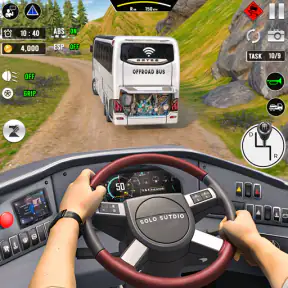


 Analysis by Frivlyz
I usually know within the first week whether a driving game has more to offer than a pleasant first impression. Real Bus Simulator: Bus Games made a reasonably clear case for itself as a casual strategy game built around bus-driving routines rather than high-speed racing. I spent time learning its controls, judging turns, managing the bus through ordinary routes, and deciding whether the experience felt rewarding enough to revisit. My conclusion is mixed but useful: it is easy to start, free to try, and approachable for players who enjoy simple vehicle challenges, yet its lasting appeal depends heavily on how much repetition you can tolerate.
The game comes from Solo Studio Inc and is aimed at a broad audience, with an Everyone content rating. It runs on devices using Android 6.0 or later, which makes it accessible to many older phones and tablets. The current release is version 6.5, and the game has attracted over 50 million installs. Those numbers suggest that it is designed for a wide casual audience rather than a small group of simulation specialists. I would describe it as a light bus-driving game with strategic elements, not as a detailed professional training simulator.
What the first week feels like
The opening appeal comes from the simple fantasy of taking responsibility for a large bus. A car can feel forgiving in a driving game, but a bus encourages me to think ahead. Turns need more space, stopping requires better timing, and careless movement feels more noticeable. That basic change in scale gives the game its first useful hook. Even when the underlying tasks are straightforward, the bus itself makes ordinary driving feel different from a typical arcade racer.
I found the early sessions best suited to short play periods. A quick route can provide a small sense of accomplishment without demanding the concentration of a long competitive match. This makes it a practical choice for a commute, a waiting room, or a few minutes before bed. It is also approachable for someone who does not normally play strategy games, because the strategic side is connected to driving decisions rather than menus full of complicated systems.
New players should resist the temptation to rush immediately. My most useful early habit was to treat every turn as a setup for the next action. I slowed before corners, left extra room near obstacles, and corrected the bus gently instead of making sharp movements. That approach is less exciting than driving aggressively, but it reduces avoidable mistakes and helps the controls become familiar. In a bus game, smoothness matters more than speed, especially when the road layout becomes less forgiving.
The first week also reveals an important distinction between this title and a full simulation. It gives me the feeling of operating a bus, but I would not install it expecting the depth of a serious transport-management game. The experience is more immediate and game-like. Players who want a relaxed vehicle challenge will probably appreciate that accessibility. Players looking for realistic regulations, detailed passenger operations, complex timetables, or a deep economy may find the design too light.
The free entry point helps with that decision. I can try the core experience without paying at the beginning, while optional in-app purchases are priced at $0.99 per item. That makes experimentation relatively low-risk, but I still recommend playing long enough to understand the normal progression before spending anything. A purchase can make a moment easier or more convenient, but it cannot automatically solve the central question of whether the driving loop remains enjoyable after the novelty wears off.
Gaming Stories You May Enjoy

Dancing Road Turns Short Breaks Into a Test of Rhythm and Timing

Super Stylist Makes Every Outfit a Test of Taste and Patience

Dominoes on Your Terms: Who Should Play and Who Should Pass

Pokémon GO Makes the Familiar World Feel New

Chess.com Turns Rematches Into Rivalries, but Community Has Its Costs

Archery Battle 3D Review: Sharp Aiming, Unclear Feedback
The average rating is 3.4 from around 52 thousand ratings, which matches my impression of a game that will appeal strongly to some casual players and frustrate others. The large audience shows that the concept is easy to understand, but popularity alone does not guarantee that every player will enjoy the repetition. I would read the rating as a reminder to set realistic expectations: this is a simple bus game, not a definitive mobile simulation.
Small habits that improve the driving
One non-obvious advantage of a bus-focused game is that it rewards a different kind of attention from racing titles. Instead of staring only at the road ahead and chasing a fast time, I found myself planning the bus’s entire body through a turn. Before entering a narrow section, I tried to identify where the rear of the vehicle would swing. That habit is useful because many driving errors happen after the front has already cleared an obstacle.
I also recommend separating learning sessions from score-chasing sessions. During the first few attempts on a route, I focused on discovering where braking and steering felt safest. Only after that did I try to improve the run. This prevents a common frustration: repeating the same mistake because the player is concentrating on finishing quickly rather than understanding the road. The game works better when I treat each run as practice first and performance second.
Another practical tip is to use short sessions to test your own tolerance for repetition. Play a few routes on separate days instead of consuming everything in one sitting. If the basic driving still feels satisfying after that pause, the game may have a place in your routine. If it already feels like a chore, longer sessions will probably make the problem more obvious rather than fixing it.
Whether it has value after the novelty fades
The month-to-month question is more difficult than the first-week question. The basic appeal is clear: drive a bus, improve control, and repeat the activity with the hope of handling routes more cleanly. That can be enough for players who enjoy routine mastery. I often return to simple driving games not because they constantly surprise me, but because they offer a familiar task that requires just enough attention to be relaxing.
For that kind of player, Real Bus Simulator: Bus Games can work as a small habit. It is easy to understand again after a few days away, and the bus-driving theme gives the sessions a recognizable identity. I do not need to remember a complicated story or rebuild a large strategy before playing. I can open it, settle into the controls, and see whether I feel like driving for a while.
The trade-off is that recurring value depends on variety and personal patience. A player who needs frequent new mechanics, dramatic progression, or competitive goals may run out of reasons to return. The store summary presents bus driving and bus-game skills as the central idea, and that is exactly how I experienced the product: the driving loop is the attraction, not a large collection of unrelated activities.
This is where it differs from the usual alternatives in the category. A racing game normally emphasizes acceleration, overtaking, and excitement. A management strategy game may focus on budgets, upgrades, staffing, or long-term planning. A serious simulator may emphasize realism and detailed operating procedures. This title sits between those expectations. It offers more patience and spatial awareness than a pure racer, but less management depth than a transport tycoon and less realism than a dedicated simulator.
That middle position is both its strength and its limitation. I can recommend it to someone who wants the feeling of driving a bus without committing to a demanding simulation. I would not recommend it to a player who specifically wants to run a complete bus company or study authentic professional procedures. Choosing the right comparison matters more than judging the game against an experience it never appears designed to provide.
A realistic everyday use case is a player who has ten minutes during a lunch break. They want something more involving than scrolling, but they do not want a match that punishes them for leaving quickly. A short bus-driving session can fit that moment well. The player can practice braking, work through a route, and stop without needing a large uninterrupted block of time. On the other hand, someone looking for a deep evening game with a strong long-term campaign may prefer a more substantial strategy title.
Who is most likely to keep playing
I think the strongest audience is made up of casual Android players who like vehicles, gradual improvement, and uncomplicated objectives. It can also suit younger players and families because of the Everyone rating, although adults should still decide whether optional purchases fit their household rules. The game is particularly approachable for someone who finds racing controls too frantic but still wants a driving challenge.
It is less suitable for players who dislike repeating routes or correcting small driving errors. Bus operation naturally creates slower moments, and that can feel satisfying to a patient player but dull to someone who wants constant action. I would also point simulation enthusiasts toward a more specialized alternative if they care about authentic traffic behavior, detailed vehicle systems, or extensive route planning. This game’s value comes from accessibility, not technical depth.
One useful way to judge it is to ask what kind of satisfaction you want. If you enjoy making a difficult turn cleaner on the next attempt, the game has a reasonable chance of holding your attention. If you need a new reward every few minutes, the same driving structure may feel thin. That difference explains why a free game with a very large install base can still receive a moderate average rating: the concept is broadly attractive, but the long-term fit is personal.
Maintenance, friction, and the reasons fatigue appears
The main maintenance burden is not complicated setup; it is managing your own expectations. Because the game is free and easy to start, I might assume that more depth will appear later. That assumption can lead to disappointment if what I really want is a full transport-management experience. Before investing time or making an in-app purchase, I would decide whether the basic act of driving already feels good. If it does not, added convenience will not change the underlying loop.
Version 6.5 indicates that the game has an established release rather than being a brand-new experiment, but I would still approach updates as maintenance rather than a promise of a transformed experience. A new version number does not automatically mean that the game has become a deeper simulator. My practical advice is to keep the app updated through the normal store process, then judge each session by how well the current controls and routes suit you instead of expecting a completely different game.
Device compatibility is another positive practical detail. Support for Android 6.0 or later means the game can be considered by people using older hardware, though the experience will naturally depend on the individual device. I would close other demanding apps before playing on an older phone and avoid judging the game after a single rough session caused by general device performance. That is a sensible precaution for any 3D driving game, especially one intended for a broad mobile audience.
Fatigue usually comes from repetition rather than difficulty alone. Repeating a route can be satisfying when I am learning a specific corner or trying to drive more smoothly. It becomes tiring when the task feels identical and my attention no longer has anything new to solve. I noticed that alternating short sessions with other games or activities makes the bus-driving loop feel fresher than forcing a long marathon.
Another source of friction is the gap between “realistic” wording and casual mobile design. The short description calls it Real Bus Simulator, but I would interpret that as a theme and play style, not a guarantee of professional-level simulation. That distinction is important for anyone downloading it because of an interest in actual bus operation. The game can introduce the idea of handling a larger vehicle, but it should not replace formal learning or a specialized simulator.
Optional purchases deserve a calm approach. At $0.99 per item, each one is inexpensive in isolation, yet repeated small purchases can change the cost of a supposedly free game. I would play without buying first, identify exactly what inconvenience I am trying to remove, and then decide whether that single purchase improves my enjoyment. If I find myself spending mainly to skip parts I do not enjoy, I would take that as evidence that the game is not a good long-term fit.
The developer, Solo Studio Inc, has positioned the title for a broad mobile audience, and that broad approach explains much of the design. The game is not intimidating, but it also does not offer the specialized detail that experts may expect. In my view, this is not a flaw by itself. It becomes a flaw only when the player downloads it for the wrong reason. The best experience comes from treating it as an accessible bus-driving pastime with light strategic thinking.
How to decide after a month
After several weeks, I would use a simple test: do I return because I want to drive, or only because I feel I should finish something? If I still enjoy setting up turns, controlling the bus, and improving small mistakes, the game has earned a place as a casual habit. If I open it and immediately feel the repetition, uninstalling it is reasonable. Free storage and free time are still resources, even when the download costs nothing.
I would also compare it with the alternatives honestly. Choose a racing game instead if speed, competition, and dramatic action are your priorities. Choose a management game if you want to build a network and make business decisions. Choose a deeper simulator if realistic operations matter more than quick accessibility. Choose this title when you want a straightforward bus-driving session that sits between arcade driving and simulation.
My long-term verdict
The lasting value is real, but it is narrow. Real Bus Simulator: Bus Games earns its place for players who enjoy the physical feel of guiding a large vehicle and who are comfortable with a repeated, uncomplicated structure. Its free price, Everyone rating, broad device support, and easy-to-learn concept make it a sensible trial for casual Android players. The large install base also shows that the bus-driving idea has reached many people successfully.
My recommendation is therefore conditional rather than enthusiastic. Install it if you want a relaxed driving game, have patience for practice, and prefer short sessions over complex campaigns. Give it a fair trial without buying anything, then notice whether the act of driving itself remains enjoyable. That is the most reliable way to judge its recurring value.
Skip it if you are searching for a detailed professional simulator, a rich bus-company strategy game, or a constantly changing experience. The moderate 3.4 average rating reflects the same tension I felt: the game is accessible and recognizable, but its simplicity will not satisfy everyone. For the right player, it can become a pleasant occasional habit. For everyone else, the first-week novelty may be the best part.
In my experience, that is a respectable result for a free mobile strategy game, as long as it is judged on its actual strengths. It does not need to become a complete transport empire to be enjoyable. It only needs to make the next route feel worth driving. When it does, I am happy to return; when it does not, I would rather move to a more specialized alternative than force a routine that has already become work.
Real Bus Simulator : Bus Games Pros and Cons
Pros
- Realistic bus controls offer an engaging driving experience.
- Multiple routes and environments provide variety during gameplay.
- Bus customization options let players personalize their vehicles.
- Traffic and passenger tasks add challenge beyond simple driving.
- Offline play is useful when an internet connection is unavailable.
Cons
- Some missions may feel repetitive after extended play.
- Controls can take time to master on smaller phone screens.
- Ads may interrupt gameplay
- especially between completed routes.
- Graphics quality varies across devices and settings.
- Large buses require careful maneuvering in narrow streets.
Frequently Asked Questions
What is Real Bus Simulator: Bus Games about?
Real Bus Simulator: Bus Games is a driving and transportation game focused on operating passenger buses in different routes and environments. Players typically pick up passengers, follow traffic rules, manage turns and braking, and complete scheduled journeys. The game is designed for people who enjoy realistic vehicle controls, city driving, and progression through increasingly demanding bus missions.
Is Real Bus Simulator: Bus Games free to download and play?
The game is generally available as a free download, although the exact availability and pricing may depend on whether you use Android or iOS. Like many free mobile driving games, it may include advertisements, optional in-app purchases, or unlockable content. Before installing, check the store listing for the current purchase details, supported devices, and any restrictions in your region.
Does the game require an internet connection?
An internet connection may be needed for the initial download, advertising, updates, cloud-related features, or in-app purchases. However, the core driving missions may work offline depending on the version installed and the developer’s implementation. If you plan to play while traveling, test the game in airplane mode first, because some menus or rewards may not be available without an active connection.
What gameplay features and controls can players expect?
The game usually offers touch-based controls designed for mobile bus driving, such as steering, acceleration, braking, indicators, camera changes, and sometimes door or horn controls. Gameplay commonly involves completing routes, collecting passengers, avoiding collisions, and earning rewards to improve progress. The experience can feel more demanding than an arcade racer because large vehicles require wider turns and careful speed management.
Is Real Bus Simulator: Bus Games suitable for all phones and players?
Compatibility depends on the game version, operating system, available storage, and the phone’s graphics performance. Older devices may experience slower loading, reduced visual quality, or occasional lag. The game is suitable for players who enjoy vehicle simulators and patient route-based missions, but younger users should review the store’s age rating and consider that advertisements or optional purchases may be included.


