

Police Simulator: Police Games
- Reviews
- 4.5
- Version
- 2.10.11
- Installs
- 10,000,000+

Screenshots
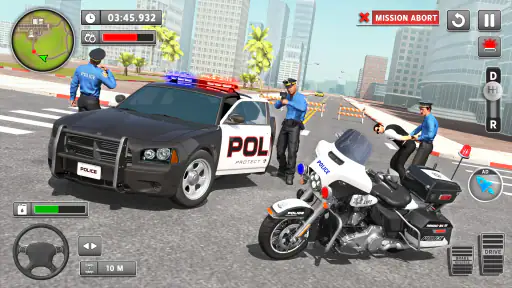
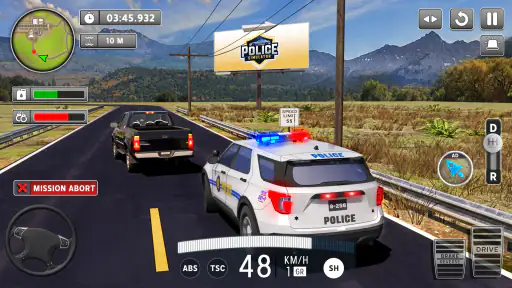
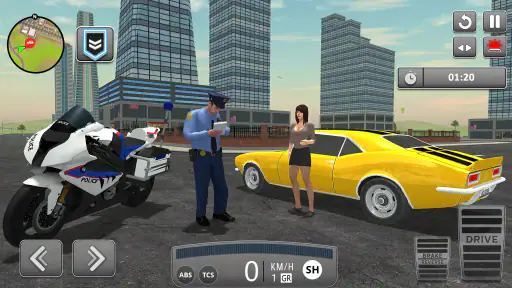
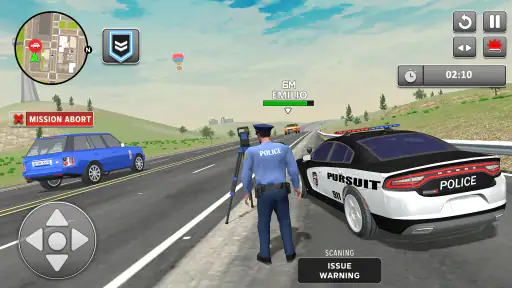
 Analysis by Frivlyz
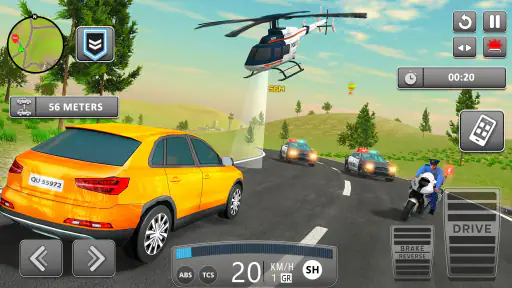
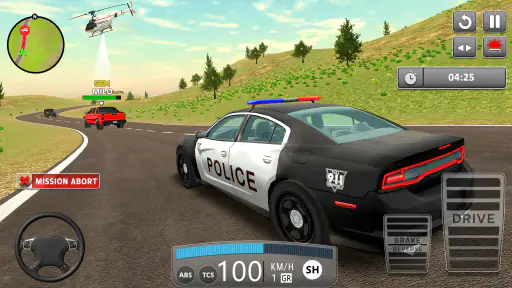
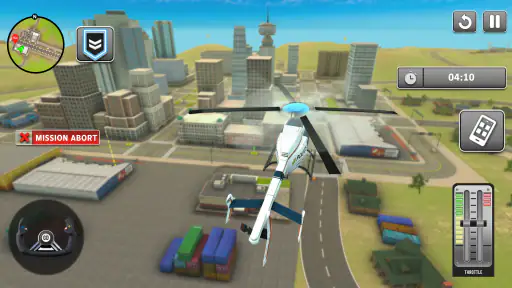
What I find most appealing about Police Simulator: Police Games is the chance to change how I move through its setting: I can drive a police car, take a police bike out, or switch to a flying police helicopter. That vehicle variety gives the central idea a practical twist. Instead of treating patrol as one long drive, the game invites me to imagine the same duty from different angles, and that makes it easier to pick up for a short session when I want a quick change of pace.
Three ways to approach a patrol
In many mobile strategy games, the main decision is about units, upgrades, or a turn-by-turn plan. Here, the choice of police vehicle is the clearest hook. A car suggests a familiar street-level patrol, a bike offers a different way to picture moving through the city, and the helicopter promises a view above the roads. I like that the fantasy is immediately understandable: I can decide what sort of police role I feel like playing before I settle into a session.
That simple choice can also help set expectations. If I want the familiar feel of a road patrol, the car is the obvious starting point. If I want the more distinctive image of police work, the bike or helicopter makes the premise feel less routine. I wouldn’t assume that changing vehicles automatically means a deep simulation of each role; the appeal is the shift in perspective and mood, rather than a promise that every vehicle has a complex career system.
How the vehicle choice affects a session
For a casual play session, I find this setup works best when I treat each vehicle as a different way to enter the game, not as a checklist I have to complete. I might choose the car when I want the straightforward image of cruising through a city, then try the bike or helicopter when I want the experience to feel more unusual. That small decision gives the session a focus without requiring me to plan a long strategy in advance.
A useful habit is to decide what I want from the next few minutes before starting: a familiar patrol mood, a change of scenery, or simply a different vehicle fantasy. That keeps the game from feeling like aimless driving. It also makes the vehicle variety more meaningful, because I am choosing the tone of the session rather than expecting every option to transform the entire game.
Who will enjoy this kind of police game
I’d point this toward players who enjoy police themes, casual driving, and games that are easy to understand at a glance. It is also a natural fit for someone who likes trying different vehicles without committing to a complicated strategy campaign. If you want a detailed, methodical police simulation with a heavy emphasis on procedures, or a competitive strategy game built around long-term planning, this is probably not the right match. I would look for a more specialized simulation or a deeper strategy title instead.
As a free strategy game from GamePark, it has a low-friction way in for anyone curious about the premise. Its average rating is 4.5 from around 65,000 ratings, and it has passed 10 million installs, so it has clearly found a substantial audience. It is rated Teen, runs on Android 5.0 or later, and version 2.10.11 is the current release. Those details make it easy to judge whether it suits your device and household before you try it.
Gaming Stories You May Enjoy

Dancing Road Turns Short Breaks Into a Test of Rhythm and Timing

Super Stylist Makes Every Outfit a Test of Taste and Patience

Dominoes on Your Terms: Who Should Play and Who Should Pass

Pokémon GO Makes the Familiar World Feel New

Chess.com Turns Rematches Into Rivalries, but Community Has Its Costs

Archery Battle 3D Review: Sharp Aiming, Unclear Feedback
Where it sits among alternatives
Compared with a typical racing game, the police setting is the reason to choose this one; the goal is not simply to chase the fastest lap. Compared with a serious vehicle simulator, I would come here for a lighter, more immediately accessible police fantasy rather than technical depth. And compared with a conventional strategy game, the vehicle-led premise is more concrete and less about managing a broad system of resources. That focus is a strength when I want something direct, but it may feel limited if I expect the planning and layered decisions found in deeper strategy games.
The vehicle variety also suggests a practical way to keep the experience fresh: alternate choices based on mood instead of trying to rank them as “best.” If I have only a short break, I can pick one vehicle and enjoy the premise without turning the session into a project. If I want a game that rewards detailed mastery of driving physics, procedural realism, or complex tactical decisions, I would choose another title. This one makes more sense as an accessible police-themed diversion than as a replacement for those specialist games.
A Day in the Life of a Cop
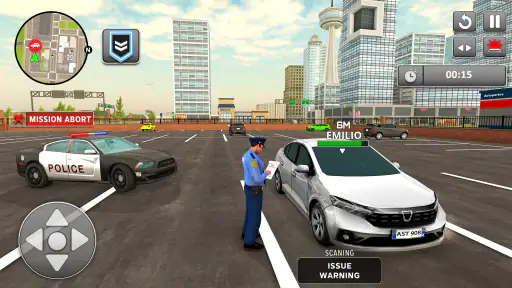
When you first load up Police Simulator: Police Games, you're greeted with a bustling city environment that’s just waiting to be explored. You start off as a rookie officer, tasked with patrolling the streets and responding to various incidents. The game does a great job of slowly introducing you to your duties, which range from issuing parking tickets to handling serious emergencies.
Gameplay Mechanics
The gameplay is surprisingly immersive. You have to pay attention to traffic rules, monitor speed limits, and even engage in foot pursuits. The controls are intuitive, allowing you to focus on the strategy rather than fumbling with the mechanics. What really stands out is how the game balances realism with fun. You’re not just chasing down bad guys; you’re also interacting with citizens, solving disputes, and making decisions that impact the community.
Graphics and Sound
The graphics are quite impressive for a mobile game. The city feels alive with pedestrians, vehicles, and dynamic weather conditions that add a layer of realism. The sound design complements the visuals perfectly, with realistic sirens, radio chatter, and the ambient noise of a bustling city. It’s easy to get lost in this world.
One of my favorite moments was pulling over a speeder and having a full-blown conversation with them. The dialogue options make every interaction unique and sometimes even humorous. It's these little details that make the game enjoyable and engaging.
What Keeps You Hooked
What keeps you coming back to Police Simulator: Police Games is the variety of missions and the unpredictability of each shift. One moment you’re dealing with a simple fender bender, and the next, you’re in a high-speed chase across the city. The game does a fantastic job of keeping you on your toes, wondering what’s going to happen next.
Plus, there are plenty of upgrades and customizations for your police vehicles and equipment, which adds a layer of depth to the gameplay. You can tailor your gear to suit your playstyle, whether you prefer a more tactical approach or just want to look cool while patrolling the streets.
Keeping expectations in check
For me, the best way to judge the game is by asking whether I want a police-themed mobile diversion rather than a strict real-world simulator. It has the broad appeal of a vehicle game, but its police framing gives ordinary movement a role-playing context. That can make a short session feel more purposeful than free driving, especially if I enjoy imagining myself on duty. At the same time, the more I expect accurate procedure or finely tuned simulation, the more likely I am to notice the limits of a lighter mobile approach.
The everyday use case is simple: I have a few minutes between tasks, want something more active than a puzzle, and do not want to learn a sprawling system before I can play. I can choose a vehicle, settle into the police theme, and stop when the break is over. For a longer session, I would want the different activities and vehicle options to keep giving me reasons to return; if I am looking for a structured story or a carefully balanced competitive challenge, I would choose a game designed around those goals instead.
A sensible way to decide if it fits
Before installing, I would ask myself which part of the premise actually appeals to me. Is it the police role, the chance to drive different vehicles, or the idea of moving around a city while responding to situations? If the answer is mainly the vehicle fantasy, this game has a clear point of difference from ordinary driving titles. If I care most about detailed tactical decisions, the strategy label alone should not be taken as a promise of the same depth as a complex planning game.
It is free to start, which makes trying the basic premise a straightforward decision, but “free” does not tell me whether every option or progression path will suit my preferences. I would treat an initial session as a test of the controls, pace, and variety rather than assume that liking the theme guarantees long-term appeal. The Teen rating is also worth keeping in mind when deciding whether it is appropriate for a younger player in the household.
What makes the vehicle angle useful
The strongest practical tip I can offer is to use vehicle choice to avoid asking the game to be one thing all the time. A police car, bike, and helicopter create different mental pictures of patrol, so alternating between them can refresh the experience even when I am not chasing a new high score or pursuing a long campaign. That is a modest kind of variety, but it suits a mobile game I might open for a short stretch rather than dedicate an entire evening to.
There is a trade-off, though: switching vehicles is appealing only if I enjoy the underlying police activity. It cannot, by itself, turn a basic driving loop into a deep simulation or a strategy system with extensive planning. I would recommend trying the game for its accessible police fantasy, then deciding whether its pace and interactions are enough for me. Players who want specialist realism, detailed traffic enforcement procedures, or a robust competitive scene should look elsewhere; players who want an approachable police-themed game with several kinds of transport have a clearer reason to stay.
How I would use it over time
I would keep this installed as an occasional pick rather than expect it to replace every other mobile game. On a commute break or while waiting for an appointment, a short patrol can be an easy way to enjoy the setting without needing a lengthy setup. At home, I might spend longer exploring the different vehicle choices and seeing which one feels most satisfying. That distinction matters: the game’s appeal is strongest when I let it be a compact, accessible activity, not when I measure it against a full-scale simulator.
For parents or anyone sharing a device, the Teen content rating is a useful starting point, but I would still make the decision based on the player and household expectations. For someone new to police games, the recognizable vehicle premise offers an easy entry point. For an experienced simulation fan, it is better approached as a lighter alternative than as a technical showcase. Knowing which of those audiences I belong to helps me avoid expecting the wrong kind of depth.
Final Thoughts
Overall, Police Simulator: Police Games is a thoroughly enjoyable experience for anyone looking to dive into the world of law enforcement. It captures the essence of being a police officer while keeping the gameplay fun and engaging. Whether you're issuing tickets, solving crimes, or just driving around the city, there's always something to do. If you’re looking for a game that offers both excitement and a touch of reality, this one is definitely worth a try.
Police Simulator: Police Games Pros and Cons
Pros
- Realistic police scenarios and duties.
- Engaging gameplay with various missions.
- High-quality graphics and sound effects.
- User-friendly interface and controls.
- Regular updates with new content.
Cons
- In-app purchases can be expensive.
- Requires persistent internet connection.
- Occasional bugs and glitches.
- Limited customization options.
- High battery consumption on devices.
Frequently Asked Questions
What is Police Simulator: Police Games about?
Police Simulator: Police Games is a mobile application that allows players to experience the life of a police officer. In this game, users engage in various police duties such as patrolling the city, responding to emergencies, and handling traffic violations. The game provides a realistic simulation of police work, offering players a glimpse into the challenges and responsibilities faced by law enforcement officers on a daily basis.
Is Police Simulator: Police Games free to play?
Yes, Police Simulator: Police Games is free to download and play on both Android and iOS platforms. However, the game does offer in-app purchases that enhance the gaming experience, such as unlocking additional features, characters, or tools. While these purchases are optional, they can provide a more immersive and comprehensive gameplay experience for those who choose to invest in them.
What are the system requirements for Police Simulator: Police Games?
To ensure smooth gameplay, Police Simulator: Police Games requires a device running at least Android 5.0 or iOS 10.0. Additionally, users should have adequate storage space available, as the game may require a significant amount of data to download and install. It's also recommended to have a stable internet connection for optimal performance, particularly when accessing online features or updates.
Are there any ads in Police Simulator: Police Games?
Yes, like many free-to-play games, Police Simulator: Police Games includes ads. These advertisements help support the developers and allow them to offer the game for free. Players may encounter ads during gameplay, but there is often an option to remove them through in-app purchases. This can enhance the user experience by providing uninterrupted gameplay.
Can I play Police Simulator: Police Games offline?
Police Simulator: Police Games offers both online and offline gameplay options. While many features and missions can be accessed offline, certain elements of the game, such as updates, leaderboards, and multiplayer modes, require an internet connection. Playing offline allows users to enjoy the core aspects of the game without interruption, but connecting online can provide a fuller, more interactive experience.


