

Pokémon Quest
- Reviews
- 4.2
- Version
- 1.0.9
- Installs
- 10,000,000+

Screenshots






 Analysis by Frivlyz
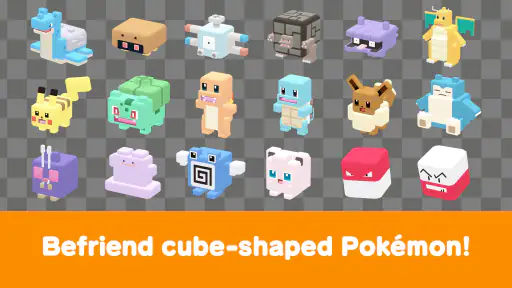
I like Pokémon Quest most when I treat it as a small, self-contained Pokémon adventure rather than a replacement for the series’ deeper role-playing games. Its cube-shaped world gives familiar creatures a playful new look, while expeditions, team choices, and cooking create a simple loop that is easy to pick up in short sessions. That focus is also its main limitation: players looking for a long story or hands-on battles may find the routine too light.
As a free role-playing game from The Pokémon Company, it is an approachable option for fans who want to collect Pokémon without committing to a complex adventure. It is rated for Everyone, and its broad appeal shows in its 4.2 average from around 217,000 ratings. I would recommend trying it if you enjoy gradual collection and relaxed planning; I would be more cautious if you want a traditional Pokémon journey with lots of direct control.
A compact loop built around expeditions
The game’s rhythm is easy to understand: prepare your camp, send a team to explore, collect what the expedition yields, and use those rewards to improve your next attempt. That clarity makes it comfortable to play in spare moments. I can imagine checking in during a short break, choosing a stage, then returning later to decide what to do with the haul rather than needing a long uninterrupted session.
The stages give that loop a useful sense of direction. Instead of wandering through a large map, I choose an expedition and focus on its encounters and rewards. This keeps the experience brisk, but it also means exploration is more about selecting and repeating challenges than getting lost in a sprawling world. If you enjoy a clear next objective, that structure works well; if you want open-ended discovery, it can feel narrow.
Exploring Tumblecube Island
As soon as you dive into the game, you're tasked with setting up camp and exploring the island with your team of cube-shaped Pokémon. The objective is simple: journey through various stages, battling wild Pokémon and collecting loot. The controls are straightforward, making it easy for players of all ages to jump in and start having fun. I found myself tapping away, eagerly awaiting the next encounter.
When the automatic rhythm works—and when it doesn’t
The light-touch controls are a good fit for casual play, but they shape the kind of role-playing experience this is. I would not choose it when I want the precision of a turn-based battle where every move is a deliberate decision. Its appeal is more about setting up a capable group and seeing how that plan performs during an expedition. That makes it easy to follow while relaxing, though less satisfying for anyone who wants to control every moment of a fight.
A practical way to approach tougher stages is to change one team choice at a time instead of rebuilding everything after a loss. That gives you a clearer sense of whether a different Pokémon or ability is helping. It also turns setbacks into useful feedback rather than a reason to keep tapping through the same attempt without a plan. I found this kind of small adjustment more rewarding than treating the game as a race to push forward.
Gaming Stories You May Enjoy

Dancing Road Turns Short Breaks Into a Test of Rhythm and Timing

Super Stylist Makes Every Outfit a Test of Taste and Patience

Dominoes on Your Terms: Who Should Play and Who Should Pass

Pokémon GO Makes the Familiar World Feel New

Chess.com Turns Rematches Into Rivalries, but Community Has Its Costs

Archery Battle 3D Review: Sharp Aiming, Unclear Feedback
Building Your Team
One of the most enjoyable aspects of Pokémon Quest is assembling your team. You start with a basic Pokémon, but as you progress, you can recruit more to join your squad. Each Pokémon has unique abilities, and part of the fun is strategizing which combination works best for the challenges ahead. I personally loved experimenting with different team formations to tackle tougher stages.
Team building is more interesting when I think about how a group works together, not just which individual Pokémon I like most. A favorite may be fun to bring along, but a stage that feels difficult is a good moment to test another combination. Keeping a few alternatives in mind gives recruitment a purpose beyond collecting for its own sake. The trade-off is that experimentation takes patience: a new team is not automatically a better one, and progress can feel gradual.
For a relaxed routine, I would pick a stage, make a deliberate team choice, and then check the results before starting another expedition. This avoids turning each session into repeated, unthinking attempts. It is also a useful approach for younger players: they can enjoy seeing new Pokémon arrive while learning that changing a team can matter, without needing to master a complicated control scheme.
Cooking Up Some Fun
A quirky feature of the game is the cooking mechanic. By collecting ingredients during your adventures, you can whip up various dishes to attract new Pokémon to your camp. It's a delightful way to expand your roster, and I found myself eagerly checking the cooking pot after each expedition to see who might join my team next.
Cooking gives expedition rewards a second purpose. Ingredients are not just a pile of loot to ignore; they connect the act of exploring with the chance to bring new members into camp. I recommend treating the pot as part of a longer plan rather than expecting every dish to solve an immediate team problem. The appeal is anticipation, and the uncertain wait for a new arrival is part of the charm. If you prefer direct, predictable recruitment, this system may feel less satisfying.
One small but useful habit is to check your camp and cooking progress before starting a fresh run, especially when you only have a minute to play. That way, a quick visit can have a clear purpose: see what has changed, choose whether to set out again, and leave without needing to commit to a long session. The game suits that stop-and-start pattern better than players who want a continuous narrative to carry them through a single sitting.
How it compares with other Pokémon role-playing games
Compared with the usual Pokémon role-playing adventure, this one puts less emphasis on a long journey and more on short expeditions, team setup, and collecting. That difference is not a flaw by itself; it is why I would choose it for a casual break instead of a more involved game. But it also means longtime fans should not expect the depth, pacing, or hands-on battles they associate with a full-scale Pokémon RPG.
It is also distinct from collection games that make roster growth the only attraction. Here, sending a team into stages gives your choices a practical test, while cooking links gathered ingredients to recruiting. Still, if your priority is a substantial plot, intricate character progression, or precise command over battles, another role-playing game will probably be a better fit. This is best approached as a lighter side activity, not as a substitute for every other Pokémon experience.
Its reach is substantial, with over 10 million installs, but popularity alone does not determine whether its pace will suit you. The current version is 1.0.9 and it runs on Android 4.4 or later. I would check that basic compatibility before installing on an older device, then decide based on the style of play: short, accessible sessions are its strength, while players wanting a more involved RPG may outgrow the loop.
Who will enjoy the slower collection pace
I think it is a particularly good fit for Pokémon fans who like seeing familiar creatures in an unusual visual style, younger players who benefit from simple controls, and anyone who wants a game that can be picked up between other tasks. A realistic use case is a commute or a quiet lunch break: start an expedition, make a team decision, and check camp again when you have another moment. The game does not demand that every visit become a lengthy session.
It is less suited to someone who dislikes waiting for collection to build, wants a detailed campaign, or expects every battle to reward exact timing and tactical input. Those players may find the expedition loop repetitive once its basic pleasures are familiar. I would also skip it if your enjoyment depends on direct control over every action; the game’s appeal comes from preparation and gradual progress, not from constant hands-on combat.
The game is free to download, with optional in-app purchases priced from $2.99 to $29.99 per item. I would begin without spending and see whether the ordinary pace is enjoyable first. If the appeal is the calm routine of exploring, gathering ingredients, and welcoming Pokémon to camp, there is a satisfying reason to keep playing. If progress feels too slow, paying is unlikely to change the underlying style that either works for you or does not.
For parents considering it for a child, the Everyone age rating makes the intended audience clear, and the simple presentation is easy to understand. I would still look at the in-app purchase options together before handing over a device, as with any free game that offers paid items. That is a practical conversation rather than a reason to avoid the game outright, especially when the child is mainly interested in collecting and exploring at an unhurried pace.
There is enough here for a pleasant routine, but I would not call it an endlessly varied adventure. The strongest moments come from seeing a new Pokémon join, trying a different team, or finally making progress on a stage that had been awkward. Between those moments, the same broad cycle returns. Whether that repetition feels comforting or stale depends on how much you enjoy gradual improvement and collection.
Aside from cooking, there's plenty to keep you busy. With daily quests, expeditions, and the thrill of discovering new areas, Pokémon Quest ensures there's always something to look forward to. The game encourages exploration and rewards curiosity, making it perfect for those who love to wander.
Final Thoughts
In conclusion, Pokémon Quest is a delightful and engaging game that offers a fresh take on the Pokémon franchise. Its charming graphics, simple mechanics, and abundance of activities make it a perfect pick for casual gamers and Pokémon fans alike. Whether you're a seasoned trainer or new to the world of Pokémon, this game is sure to provide hours of entertainment. So, what are you waiting for? Dive into Tumblecube Island and see what adventures await!
Pokémon Quest Pros and Cons
Pros
- Engaging blocky graphics style.
- Simple and intuitive controls.
- Offline play available.
- Regular updates with new features.
- Fits well for short play sessions.
Cons
- Limited character customization.
- In-app purchases can be costly.
- Repetitive gameplay after a while.
- Requires constant internet for updates.
- Basic storyline
- not very deep.
Frequently Asked Questions
What is Pokémon Quest and how does it differ from other Pokémon games?
Pokémon Quest is a unique action-adventure game that stands out from traditional Pokémon games by incorporating a blocky, cube-shaped aesthetic similar to Minecraft. Unlike the classic series that focuses on turn-based battles, Pokémon Quest offers an expedition-style gameplay where players explore Tumblecube Island, gather resources, and recruit Pokémon to form a team. The game emphasizes strategic planning and resource management, making it appealing to both casual gamers and Pokémon enthusiasts.
Is Pokémon Quest free to play, and are there in-app purchases?
Yes, Pokémon Quest is free to download and play on both Android and iOS platforms. However, the game includes in-app purchases that allow players to buy special items, decorations, and power-ups to enhance their gameplay experience. While these purchases can speed up progress and offer additional customization options, they are not necessary to complete the game, allowing players to enjoy it without spending money.
What age group is Pokémon Quest suitable for, and is it child-friendly?
Pokémon Quest is suitable for a wide range of age groups, including children as young as six years old. The game features simple controls, colorful graphics, and a non-violent gameplay style, making it an excellent choice for young players. Additionally, the lack of complex text and emphasis on visual strategy ensures that children can easily understand and enjoy the game without adult supervision.
How does the combat system work in Pokémon Quest?
In Pokémon Quest, the combat system is designed to be simple yet strategic. Players form a team of up to three Pokémon, each with unique moves and abilities. During expeditions, battles are initiated automatically, but players can influence outcomes by timing their Pokémon's special moves and positioning them advantageously. This system balances automation with player interaction, providing a dynamic and engaging combat experience without the complexity of traditional Pokémon battles.
Can I play Pokémon Quest offline, and is an internet connection required?
Pokémon Quest can be played offline, making it a convenient option for on-the-go gaming. An internet connection is only required for initial download and updates, ensuring that players can enjoy the game without worrying about connectivity issues. However, staying connected occasionally allows for smoother updates and access to any new content or features released by the developers.


