

Planet Crusher: Mine & Attack
- Reviews
- 4.1
- Version
- 0.26.1
- Installs
- 1,000,000+

Screenshots

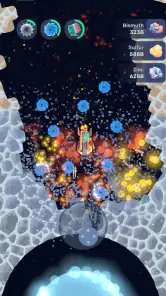
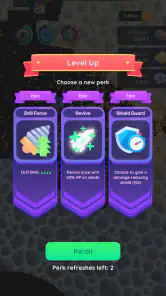

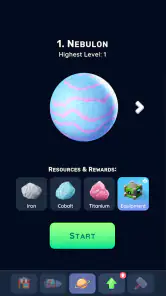
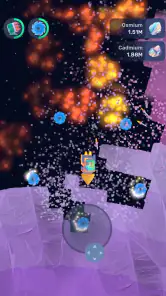
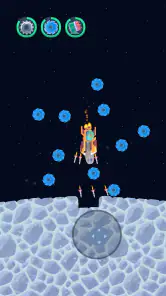
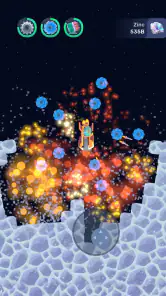
 Analysis by Frivlyz
I’m usually cautious about mobile games that promise a huge universe, because the first burst of novelty can disappear once the early upgrades slow down. Planet Crusher: Mine & Attack makes a clear case for itself through a simple loop: collect resources, improve your ship, then decide when to take on another planet or rival. I find that rhythm easy to understand but more involving than a basic tap-to-score arcade game, especially when I have only a few minutes to play.
Why the first sessions click
The opening appeal is the quick connection between work and reward. Mining gives you a practical reason to keep moving, while ship upgrades turn those gathered resources into a stronger next attempt. Attacking, meanwhile, gives the routine a goal beyond collecting for its own sake. That combination makes the game approachable for someone who wants action without having to learn a complicated control scheme before anything happens.
It also suits short breaks. I can imagine opening it while waiting for a coffee or sitting through a brief commute, making a little progress and closing it without needing to remember a long chain of instructions. The important decision is not simply whether to attack, but whether my current ship and supplies make that attempt sensible. That small pause for planning gives the arcade action a welcome strategic edge.
What the mining-and-attack loop asks of you
Mining and combat pull in different directions: one encourages patience, while the other tempts you to test your strength. I get the most out of the loop when I treat mining as preparation rather than a chore to rush through. If an attack stalls, returning to gather resources and improve the ship is more useful than repeating the same attempt out of impatience. Choosing when to pause and build up is part of the strategy, not a sign that a run has failed.
That makes the game a better fit for players who enjoy incremental progress than for anyone looking for a nonstop action title. Its basic idea is easy to grasp, but the satisfaction comes from making a series of sensible choices about upgrades and targets. I would not expect every session to feel like a fresh tactical puzzle; the familiar cycle is also the source of its comfort and, eventually, its risk of repetition.
Who is likely to enjoy it
I’d recommend it to casual arcade players who like having a longer-term objective attached to each short session. It can also work for someone who enjoys improving a vehicle or loadout over time and wants combat to give those upgrades a purpose. The space setting gives the activity a cohesive theme, while the mining element provides a calmer counterweight to attacking.
On the other hand, I would steer away anyone who wants a tightly scripted story, deep real-time tactics, or a purely reflex-based arcade challenge. The appeal here is the recurring cycle of gathering, upgrading, and trying again. Players who find repeated resource collection dull may feel the pace drag, and those who dislike competing with other players may have little reason to care about the social side.
Gaming Stories You May Enjoy

Dancing Road Turns Short Breaks Into a Test of Rhythm and Timing

Super Stylist Makes Every Outfit a Test of Taste and Patience

Dominoes on Your Terms: Who Should Play and Who Should Pass

Pokémon GO Makes the Familiar World Feel New

Chess.com Turns Rematches Into Rivalries, but Community Has Its Costs

Archery Battle 3D Review: Sharp Aiming, Unclear Feedback
Keeping it in your rotation
I treat a game like this as a small routine rather than something that needs a long, uninterrupted session: decide what I want to improve, make progress toward it, and stop when that goal is reached. That makes it easier to notice whether returning still feels worthwhile or whether mining has become a chore. The next section looks at how that habit can shape its month-to-month appeal.
Month-to-month value after the novelty fades
The key question for a game built around repeatable progress is whether upgrades continue to make choices feel meaningful. In my view, the strongest reason to return is the link between what you collect and what you can attempt next. An upgrade has a practical role when it helps prepare your ship for a tougher challenge; it feels less satisfying if progress becomes a routine of gathering without a clear target.
A useful habit is to decide on a modest goal before each session: build toward a particular improvement, or prepare for an attack you have been postponing. That gives a short visit a finish line and helps prevent aimless tapping. If I only have a spare minute, I can treat resource gathering as a small step toward that goal; when I have more time, I can make the attempt and judge whether my preparation paid off.
How it compares with familiar arcade choices
Compared with a traditional score-chasing arcade game, this one gives progress more weight than a single high-score run. You are not just trying to last longer in one sitting; your ship and resources matter to what you can do next. Compared with a deeper strategy game, though, its appeal is lighter and more immediate: the decisions support a straightforward action loop instead of demanding long planning sessions.
That middle ground is its most useful distinction. If I want a quick burst of reflex-focused play, a conventional arcade game may be a better match. If I want elaborate tactical systems, a strategy title with more layers is likely to satisfy me more. Here, the attraction is making manageable choices around mining and attacks without turning a casual mobile session into homework.
Small habits that make sessions work better
One practical approach is to avoid treating every available attack as an invitation to launch immediately. Check whether your current resources support the next attempt, and use a setback as a cue to adjust your preparation rather than simply repeating it. This is a modest change in mindset, but it makes the mining phase feel purposeful and reduces the frustration of going into a challenge underprepared.
I’d also keep sessions bounded by an intention rather than by the urge to upgrade everything. Pick one improvement or one attack to work toward, then stop when you have made that step. This is particularly helpful in incremental games, where there is nearly always another resource to collect. It lets the game fit around a real day instead of asking you to turn every spare moment into a grind.
What to expect from spending and competition
The game is free to play, with optional in-app purchases ranging from $0.99 to $99.99 per item. I would approach those purchases as convenience options rather than a requirement for finding out whether the core loop suits me. If progress feels slow, first consider whether a more deliberate upgrade plan would help; spending to rush ahead can remove some of the satisfaction that comes from preparing for a challenge yourself.
There is also a competitive and social layer, including events and leaderboards, which can give returning players a reason to measure progress against others. That will matter more if I enjoy comparison and shared goals than if I prefer a completely private arcade experience. I would treat those features as an extra source of motivation, not as the main reason to install the game.
Maintenance, fatigue, and the limits of the loop
In a game like this, the main maintenance burden is attention: remembering what you were building toward and resisting the temptation to repeat actions without a purpose. The mining-and-upgrade cycle is easy to pick up again, so I do not need to dedicate a long uninterrupted block of time. Still, its familiarity can become a weakness. If I stop caring about the next ship improvement or attack, the same loop that once made progress satisfying can start to feel like a checklist.
Competition can help refresh that routine, but it will not fix a mismatch in taste. Players who want every session to introduce a radically different challenge may find the recurring structure too predictable. I also would not choose it when I want a story-led game to follow closely or an arcade game focused solely on quick reactions. Its lasting value depends on whether the combination of resource planning and combat continues to feel rewarding to you.
Practical details before you install
Gryphon Games released this free arcade game on December 17, 2024. It is rated for Everyone, has an average rating of 4.1 from around 11,000 ratings, and has passed one million installs. Those figures suggest that it has found a broad audience, though they cannot tell me whether its particular pace will suit every player. The current version is 0.26.1, and the minimum operating-system requirement is version 12.
If you are deciding whether to try it, the simplest test is to ask whether you enjoy earning upgrades through repeated play. Someone who likes short, goal-oriented sessions can start without paying and see whether the loop holds their interest. Someone who already knows that resource gathering feels like busywork should probably choose a more direct action game instead. The Everyone rating also makes its general audience clear, while the optional purchases are worth keeping in mind if you share a device or manage spending carefully.
My long-term verdict
After the initial novelty, I think the game earns a place in a rotation when I approach it as a compact progression game rather than an endless source of new surprises. The mining gives each session a practical task, and the ship improvements give attacks a reason to matter. That is enough to make returning worthwhile for the right player, particularly someone who likes to see a small plan turn into a stronger attempt.
It is not the best fit for players who need constant variety or dislike repeating a resource loop. For me, the strongest recommendation is a cautious one: try it as a free arcade option, set small goals, and see whether preparing for the next challenge stays enjoyable after the first few sessions. If that preparation feels rewarding, the game has a sensible place among other mobile diversions; if it starts to feel like maintenance without excitement, there are better alternatives for your play style.
The first thing you’ll notice when you fire up the game is its vibrant graphics. The developers have done a stellar job, quite literally, in creating a visually appealing universe. From colorful planets to detailed spacecraft, everything is designed to keep your eyes glued to the screen. The interface is user-friendly, making it easy for even the most casual gamers to jump right in.
Gameplay Mechanics
The core of the game revolves around two main activities: mining resources and attacking planets. It’s this blend that keeps the game exciting and unpredictable. You’ll find yourself balancing between gathering the necessary resources and planning your next strategic attack. The mining process is straightforward yet engaging, with various upgrades available to enhance your efficiency.
As you progress, the planets get tougher, requiring you to strategize and sometimes even retreat to gather more resources before attempting another assault. This element of strategy is what makes the game more than just a tap-and-go experience. You’ll need to think ahead and plan your moves carefully.
Strategic Depth
What I really appreciate about the game is its strategic depth. You’re not just randomly attacking planets; you need to consider which ones to target based on your current resources and the potential rewards. This adds a layer of depth that keeps you coming back for more. It’s like a cosmic chess game where every move counts.
Additionally, the game offers a variety of ships and upgrades, allowing you to customize your fleet to suit your playstyle. Whether you’re a fan of heavy artillery or prefer a stealthy approach, there’s something here for everyone. The customization options are robust, ensuring that no two players will have the same experience.
Community and Social Features
One of the standout features is the game’s community aspect. There are in-game events and leaderboards that encourage you to compete against other players worldwide. This competitive edge adds another layer of excitement, pushing you to improve and climb the ranks.
The social features are pretty cool too. You can team up with friends or make new ones as you conquer the galaxy together. It’s always more fun to crush planets with a buddy, right?
In-App Purchases and Monetization
Let’s talk about the elephant in the room: in-app purchases. The game does have them, but they’re not overly intrusive. You can enjoy the game without spending a dime, though if you’re looking to speed up progress, there are options available. The balance is fair, and it doesn’t feel like a pay-to-win scenario, which is always a plus in my book.
Overall, this game offers a satisfying blend of strategy and action with enough depth to keep you engaged for the long haul. Whether you’re mining for resources or strategizing your next big attack, there’s plenty to do and discover. The vibrant visuals, strategic gameplay, and community features make it a must-try for any mobile gamer looking for their next addiction.
So, what are you waiting for? Harness your cosmic strategy skills and dive into the universe of Planet Crusher: Mine & Attack. It might just be the out-of-this-world experience you’ve been searching for!
Planet Crusher: Mine & Attack Pros and Cons
Pros
- Engaging gameplay with diverse challenges.
- Stunning graphics enhance user experience.
- Smooth controls for seamless navigation.
- Frequent updates with new content.
- Multiplayer mode adds competitive fun.
Cons
- In-app purchases can be quite costly.
- Occasional lag in multiplayer mode.
- Requires constant internet connection.
- Ads can interrupt gameplay frequently.
- Limited offline content availability.
This Game in Other Languages
Frequently Asked Questions
What is the main objective of Planet Crusher: Mine & Attack?
Planet Crusher: Mine & Attack is an action-packed game where players aim to conquer and destroy planets across the galaxy. The primary objective is to mine resources, upgrade your arsenal, and strategically attack planets to expand your cosmic empire. Players must balance resource management with combat tactics to succeed.
Is Planet Crusher: Mine & Attack free to play?
Yes, Planet Crusher: Mine & Attack is free to download and play. However, it offers in-app purchases for players who wish to enhance their gaming experience. These purchases can include additional resources, special weapons, or unique skins. Players can enjoy the game without spending money, but purchases can provide a strategic advantage.
What are the system requirements for Planet Crusher: Mine & Attack?
Planet Crusher: Mine & Attack is available on both Android and iOS platforms. For Android, it requires version 5.0 or higher, and for iOS, it needs iOS 10.0 or later. The game is optimized for a smooth experience on most modern smartphones and tablets, ensuring vibrant graphics and responsive controls.
Does Planet Crusher: Mine & Attack require an internet connection?
Planet Crusher: Mine & Attack offers both online and offline modes. While an internet connection enhances the experience by enabling multiplayer battles and leaderboards, the game can still be enjoyed offline with limited features. Offline mode allows players to progress through the campaign without requiring constant connectivity.
How does multiplayer work in Planet Crusher: Mine & Attack?
Multiplayer mode in Planet Crusher: Mine & Attack lets players compete against others worldwide. Players can join alliances, participate in tournaments, and engage in real-time battles to showcase their skills. Communication tools are available for strategy planning, and leaderboards track the top performers globally, adding a competitive edge to the gameplay.


