

People Say - Family Game
- Reviews
- 4.7
- Version
- 3.0.0
- Installs
- 1,000,000+

Screenshots


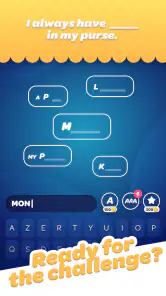



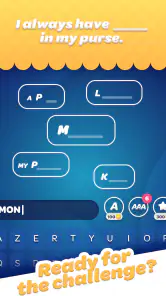

 Analysis by Frivlyz
I first gravitate toward a trivia game when I want something easy to explain, but I don’t always want to spend a whole evening answering facts about history or science. People Say - Family Game takes a different route: the challenge is to anticipate answers other people are likely to give. That small shift changes the mood. You are not proving what you know so much as comparing your instincts with a group, which makes the game a natural fit for a relaxed get-together.
A simple idea that changes the conversation
When I first opened People Say - Family Game, I was immediately drawn in by its vibrant and user-friendly interface. The game starts with a simple premise: you're given a question, and your goal is to guess the most popular answers that people would say. Sounds easy, right? Well, that's where the fun kicks in. As you dive deeper, you realize that it's not just about what you think, but what the majority of people might say.
That distinction is the game’s strongest hook. A question about a common annoyance or an everyday object can look obvious until people start defending completely different answers. I enjoy that brief pause before a guess, when I have to decide whether to trust my own first thought or imagine what a broad group might say. The fun often comes from being confidently wrong and hearing everyone explain why their answer seemed more likely.
How its look and pace support play
I find that the look and pacing work best when the game is treated as a shared prompt rather than a race to finish. In this section, I’ll focus on how its bright presentation and everyday subject matter help a mixed group settle into play, while keeping the limits of that relaxed rhythm in view. That sets up a closer look at how the questions shape the atmosphere.
Bright presentation, ordinary-life subject matter
The visual style feels suited to the light premise rather than to a detailed fictional world. There is no elaborate setting to learn before the questions make sense; the focus stays on the prompt and the people reacting to it. The bright interface helps the experience feel welcoming, while the everyday subjects give players of different ages something familiar to work with. In my view, that makes the game easier to bring out casually than a trivia title built around specialist knowledge.
The questions mentioned in the game range from everyday irritations to things you might find in a garage. That ordinary subject matter is useful because it leaves room for personal stories: someone’s answer may come from a family habit, a job, or a memorable mishap. I would not treat every prompt as a test with one objectively sensible response. The appeal is seeing which answers seem most widely shared, then comparing that expectation with the group’s own logic.
Conversation is part of the rhythm
The gameplay is intuitive and keeps you on your toes. Each round presents a new challenge, with questions ranging from "What's a common pet peeve?" to "Name something you find in a garage." You score points by matching your answers with the most popular ones. The more you match, the higher your score. It's a fantastic way to test your knowledge of common perceptions and have a great laugh with your friends and family.
Gaming Stories You May Enjoy

Dancing Road Turns Short Breaks Into a Test of Rhythm and Timing

Super Stylist Makes Every Outfit a Test of Taste and Patience

Dominoes on Your Terms: Who Should Play and Who Should Pass

Pokémon GO Makes the Familiar World Feel New

Chess.com Turns Rematches Into Rivalries, but Community Has Its Costs

Archery Battle 3D Review: Sharp Aiming, Unclear Feedback
What I really love about this game is how it encourages social interaction. Whether you're playing with family during a cozy evening or with friends at a party, it sparks conversations and sometimes heated debates about why a certain answer is more popular than another. It's like a survey game show right in your pocket!
That social rhythm works best when players let the discussion breathe instead of rushing through every prompt. If I were hosting, I’d give people a moment to explain an unexpected answer after the scoring, rather than arguing over it while someone is trying to enter a response. It keeps the competition playful and lets quieter players contribute without needing to be the fastest person in the room. The game can be a conversation starter even when the group’s guesses do not line up.
Where it sits among trivia games
People Say is a trivia game from SAS ELIA, and its central appeal is different from a conventional quiz. In a fact-based quiz, knowing the answer is usually the point; here, a reasonable answer can still miss if it is not the one other people are likely to name. Compared with word puzzles, it also puts less emphasis on finding a single clever solution. That makes it a better choice for a mixed group that wants to talk and laugh than for someone who wants a quiet, skill-focused brainteaser.
The trade-off is that players who prefer clear factual answers may find the premise less satisfying. Popularity is not the same thing as truth, and a round can feel arbitrary to anyone expecting a knowledge test. I’d choose a classic quiz for a competitive challenge based on learning, or a crossword-style game for solitary concentration. I’d reach for this one when the group itself is part of the entertainment.
Making it work for a real gathering
For a realistic use case, picture a family waiting for dinner to finish or friends settling in before a film. One person can introduce a prompt, everyone can make a guess, and the answers can lead naturally into stories about household habits or old disagreements. It does not require a long explanation before people can join, so it is especially handy when not everyone at the table plays mobile games. I would keep the phone visible and pass attention around the group so the experience stays social rather than turning into one person silently playing while others watch.
It is also a reasonable choice for a short break alone if you enjoy testing your assumptions about common answers. Still, its premise has more energy when you can compare reactions with somebody else. If I were playing solo, I would treat each question as a quick prediction exercise, not expect the same kind of atmosphere as a group session. That distinction helps set expectations: the game’s social value is strongest when there are people nearby willing to discuss a guess.
To keep rounds welcoming across ages, I’d avoid treating the score as a measure of who is cleverest. A younger player may think of a different answer because their everyday experience is different, and that can be exactly what makes the conversation interesting. The game is rated for Everyone, which supports its broad family positioning, but a mixed-age group will still have the best time when adults make space for different perspectives instead of correcting every response.
Who will enjoy it, and who may not
I can recommend it to families looking for a low-pressure activity, friends who enjoy debating everyday questions, and casual players who want a trivia game that does not depend on specialist knowledge. Its accessibility is a real advantage when the group includes people with very different interests. It is less suited to players seeking a deep solo campaign, complex strategy, or a dependable stream of factual learning. Those players are likely to get more from a traditional quiz or a dedicated word game.
There is another small trade-off in a game built around popular responses: a player’s own background can shape what seems obvious. If someone answers from a particular workplace, region, or family routine, their choice may make perfect sense to them but not feel like the broadest guess. I find that more interesting than frustrating when the group treats it as a prompt for discussion. If everyone expects the game to validate their personal answer, however, disagreements can become tiring rather than funny.
Practical expectations before you play
The game is free to download, with optional in-app purchases listed from $0.99 to $99.99 per item. I’d be comfortable trying the basic experience first and deciding later whether anything offered inside is worth it; the presence of purchases is worth keeping in mind if children use the device. Its 1M+ installs and 4.7 average rating across 32K ratings suggest that many players have taken to the concept, though popularity alone cannot guarantee that its style will suit every group.
People Say was released on May 16, 2022, and its current version is 3.0.0. It is developed by SAS ELIA and requires Android 7.0 or later. Those details make it easier to check whether it fits an older device before planning a game night. For iPhone or iPad owners, I’d check the relevant app-store page for device compatibility rather than assume Android requirements apply to iOS.
A useful way to approach a first session is to keep the stakes low: play for amusement, let people explain unusual guesses, and do not turn a missed answer into a dispute about whose common sense is correct. If you want a structured competition, agree on how you will handle close calls before you begin. That tiny bit of group coordination can prevent the scoring from interrupting the conversation that makes this particular game enjoyable.
Family-friendly, with a few limits
One of the standout features of People Say - Family Game is its accessibility. The app is designed for players of all ages, making it a perfect choice for family game nights. Kids, teens, and adults can all join in the fun, making it a wonderful way to bring everyone together. It's easy to navigate, and the rules are simple enough for even the youngest players to understand.
Its broad appeal does not mean it will be every family’s first choice. If your group dislikes phones at the table, or if a gathering is too noisy for people to focus on a prompt, a physical party game may work better. Likewise, someone looking for a long-form game with a growing story or elaborate progression should look elsewhere. I see this as a compact social activity: useful when you want a quick shared focus, not a replacement for every kind of family entertainment.
What to expect from replaying it
The app also offers various game modes to keep things fresh and exciting. You can choose to play solo, team up with others, or even challenge yourself with timed rounds. Each mode offers a unique twist, ensuring that the game never gets old. Plus, with regular updates and new questions added frequently, there's always something new to discover.
For replaying, I would vary how the group approaches each question rather than simply chase the highest score. One round, players can make their own instinctive guesses; another time, they can try to predict what a different age group or a more general audience might say. That is a small house-rule approach, not a claim about a special in-game option, and it makes the central mechanic feel less repetitive. The key limitation is that the core activity remains guessing popular responses, so anyone who tires quickly of that style may not be won over by another session.
A light game whose best feature is the group
In conclusion, People Say - Family Game is a delightful addition to any social gathering. Its engaging gameplay, accessibility, and ability to bring people together make it a standout choice for anyone looking to have a good time. Whether you're a seasoned gamer or just looking for something fun to do with your loved ones, this app promises hours of entertainment. So, gather your friends and family, and let the guessing games begin!
My recommendation is more specific: choose it when you want a friendly prompt for conversation, not when you need deep mechanics or a guaranteed test of knowledge. The bright presentation, familiar topics, and quick-to-understand premise give it a coherent, relaxed mood, while the scoring adds just enough competitive edge to keep guesses lively. If your group enjoys comparing opinions and can laugh when its assumptions differ from the crowd, this is an easy game to bring along. If you want a demanding solo challenge, a fact-heavy quiz will be a better fit.
People Say - Family Game Pros and Cons
Pros
- Engages the whole family in fun challenges
- Simple and intuitive interface
- Regular updates with new content
- Encourages teamwork and communication
- Available on both Android and iOS
Cons
- Requires internet connection to play
- Contains ads that can be disruptive
- Limited free content
- in-app purchases needed
- Some questions may repeat over time
- Not suitable for single players
Frequently Asked Questions
What is People Say - Family Game?
People Say - Family Game is an interactive app designed for family entertainment, where players answer survey-based questions. The game challenges players to guess the most popular responses to fun and engaging questions, making it an ideal choice for family gatherings or parties. With its easy-to-understand rules and user-friendly interface, it’s perfect for users of all ages.
How do you play People Say - Family Game?
To play People Say - Family Game, players are presented with a series of survey questions. The objective is to guess the most popular answers given by other players or the general public. Players can compete against each other or work as a team to score points. The game is intuitive and requires no prior experience, making it accessible to everyone.
Is People Say - Family Game suitable for all ages?
Yes, People Say - Family Game is designed to be family-friendly and suitable for all age groups. The questions are crafted to ensure that they are appropriate for children and adults alike, making it a great app for family game nights. It promotes family bonding through fun and laughter while ensuring a safe gaming environment for everyone.
Can I play People Say - Family Game offline?
Unfortunately, People Say - Family Game requires an internet connection to function. This is because the app frequently updates its question database and relies on online servers to provide the most current and popular questions. Therefore, a stable internet connection is necessary to enjoy the full experience of the game.
Are there any in-app purchases in People Say - Family Game?
Yes, People Say - Family Game does offer in-app purchases. These purchases generally include additional question packs, hints, or ad removals. While the base game is free, these optional purchases can enhance the gameplay experience. However, players can still enjoy the core features of the game without spending any money.


