

Peek a Phone - Detective Game
- Reviews
- 4.8
- Version
- 80
- Installs
- 1,000,000+

Screenshots






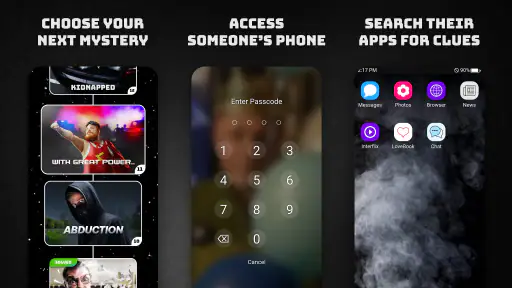
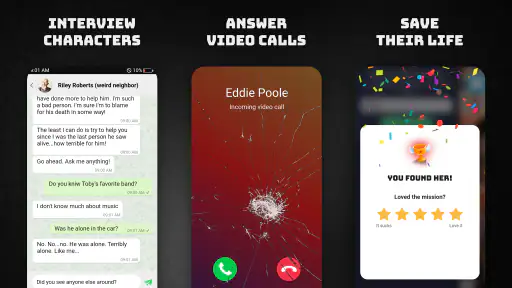
 Analysis by Frivlyz
I like detective games that let me solve a case by paying attention rather than simply tapping through action scenes, and Peek a Phone - Detective Game is built around that kind of curiosity. Its central idea is to examine a found phone and work out what happened to its owner, so the story unfolds through digital traces instead of a conventional clue board. That makes it a natural fit for short, focused sessions, though the cases are more satisfying when I have enough time to connect details rather than rush.
Who will enjoy this kind of investigation
This adventure game is a good match for players who enjoy reading between the lines: noticing a suspicious message, remembering a name, or checking a detail that seemed unimportant at first. It is less suited to someone looking for fast combat, open-world exploration, or a stream of simple puzzles with instant answers. The pleasure here comes from interpreting information, and some people may find that slower, text-led approach less exciting than a more action-oriented mystery.
I would also recommend it to anyone who likes stories told through a character’s everyday digital life. Messages, emails, photos, and apps can suggest relationships and motives without spelling everything out at once. If you prefer to make a case from scattered clues, that format has appeal; if you dislike reading on a phone screen or keeping track of several details, it can feel like homework rather than play.
A useful way to approach each case
When I play a mystery built around a simulated phone, I try not to treat each screen as an isolated puzzle. A name or event mentioned in one conversation may change how another item reads later. It helps to pause before deciding that a detail is irrelevant, and to revisit earlier information when a new clue makes it look different. This is a practical way to avoid guessing too soon, especially if the story has introduced several people or overlapping motives.
For a realistic everyday session, imagine opening the game during a quiet commute or while waiting for an appointment. I would tackle one small stretch of a case, remember the unresolved names or questions, then return when I can give the next set of clues proper attention. That is more rewarding than trying to play while distracted by messages from real life. The phone-like presentation is part of the fiction, so switching repeatedly between the game and your actual notifications can also break the mood.
How it differs from other mobile mysteries
Many mobile detective games lean on map searches, hidden-object scenes, or a sequence of standalone logic challenges. This one’s defining appeal is the sense of investigating a person through the material left on a phone. That creates a more intimate kind of mystery: small pieces of communication can carry as much weight as an obvious clue. I find that more involving than a puzzle collection when I want a story, but it is not automatically better for every player. Someone who wants visual exploration or a brisk, clearly signposted trail may prefer a different style of adventure.
The realistic interface also brings a trade-off. It supports the premise and makes browsing feel like part of the investigation, but the familiar layout can encourage you to expect every interaction to work exactly like a real device. I would approach it as a game interface rather than assume that ordinary phone habits always apply. Staying curious is useful; tapping around without a reason is less likely to help than comparing what you have read and looking for contradictions.
Gaming Stories You May Enjoy

Dancing Road Turns Short Breaks Into a Test of Rhythm and Timing

Super Stylist Makes Every Outfit a Test of Taste and Patience

Dominoes on Your Terms: Who Should Play and Who Should Pass

Pokémon GO Makes the Familiar World Feel New

Chess.com Turns Rematches Into Rivalries, but Community Has Its Costs

Archery Battle 3D Review: Sharp Aiming, Unclear Feedback
Unraveling the Mystery
Once you download Peek a Phone - Detective Game, you're immediately thrust into the shoes of a detective. The premise is simple yet incredibly engaging. You find a lost phone, and it’s your job to dig through its contents to solve the mystery of its owner. Sounds easy? Trust me, it's anything but!
Gameplay Mechanics
The game is all about snooping through texts, emails, photos, and apps on this virtual phone. The attention to detail is impressive, and as you piece together clues, you really start feeling like a modern-day Sherlock Holmes. Each case is unique, offering a fresh challenge that keeps the game from becoming repetitive. The puzzles are well-thought-out, requiring you to think critically and pay attention to the smallest details.
The interface is designed to mimic a real phone, which is both intuitive and immersive. It's so realistic that I almost forgot I wasn’t on my actual device! Plus, the app's design makes navigation a breeze, ensuring that you can focus on the mystery at hand without getting bogged down by clunky controls.
Engaging Storylines
What I really love about this game is the storytelling. Each case is a story in itself, with characters that are surprisingly well-developed given the format. You get snippets of their lives, their secrets, and their motives, which makes solving each mystery that much more satisfying. The writing is top-notch, drawing you in with every new notification or message you uncover.
And let’s not forget the thrill of the chase. As you delve deeper, the stakes get higher, and the suspense builds. There were moments I was genuinely on the edge of my seat, eager to see what twist or turn was coming next. It's this kind of engagement that makes Peek a Phone - Detective Game stand out in a crowded market of mobile games.
Following clues without spoiling the story
A small habit makes this kind of casework easier: keep a mental note, or jot down a couple of names and unanswered questions outside the game if you tend to take long breaks. I would avoid writing a full solution as I go; the fun is in making the connection myself, and a short reminder is enough to restart my train of thought. When a clue seems obvious, I also check whether it actually explains the situation or merely points toward another person. That distinction helps preserve the satisfaction of solving a case rather than guessing at the first plausible answer.
Another useful trade-off is pacing. If I am tired or only have a minute, I would rather stop at a natural pause than skim a conversation and miss a detail that matters later. The game’s strength is its close attention to written clues, so distracted play can make it feel harder than it is. On the other hand, a player who enjoys reading carefully may appreciate that the experience does not depend on reflexes or quick reactions.
What the purchase details mean in practice
The game is free to download, while optional in-app purchases are listed from $0.99 to $49.99 per item. That range is worth noticing before you start: it tells me that paid items are part of the experience, but it does not tell me what each item contains or whether any purchase is needed to enjoy a case. I would begin without spending and decide only after seeing how the game fits my habits. There is no reason to treat a displayed purchase range as a recommendation to buy.
For fairness, I separate what is clear from what is not. The presence of in-app purchases is confirmed, but their specific contents and effect on progression are not established here, so I would not assume they provide clues, remove waiting, or give a competitive advantage. This is a single-player-style mystery experience in its premise rather than a contest against other players, which makes the usual pay-to-win concern less central. Still, anyone who wants a fully predictable spending experience should review purchase prompts carefully and use their device’s purchase controls as they normally would.
What to expect before installing
FaintLines, Inc. developed the game, which is listed as a free adventure for Teen players. It was released on June 19, 2020, and the current version is 80, with a minimum operating-system requirement of 10. Those details make it easier to judge basic fit: check that your device meets the system requirement, and keep the age rating in mind if you are choosing a game for a younger player. The story format may also suit a teen who enjoys mysteries more than a player who wants constant action.
Its audience response is strong, with a 4.8 average from around 88,000 ratings, and it has passed one million installs. I treat that as useful context, not a guarantee that every case or writing style will work for me. A large audience can suggest that the phone-based format has broad appeal, but my own preference for reading-heavy puzzles matters more when deciding whether to install it.
Where the experience may not fit
The main limitation is inherent in the concept: much of the investigation asks you to inspect written or visual material on a simulated device. If you want a game that gives immediate feedback for every move, or one that can be enjoyed with the sound off and almost no reading, this may not be your best pick. Likewise, anyone who gets impatient when a story asks them to revisit information may find the careful pace frustrating. I see those as meaningful fit questions, not flaws that can be solved by tapping faster.
There is also a difference between immersion and convenience. A phone interface can make fictional evidence feel personal, but it can be less direct than a conventional list of clues or a dedicated notebook. I would choose this game when I want to inhabit a mystery, not when I simply want a quick brain teaser between tasks. If the case has my attention, that extra browsing is part of the pleasure; if I am in a hurry, it can become friction.
Final Thoughts
In a world where mobile games are often quick distractions, this app offers something more substantial. It's a game that demands your attention and rewards it with a rich, immersive experience. Whether you're a mystery buff or just looking for something different to pass the time, this game is definitely worth checking out. Just be prepared to lose track of time as you dive deeper into the mysteries it has to offer!
Overall, Peek a Phone - Detective Game is a refreshing take on the detective genre, blending storytelling and interactive gameplay seamlessly. So, if you're ready to put your detective skills to the test, this app is your new best friend. Happy sleuthing!
My trust verdict
I would recommend it to a friend who enjoys patient, story-first detective work and likes piecing together a person’s life from digital fragments. I would not recommend it blindly to someone who dislikes reading on a small screen, expects every clue to be obvious, or wants to know exactly what paid options do before installing. The purchase range is visible, but the contents and impact of individual items remain unknown, so my practical advice is simple: try the free download first, pay attention to any purchase prompt, and spend only if the game itself has already earned your interest.
Peek a Phone - Detective Game Pros and Cons
Pros
- Engaging detective-themed puzzles.
- Variety of mystery cases to solve.
- User-friendly interface.
- Regular updates with new content.
- Multiplayer mode for team play.
Cons
- In-app purchases required for hints.
- Occasional bugs in gameplay.
- Limited offline functionality.
- Ads can be intrusive.
- Requires constant internet connection.
Frequently Asked Questions
What is Peek a Phone - Detective Game about?
Peek a Phone - Detective Game is an interactive mystery-solving game where players assume the role of a detective. Players are tasked with solving various cases by exploring clues, interrogating suspects, and piecing together evidence. The game offers a unique experience by allowing players to dive into an immersive story, challenging their problem-solving and analytical skills.
Is Peek a Phone - Detective Game free to play?
Peek a Phone - Detective Game is free to download and play with optional in-app purchases. While the main game and storylines are accessible at no cost, players can enhance their experience through purchasing additional hints, stories, or cosmetic items. These purchases are entirely optional and not necessary to enjoy the game fully.
What are the system requirements for Peek a Phone - Detective Game?
For Android users, Peek a Phone - Detective Game requires Android version 5.0 or higher, while iOS users need iOS 10.0 or later. The game is optimized for both smartphones and tablets, ensuring a smooth gameplay experience. It's recommended to have at least 200 MB of free storage and a stable internet connection for the best performance.
Can I play Peek a Phone - Detective Game offline?
Peek a Phone - Detective Game is primarily designed for online play to access the latest updates and participate in community events. However, certain elements of the game can be played offline, such as revisiting previously solved cases or practicing detective skills. For a complete experience, an internet connection is advisable.
Is Peek a Phone - Detective Game suitable for all ages?
Peek a Phone - Detective Game is suitable for players aged 12 and above due to its complexity and the nature of its content. The game involves solving crime-related mysteries, which may include themes not suitable for younger audiences. Parents are encouraged to review the game’s content and decide if it aligns with their expectations for appropriate material.


