

Parking Jam: Car Parking Games
- Reviews
- 4.4
- Version
- 6.10.0
- Installs
- 10,000,000+

Screenshots
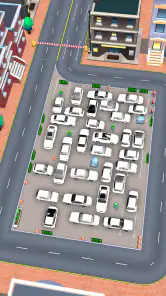
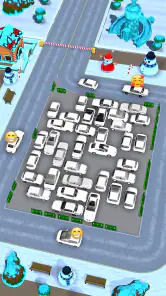
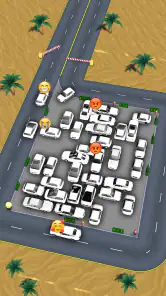
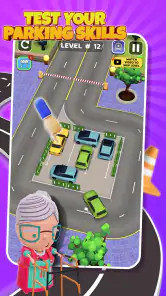
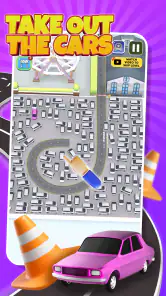
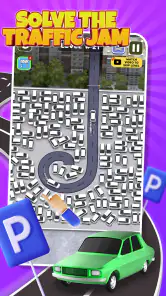
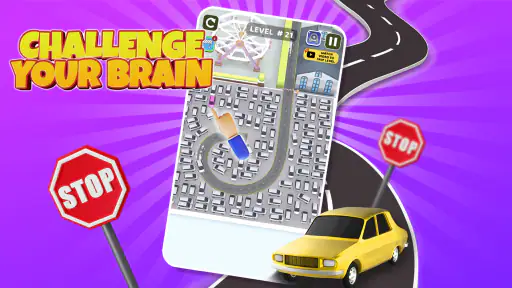
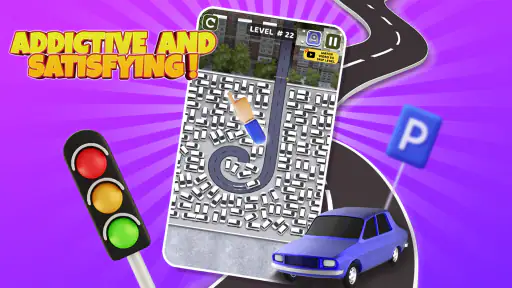
 Analysis by Frivlyz
On a shared phone or tablet, a quick puzzle can become an easy way to fill the few spare minutes when one person is waiting for dinner or someone else has finished a task early. That is where Parking Jam: Car Parking Games makes sense to me: its central challenge is immediately understandable, so a family member can pick it up without needing a long explanation. The appeal is less about building a shared campaign and more about taking turns with a compact problem: look at the crowded lot, decide which car should move, and see whether that choice opens a route out.
A puzzle that works in short turns
In a household, I’d treat it as a pass-the-device game rather than an activity that needs everyone playing at once. One person can study the arrangement, make a move, then hand the phone to the next person to spot a different route. That small pause before moving a car can prompt useful discussion: which vehicle is blocking the exit, and which move is likely to create space instead of shifting the jam around? It gives a shared session a little more thought than simply tapping through a screen, while still keeping the rules simple enough for a casual turn.
A realistic use would be a short wait at home: one person has a few minutes before heading out, while another wants to try the next puzzle. Because the board presents a contained problem, it is easy to stop after a level and let someone else take over. I would avoid treating it as a game that automatically saves a shared group’s progress in a way each person can separate; on a shared device, it is sensible to agree on who is playing and when. That is a practical boundary, not a reason to make the game complicated.
Keeping turns and expectations clear
When several people use one device, the main coordination issue is simply ownership of the current session. If one player is halfway through working out a sequence, another person jumping in can undo the plan or make it harder to tell whose turn it is. A low-effort routine helps: finish the current puzzle before passing the device, or let the next player take over only after everyone agrees. This suits the game’s bite-sized puzzle style better than trying to coordinate a long multiplayer match.
That distinction matters when comparing it with other strategy games. Many strategy titles ask players to manage several systems at once, compete against opponents, or invest time in a continuing run. This one is more immediate and spatial: the challenge is to reason about a crowded parking layout, not to maintain an elaborate plan across a long session. I’d choose it when I want a small logic problem that can be shared casually, but I’d choose a deeper strategy game if I wanted sustained planning, meaningful team roles, or direct competition between people.
Who should play, and what to expect
The game is free to start, and TapNation is its developer. It has a 4.4 average from around 65,000 ratings, with over 10 million installs, which suggests that this straightforward puzzle format has found a broad audience. It is rated for everyone, and the current version is 6.10.0. The game first arrived on June 25, 2020, and it runs on Android 7.0 or later. Those details make it a plausible choice for a range of Android devices, though the age rating should not be confused with a promise that every household will want the same play limits or purchase rules.
There are in-app purchases, priced from $0.49 to $89.99 per item, so I would check the device’s purchase settings before handing it to a child or leaving it available on a shared screen. The game can be enjoyed as a free puzzle, but the presence of optional purchases is still worth discussing in a family setting. I would set expectations beforehand: playing a level is one thing; spending money is a separate decision that should belong to the account holder. That simple boundary avoids turning an otherwise casual puzzle session into an awkward surprise.
Gaming Stories You May Enjoy

Dancing Road Turns Short Breaks Into a Test of Rhythm and Timing

Super Stylist Makes Every Outfit a Test of Taste and Patience

Dominoes on Your Terms: Who Should Play and Who Should Pass

Pokémon GO Makes the Familiar World Feel New

Chess.com Turns Rematches Into Rivalries, but Community Has Its Costs

Archery Battle 3D Review: Sharp Aiming, Unclear Feedback
For younger players, the basic idea is approachable because it relies on visual reasoning rather than complicated instructions. An adult can use a first turn to show how to inspect the lot before moving anything, then let the child explain what they think is blocking the way. If frustration builds, it is better to pause and revisit the puzzle later than to turn each level into a test of patience. Older puzzle fans may enjoy trying to plan several moves ahead, while people who dislike trial and error may find the tighter layouts less relaxing than they expected.
Small habits that make the puzzles clearer
My first practical tip is to scan the entire parking arrangement before making the obvious move. A car near the exit may look like the first one to shift, but a different vehicle can be the actual blocker; moving cars without a plan can leave the same bottleneck in place. I find it more useful to trace a route backward from the exit: identify what must move first, then ask which space each move needs. This turns a vague “try things until it works” approach into a simple sequence of checks.
Another useful habit is to pause after each move and reassess the available space rather than rapidly tapping through a chain of guesses. In a puzzle built around congestion, a move that appears productive can close off a lane or make another car harder to reposition. When sharing the device, saying the intended next step aloud also makes the puzzle more collaborative: the other player can challenge the plan before the move, not merely react after it. That works especially well when one person spots the exit route and another notices a blocked space.
I would also keep sessions modest if the puzzles begin to feel repetitive. The simple format is a strength when I have a short break, but it can become a limitation if I am looking for a broad range of strategic systems or a strong narrative reason to keep playing. This is a focused parking-lot puzzle, not a substitute for every kind of strategy game. If I want a quick mental reset, I’m happy to open it; if I want a longer session with more varied decision-making, I’d look elsewhere.
Age, purchases, and shared-device boundaries
The everyone age rating makes the game suitable for a general audience, but the household context still matters. A child may understand the car-moving puzzle while not understanding that a purchase prompt involves real spending. I would keep purchase approval with the adult or account holder and explain that free access does not mean every optional item is free. This is especially important on a device used by several people, where one person’s settings and another person’s play can overlap.
For adults deciding whether it belongs on a family device, the main question is not whether the premise is difficult to explain; it is whether a short, repeatable puzzle is the kind of screen time they want to encourage. It can offer a small reasoning exercise, but it is still a mobile game and can invite “one more level” when someone meant to stop. Agreeing on a natural stopping point, such as finishing the current puzzle, is more realistic than expecting every player to disengage at the same moment.
Where it fits among puzzle games
Compared with match-style puzzles, this game asks for spatial planning rather than matching colors or clearing a pattern. Compared with traffic-management games, its central pleasure is less about responding to a stream of events and more about untangling a fixed arrangement. That makes it a good fit for players who like to inspect a board and work out an order of moves. It is less suitable for someone who wants a story-led experience, a social competition, or a strategy game with several interacting resources.
The trade-off is that a narrow mechanic has to keep earning attention through the puzzles themselves. The gradually rising complexity gives the basic idea room to develop, but anyone who already knows they tire quickly of repeated board-clearing tasks may not want to make it a main game. I’d think of it as a handy extra: a title to keep around for a commute wait, a quiet break, or a shared-device turn, rather than something every household member needs to play daily.
One question people often have before trying a free game is whether they need to spend money to enjoy the central activity. I can recommend approaching it as a free puzzle first and treating purchases as optional choices, not a requirement to understand the basic appeal. The listed purchase range runs from $0.49 to $89.99 per item, so anyone sharing a device should make sure the person playing cannot make an unintended purchase. Another practical question is whether it suits a very young or impatient player: the concept is easy to grasp, but the later need to think through move order may frustrate someone who expects every tap to work immediately.
For a casual player, the key question is whether the game can be put down easily. Its individual puzzle structure makes it convenient to stop between challenges, although the temptation to try another one is part of its appeal. If you want to keep play brief, decide on a stopping point before opening it. If you want a single game to occupy a long evening with changing modes and a wide variety of activities, this is probably not the best match.
Getting into the Driver’s Seat
From the get-go, Parking Jam: Car Parking Games hooked me with its simple yet engaging premise. The idea is straightforward: you have a parking lot jam-packed with cars, and your task is to get them out without causing a gridlock. The game starts off easy, luring you into a false sense of security. But don’t be fooled! As you progress, the levels become increasingly intricate, requiring a keen eye and strategic thinking.
Visuals and Gameplay
Now, let’s talk about the visuals. I was pleasantly surprised by the bright, colorful graphics that make each level a joy to look at. The design is intuitive, with smooth animations that add to the overall experience. It’s not just about moving cars; it’s about doing so with finesse. The game offers a variety of levels that gradually increase in difficulty, ensuring you’re always on your toes. Plus, the occasional addition of quirky obstacles keeps things interesting.
Why I Keep Coming Back
You know a game is good when you find yourself reaching for your phone during every spare moment. For me, the addictive nature of Parking Jam: Car Parking Games lies in its perfect balance of challenge and simplicity. It’s the kind of game that’s easy to pick up but hard to put down. Each level gives you a sense of accomplishment, and there’s always that urge to try "just one more" before you finally set your phone down.
Final Thoughts
In conclusion, if you’re on the hunt for a game that’s both entertaining and mentally stimulating, give Parking Jam: Car Parking Games a shot. It’s a fantastic way to pass the time, offering a unique twist on puzzle games that keeps you engaged for hours. Whether you’re a casual gamer or a puzzle enthusiast, this app has something for everyone. So, go ahead, clear that jam, and let the cars roll free!
Parking Jam: Car Parking Games Pros and Cons
Pros
- Engaging puzzles keep players hooked.
- Variety of levels for different skills.
- Colorful graphics enhance gameplay.
- Smooth controls make navigation easy.
- Frequent updates with new challenges.
Cons
- In-app ads can interrupt gameplay.
- Some levels feel repetitive.
- Limited free hints available.
- Occasional glitches in app performance.
- Requires internet for some features.
Frequently Asked Questions
What is Parking Jam: Car Parking Games and how does it work?
Parking Jam: Car Parking Games is a fun and engaging mobile game available on both Android and iOS. The primary objective of the game is to strategically maneuver cars out of a crowded parking lot without hitting other vehicles or obstacles. Players are challenged to solve increasingly difficult puzzles as they progress, making it a perfect game for those who love strategy and problem-solving.
Is Parking Jam: Car Parking Games free to play?
Yes, Parking Jam: Car Parking Games is free to download and play. However, like many free-to-play games, it offers in-app purchases. These purchases can enhance gameplay by unlocking special features, removing ads, or providing other benefits. Players can enjoy the game without spending money, but optional purchases can offer a more enriched experience.
What are the key features of Parking Jam: Car Parking Games?
Parking Jam: Car Parking Games boasts several exciting features, including a variety of challenging puzzles that increase in difficulty, intuitive touch controls, and colorful graphics. The game also offers a leaderboard to compete with friends, daily challenges to keep the gameplay fresh, and regular updates with new levels and features to keep players engaged.
Are there any advertisements in Parking Jam: Car Parking Games?
Yes, Parking Jam: Car Parking Games includes advertisements, which is common for free-to-play games. These ads help support the developers and fund future updates and new features. Players can choose to remove ads through an in-app purchase, which can provide a smoother, uninterrupted gaming experience.
Can I play Parking Jam: Car Parking Games offline?
Parking Jam: Car Parking Games can be played offline, making it a great option for those who want to enjoy the game without needing an internet connection. However, some features, such as leaderboards and daily challenges, may require an internet connection to function correctly. This provides flexibility for players to enjoy the game anytime, anywhere.


