

Paper Boy Race: Running game
- Reviews
- 4.5
- Version
- 1.34.1
- Installs
- 50,000,000+

Screenshots

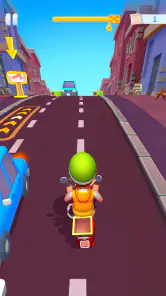
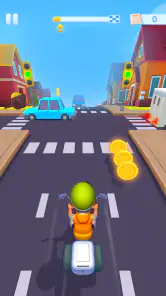
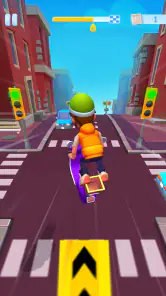
 Analysis by Frivlyz
Sharing a phone or tablet can make a quick arcade game an easy way to fill a spare moment, but it also changes what I look for: clear turns, simple expectations, and a game that suits the people who actually use the device. Paper Boy Race: Running game has an immediately understandable paper-delivery premise, so it can be approachable when someone wants to try a run without learning a complicated set of rules. I’d treat it as a casual game to take turns with, rather than assume it is designed for shared accounts or family play.
Taking turns on one device
In a household setting, the natural way to share this kind of game is to pass the device between short attempts. One person can concentrate on steering through the route, while the next watches for hazards and sees whether a different approach works. That makes a run easy to discuss, but it is still worth agreeing whose turn it is and whether anyone is trying to beat a personal best; a shared screen does not automatically mean shared progress or separate player spaces.
A realistic moment for it is a wait at home while someone else finishes getting ready. I’d hand over the device for a brief try, then take it back without turning the game into a longer commitment. The simple premise helps explain what is going on quickly, while the rising challenge gives repeat turns a purpose. If the household needs a game where several people play together at once, though, this is not the format I’d choose; a turn-taking alternative or a party game built around simultaneous play would be a better fit.
Setting expectations before play
Because this is an arcade game, I would approach it as an activity centered on repeated runs and improving performance, not as a broad collection of different experiences. That distinction matters when a child asks for a game to occupy a long stretch of time: a quick racing challenge may be welcome in a short break, but it may not satisfy someone looking for a story, a creative sandbox, or a large set of modes.
On a shared device, I’d also make a simple boundary clear before handing it over: who is playing, how long the turn lasts, and whether the next person can use the same game session. Those are practical household choices, not features I’d assume the app provides. If keeping each person’s activity distinct is important, it is sensible to check how the game behaves on the device before treating it as a multi-player household setup.
Age, trust, and choosing the right player
The game carries a Teen content rating, so I would check that rating against the age guidance used in my household instead of judging suitability only by its colorful racing premise. That does not replace a parent’s own decision about a particular child, especially when a device is shared and younger users may browse or launch apps independently.
Free access can make trying it feel low-commitment, but I still recommend agreeing on ordinary device rules before a child plays: use the family’s usual boundaries for downloads, screen time, and who can make account or purchase decisions. I would not assume that the game supplies parental controls or separate child profiles. If those are essential, choose a game or device arrangement that clearly supports the controls you need.
Gaming Stories You May Enjoy

Dancing Road Turns Short Breaks Into a Test of Rhythm and Timing

Super Stylist Makes Every Outfit a Test of Taste and Patience

Dominoes on Your Terms: Who Should Play and Who Should Pass

Pokémon GO Makes the Familiar World Feel New

Chess.com Turns Rematches Into Rivalries, but Community Has Its Costs

Archery Battle 3D Review: Sharp Aiming, Unclear Feedback
A Nostalgic Ride with a Dash of Modern Fun
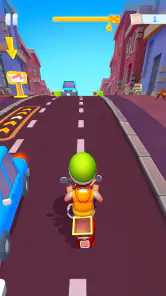
Upon launching Paper Boy Race: Running game, the first thing you'll notice is its charmingly retro graphics. It's like stepping into a time machine and landing in an 8-bit wonderland, yet it’s polished enough to keep up with today’s gaming standards. The game beautifully balances nostalgia with contemporary gaming elements, making it a delightful experience for both old-school gamers and newbies alike.
Gameplay that Keeps You on Your Toes
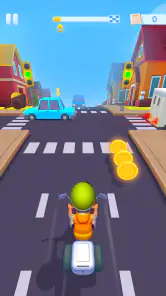
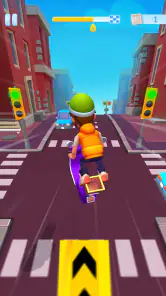
The core of the game is as straightforward as it gets: deliver newspapers while racing through an obstacle-filled neighborhood. But don’t be fooled by its simplicity; the game quickly ramps up in difficulty, ensuring your fingers stay busy and your mind engaged. You have to dodge cars, jump over fences, and avoid the occasional stray dog, all while making sure the newspapers land perfectly on the doorsteps.
One of the standout features is the game’s dynamic environment. As you progress, the neighborhood changes, offering new challenges and keeping the experience fresh. Plus, there’s a fantastic selection of power-ups that can help you navigate the trickier parts of the route. Whether it's a speed booster or a protective shield, each power-up adds a layer of strategy to your run.
Learning the route rather than rushing blindly
Once the obstacles start demanding quicker reactions, I find it more useful to notice patterns than to treat every run as a straight sprint. Pay attention to the part of the route where a collision happens, then make one adjustment on the next attempt instead of changing everything at once. That turns a frustrating miss into a small lesson and makes the increasing difficulty feel more manageable.
There is also a useful trade-off between speed and control. A boost can help cover ground, but activating a power-up without looking ahead may leave less time to react to what follows. I’d save those aids for sections that have already given me trouble, rather than using them as soon as they appear. The same goes for deliveries: focusing only on avoiding hazards can make the paper-throwing objective feel like an afterthought, so I try to keep both the route and the doorstep targets in view.
This is a good fit for players who enjoy the familiar arcade loop of learning through retries. It is less suitable for someone who dislikes quick reactions or gets annoyed when a small mistake disrupts a run. Compared with a typical endless runner, the paper route gives the action a more specific goal than simply staying alive; compared with a traditional motorcycle racer, it places more emphasis on navigating a delivery course than on racing opponents around a track. If you want realistic bike handling, detailed vehicle tuning, or head-to-head competition, a dedicated racing game is likely a better choice.
Short sessions, changing routes, and practical trade-offs
The changing neighborhood gives repeat attempts some variety, but I would not mistake that for a completely different game each time. The central appeal remains the same: ride, react, and make deliveries. That consistency is useful when I have only a little time, because I can return without needing to remember a complicated story or rebuild a strategy from scratch. On the other hand, players who need a steady stream of new mechanics may find the core loop familiar sooner than they would in a game with several distinct modes.
For a short break, I’d start with a single run and use the result to decide whether I have time for another. For a longer play session, I’d set a stopping point before chasing a better performance; arcade retries make it easy to keep thinking that the next attempt will be the one. This is a small but practical way to enjoy the challenge without letting a quick diversion take over the time meant for something else.
If you are wondering whether it is free to try, the game is listed as free. It was released on November 1, 2021, and Freeplay Inc is the developer. The current version is 1.34.1, and the minimum operating system is Android 5.1. I’d still check that the device in question is compatible before making it part of a shared-device routine. Its 4.5 average from around 28,000 ratings and more than 50 million installs suggest that many players have tried it, but popularity alone cannot tell you whether its quick-reaction style suits your household.
Soundtrack That Hits All the Right Notes
No game would be complete without a killer soundtrack, and this one does not disappoint. The upbeat, catchy tunes keep you motivated, making you feel like you’re part of an epic adventure. The sound effects, from the rustling of newspapers to the honking of cars, add an extra layer of immersion that makes each run feel authentic and exciting.
What really sets the soundtrack apart is how it adapts to the gameplay. During intense moments, the music picks up the pace, perfectly syncing with your racing heartbeat as you try to beat your high score. It’s these little touches that make the game a standout in its genre.
What to know before installing
The quick premise answers one common question: you ride through a neighborhood while trying to deliver papers, so the goal is more focused than in a general-purpose racing game. Another practical question is whether it works for a younger player. The Teen rating is the clearest age guide I would use, alongside the household’s own standards. For shared use, I would also check that the device’s account and download arrangements are appropriate; the game should not be treated as a substitute for household rules about who can install or play apps.
Its popularity is useful context, not a guarantee that every player will enjoy it. The 822 reviews sit alongside a 4.5 average, while the 50M+ install figure points to a broad audience. I’d weigh those signals against the kind of play someone wants: quick arcade decisions and repeated route attempts are the draw here, while a player looking for calm exploration, cooperative play, or deep racing simulation should look elsewhere.
A household verdict
Freeplay Inc’s arcade game is at its best as a compact, easy-to-explain challenge that can fit between other activities. I can see it working for an older child or adult who enjoys improving through retries, and for a household willing to take turns and keep expectations simple. Its changing routes and power-ups give players a reason to pay attention rather than just hold a direction, though the quick reactions and repeated runs will not suit everyone.
My recommendation is to try it when you want a lightweight paper-delivery race, not when you need a shared family game with coordinated simultaneous play, a long narrative, or clear individual account boundaries. If the Teen rating fits the intended player and the arcade pace sounds appealing, it is a reasonable free game to sample. If those conditions do not fit, a slower, cooperative, or more simulation-focused alternative will probably make for a better household choice.
Final Thoughts
In conclusion, Paper Boy Race: Running game is a delightful blend of past and present. It takes a classic concept and reinvents it with modern-day flair, making it a must-try for anyone looking for a fun, engaging, and challenging game. Whether you’re in it for the nostalgia or just need a new game to pass the time, this one is sure to deliver hours of entertainment. So, what are you waiting for? Grab your virtual bike and start your paper route today!
Paper Boy Race: Running game Pros and Cons
Pros
- Engaging and fun gameplay mechanics.
- Bright and colorful graphics.
- Simple controls easy to master.
- Regular updates with new content.
- Encourages quick reflexes and timing.
Cons
- Contains in-app purchases.
- Requires constant internet connection.
- Can become repetitive over time.
- Ads can be intrusive.
- Limited character customization.
Frequently Asked Questions
What is the primary objective of Paper Boy Race: Running game?
In Paper Boy Race: Running game, the primary objective is to navigate through various urban environments as a paperboy, delivering newspapers to homes while avoiding obstacles. The game challenges players to maintain speed and accuracy in deliveries, aiming to complete routes efficiently and earn high scores. Players can enjoy increasingly difficult levels, each with unique challenges.
What are the key features of Paper Boy Race: Running game?
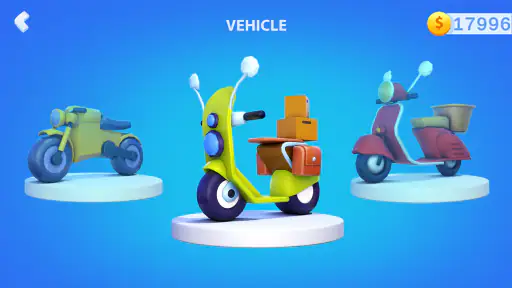
Paper Boy Race: Running game offers a variety of features, including dynamic urban environments, multiple levels with increasing difficulty, and a variety of obstacles that require quick reflexes. Additionally, the game features power-ups to enhance gameplay, leaderboards to track high scores, and customizable paperboy avatars, providing a personalized gaming experience for users.
Is Paper Boy Race: Running game suitable for all age groups?
Yes, Paper Boy Race: Running game is designed to be family-friendly, making it suitable for players of all ages. The game features simple controls and straightforward objectives, which allow younger players to enjoy the gameplay, while the increasing difficulty and competitive elements keep it engaging for older players as well.
Does Paper Boy Race: Running game require an internet connection to play?
No, Paper Boy Race: Running game does not require a constant internet connection to play. Players can enjoy the game offline, making it a convenient choice for gaming on the go. However, an internet connection might be necessary for certain features like downloading updates, accessing leaderboards, and making in-app purchases.
Are there in-app purchases in Paper Boy Race: Running game?
Yes, Paper Boy Race: Running game includes in-app purchases. These may range from cosmetic items for customizing your paperboy to power-ups that can enhance gameplay. While these purchases can enrich the gaming experience, they are entirely optional, allowing players to enjoy the core features of the game without spending money.


