

Papa's Sushiria To Go!
- Reviews
- 4.6
- Version
- 1.0.2
- Installs
- 100,000+

Screenshots


 Analysis by Frivlyz
I tend to enjoy food games most when they make the small details of an order matter, rather than asking me to tap through the same routine without thinking. Papa's Sushiria To Go! is a strategy game from Flipline Studios built around exactly that kind of shop-floor juggling: preparing sushi to match customers’ requests while trying to keep service moving. It suits short sessions, but the stream of orders gives each visit a little pressure. I would pick it when I want a cheerful, focused game, not when I’m looking for a deep restaurant simulator or a story-heavy adventure.
What the purchase gets you
This is a paid game, listed at $1.99, with optional in-app purchases ranging from $0.99 to $4.99 per item. That makes the spending context worth considering before you install: the initial price is not the only possible purchase, but I wouldn’t assume that optional items are necessary to enjoy the core sushi-shop routine. If you prefer to avoid additional spending, check the purchase prompts as they appear and decide for yourself whether anything offered is worth it. The game is rated Everyone, so its presentation is aimed at a broad audience.
The store shows an average rating of 4.6 from around 1.9 thousand ratings, and more than 100 thousand installs. Those figures suggest that plenty of players have tried it, but they don’t tell me whether its pacing or touch controls will suit you personally. The current version is 1.0.2, and the game was released on April 21, 2020. I’d treat those as useful identification details rather than a promise about how it will perform on every device.
Rolling into the World of Sushi
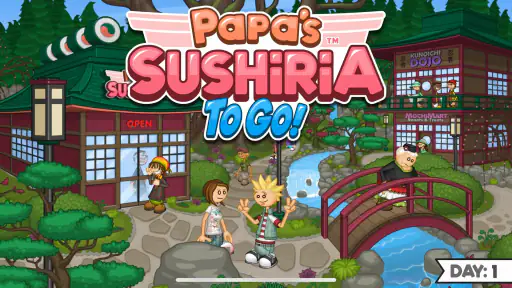
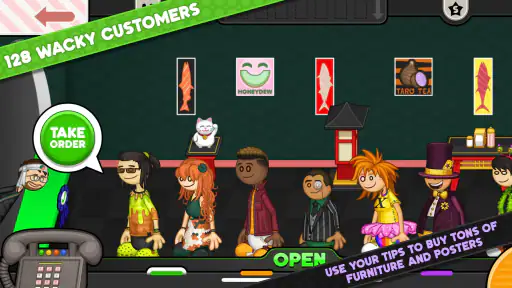
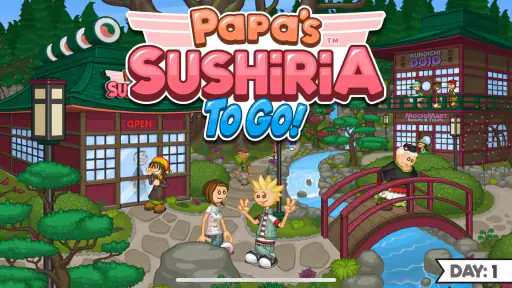
From the moment you launch Papa's Sushiria To Go!, you're greeted with a colorful and bustling sushi restaurant atmosphere. The game sets you up as the newest chef in town, tasked with crafting the most delicious sushi rolls and satisfying a stream of eager customers. The goal? To become the ultimate sushi master, of course!
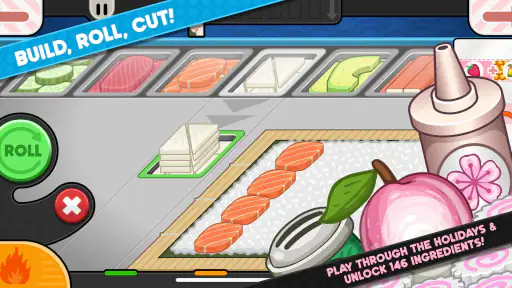
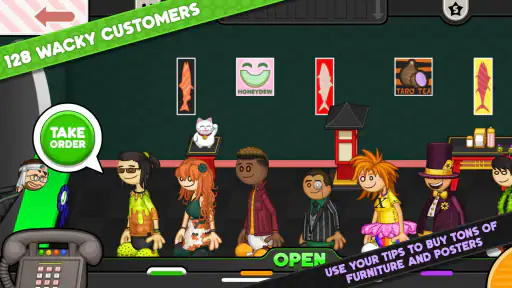
The interface is super intuitive, making it easy to jump right in and start rolling. You'll be guided through the basics of sushi preparation, from spreading rice on nori to layering on fresh fish and toppings. The real fun comes with the challenge of keeping up with customer orders and ensuring each roll is picture-perfect. It’s a fast-paced environment that’s both thrilling and rewarding.
Making progress without rushing every order
The satisfying part of the work is that an order is more than a single button press: preparation has stages, and attention to what a customer asked for matters. I find it helpful to read the whole order before starting instead of relying on memory once several tasks compete for attention. That small habit can make the difference between a calm run and a scramble, especially if you are still learning how the different ingredients fit into the workflow.
There is a useful trade-off between speed and accuracy. Trying to move quickly feels rewarding, but rushing through a build can undermine the care the game asks for. I’d focus on getting a consistent routine first: take in the request, work through the components in order, and only then try to shave time off. If you are playing in a brief break, this approach keeps the session enjoyable rather than turning every customer into a test of reflexes.
Gaming Stories You May Enjoy

Dancing Road Turns Short Breaks Into a Test of Rhythm and Timing

Super Stylist Makes Every Outfit a Test of Taste and Patience

Dominoes on Your Terms: Who Should Play and Who Should Pass

Pokémon GO Makes the Familiar World Feel New

Chess.com Turns Rematches Into Rivalries, but Community Has Its Costs

Archery Battle 3D Review: Sharp Aiming, Unclear Feedback
Customization and Creativity
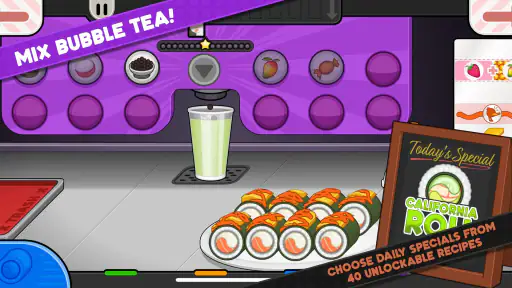
One of the standout features of this app is the incredible level of customization. As you progress, you'll unlock new ingredients, recipes, and even restaurant upgrades. This means you can really let your creativity shine by inventing unique sushi rolls and decorating your restaurant to suit your style. The more you play, the more you can personalize your sushi empire.
And let's not forget about the mini-games! These little side quests add an extra layer of fun, giving you a chance to earn rewards and improve your skills. Whether it's slicing up fish or catching ingredients, they’re a delightful distraction from the main game.
How I’d use the rewards and side activities
The side games are a welcome change of pace, but I wouldn’t treat them as chores that must be cleared before the main service can be fun. They make more sense as a palate cleanser when you want a different kind of interaction, or as a way to break up a longer stretch of orders. If you enjoy collecting and unlocking things, their rewards can add motivation; if you mainly want the sushi-making loop, you can keep your attention on the restaurant instead.
As new ingredients and recipes become available, I’d experiment with them when the service feels manageable rather than trying to absorb every new option at once. That is a practical way to learn what each order needs and avoid confusing novelty with difficulty. Decorating and upgrades also give progress a personal angle, though players who care only about optimizing a score may find that visual customization is less compelling than the order-by-order challenge.
Where it sits among strategy games
Compared with a turn-based strategy game, this one is much more immediate: the decisions are made while handling a flow of customer requests, rather than planning a long campaign across a map. Compared with a simple idle restaurant game, it asks you to take an active role in assembling orders. That makes it a better fit if you like hands-on time management and a clear task loop, but a weaker choice if you want to relax without paying attention or build a restaurant through long-term economic planning.
It also differs from open-ended cooking games that let you improvise freely. Here, creativity sits alongside the need to follow what each customer wants. I see that structure as the point: there’s room to unlock and personalize, but the work still revolves around serving the order correctly. If you want a sushi-themed game where precision and pace matter, that balance is appealing; if you would rather experiment without customers waiting, a sandbox-style cooking game may be a better match.
A realistic fit for everyday play
For me, this is the kind of game I’d open while waiting for a ride or settling in for a short break. I can focus on a handful of orders, then put it down when I need to move on. The stage-based preparation makes it more engaging than a passive time-filler, while the colorful presentation keeps the mood light. A longer session may be more satisfying when I want to make progress with unlocks and customization, but I wouldn’t start a round when I need to keep my attention on something else.
That attention requirement is an important limitation. The shop’s pace is part of the fun, yet it can feel demanding if you are tired, distracted, or hoping for a game that pauses its pressure. I’d also skip it if the main appeal for you is realistic cooking: this is a stylized strategy game, not a guide to sushi preparation. The appeal is in managing a playful service routine, not learning real-world kitchen technique.
A Feast for the Senses
Visually, the game is a treat. The graphics are vibrant and charming, with a cute, cartoonish style that’s easy on the eyes. The sound effects and background music are also on point, enhancing the overall immersive experience. It’s like stepping into a cozy sushi bar, complete with the hustle and bustle of hungry customers.
The gameplay is smooth and responsive, which is essential for a time-management game like this. There’s nothing more satisfying than seeing a perfectly rolled sushi glide across the screen to a happy customer. And when you hit a combo streak, it’s pure bliss!
Fairness, spending, and what I would check
Because the game combines a purchase price with optional in-app items, I would make my spending decision deliberately rather than treating every offer as part of the basic experience. The listed item range is $0.99 to $4.99, but that alone does not explain what each item contains or whether it changes progression. I can say the purchase structure includes both an upfront cost and optional purchases; I can’t responsibly infer the exact value, necessity, or effect of an individual item from its price range.
That distinction matters if you are choosing it for a younger player. The Everyone age rating describes the content audience, not a spending limit. I’d review the device’s purchase settings and make sure the person playing understands that optional items can cost extra. The game’s appeal does not depend on assuming that spending more will make the sushi work more enjoyable, so I’d start with the paid game itself and only consider an extra purchase if its purpose is clear to you.
For competitive fairness, I’d describe this as a personal score-and-service challenge rather than a contest where I need to buy my way past another player. The verified purchase facts establish optional items, but they do not establish how those items affect play or whether there are competitive advantages. So I would not promise that spending is irrelevant, nor claim that it gives an edge. If that question is central to your decision, inspect the in-game purchase details before paying for anything beyond the initial game.
What to expect before installing
The key question is whether you enjoy repeating a hands-on service loop with small variations. If you like reading requests, assembling the right combination, and improving your flow, the sushi theme gives that familiar strategy format a distinct personality. If you want a game that is mostly narrative, a relaxed collection experience, or a realistic culinary lesson, this one is unlikely to meet that expectation. Its strength is focused order management, not broad simulation.
I’d also think about how you prefer to play on a phone. The work involves several stages and quick attention shifts, so a comfortable screen and a moment when you can concentrate will help. It is an easy concept to understand, but that doesn’t mean every session is effortless. When you feel yourself rushing, slowing down to read the order carefully is a better tactic than tapping faster and hoping the result matches.
One final practical point: the listed rating and install count can help you gauge that the game has an established audience, but they are not a guarantee of compatibility, personal enjoyment, or current performance on a particular device. I would judge it by its core loop and purchase model: a paid, food-themed strategy game with optional item purchases, a broad age rating, and a focus on active service. That is enough to decide whether its style is appealing without treating popularity as a substitute for fit.
Final Thoughts
In conclusion, Papa's Sushiria To Go! is an absolute gem for anyone who loves food-themed games or is simply looking for a fun and engaging way to pass the time. It’s got a perfect blend of challenge and creativity, wrapped up in a charming package. Whether you’re a seasoned gamer or a casual player, this app offers something for everyone.
So, if you're ready to roll up your sleeves and dive into the world of sushi-making, give Papa's Sushiria To Go! a try. Your inner sushi chef will thank you!
Papa's Sushiria To Go! Pros and Cons
Pros
- Smooth and intuitive gameplay mechanics.
- Wide variety of ingredients and customization options.
- Engaging storyline with charming characters.
- Frequent updates with new levels and features.
- Offline play supported for on-the-go fun.
Cons
- Limited free content; in-app purchases needed.
- Repetitive tasks may become monotonous.
- Graphics may seem simplistic to some users.
- Requires significant storage space.
- Occasional performance issues on older devices.
Frequently Asked Questions
What is Papa's Sushiria To Go! about?
Papa's Sushiria To Go! is a popular time-management game where players take on the role of a sushi chef working at Papa Louie's restaurant. Your main tasks involve preparing sushi rolls, serving customers, and managing the restaurant's daily operations. The game is well-loved for its engaging gameplay mechanics, colorful graphics, and the challenge of balancing speed with quality to keep customers happy.
What platforms is Papa's Sushiria To Go! available on?
Papa's Sushiria To Go! is available for both Android and iOS devices. It can be downloaded from the Google Play Store for Android users and the Apple App Store for iOS users. The game is optimized for mobile devices, ensuring smooth gameplay and an intuitive user interface, making it easy to play on the go.
Do I need an internet connection to play Papa's Sushiria To Go!?
No, you don't require a constant internet connection to play Papa's Sushiria To Go!. Once downloaded and installed, the game can be played offline. This makes it a perfect option for players who want to enjoy gaming without worrying about data usage or connectivity issues, especially while traveling or in areas with poor network coverage.
Are there any in-app purchases in Papa's Sushiria To Go!?
Papa's Sushiria To Go! is a paid app, meaning you purchase it upfront to download and play. Once you have the game, there are no additional in-app purchases required. This one-time payment structure is appealing for many users who prefer not to deal with ongoing purchases or microtransactions commonly found in other mobile games.
What age group is Papa's Sushiria To Go! suitable for?
Papa's Sushiria To Go! is suitable for a wide range of age groups, typically recommended for ages 9 and up. The game features colorful, cartoon-like graphics and engaging gameplay that appeal to both children and adults. Its content is family-friendly, making it a great choice for parents looking for a safe and entertaining game for their kids.


