

Overmortal
- Reviews
- 4.2
- Version
- 1.4.25112405
- Installs
- 1,000,000+

Screenshots

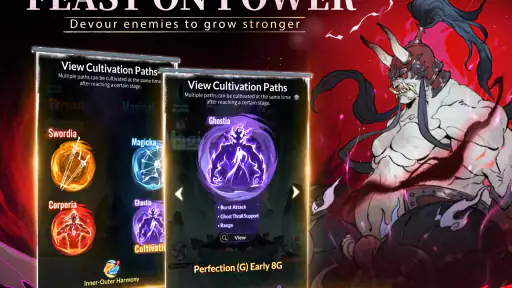




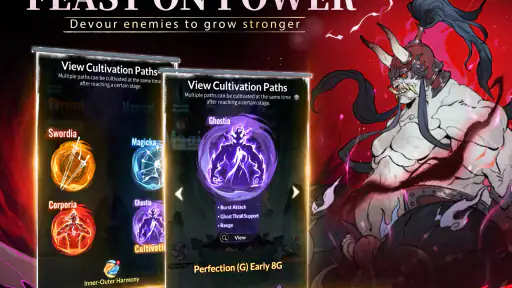

 Analysis by Frivlyz
When I decide whether a free role-playing game is worth trying, I look beyond its fantasy premise: I want to know what kind of routine it asks for, whether spending feels necessary, and how much room there is to enjoy it at my own pace. Overmortal is a mobile cultivation-themed RPG from LTGAMES GLOBAL, and its appeal is the promise of a long journey from ordinary beginnings toward a more powerful, almost mythic identity. I’d approach it as a game to dip into regularly rather than a tightly plotted adventure meant to be finished in a few evenings.
It is free to download, with in-app purchases ranging from $0.99 to $99.99 per item. That tells me there are optional purchases at very different price points, but it does not tell me what each purchase contains or whether any particular one is worthwhile. I would decide based on the actual purchase screen and my own budget, not assume that the largest option is needed to enjoy the game. The age rating is Everyone 10+, a useful starting point for families, though I’d still check the game’s current content and purchase settings together with younger players.
A cultivation journey built for gradual progress
The central fantasy gives the progression a clear direction: you begin as a mortal and work toward ascension. That framing is a natural fit for an RPG, because character growth feels like part of the world rather than a separate checklist. If you enjoy watching a character become more capable over time, the long arc can be satisfying. If you prefer a compact story with a definite ending and little ongoing upkeep, this may feel more like an extended commitment than a one-and-done campaign.
My practical advice is to treat each session as one step in a longer journey. Before spending time or money, get a feel for how the game presents its current tasks and progression choices. Notice which activities you genuinely enjoy, rather than trying to clear every available prompt simply because it is visible. That small habit helps keep a progression-focused RPG from turning leisure time into a second to-do list.
Spending, fairness, and what a player can judge
The purchase range is broad enough that I would pay attention to how offers are presented, especially if I were playing regularly. I’d set a personal limit before opening optional purchase screens, and I’d avoid buying anything just to keep up with a momentary sense of urgency. A free entry point makes it easy to try the game first; there is no reason to commit money before you know whether its pace suits you.
Fairness is harder to judge from a price range alone. I can’t responsibly claim that purchases do or do not affect competitive outcomes without knowing what each item provides and how the game handles its player matchups. If competition is your main reason for playing, spend some time understanding the actual modes and the role of progression before investing. If you mainly want a personal fantasy adventure, the more useful test is whether the free experience keeps you interested without making spending feel like a requirement.
Who is likely to enjoy it—and who may not
I’d recommend giving it a try if you like role-playing games built around steady character growth, mystical world-building, and returning to a continuing adventure. It could suit someone who has a few short windows during the day and prefers making incremental progress, provided the game’s session structure works for them. A sensible first week is simply to explore, learn the progression rhythm, and hold off on purchases until you know what you actually value.
Gaming Stories You May Enjoy

Dancing Road Turns Short Breaks Into a Test of Rhythm and Timing

Super Stylist Makes Every Outfit a Test of Taste and Patience

Dominoes on Your Terms: Who Should Play and Who Should Pass

Pokémon GO Makes the Familiar World Feel New

Chess.com Turns Rematches Into Rivalries, but Community Has Its Costs

Archery Battle 3D Review: Sharp Aiming, Unclear Feedback
On the other hand, I’d look elsewhere if you want a completely self-contained story, dislike long-term progression, or prefer competitive games where you can judge fairness immediately and without learning a deep development curve. Someone seeking a traditional action RPG with a tightly controlled, hands-on combat focus should also compare alternatives before settling in; the cultivation premise and ongoing growth are the distinctive draw here, not a promise that it will match every action-focused game.
Immersive Gameplay and Stunning Visuals
First things first, the visuals in Overmortal are truly something to behold. The game developers have done an incredible job crafting a universe that's both vibrant and mystical. From lush forests to intricate temples, every scene is a feast for the eyes. The attention to detail is just mind-blowing, and it really draws you into the game’s atmosphere.
The gameplay itself is super engaging. You start as a humble mortal with dreams of ascending to godhood. The journey is filled with challenges, quests, and battles that test your strategic thinking. What I love is that Overmortal cleverly balances action with thoughtful decision-making, keeping you on your toes. It's not just about mindless button mashing; there's a lot of depth here.
Character Development and Customization
One of my favorite aspects is the character development. As you progress, you get to customize your character with a range of skills and abilities. This is where Overmortal really shines. The level of customization is incredible, letting you tailor your character to suit your play style. Whether you prefer being a fierce warrior or a cunning strategist, the game has got you covered.
There’s also a rich narrative that unfolds as you advance. The storyline is well-crafted, with plenty of twists and turns to keep you hooked. The characters you meet along the way are well-developed and add depth to the adventure. I found myself getting invested in their stories, which is a testament to the game’s storytelling prowess.
Multiplayer Experience
No game is complete without a solid multiplayer component, and Overmortal doesn’t disappoint. You can team up with friends or other players to tackle challenges and explore new territories. The community aspect really enhances the experience, making every victory feel that much sweeter when shared with others.
The cooperative quests are particularly enjoyable. They require teamwork and strategy, adding an extra layer of excitement. Plus, the competitive modes allow you to test your skills against other players, which can be both exhilarating and humbling!
Soundtrack and Audio Effects
Let’s not forget the soundtrack. The music in Overmortal is nothing short of epic. It perfectly complements the game’s epic scale, enhancing the mood and immersion. The audio effects are also top-notch, with every swing of the sword or magical spell casting feeling impactful and satisfying.
Final Thoughts
Overall, Overmortal is a captivating blend of great storytelling, stunning visuals, and engaging gameplay. It’s a game that truly offers something for everyone, whether you’re a fan of action, strategy, or just love a good story. I found myself looking forward to each new session, eager to see what the world of Overmortal had in store next.
So, if you’re ready to embark on a mystical journey and transform from a mere mortal to something extraordinary, give Overmortal a shot. Trust me, you won't regret it.
Fitting progress into an ordinary day
A realistic way I’d fit this game into a busy day is to open it during a short break, choose one clear objective, and stop when that objective is done rather than letting every available activity dictate the length of the session. For example, on a commute or while waiting for an appointment, I’d check what my character can advance, make a deliberate choice, and save longer play for a time when I can pay attention to the story or multiplayer. That division matters: a cultivation RPG can be relaxing when I set the pace, but less so if I feel obliged to keep checking in.
One useful approach is to separate experimentation from optimization. Early on, I’d try different character choices because the point is to discover what feels enjoyable, not to guess the perfect build from the start. Once I have a preferred style, I can pay closer attention to how skill choices support it. This makes customization more meaningful and reduces the temptation to chase every new option simply because it appears to offer a stronger route.
Reading the game’s systems before committing
Character growth and strategic decisions are part of the appeal, but they can also create friction when a game has several systems competing for attention. I recommend pausing before making an irreversible or costly choice, if one is presented, and reading the explanation rather than tapping through on autopilot. Keep track of which choices improve the style you actually use. A build that looks impressive on paper may be less satisfying if it pushes you away from the way you like to play.
The same care applies to optional purchases. I’d look at the item itself, its stated benefit, and whether it solves a problem I have genuinely encountered. A limited-time prompt can make a purchase seem urgent, but urgency is not evidence that an item is good value. Since the listed price range stretches from small purchases to much larger ones, I’d use device-level spending controls if a child is playing and make sure any purchase requires the account holder’s approval.
For families, the Everyone 10+ age classification is a helpful broad guide, not a substitute for a quick shared look at the game. I’d check how the player responds to the fantasy battles and social interactions, and talk through what purchases mean before handing over a device. That is more useful than assuming that a general age label answers every household’s preferences.
How it compares with other mobile RPGs
Compared with a conventional story-led RPG, this game’s strongest draw is the long cultivation arc and the sense of shaping a character over time. A shorter, chapter-based adventure is likely a better fit if you want a story you can complete without maintaining an ongoing routine. Compared with a straightforward action RPG, the emphasis here is not simply quick combat; the appeal also lies in progression and decisions about character development. Players who want precise, continuous action may find a more combat-centered alternative more satisfying.
It also differs from a purely competitive game. The multiplayer modes can add a social and challenging dimension, but I would not choose it solely on the assumption that every contest is a level playing field. Progression-focused games naturally ask players to develop their characters, and the relationship between development and competitive results is something each player should observe firsthand. If that question is decisive for you, try the available modes before spending and judge whether the experience feels comfortable.
Practical details and a measured verdict
The game is free, is rated Everyone 10+, and requires Android 6.0 or later. Its current version is 1.4.25112405, and it has passed one million installs. It holds an average rating of 4.2 from around 26,000 ratings, with roughly 2,000 written reviews. Those figures suggest that many players have tried it, but they cannot tell me whether its particular pace or purchase design will suit an individual. The best test is still to play without spending first and decide whether the core loop earns a place in your routine.
In everyday use, the main trade-off is between a broad, ongoing fantasy journey and the attention that a continuing RPG can ask for. I’d enjoy it most when I have the patience to develop a character gradually, take in the setting, and occasionally play with others. I’d be less inclined to recommend it to someone who dislikes progression systems, wants a clearly bounded campaign, or feels pressured by persistent prompts and competitive comparisons.
My trust verdict is cautious but positive: the free starting point makes trying it a reasonable choice, while the wide purchase range means I’d keep spending deliberate and limited. I would not treat the price of an item as proof of advantage or fairness, and I would not buy before understanding what it changes. If the cultivation journey, character choices, and social play are what you want from a mobile RPG, it is worth exploring at your own pace. If they are not, a more focused story game or a direct action RPG will probably be a better match.
Overmortal Pros and Cons
Pros
- Engaging storyline with immersive elements.
- Easy-to-learn mechanics for all players.
- Visually appealing graphics and animations.
- Frequent updates with new content.
- Supportive and active player community.
Cons
- Requires constant internet connection.
- Occasional in-app purchase prompts.
- Can be resource-heavy on older devices.
- Progression can feel slow without purchases.
- Limited offline gameplay options.
Frequently Asked Questions
What is Overmortal, and what genre does it belong to?
Overmortal is an immersive MMORPG that combines elements of strategy and adventure. Set in a mystical world, players engage in quests, battles, and alliances. The game offers both PvE and PvP modes, allowing players to explore dungeons or face off against each other in intense combat scenarios.
Is Overmortal free to play, and are there in-app purchases?
Yes, Overmortal is free to download and play. However, it includes in-app purchases that can enhance the gaming experience. Items such as character upgrades, cosmetic enhancements, and special abilities can be purchased, though they are not necessary for enjoying the core gameplay.
What are the system requirements for running Overmortal on mobile devices?
Overmortal requires a minimum of Android 5.0 or iOS 10.0 to run smoothly. It is optimized for devices with at least 2GB of RAM and a stable internet connection for seamless gameplay. Players are encouraged to ensure sufficient storage space and battery life before playing.
Can I play Overmortal with friends, and how does the multiplayer aspect work?
Yes, Overmortal features robust multiplayer capabilities. Players can join guilds, participate in cooperative missions, and engage in large-scale battles with friends. Communication tools within the game, such as chat and voice options, enhance the collaborative experience, making teamwork an integral part of the gameplay.
How often does Overmortal receive updates and new content?
Overmortal is regularly updated with new content, bug fixes, and enhancements. The developers are committed to providing fresh experiences and ensuring game stability. Players can expect seasonal events, new quests, and character updates, keeping the game dynamic and engaging over time.


