

Obby Noob: Parkour Craft
- Reviews
- 3.8
- Version
- 1.3.34
- Installs
- 1,000,000+

Screenshots
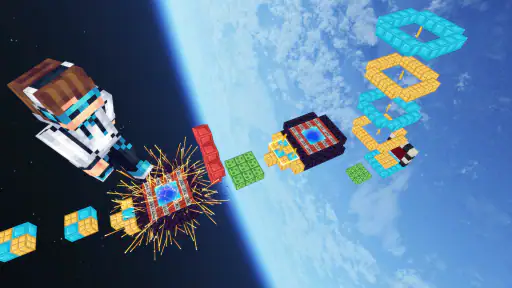
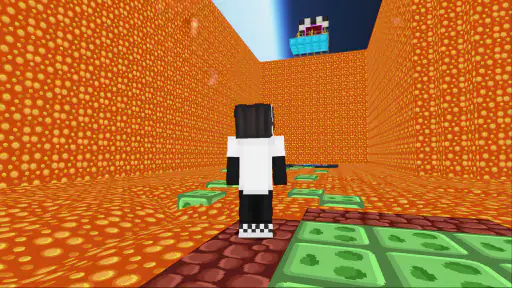
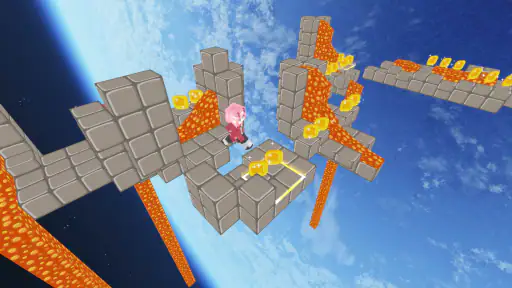
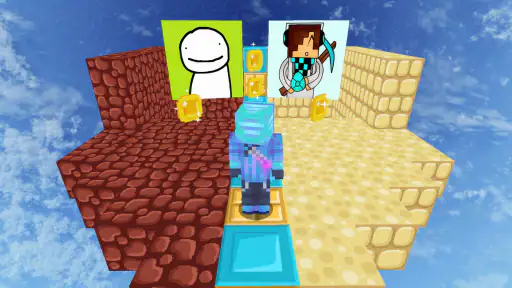
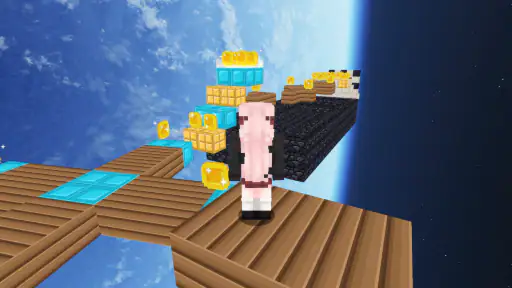
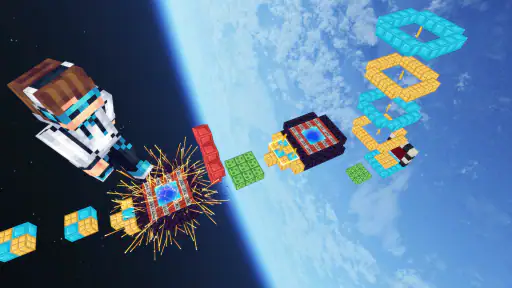
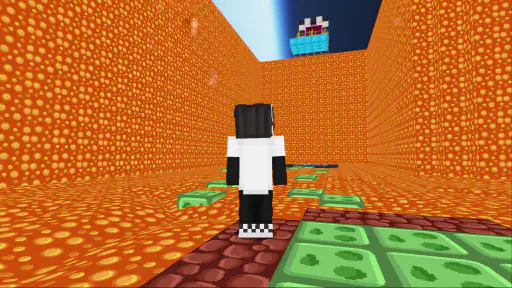
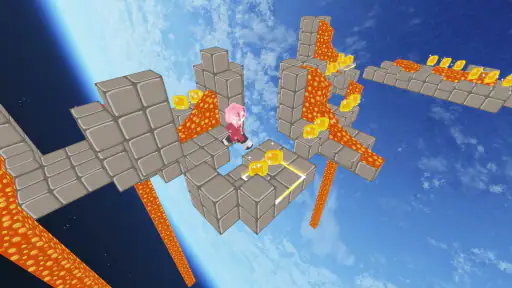
 Analysis by Frivlyz
I went into Obby Noob: Parkour Craft expecting a quick obstacle-course game, and that is exactly where its appeal begins. This is a free adventure game from Kids Games LLC built around 3D platforming and parkour-style movement. The idea is easy to understand: move through an obstacle route, react to what is in front of you, recover from mistakes, and try again with a slightly better sense of timing.
That simple loop matters because this is not the kind of game I would choose for a long story, deep character development, or a complicated collection system. I would choose it when I want a direct challenge that can be understood almost immediately. The game’s bright, block-inspired presentation gives it a familiar craft-game flavor, while the obstacle focus keeps attention on movement rather than on menus or long explanations.
After spending time with it, my opinion is fairly clear: it works best as a short-session parkour game for players who enjoy repeating a route until their hands learn the timing. It is less convincing for anyone looking for a large adventure world or a carefully developed narrative. The difference between those two expectations will decide whether this feels pleasantly focused or too limited.
How the first attempt sets up the challenge
The first action in a game like this is important because the controls have to communicate their purpose quickly. Here, the attraction is the immediate physical problem: reach the next safe platform, avoid a bad landing, and keep moving through a three-dimensional course. I found that the most useful way to approach each section was not to rush toward the finish, but to read the next landing area before committing to a jump.
That sounds obvious, but it changes how the game feels. A player who treats every obstacle as a reflex test may make unnecessary errors. A player who pauses briefly to judge distance and direction has a better chance of turning the route into a sequence of manageable decisions. The game is at its most enjoyable when I am balancing momentum with caution rather than simply holding forward and hoping the character reaches the other side.
The craft-like visual style helps make the spaces readable. Platforms and gaps have a clear physical presence, so I can usually understand what the game is asking me to do without a large amount of text. That is useful for younger players and for anyone opening the game for a few minutes between other activities. It also supports the Everyone content rating, since the presentation is approachable rather than built around mature themes.
Still, approachable does not mean effortless. Parkour games depend on small corrections, and a jump that looks safe can become a miss if the approach is slightly wrong. My practical advice is to use the early attempts as a control check. Learn how quickly the character responds, how much room is needed before a jump, and whether a change in direction should happen before or after leaving a platform. Those observations are more valuable than trying to memorize a route immediately.
Gaming Stories You May Enjoy

Dancing Road Turns Short Breaks Into a Test of Rhythm and Timing

Super Stylist Makes Every Outfit a Test of Taste and Patience

Dominoes on Your Terms: Who Should Play and Who Should Pass

Pokémon GO Makes the Familiar World Feel New

Chess.com Turns Rematches Into Rivalries, but Community Has Its Costs

Archery Battle 3D Review: Sharp Aiming, Unclear Feedback
Why the movement feels better when treated as a rhythm
The strongest part of the experience is the feedback rhythm: move, commit, see the result, and adjust. A successful landing gives a small but satisfying confirmation that the previous decision was correct. A failed jump is equally useful when it clearly shows that the problem was timing, positioning, or impatience. That relationship between action and consequence is what keeps the game from feeling like a passive walk through a colorful level.
I noticed that the game rewards a calm tempo more than frantic input. When I tried to make every jump as quickly as possible, I created mistakes that were avoidable. When I gave myself a moment to line up the next move, the same route became easier to understand. This is a valuable lesson for new players: speed may look like the goal, but consistency is usually the faster path to completion.
The feedback also makes the game suitable for short bursts. I do not need to prepare for a long story sequence before playing. I can start, concentrate on a small stretch of obstacles, and stop when my attention drops. For example, I can imagine using it during a short break while waiting for an appointment. One attempt might end quickly, but the next attempt begins with a specific adjustment in mind: jump later, turn earlier, or avoid taking a risky shortcut.
That kind of immediate correction is more satisfying than a game that hides the reason for failure. However, it can also become tiring if a player dislikes repetition. The same design quality that makes improvement possible—repeating a difficult sequence—may feel frustrating to someone who wants constant novelty. I would not recommend it to a player who prefers relaxed exploration with little pressure on precision.
What makes a successful run feel worthwhile
The reward in this type of game is not only reaching the end. It is the gradual change from uncertainty to control. At first, a jump may seem awkward because I am still judging the space. After several attempts, I begin to recognize the setup, anticipate the landing, and move with less hesitation. That improvement is the main reason another session starts.
I also like that the core satisfaction does not require a complicated explanation. The obstacle itself creates the goal. If I fail, I know what I am trying to fix; if I succeed, I can feel the difference immediately. This makes the game easy to share with a friend or younger family member. Someone can watch a short attempt and understand the challenge without needing to learn a large set of rules.
There is a useful distinction here between entertainment and progression. A player who needs a deep long-term progression system may find the experience too narrow. A player who enjoys mastering movement can get more from it than the simple store summary suggests. The meaningful reward is the growing ability to predict the course, not a story revelation or a powerful character build.
For that reason, I recommend playing with a small personal target. Instead of saying, “I must finish everything now,” choose a more concrete goal: complete the next section without rushing, recover from one mistake, or repeat a successful sequence with fewer pauses. These targets make the feedback loop more visible and prevent a difficult attempt from feeling like wasted time.
The free entry point is another practical advantage. I can try the game without paying upfront, which lowers the risk for families and casual players. There are in-app purchases ranging from forty-nine cents to nine dollars and ninety-nine cents per item, so I would still advise checking the purchase settings before handing the device to a child. The game is free to start, but that does not mean every optional transaction should be treated casually.
The reset is part of the design, not just a setback
Every parkour game depends on what happens after a mistake. If restarting feels slow or confusing, the player loses the desire to try again. In my experience, the reset is most useful when I treat it as a quick return to the same problem rather than as a punishment. The failed attempt supplies information, and the restart gives me an immediate chance to apply it.
This creates a clear action-feedback-reward-reset cycle. I choose a line through the obstacle, receive the result, enjoy the success or learn from the miss, and then decide whether another attempt is worth it. The reason to begin again is not mysterious: I already know one thing that did not work, and I want to test a better approach.
That cycle is especially effective for players who like “one more try” games. A session can end after a frustrating mistake, but it can also end after a breakthrough, when a section that felt impossible suddenly becomes familiar. I found that stopping after a successful improvement can be smart. It leaves the session on a positive note instead of turning a good run into an exhausted series of careless attempts.
On the other hand, the reset loop will not satisfy everyone. If you want a game where failure changes the world, unlocks a new story branch, or reveals a major discovery, this is not the right type of adventure. Its reset is practical and focused on mastery. It sends you back to the movement challenge, not into a new narrative consequence.
Another useful habit is to separate a mistake caused by execution from one caused by planning. If I know exactly where I wanted to land but missed it, I should adjust timing or positioning. If I was unsure which route to take, I should slow down and observe before moving. Making that distinction prevents random retries and gives each restart a purpose.
Who will get the most from the parkour loop
I think the game is a good match for casual players who enjoy platforming without a large amount of setup. It can also suit younger players who like colorful three-dimensional obstacle courses and want a challenge they can understand visually. The Everyone age rating supports that broad accessibility, although adults should still manage in-app purchase access when children use the device.
It is also a reasonable choice for fans of craft-styled games who want movement rather than building. The blocky atmosphere may attract players familiar with creative sandbox games, but the experience should not be confused with a full construction playground. The focus is on navigating the course. Someone choosing it because they want to design elaborate structures may be happier with a true building game instead.
I would skip it if my priority were a story-driven adventure, open-ended exploration, or a competitive parkour experience with extensive social systems. I would also be cautious if I had little patience for repeating jumps. The game’s strengths are concentrated in direct control, readable obstacles, and the satisfaction of improving through attempts. Those strengths do not automatically translate into variety for every type of player.
Compared with a traditional platform game, this feels more focused on spatial judgment and repeated route learning than on character abilities or narrative pacing. Compared with an open-world adventure, it offers less freedom but a clearer immediate objective. Compared with a relaxed endless runner, it asks for more deliberate control because the player has to think about where the next landing will happen rather than simply reacting to a continuous stream.
That comparison also explains its best use case. I would open it when I want a compact challenge that gives me something specific to improve. I would choose another game when I want to wander, collect a large variety of items, or become invested in a long-form adventure.
Practical details before installing
Obby Noob: Parkour Craft is available free of charge and was released on December 13, 2024. The current version is 1.3.34, and it requires Android 6.0 or later. Those details make it accessible on a broad range of Android devices, though actual comfort will still depend on the phone or tablet’s screen size, responsiveness, and general performance.
The game has passed one million installs and holds an average rating of 3.8 from around one thousand six hundred ratings. I read that as a sign of a recognizable but not universally loved experience: plenty of players are willing to try it, while the middling average suggests that expectations matter. The small number of written reviews—eight—also means I would rely more on my own reaction to the movement loop than on a handful of comments.
Before installing, I would ask myself three questions. Do I enjoy repeating a difficult jump? Do I want a quick game rather than a substantial story? Am I comfortable with a free game that includes optional purchases? If the answer to all three is yes, the download is an easy experiment. If the answer to the first two is no, the colorful presentation may not be enough to hold attention.
For parents, the age rating is reassuring in terms of broad content suitability, but the purchase range still deserves attention. A sensible setup is to review device purchase controls before letting a child play independently. That is not a criticism unique to this game; it is simply the practical step I would take with any free title that offers optional items.
My verdict on starting another session
After looking at the complete loop, I see a focused parkour challenge rather than a full-scale adventure. The action is easy to grasp, the feedback becomes useful once I stop rushing, the reward comes from improving my control, and the reset gives me a clear reason to test a better attempt. That structure is simple, but it is coherent.
My recommendation is strongest for players who enjoy obstacle courses, short gaming sessions, and the satisfaction of turning repeated failure into reliable movement. I would especially suggest approaching it with small goals instead of expecting a large world. That mindset makes the game’s narrow focus feel intentional rather than incomplete.
For players seeking a story, deep customization, or open exploration, I would point toward a different adventure game. For everyone else, the free starting price makes this a low-risk way to see whether its timing-based movement clicks. Kids Games LLC has made something approachable, but the real test is personal: after a missed jump, do I feel annoyed enough to quit, or curious enough to try one more time?
In my case, the answer is often the latter, provided I play in short sessions and treat each restart as a lesson. That is the lasting appeal of Obby Noob: Parkour Craft: not a huge collection of systems, but a compact challenge that asks me to act, read the result, adjust, and decide whether the next attempt might finally be the clean one.
Obby Noob: Parkour Craft Pros and Cons
Pros
- Simple controls make it easy for younger players to start.
- Bright block-style visuals are clear and easy to follow.
- Short levels suit quick gaming sessions.
- Checkpoints reduce frustration after failed jumps.
- Parkour challenges can improve timing and reflexes.
Cons
- Some levels may feel repetitive after extended play.
- Precision jumps can be frustrating on smaller screens.
- The game may include frequent ads between attempts.
- Limited variety can reduce long-term replay value.
- Performance may vary on older Android or iOS devices.
Frequently Asked Questions
What is Obby Noob: Parkour Craft?
Obby Noob: Parkour Craft is a parkour and obstacle-course game inspired by block-building adventures. Players guide the character through floating platforms, traps, jumps, and challenging levels while trying to reach the finish line. Its colorful, cubic presentation makes it easy to recognize, and the gameplay focuses mainly on timing, movement, and avoiding obstacles rather than complex combat or strategy.
How do you play Obby Noob: Parkour Craft?
The main objective is to move through each obstacle course without falling or touching dangerous traps. You generally control the character with on-screen movement controls and use jumps carefully to land on platforms. Progress depends on learning the layout, judging distances, and repeating difficult sections until your timing improves. Checkpoints, when available, can make longer levels less frustrating.
Is Obby Noob: Parkour Craft suitable for children?
The game is generally easy to understand because its mechanics are based on familiar platforming actions such as running and jumping. The bright block-style graphics and simple objectives may appeal to younger players. However, parents should still review the app’s age rating, advertising, permissions, and any possible in-app purchase options before installation, especially if children will play without supervision.
Does Obby Noob: Parkour Craft require an internet connection?
Whether an internet connection is required can depend on the version of the app and the features currently available. Basic obstacle-course gameplay may work offline after installation, but advertisements, updates, analytics, or other online services may need connectivity. It is best to test the game in airplane mode after downloading if offline play is important to you.
Is Obby Noob: Parkour Craft free to download and play?
Obby Noob: Parkour Craft is typically offered as a free download, allowing players to try its parkour levels without paying an upfront purchase price. Free games may include advertising, optional purchases, or other monetization features, so you should check the store listing before installing. Also verify the required storage space, supported Android or iOS version, and developer information.


