

NYT Crossplay: Play and Spell
- Reviews
- 4.7
- Version
- 2.26.0
- Installs
- 500,000+

Screenshots
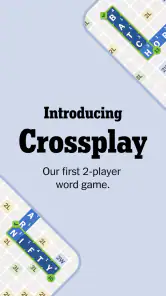
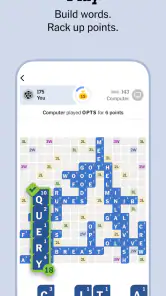


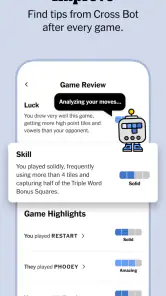

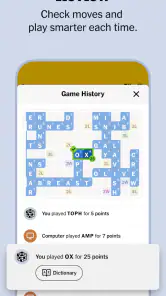

 Analysis by Frivlyz
I went into NYT Crossplay: Play and Spell expecting a familiar word-game routine, but its strongest quality is how quickly it turns a small amount of space into a focused contest. This is a two-player word board game from The New York Times Company, built around the simple pleasure of going from one word to another while trying to outthink the person on the other side. The rules are approachable, yet the decisions become more interesting once both players stop choosing words merely because they fit and start thinking about position, timing, and the opponent’s likely response.
That distinction matters. Many word games are primarily solo exercises with a score attached, while this one feels designed around the tension of another human being making choices at the same time. I found myself paying attention not only to whether a word was valid, but also to what that move might invite next. It creates a quieter kind of competition: less about frantic tapping and more about reading the shape of the board and guessing where the other player wants the game to go.
The basic download is free, and the game is suitable for Everyone. It has reached over 500 thousand installs, with a 4.7 average from around 20 thousand ratings and roughly 1.1 thousand written reviews. Those figures suggest that its compact concept has found an audience, but they do not replace the more important question: whether the format suits the way you like to play. In my experience, it works best when you want a thoughtful match that can fit into a short break without feeling disposable.
A small board with a clear visual voice
The first impression is deliberately restrained. Rather than burying the wordplay under a noisy theme, the presentation keeps attention on the letters and the developing board. That restraint gives the game a composed mood. I never felt that visual effects were competing with the central decision, which is valuable in a genre where clarity is more important than spectacle.
The setting is communicated through the language of the board itself rather than through a large fictional world. There are no elaborate characters or story scenes pulling the game in another direction. Instead, the board becomes the place: a shared surface where each choice leaves a visible trace and gradually changes the possibilities available to both players. That makes the experience feel closer to sitting across from someone with a physical word board than to moving through a conventional mobile adventure.
This visual approach also helps with concentration. When I returned to a match after a distraction, I could understand the state of play quickly because the important information stayed readable. That is a practical strength, especially for people who play in short sessions on a phone. The trade-off is equally clear: anyone looking for animated characters, a rich narrative setting, or a heavily decorated interface may find the presentation too quiet.
The game’s language is its real art direction. Words are not just answers; they are the materials used to shape the board. A short, safe choice can preserve flexibility, while a more ambitious word may create a better position or close off an attractive route for the opponent. I like that the visual identity and the rules point in the same direction. The board looks calm because the game asks for calm observation.
Gaming Stories You May Enjoy

Dancing Road Turns Short Breaks Into a Test of Rhythm and Timing

Super Stylist Makes Every Outfit a Test of Taste and Patience

Dominoes on Your Terms: Who Should Play and Who Should Pass

Pokémon GO Makes the Familiar World Feel New

Chess.com Turns Rematches Into Rivalries, but Community Has Its Costs

Archery Battle 3D Review: Sharp Aiming, Unclear Feedback
That coherence becomes more noticeable when compared with casual word puzzles that rely on bright rewards, constant celebrations, and a rapid stream of small objectives. Those games can be excellent for relaxation, but they often make the surrounding presentation louder than the vocabulary itself. Here, the understated look supports a more deliberate mood. The absence of visual clutter is not an empty space; it is part of the game’s personality.
How the word-based setting changes the way I play
I began by searching for obvious connections and immediately learned that this is not always the most useful habit. A word that appears attractive in isolation may be less valuable if it gives the other player an easy continuation. I started looking at each move in two layers: what does this word achieve now, and what kind of reply does it make comfortable?
That shift is one of the more interesting insights hidden beneath the simple store pitch. The game rewards vocabulary, but it also rewards restraint. Sometimes the best move is not the most impressive word I can think of. It may be the word that keeps several future options alive while forcing the opponent to reveal more of their plan. This makes the board feel like a conversation in which every sentence changes the next sentence.
A useful everyday scenario is a quiet break between tasks. I can play a round while waiting for an appointment or during a commute, then put the phone down without needing to remember a complicated story or a long chain of objectives. When I come back, the board itself tells me what matters. That makes it easier to fit into a day than a game that demands a continuous block of attention.
At the same time, I would not describe it as mindless entertainment. If I am tired and only want to tap through a few obvious answers, the competitive structure can feel more demanding than a standard daily word puzzle. It asks me to stay mentally present because another player can take advantage of a careless decision. That is a strength for strategic players, but a limitation for anyone seeking a purely passive distraction.
Sound, pauses, and the pace of a match
The audio presentation works best when it stays in the background. The game’s mood comes more from the rhythm of placing words and waiting for the next decision than from an elaborate musical identity. That creates a useful sense of space. I can focus on the board without feeling pushed into a particular emotional response by constant sound cues.
Its pacing is similarly measured. A match does not need the frantic tempo of an arcade game to remain engaging. The pauses between decisions give me time to inspect the board, reconsider a tempting move, and think about what the other player may be preparing. Those pauses are not dead time; they are where much of the strategy happens.
There is a subtle psychological effect here. In a solo puzzle, hesitation usually means I am stuck. In a two-player word contest, hesitation can also be a form of information. If I rush, I may expose a preference for aggressive moves or give away that I have found a promising route. Taking a moment can protect my position, even when the game does not turn that pause into an explicit mechanic.
The slower rhythm will not suit everyone. Players who prefer rapid rounds, immediate rewards, or a constant flow of new challenges may find the experience too restrained. I also think the mood depends heavily on the person on the other side. A thoughtful opponent makes the silence feel tense and meaningful; an uneven match can make the same pacing feel less satisfying.
That is why I see this as a game to play with intention rather than something to open automatically whenever I have ten seconds to spare. It is most enjoyable when I am willing to observe and respond. The sound and pacing do not try to disguise the thinking time. They give it room.
Where the rules and atmosphere meet
The central mechanical fit is strong because the board, wording, and tempo all support the same kind of attention. The game asks me to move from word to word, but the meaningful decision is not only lexical. I have to consider the location and consequence of a choice, then anticipate how the opponent might exploit the opening. That makes each turn feel connected to the larger shape of the match.
One practical technique I found useful was to separate “good word” from “good move.” A word can be clever and still be strategically awkward. Before committing, I try to scan for the obvious reply it might create, especially if the move appears to give the other player a convenient path. This small pause improves my play more than simply trying to recall rarer vocabulary.
Another useful habit is to protect flexibility. When several routes remain available, I prefer a move that does not force me into one narrow plan too early. This is particularly helpful when I am unsure how the opponent evaluates the board. Keeping options open gives me room to adapt instead of hoping that one ambitious idea works exactly as planned.
The third insight is about reading the opponent through their choices. A player who repeatedly takes safe connections may be trying to control the board gradually, while someone who selects more confrontational routes may be attempting to create a decisive exchange. I cannot assume those patterns are permanent, but noticing them helps me make better predictions. The game becomes more personal and less like a fixed puzzle.
Compared with a traditional daily word puzzle, this format offers more replay value through the other player’s decisions. A daily puzzle gives everyone a defined challenge, which is excellent for routine and comparison. Crossplay feels less predictable because the board develops through interaction. Compared with a classic word-board game, it appears more focused on the direct movement from one word to another rather than on the broader ritual of a long tabletop session. That makes it easier to approach, though players who enjoy a sprawling, highly layered board game may want more complexity.
The free entry point is helpful for trying the format without committing immediately. There are in-app purchases ranging from $5.99 to $49.99 per item, so I would advise checking what is optional before spending. The important point for a potential player is not simply that purchases exist, but whether the basic experience already provides enough enjoyment. For me, the answer is yes when I want a compact strategic word match; people who dislike any purchase prompts may still find that aspect distracting.
The current version is 2.26.0, and it requires iOS or Android 10 or later. That makes the compatibility question straightforward for anyone using a reasonably recent device, while owners of older phones should check their operating system before planning around it. The game’s modest visual style should help it feel comfortable on a range of screens, but the exact quality of a match will still depend on how clearly you can read the board and interact with the letters.
Who will enjoy it, and who should pass
I would recommend this game to people who enjoy wordplay but want more agency than a fixed-answer puzzle provides. It is especially appealing if you like games where a small decision can have consequences several turns later. It also suits friends or family members who want a shared activity that does not require a long session or a complicated rules explanation.
It is less suitable for someone who wants a solitary vocabulary workout with a predictable daily structure. If your favorite part of word games is racing a timer, clearing a list of clues, or chasing a personal streak, this two-player board format may feel indirect. Likewise, if you prefer a strongly narrative game with a memorable fictional world, the restrained setting will not provide that kind of escape.
I would also be cautious about recommending it to players who become frustrated by uneven competition. Because the experience depends on the quality and style of the opponent, one match can feel thoughtful while another feels one-sided. That is not a flaw unique to this game, but it is more important here than in a purely solo alternative. If you want complete control over difficulty and pace, a solo word puzzle is likely the better choice.
For new players, my advice is to resist trying to win every turn. Focus first on understanding how a move changes the board. Look for the opponent’s easiest response, keep a backup plan, and treat the early part of a match as information gathering. This approach makes the game more enjoyable and reduces the temptation to spend every turn searching for the most unusual word available.
My verdict on the playable mood
What stays with me is the consistency between the game’s appearance, sound, and rules. The visual restraint keeps the board legible, the quiet rhythm gives decisions room to breathe, and the word-based setting makes every move feel like part of the same conversation. Nothing about the presentation overwhelms the mechanics, which is exactly why the mechanics have room to become absorbing.
There are limits. The calm pacing may feel slow to players who want constant action, and the two-player structure means the quality of the match depends on the person across from you. The optional purchases also deserve a quick look before spending. Still, those concerns do not undermine the core idea; they simply define the audience more clearly.
For me, NYT Crossplay: Play and Spell is at its best as a compact, thoughtful word game rather than a background time-killer. I would open it when I wanted a short contest that rewarded attention, especially with a friend who enjoys discussing why a move worked. If that sounds more appealing than chasing a solo score, this is a polished choice in the word category. If you need speed, spectacle, or a fully solitary experience, another kind of word game will probably serve you better.
The final recommendation is simple: try it for the conversation between moves. The words are the visible pieces, but the real appeal is learning how a board changes when two people bring different instincts to the same small space. That is what gives the game its atmosphere, its replay value, and its reason to remain installed after the novelty of the first match has passed.
NYT Crossplay: Play and Spell Pros and Cons
Pros
- Daily puzzles offer a satisfying routine for word-game fans.
- Crossword clues and wordplay provide useful mental stimulation.
- Clean interface makes the game easy to navigate on mobile.
- Progress tracking encourages players to return and improve.
- Different puzzle formats add variety beyond traditional crosswords.
Cons
- Many puzzles require a paid subscription after limited access.
- Some clues may feel too niche or culturally specific.
- Difficulty can vary noticeably between puzzles and sections.
- Hints can reduce the challenge and may be limited for free users.
- A stable internet connection may be needed for new content and syncing.
Frequently Asked Questions
What is NYT Crossplay: Play and Spell?
NYT Crossplay: Play and Spell is a word puzzle game from The New York Times that combines crossword-style clues with word-building challenges. It is designed for players who enjoy vocabulary games, daily puzzles, and short sessions that can gradually become more difficult. The game focuses on finding valid words, recognizing patterns, and improving spelling while providing a polished, newspaper-inspired experience on mobile devices.
Is NYT Crossplay: Play and Spell free to download and play?
The application can generally be downloaded at no initial cost, but access to all puzzles, features, or ongoing content may depend on a New York Times Games subscription. Some users may be able to try selected content before subscribing, while others may encounter limits after the introductory period. It is worth checking the current App Store or Google Play listing and subscription terms before downloading.
Does NYT Crossplay: Play and Spell work offline?
The game may allow some previously loaded puzzles or content to remain available without an internet connection, but an online connection is normally useful for downloading new challenges, synchronizing progress, validating account access, and updating the application. Offline availability can vary by device and version. For the most reliable experience, open the game while connected before traveling or playing in areas with limited coverage.
Is NYT Crossplay: Play and Spell suitable for beginners?
Yes, the game is approachable for beginners, particularly for players who enjoy word searches and want to build confidence gradually. However, some puzzles can require a broad vocabulary, careful spelling, or creative thinking, so difficulty may increase as you progress. The experience is best suited to users who enjoy learning through trial and error rather than expecting every answer to be immediately obvious.
What devices and accounts are required to use the game?
NYT Crossplay: Play and Spell is intended for supported Android and iOS devices, although the exact operating-system requirements can change with future updates. A New York Times account may be needed to save progress, access subscription content, or synchronize activity across devices. Before installing, confirm that your phone or tablet has enough storage, a compatible operating system, and access to the relevant app store.


