

NumLink - Number Match Puzzle
- Reviews
- 4.7
- Version
- 1.0.4
- Installs
- 100,000+

Screenshots
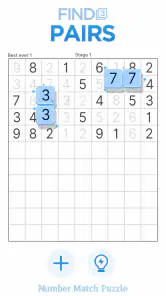
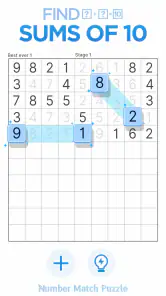
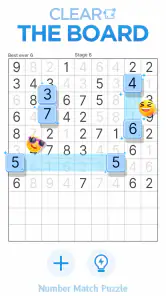


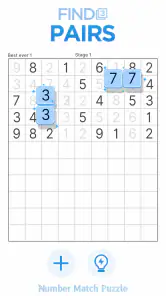
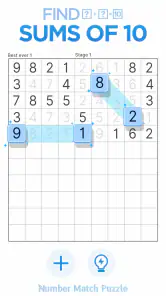
 Analysis by Frivlyz
I tend to reach for a number puzzle when I have a few spare minutes but do not want to start a game that demands a long session. NumLink - Number Match Puzzle is aimed at that kind of moment: it is a free puzzle game from Big Cake Apps, built around spotting number relationships and working through a board one decision at a time. Its simple premise makes it easy to approach, though whether it suits you depends on the sort of challenge you want. If you enjoy patient visual reasoning, it is worth a look; if you want a story, action, or elaborate progression, it is probably not the right pick.
Where the game stands now
The central appeal is the quiet concentration of examining a number layout, choosing a move, and seeing how that choice affects the rest of the puzzle. The short store summary calls out number matching and logic, and that is the right way to think about the game: it is not a fast reflex test, but a small problem to work through at your own pace. I find that distinction useful because it sets expectations before you install it.
The game is listed as a puzzle title, has a 4.7 average from around 400 ratings, and has passed 100,000 installs. Those figures suggest that it has found an audience, but they do not tell me whether every player will enjoy its particular rhythm. I would treat them as a reassuring sign of interest rather than a substitute for deciding whether number-based logic is your kind of downtime.
It is free to download and is rated for Everyone, which makes it accessible to a broad range of players. It was released in October 2024, and version 1.0.4 is the current version. Those details place it as a relatively recent, still clearly identified puzzle app, rather than a long-established series with years of visible evolution to judge.
What the version and release tell us
The confirmed release and version history establish a useful baseline: this is a game that arrived in 2024 and is now at version 1.0.4. I would not read a version number as proof of a particular new feature or major redesign. What it does tell me is which build a new player should be looking at, and gives existing players a concrete reference point when checking that they are using the current release.
For someone already playing, the practical question is whether an update changes the feel of familiar puzzles, the clarity of the interface, or the reliability of a session. I would pay attention to those things when moving to a newer build, rather than assuming that a higher version number means the game has added a specific mode or solved a particular complaint. The safest expectation is continuity unless the game itself shows otherwise.
That matters because number puzzles rely on consistency. If I have developed a way to scan a board or plan a sequence, sudden changes to layout or controls can interrupt that habit. On the other hand, a small improvement to readability or input responsiveness can make repeated play more comfortable without changing the puzzle’s underlying character. For returning players, that is the kind of evolution worth noticing.
Gaming Stories You May Enjoy

Dancing Road Turns Short Breaks Into a Test of Rhythm and Timing

Super Stylist Makes Every Outfit a Test of Taste and Patience

Dominoes on Your Terms: Who Should Play and Who Should Pass

Pokémon GO Makes the Familiar World Feel New

Chess.com Turns Rematches Into Rivalries, but Community Has Its Costs

Archery Battle 3D Review: Sharp Aiming, Unclear Feedback
How NumLink fits into everyday play
I find that NumLink fits best into small pockets of time when I want to focus on one clear problem rather than follow a longer game. Its number-based puzzles make a good change from word games or quick-match distractions, especially if I take a moment to scan the board before choosing a move. That measured approach also helps me see where the game’s appeal ends—and what I would want to watch as it continues to evolve.
A good fit for short, focused breaks
I see the strongest use case as a pause between other tasks: waiting for a kettle, sitting on public transport, or taking a short break from reading. A number puzzle gives your attention something specific to do without requiring you to remember a long plot or coordinate with other people. One useful habit is to start a board only when you have enough time to think through a few moves; if you are about to be interrupted, stopping mid-reasoning can make the game feel less relaxing.
For example, if I have a few minutes before an appointment, I can use a puzzle as a deliberate screen break from scrolling. I would focus on the visible number relationships, make one considered move at a time, and stop when I reach a natural pause instead of rushing to finish. This makes the game better suited to calm, self-directed play than to moments when I need to keep checking messages or listening closely to something else.
It can also work as a low-pressure way to practise attention. Rather than trying to play as quickly as possible, I would treat each board as an exercise in checking assumptions: before committing to a connection or match, scan the surrounding possibilities and consider whether a tempting move could leave a more awkward arrangement. That small pause is often more useful than tapping immediately, and it helps keep a logic game from turning into random trial and error.
How it compares with other puzzle choices
Compared with a crossword or word search, NumLink asks you to reason about numbers and their placement rather than vocabulary. That can be a welcome change if you want a puzzle that feels more visual and less dependent on language. Compared with a large match-three game, it is a more thoughtful choice for players who would rather plan than chase quick combinations. The trade-off is that it may feel less lively if you expect animation, a strong theme, or frequent rewards to carry the experience.
It also occupies different territory from Sudoku. Sudoku is built around a familiar set of row, column, and box constraints; a number-matching puzzle instead asks you to notice relationships and work through the board’s particular arrangement. If you enjoy both, switching between them can keep a break from feeling repetitive. If what you specifically want is a classic Sudoku grid, a dedicated Sudoku app will be the clearer choice.
Against paper puzzles, the phone version is easier to carry and can be opened without setting anything up. Paper still has an advantage for people who prefer to mark possibilities by hand or want a screen-free activity. I would choose NumLink when convenience matters and a phone is already in my hand, but I would not claim it replaces every benefit of solving on paper.
Small decisions that make play more satisfying
A practical approach is to scan the whole board before making the first move. It is tempting to act on the clearest-looking pair, but the obvious choice is not always the most helpful one if it limits later options. I would first note which connections or matches seem constrained, then deal with the choices that have fewer alternatives. This is a general logic-puzzle technique, but it is especially useful in a number-focused game because a quick visual impression can hide a less obvious consequence elsewhere on the grid.
When a move leaves the board in a confusing state, I find it more useful to pause and re-evaluate the remaining choices than to tap faster. If the game offers assistance in the current build, use it as a prompt to understand what you missed, not as a substitute for thinking through every puzzle. Hints can preserve momentum when you are genuinely stuck, but leaning on them too early can make a puzzle feel solved for you rather than by you.
Another helpful routine is to separate “I can see a match” from “this is the best next move.” That distinction prevents a common source of frustration: making a locally sensible choice that leaves a harder puzzle behind. If a board starts to feel messy, retrace the logic of the last few decisions before restarting or reaching for help. The aim is not to be perfect; it is to learn which patterns make the rest of the board easier to read.
For a shared household device, I would keep play casual and avoid treating completion speed as a measure of skill. A child or a less experienced player may enjoy working out the number relationships at their own pace, while an adult can offer a question such as “which choice gives you fewer options later?” rather than simply pointing to a move. The Everyone rating supports broad accessibility, but the best experience still depends on whether the player enjoys this kind of quiet reasoning.
Who may want a different game
NumLink is less suitable if you want a puzzle with a detailed campaign, character development, a strong narrative, or a social competition at its centre. It is also not an ideal choice when you are looking for a very quick reaction game: thoughtful number matching rewards attention, not reflexes. Players who become frustrated by abstract boards may be happier with a word puzzle, a themed adventure, or a familiar Sudoku format that makes its rules explicit and recognizable from the start.
Another trade-off is that the appeal of a number puzzle depends on how much satisfaction you get from solving the board itself. If you need a changing story or a clear collection of long-term goals to stay interested, this kind of focused task can begin to feel samey. I would try it for the puzzle experience rather than expecting a broad package of different activities.
It is also worth considering your screen habits. A small phone display can make a dense number layout harder to inspect, particularly if you prefer to think several moves ahead. If you regularly play on a larger screen or find detailed grids tiring on a phone, a paper puzzle or a game designed around larger visual elements may be more comfortable. The right choice is the one that lets you concentrate without straining to read the board.
What existing players should keep an eye on
For anyone who has already made NumLink part of a daily routine, the most meaningful things to watch in future versions are practical rather than speculative: whether the board remains easy to read, whether controls feel dependable, and whether the game continues to provide a satisfying challenge. Those are the details that affect repeated sessions. I would check the current version before troubleshooting a problem, but I would not assume that an update introduces a new mode just because the version changes.
For a new player, the minimum operating system is Android 6.0. That gives Android users a straightforward compatibility point to check before installing. The title is free, so it is easy to try without paying upfront; I would still approach it with the expectation of a focused puzzle game, not a full collection of unrelated modes.
The developer, Big Cake Apps, has positioned the game around a compact number-and-logic challenge. My recommendation is therefore simple: choose it if you want a calm task that rewards careful scanning and deliberate decisions. Choose another kind of puzzle if you need a strong narrative, more variety in the core activity, or a screen-free alternative. That is a clearer way to judge whether it belongs in your routine than relying on popularity alone.
Getting Started with NumLink
When I first downloaded NumLink - Number Match Puzzle, I was immediately drawn to its simple yet engaging interface. The game starts with a short tutorial that effectively explains the basic mechanics. Even if you’re new to puzzle games, you’ll find it easy to grasp the rules and start playing right away.
Gameplay and Mechanics
The essence of NumLink - Number Match Puzzle lies in its straightforward yet challenging gameplay. Players are presented with a grid filled with numbered pairs, and the task is to connect each pair without crossing lines. Sounds easy, right? Well, as you progress, the grid gets larger and the puzzles more complex, pushing your problem-solving skills to the limit.
One feature I particularly like is the variety of grid sizes and difficulty levels. Whether you’re a beginner or a seasoned puzzle enthusiast, there’s a level that suits your skill. The game also offers a hint system that can be a lifesaver when you’re stuck on a tricky puzzle.
Visuals and Sound
The visual design of NumLink is clean and minimalistic, which I appreciate as it keeps my focus on the puzzle itself. The colors are vibrant yet soothing, making it visually appealing without being distracting. The background music and sound effects are subtle and add to the overall relaxing experience of the game.
Why You Should Try NumLink
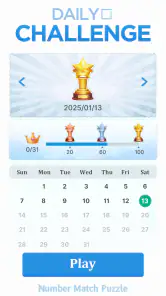
If you’re a fan of puzzle games that challenge your logic and strategic thinking, NumLink should definitely be on your radar. It’s a great way to unwind after a long day or to keep your mind sharp during breaks. The game also offers daily challenges and leaderboards, which add a competitive edge and encourage you to improve your skills.
In my opinion, what makes NumLink stand out is its balance between accessibility and challenge. It’s easy to pick up and play, but the increasing complexity ensures that it never becomes boring. Plus, the sense of satisfaction you get from completing a difficult puzzle is incredibly rewarding.
Overall, NumLink - Number Match Puzzle is a delightful addition to any puzzle lover’s collection. It’s straightforward, addictive, and offers plenty of replay value. So, why not give it a try and see if you can master the art of number matching?
NumLink - Number Match Puzzle Pros and Cons
Pros
- Challenging puzzles enhance cognitive skills.
- Minimalistic design promotes focus.
- No intrusive ads during gameplay.
- Suitable for all ages.
- Regular updates with new levels.
Cons
- Limited hints available for difficult levels.
- No multiplayer mode available.
- Requires internet for daily challenges.
- Initial levels may seem too easy.
- No customization options for themes.
Frequently Asked Questions
What is NumLink - Number Match Puzzle?
NumLink - Number Match Puzzle is a challenging and addictive puzzle game where players connect numbers to match and clear them from the board. It's designed to improve problem-solving skills and cognitive abilities by requiring strategic thinking and planning. The game offers varying levels of difficulty to cater to both beginners and experienced players.
How do you play NumLink - Number Match Puzzle?
In NumLink - Number Match Puzzle, players must connect numbers on a grid to create a path that matches the given criteria for each level. The goal is to link numbers in a way that they match and disappear, clearing the board. The game offers hints and tips for players who might find themselves stuck at certain levels.
Is NumLink - Number Match Puzzle suitable for all age groups?
Yes, NumLink - Number Match Puzzle is designed to be accessible and enjoyable for players of all ages. With its intuitive interface and progressive levels of difficulty, both children and adults can enjoy the game. It’s a great way for families to engage in a fun and intellectually stimulating activity together.
Are there in-app purchases in NumLink - Number Match Puzzle?
NumLink - Number Match Puzzle does offer in-app purchases. These can enhance the gaming experience by providing additional hints, unlocking new levels, or removing ads. However, the game is fully playable without any purchases, ensuring that all players can enjoy the core features without spending money.
Can I play NumLink - Number Match Puzzle offline?
Yes, NumLink - Number Match Puzzle can be played offline, making it a perfect companion for traveling or when you’re in areas with limited internet connectivity. However, certain features, like leaderboards or purchasing additional items, will require an internet connection to function.


