

Nations of Darkness
- Reviews
- 4.5
- Version
- 1.20.13
- Installs
- 5,000,000+

Screenshots


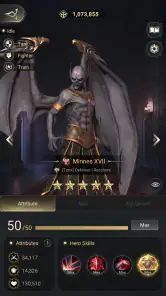

 Analysis by Frivlyz
I spent time with Nations of Darkness as a mobile strategy game built around a bleak, competitive world where the central question is who can build enough influence to rule it. That premise gives the game a more serious tone than a cheerful kingdom builder, but the real appeal is in managing decisions over time rather than rushing through short arcade rounds. It is free to start, aimed at Teen players, and developed by TCA GAMES STUDIO - FZCO.
My first impression was that this is best approached as a game you check regularly, not one you play in a single frantic sitting. Progress depends on making sensible choices, watching the situation around your nation, and deciding when to spend resources or hold them back. That rhythm will suit players who enjoy planning and gradual improvement. It may frustrate anyone looking for instant action or a compact strategy experience that can be completed in a few minutes.
How Nations of Darkness feels during ordinary play
I find ordinary play works best when I give each visit a small purpose: check what has changed, decide which choice matters most, and leave once I have acted deliberately. That keeps the slower strategy rhythm satisfying instead of turning it into aimless menu-hopping. The next thing worth understanding is how to make those brief sessions add up to steady progress.
Speed expectations: a game built around patience
The pace feels deliberately measured. I never approached it like a reflex game, because the interesting moments come from weighing options and preparing for what may happen next. That makes it comfortable for short visits during the day: I can open the game, review the current situation, make a few decisions, and leave without feeling that every session must become a long commitment.
That slower structure also affects how I judge performance. A strategy game can feel responsive without constantly moving at high speed. Menus, selections, and transitions need to get out of the way so that attention stays on planning. When that balance works, the game feels calmer than an action title, even when the underlying competition is intense.
New players should not expect the first session to explain every strategic consequence immediately. The game presents a dark setting, but understanding how to turn that setting into a successful routine takes experimentation. I found it more useful to learn one decision chain at a time than to try to optimize everything from the start. That approach reduces the feeling of being overwhelmed and makes early mistakes less costly emotionally.
A practical tip is to avoid spending every available resource as soon as it appears. In a game organized around long-term progress, keeping a reserve gives you room to react when an unexpected opportunity or problem arrives. This is one of the first habits I would recommend to a new player, because it prevents the common mistake of treating every reward as something that must be used immediately.
Gaming Stories You May Enjoy

Dancing Road Turns Short Breaks Into a Test of Rhythm and Timing

Super Stylist Makes Every Outfit a Test of Taste and Patience

Dominoes on Your Terms: Who Should Play and Who Should Pass

Pokémon GO Makes the Familiar World Feel New

Chess.com Turns Rematches Into Rivalries, but Community Has Its Costs

Archery Battle 3D Review: Sharp Aiming, Unclear Feedback
Heavy-use moments: where the phone has more work to do
The most demanding moments are likely to come when several parts of the game are being checked in one sitting rather than when you simply open it for a quick update. Reviewing progress, moving through multiple screens, and handling several decisions in sequence places more pressure on the device than a short visit. I would expect a newer phone to feel more comfortable during these longer sessions, especially if other apps are active in the background.
I also noticed that strategy games can feel heavier when a player repeatedly jumps between management screens. Even when each individual screen is simple, the total amount of interface activity adds up. My preferred workflow is to decide what matters first, complete the most important actions, and then stop instead of endlessly reopening the same panels. It saves time and makes the game feel less demanding.
Players using older hardware should keep expectations realistic. The minimum operating system is Android 5.1, which makes the game accessible to a broad range of Android devices, but operating-system compatibility does not guarantee identical comfort on every phone. Screen quality, available memory, background activity, and the age of the processor can all affect how pleasant a long strategy session feels.
If the game seems sluggish on your device, I would begin with simple habits rather than assuming the title itself is unusable. Close apps you are not using, avoid playing while the phone is already hot, and give the game a fresh launch before a longer session. These steps are especially useful for a title that encourages repeated checking throughout the day.
Reliability: what matters in a progress-focused game
Reliability matters more here than it would in a disposable puzzle game. When progress is built through repeated decisions, an interruption at the wrong time can be much more annoying than a brief pause in a casual title. I therefore paid attention to the overall feeling of returning to the game, checking the current state, and continuing from where I left off rather than judging it only by the first few minutes.
My advice is to treat important actions with a little care. Do not rush through a confirmation simply because you are trying to finish a quick session. Read what you are committing to, especially when the decision consumes a limited resource or changes your immediate priorities. This is not glamorous advice, but it is a useful safeguard in any strategy game where small choices can influence later progress.
The game has a 4.5 average from around 65 thousand ratings, with roughly 2.8 thousand written reviews. That level of player activity suggests that Nations of Darkness has attracted a substantial audience rather than remaining a niche experiment. It has also passed 5 million installs, so a newcomer is joining an established mobile community instead of trying an obscure release with no visible player base.
Those figures do not remove the need for personal testing. A large audience can enjoy a game for reasons that do not match your preferences. Some players will appreciate the long-term structure and dark atmosphere, while others may find the repeated management rhythm too slow. I would use the early part of the free version to decide whether the routine feels rewarding before considering any optional spending.
Device constraints and the cost of staying comfortable
Because the game is free, the main barrier to trying it is not an entry price. The more important questions are whether your phone runs Android 5.1 or later, whether you have enough everyday storage and memory available, and whether you enjoy a game that asks you to return often. The listed version is 1.20.13, so keeping the installation current is sensible when updates are offered through the normal store process.
I would be cautious about playing on a device that is already struggling with several demanding apps. A strategy interface may look less intensive than a 3D action game, but long sessions, repeated screen changes, and background activity can still expose weaknesses in an older phone. If your device becomes warm quickly or frequently removes apps from memory, shorter sessions will probably be more comfortable than leaving the game open for extended periods.
There is also a financial constraint. The game is free, but optional purchases range from $0.99 to $99.99 per item. That wide range means the sensible approach is to decide on a personal spending limit before becoming invested in the competition. I prefer treating purchases as convenience choices rather than requirements for enjoying the basic experience. If the pressure to spend begins to overshadow the strategy, the game is no longer serving the purpose for which I installed it.
This is particularly important for younger players because the content rating is Teen. Families should discuss both the darker presentation and the presence of in-app purchases before allowing unsupervised play. The Teen rating does not tell you whether the tone will suit every player, so I would recommend that parents look at the game together with the person who wants to install it.
What makes the strategy loop worth learning
The strongest part of the experience is the way it rewards preparation. I found myself thinking less about one isolated action and more about whether today’s choice would leave me in a better position for the next visit. That creates a useful mental shift: instead of asking only “What can I gain now?”, I started asking “What will this decision prevent me from doing later?”
One non-obvious advantage is that a short session can still be productive when it has a clear purpose. I might open the game simply to review my position, identify one urgent task, and leave after completing it. That is a better routine than opening without a plan and spending resources randomly. Players who use the game during a commute, lunch break, or evening wind-down may appreciate this structure.
Another useful habit is separating observation from action. First look at what has changed, then decide what deserves attention, and only afterward commit resources. This sounds basic, but it reduces impulsive decisions and makes it easier to understand why a result happened. It also turns the game into a learning process rather than a sequence of taps.
I would also recommend keeping a mental distinction between progress that improves your position and progress that merely feels satisfying. Unlocking or upgrading something immediately can be tempting, but a reserve may be more valuable if the surrounding situation is uncertain. That trade-off is where the strategy becomes more interesting than a simple checklist of upgrades.
How it compares with familiar mobile strategy games
Compared with a fast tactical game, Nations of Darkness asks for more patience and less moment-to-moment precision. You are not installing it for rapid battles that test reflexes. Compared with a traditional offline strategy game, it feels more suited to repeated mobile check-ins, where the goal is to make a few meaningful decisions and return later.
That distinction helps identify the right audience. If you enjoy watching a plan develop over time, adjusting priorities, and living with the consequences of resource choices, this game has a reasonable chance of holding your attention. If you prefer a complete campaign, a clear ending, or a strategy title that works best without recurring interruptions, a conventional premium game may be a better match.
The dark world also separates it from brighter city-building alternatives. I liked that the atmosphere gives the decisions a more serious identity, but players who want relaxed decoration and gentle presentation may find the tone too severe. The setting is not just a surface detail; it shapes the expectation that competition and survival matter more than creating a peaceful showcase.
Against other free-to-play strategy games, the main trade-off is familiar: the free entry makes experimentation easy, while optional purchases can complicate the feeling of progress. I would not dismiss the game because of that model, but I would stay disciplined. The best experience comes when spending remains optional and your decisions, rather than your wallet, remain the part of the game you find most satisfying.
Who should install it, and who should skip it
I would recommend it to players who like dark settings, gradual development, and strategy that rewards returning with a plan. It is also a good candidate for someone who wants a mobile game that can be checked in short bursts instead of demanding a full uninterrupted evening. The free price makes it easy to test whether the rhythm suits you before making a commitment.
I would skip it if you need immediate action, dislike resource management, or become irritated when progress is measured over repeated sessions. I would also be careful if you are looking for a completely pressure-free experience with no optional spending. The wide purchase range means self-control is part of using the game comfortably.
For a realistic everyday scenario, imagine opening it after work with ten minutes available. I would first review what has changed, identify the decision that affects the next stage most, complete that action, and stop before turning the session into unfocused tapping. On a quieter weekend, I might spend longer comparing options, but I would still keep a reserve rather than emptying everything at once.
My performance verdict after settling into the routine
From a performance perspective, Nations of Darkness works best when treated as a measured strategy game rather than a high-speed showcase. Its perceived speed is tied closely to the quality of its management flow: quick access to the information you need matters more than flashy movement. On a suitable device, the format should feel most comfortable during deliberate sessions with a clear goal.
The game’s broad Android compatibility is helpful, but I would not confuse that with a promise of identical performance on every handset. Older phones may be fine for brief check-ins yet less pleasant during heavy use. Keeping sessions focused, closing unnecessary background apps, and avoiding play while the device is hot are sensible ways to protect the experience.
My final view is positive, with an important condition: you need to enjoy long-term competition. The established audience, free entry, dark identity, and steady strategic rhythm give it a convincing reason to try. At the same time, the slower pace, possible device strain during extended use, and optional purchases mean it is not the universal choice for mobile strategy fans.
My recommendation is to install it if you want a patient, darkly themed strategy game and are willing to manage both your resources and your spending. Give the opening sessions a fair chance, use them to learn the rhythm rather than chase instant progress, and judge the game by whether your decisions feel meaningful. If that loop clicks, Nations of Darkness can become a dependable short-session strategy habit; if you want immediate battles or a self-contained campaign, another type of strategy game will serve you better.
Nations of Darkness Pros and Cons
Pros
- Immersive post-apocalyptic setting with a distinctive dark atmosphere.
- Multiple factions offer varied playstyles and strategic approaches.
- Hero collection system provides plenty of team-building options.
- Alliance features encourage cooperation and coordinated progression.
- Regular events add new objectives and rewards to pursue.
Cons
- Progress can become heavily dependent on timers and resource management.
- Upgrading a large roster may require significant time or spending.
- The interface can feel crowded for new players at first.
- Competitive rankings may favor players who make frequent purchases.
- Long-term activities can become repetitive between major events.
This Game in Other Languages
Frequently Asked Questions
What is Nations of Darkness about?
Nations of Darkness is a strategy role-playing game set in a modern supernatural world where vampires, hunters, werewolves, psychics, and other factions compete for power. You build and upgrade your base, recruit characters, form teams, gather resources, and participate in battles. Much of the experience involves planning, managing development, and choosing the best heroes for different combat situations.
Is Nations of Darkness free to download and play?
Yes, Nations of Darkness can generally be downloaded and played for free on supported mobile devices. However, it uses optional in-app purchases for items such as premium currency, upgrade materials, recruitment opportunities, and time-saving resources. Progress is possible without spending money, although free players may need more patience and consistent daily activity to keep pace with users who make purchases.
Does Nations of Darkness require an internet connection?
Nations of Darkness is primarily an online game, so an active internet connection is normally required for accessing your account, synchronizing progress, collecting rewards, joining alliances, and participating in events or competitive modes. Offline play is therefore limited or unavailable. A stable Wi-Fi or mobile data connection is recommended, especially during battles, updates, and server-based activities.
Is Nations of Darkness suitable for beginners?
The game is accessible to beginners because it includes guided tutorials, automated combat options, and early rewards that help new players develop their base and roster. Nevertheless, the number of menus, currencies, upgrade systems, factions, and timed events can feel overwhelming at first. New players should focus on the main campaign, complete daily tasks, and avoid spending premium resources too quickly.
Can I play Nations of Darkness with other players?
Yes, multiplayer and social features are an important part of Nations of Darkness. Players can join alliances, communicate with teammates, cooperate in group activities, and compete against other players for rankings and territory-related rewards. Being part of an active alliance is useful because it can provide assistance, shared objectives, and additional resources. Some competitive features may become more demanding as your account develops.


