

My Child Lebensborn
- Reviews
- 4.8
- Version
- 2.0.108
- Installs
- 100,000+

Screenshots

 Analysis by Frivlyz
My Child Lebensborn asks for a kind of attention that many mobile games do not: patience with a child’s difficult feelings, and willingness to sit with a story that does not offer easy answers. I find it most affecting when it turns ordinary caregiving into a way of understanding how prejudice can shape a young life. It is a thoughtful simulation, but not a light one, so the mood and subject matter are as important to consider as the gameplay.
What kind of game this is
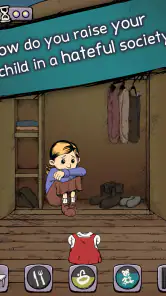
Published by Sarepta Studio, this is a story-led game about caring for a child in post-war Norway. Its subject is the Lebensborn children, who were associated with Nazi racial ideology and could face hostility because of their origins. Rather than treating that history as distant background, the game focuses on the child’s daily life and the emotional cost of being judged for something they did not choose.
The experience is built around care, conversation and decisions, rather than reflexes or competition. I would not approach it expecting a conventional life simulator where the main pleasure is optimizing a household, nor an action game with frequent rewards. The point is to pay attention to what the child says and does, then consider how a caregiver might respond. That slower focus is central to its impact, though it will not suit everyone looking for a quick distraction.
How its pace feels on a phone
The game’s rhythm is better suited to considered play than to rapid tapping. Everyday activities give the story room to breathe, and conversations are worth reading rather than skipping just to reach the next task. In my view, that makes short sessions possible, but it does not make the subject matter feel casual: even a brief visit can leave you thinking about a difficult exchange after you close the app.
A practical way to play is to choose a quiet moment, read the dialogue carefully and stop when you feel you have taken in enough. This is not a title I would open while distracted by messages or in the middle of a rushed commute. If you do need to pause, the story’s reflective tone makes it easier to return with a clear head than a game that depends on keeping a fast chain of actions alive. I still recommend giving yourself time to absorb what is happening rather than treating each interaction as a box to tick.
Story, atmosphere and emotional weight
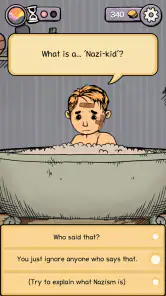
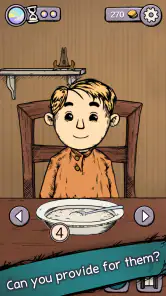
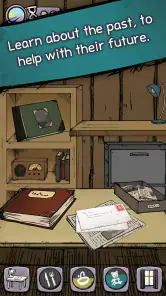
The narrative unfolds through conversations, letters and diary entries, alongside familiar caregiving activities such as preparing food and sewing clothes. Those details give the story a domestic scale: the child’s needs are not abstract, and ordinary care sits beside the larger social pressure they face. The choices matter because they frame how you respond to that pressure, not because the game turns care into a simple score to chase.
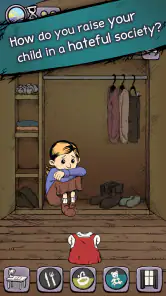
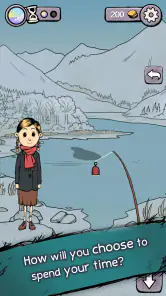
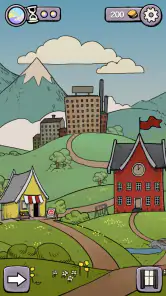
The hand-drawn, watercolor-inspired presentation supports that contrast. Its gentle look does not soften the history into something cheerful; instead, it makes the harshness of bullying and prejudice feel more personal. The soundtrack adds to the atmosphere, and I found the combination effective when I wanted a story-focused experience rather than something visually busy. The emotional intensity is also a real consideration. Anyone seeking a cheerful parenting game or a neutral historical overview may find this too intimate and heavy.
Gaming Stories You May Enjoy

Dancing Road Turns Short Breaks Into a Test of Rhythm and Timing

Super Stylist Makes Every Outfit a Test of Taste and Patience

Dominoes on Your Terms: Who Should Play and Who Should Pass

Pokémon GO Makes the Familiar World Feel New

Chess.com Turns Rematches Into Rivalries, but Community Has Its Costs

Archery Battle 3D Review: Sharp Aiming, Unclear Feedback
Who may enjoy it, and who may not
I would recommend it to players who like narrative simulations, thoughtful moral choices and stories that encourage empathy. It can also suit someone who wants a game to discuss with a friend or older teenager, provided they are comfortable talking about discrimination and the aftermath of war. The age rating is Teen, but that label does not replace a personal judgment about whether the themes are right for a particular player.
On the other hand, I would skip it if you mainly want fast progression, playful escapism or a sandbox where you can freely shape every part of a character’s life. Its emotional focus asks you to engage with difficult situations, and the limited premise is part of the design rather than a gap to solve through experimentation. If your preferred alternative is a bright, low-stakes life sim, this is a markedly different choice.
Practical expectations and value
On Android, the game is listed for devices running version 5.1 or later, and the current version is 2.0.108. It costs $2.99, so I would think of it as a paid story experience rather than a free game to sample casually. That price may feel worthwhile if you value a focused narrative and its historical subject; it may feel harder to justify if you want a title with broad replayable systems or lots of varied activities.
Its average rating is 4.8 from around 13,000 ratings, with around 1,100 written reviews and over 100,000 installs. Those figures suggest that many players have connected with it, but they cannot tell you whether its tone will work for you personally. I would use the story’s subject and slower pace as the more useful guide: if those are appealing, the game has a clear identity; if not, popularity is unlikely to change that mismatch.
The Story Unfolds
Imagine adopting a child who is not just any child, but one who carries the legacy of war unknowingly. In My Child Lebensborn, you are the caretaker of a young boy or girl, and your role is to nurture them through the challenges of growing up in a society that’s grappling with the aftermath of conflict. The game is set in Norway, a country trying to rebuild its identity post-war, and your child is one of the Lebensborn children—born to strengthen the Aryan race as per Nazi ideologies.
Gameplay and Mechanics
At the heart of the game are simple yet profound mechanics. You’ll find yourself engaging in everyday tasks like preparing meals, sewing clothes, and most importantly, having heartfelt conversations with your child. These activities might seem mundane, but they are crucial for building a bond with your child and understanding the weight they carry. The choices you make affect your child’s mental and emotional well-being, making every decision feel significant.
The game doesn't shy away from portraying the stark reality faced by these children. You’ll encounter bullying, societal prejudices, and the internal conflict of a child trying to understand their place in a world that views them as a symbol of the past. The narrative is driven through letters, diary entries, and conversations, all of which piece together a story that is both compelling and heartbreaking.
Aesthetics and Sound
Visually, the game is a treat. Its hand-drawn, watercolor-inspired art style adds a layer of softness to an otherwise heavy narrative. The simplicity of the graphics complements the complexity of the storyline, allowing players to focus on the emotional depth of the game. Accompanied by a hauntingly beautiful soundtrack, the audio-visual elements work in tandem to create an immersive experience that captivates your senses.
Why You Should Play It
My Child Lebensborn is more than just a game; it's a poignant reminder of the past and a lesson in empathy. It challenges you to reflect on the impact of history on innocent lives and the strength it takes to heal and rebuild. If you're looking for a game that offers more than just entertainment, one that challenges your perspective and evokes genuine emotion, then this is a must-play.
The journey you embark on with your child in My Child Lebensborn is one of love, understanding, and resilience. It's a narrative that stays with you, urging you to be more compassionate and informed about the world around us. So, if you're ready to take on a role that demands patience, empathy, and courage, go ahead and download this game. It's an experience that promises to be both enlightening and unforgettable.
Making its slower routine work for you
One useful way to approach the caregiving loop is to treat each visit as a small scene rather than a checklist. I would read the child’s response before deciding what to do next, then let the conversation guide how I interpret the practical task in front of me. That helps prevent the routine from feeling like chores detached from the story. It also makes the emotional choices easier to follow, because you are responding to a particular moment rather than trying to guess a universally correct answer.
For an everyday example, imagine opening the game after dinner when you have ten quiet minutes. You might handle a household activity, read a short exchange, and then stop without feeling that you have failed to complete a long session. This is a better fit than launching it during a busy break when you can only glance at the screen. The trade-off is that the story may feel less immediate if you repeatedly play while distracted; its strongest moments depend on noticing tone and context.
Choices, attention and replay expectations
Because the child’s well-being is affected by your decisions, it can be tempting to search for a perfect response at every turn. I would resist that impulse. The more meaningful approach is to think about what you would say as a caregiver faced with the moment, then accept that the game is asking you to engage with uncertainty. Treating every choice as a puzzle with a hidden optimal answer can flatten the emotional experience into trial and error.
This focus also shapes replay value. The appeal is less about accumulating a large collection of systems and more about revisiting a story with a different attitude toward the choices. If you enjoy comparing how you interpreted a conversation with how a friend did, that can make the game useful for discussion. If you need extensive customization, open-ended building or a constant supply of fresh challenges to keep returning, a broader life simulator is likely a better match.
Reliability and device expectations
I would set expectations around the nature of the game rather than assume that a quiet presentation means it will be ideal on every phone. It is a story-focused simulation, not a graphics showcase or a rapid-action test, so its appeal does not depend on visual spectacle. The listed Android minimum is version 5.1, while device age, available storage and general system condition can still affect how comfortably any app runs. Keeping the operating system current where possible and closing other demanding apps before a session are sensible steps if a device feels sluggish.
If an interruption happens, such as a call or a need to put the phone away, I would return when I can give the dialogue proper attention instead of trying to rush through it. That is a practical recovery strategy for a narrative game: pause the session mentally, then pick up the story when you are ready to read. I would not claim that this guarantees a particular save or recovery behavior; the useful point is simply that the experience rewards calm attention more than uninterrupted speed.
For resource expectations, the restrained visual style suggests a different emphasis from a demanding 3D simulation, but actual performance can vary by device. I would not choose it for benchmark-like graphics or assume that every older phone will feel equally responsive. The game’s strengths lie in its writing, mood and caregiving premise, so a stable, readable screen matters more to me than chasing maximum visual detail.
Choosing it over a typical simulation
Many mobile simulations lean on collecting, decorating, expanding a space or repeating tasks for visible progression. This one uses domestic routines to frame a specific historical and emotional story. That difference is its strongest reason to stand out, but it also narrows its audience. If what you want is a relaxed household sandbox, choose a game built around freedom and low-stakes customization; if you want a focused account of care under social pressure, this is the more distinctive option.
It is also worth separating the game from a history lesson. The setting can prompt curiosity about the period, but the experience is told through an individual child and caregiver, not as a broad survey of events. I would pair it with further reading or conversation if you want wider historical context, rather than expecting the game alone to explain every political and social detail. That distinction helps it work both as a moving narrative and as a starting point for reflection without asking it to be something it is not.
My final performance verdict
As a mobile game, its pace is deliberate, its demands are centered on attention, and its most noticeable limitation is the emotional weight of the subject rather than a need for constant technical spectacle. I would choose it for a quiet session when I want to think and read, not for a quick burst of cheerful entertainment. The game is a strong fit for players who value a carefully focused story and can meet its themes with patience; players seeking light escapism, open-ended simulation or rapid rewards should look elsewhere.
Ultimately, I recommend approaching it with realistic expectations: the caregiving is the way into the story, not a promise of an endlessly varied management game. If that distinction sounds appealing, the experience can feel intimate and memorable. If it sounds restrictive, there are plenty of less demanding simulation games that will better suit the mood you want from your phone.
My Child Lebensborn Pros and Cons
Pros
- Deep emotional narrative
- Educational historical insight
- Rich character development
- Realistic life simulation
- Immersive storytelling
Cons
- Limited replayability
- Sensitive content
- Slow-paced gameplay
- Lack of diverse outcomes
- Requires emotional investment
Frequently Asked Questions
What is My Child Lebensborn about?
My Child Lebensborn is a unique simulation game that allows players to adopt and raise a child born of a Lebensborn program post-World War II. Players get to experience the child's life challenges and emotional struggles, making decisions that affect their well-being and future. The game emphasizes understanding and empathy, providing a deep narrative experience.
Is My Child Lebensborn suitable for all ages?
My Child Lebensborn is designed for mature audiences due to its sensitive content. It deals with complex themes such as bullying, discrimination, and the aftermath of war. Parents should consider these elements before allowing younger players to engage with the game, as it may not be suitable for children under 12.
How does gameplay in My Child Lebensborn work?
The gameplay in My Child Lebensborn involves managing daily activities, making moral decisions, and responding to the needs and emotions of your adopted child. Players must balance resources, such as money and time, to ensure the child's happiness and well-being, all while navigating societal challenges and prejudices.
Can I replay My Child Lebensborn with different outcomes?
Yes, My Child Lebensborn offers replayability with multiple outcomes based on the choices you make throughout the game. Each decision impacts the child's development and the story's direction, allowing players to explore different scenarios and endings by making different decisions in subsequent playthroughs.
On which platforms can I play My Child Lebensborn?
My Child Lebensborn is available for both Android and iOS devices. It can be downloaded from the Google Play Store for Android users and the Apple App Store for iOS users. Ensure your device meets the necessary system requirements for optimal performance and gameplay experience.


