

Music Ballz Go - Hop Star
- Reviews
- 4.9
- Version
- 1.1.2
- Installs
- 500,000+

Screenshots
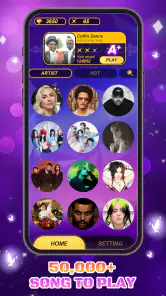
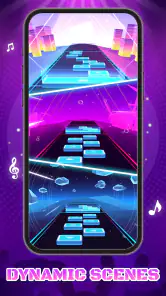
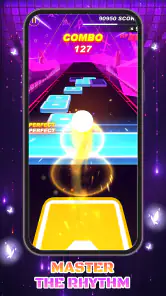
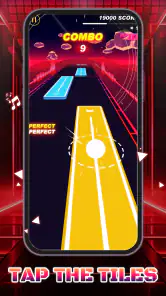
 Analysis by Frivlyz
At home, a music game can be an easy way to share a few minutes without turning the living room into a competition. Music Ballz Go - Hop Star is built around a bouncing ball and music-led timing, so its appeal is easy to understand: one person can play while someone else listens, watches the colorful tiles, or takes a turn. I find that simple setup more inviting for a shared device than a game that depends on long sessions or complicated instructions.
A small shared-device routine
Picture a quiet stretch after dinner: one family member plays a short run, then hands the device to someone else to try the same kind of rhythm challenge. That is a natural way to use this game, especially when people want a casual activity rather than a group game with elaborate rules. The basic idea is quick to explain, and the music gives spectators something to follow even when they are not holding the device.
For a fair handoff, I would agree on turns before starting and keep each player’s attempt separate rather than treating a shared score as a measure of skill. Rhythm games can feel different depending on how familiar someone is with the music and how comfortable they are with touch controls. A younger or less experienced player may need a relaxed first go; the point of sharing it is enjoyment, not making every turn a contest.
Keeping expectations clear on one device
One practical question for a household is whether everyone can treat a shared device as a shared play space. I would avoid assuming that progress, preferences, or achievements automatically belong to separate people. Before passing the device around, it helps to decide who is playing and to be mindful of any account or device access that is already in use. That is ordinary shared-device care, not a claim that the game provides household profiles or parental controls.
The same caution applies to social features. The game’s competitive side can involve challenging friends and sharing achievements on social media, but those activities are not necessary to enjoy the rhythm play. If the device is used by children, I would keep any sharing decision with the responsible adult and avoid handing over a social account just to make a casual score comparison. People who want a fully offline, private experience should check the options they see in their own installation before relying on that as a household rule.
Choosing turns that suit different players
When more than one person is waiting, a useful approach is to let each player choose a comfortable difficulty or stop when the session stops being fun. The game’s levels become harder as you progress, so a newcomer does not need to chase another person’s best run to have a satisfying turn. A short practice attempt can also help someone learn the timing before they try to beat a score.
This is where the game works best as a shared pastime rather than a test of musical ability. A player may enjoy listening and following the beat but still find a fast section frustrating. I would encourage taking a break or switching players instead of repeating the same difficult section until the mood sours. That small bit of coordination matters more in a household setting than any supposed strategy for mastering every level.
Gaming Stories You May Enjoy

Dancing Road Turns Short Breaks Into a Test of Rhythm and Timing

Super Stylist Makes Every Outfit a Test of Taste and Patience

Dominoes on Your Terms: Who Should Play and Who Should Pass

Pokémon GO Makes the Familiar World Feel New

Chess.com Turns Rematches Into Rivalries, but Community Has Its Costs

Archery Battle 3D Review: Sharp Aiming, Unclear Feedback
Age, music, and adult judgment
The game is rated Everyone, which makes it broadly approachable from an age-label perspective. I would still make the first play a quick family check: listen to the music, see how the screen feels to the child, and decide whether the pace suits them. An age rating is a starting point, not a substitute for a parent or caregiver knowing what a particular child enjoys and how they use a shared device.
There is also a difference between letting someone play and letting them use social features. A child can enjoy the ball-and-tile challenge without needing to challenge friends or post achievements. Keeping those choices separate makes it easier to share the game while maintaining sensible boundaries around accounts and public activity.
Where it fits among music games
Compared with a conventional music player, this is not a way to choose an album and listen without interaction: the music is tied to a timing challenge, and attention stays on the screen. Compared with rhythm games built around tapping a stream of notes, its ball hopping across tiles gives the action a different visual focus. That can be appealing if you want a simple, immediately readable task, though someone seeking detailed music practice or a broad instrument simulator should choose a different kind of app.
It is also less suited to a household looking for a deep multiplayer experience. The social competition may give friends a reason to compare scores, but the central appeal remains the individual act of keeping a ball moving in time. I would pick it for brief turns and informal score-chasing, not as a substitute for a party game that gives every person a role at once.
Gameplay That Keeps You Grooving
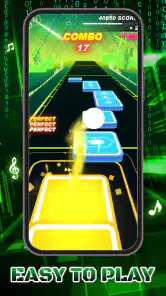
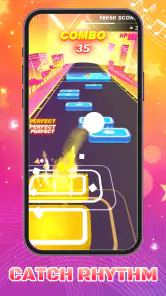
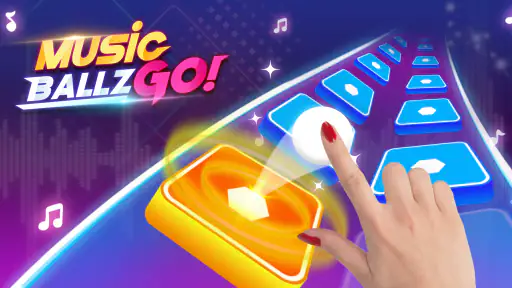
From the moment you start playing Music Ballz Go - Hop Star, you're in for a treat. The game is simple yet addictive. You control a bouncing ball that hops on tiles in sync with the rhythm of the music. And let me tell you, the music is spot on! Whether you're into pop, electronic, or classical, the game has a playlist that will keep your feet tapping and your fingers moving.
The controls are intuitive. You just need to tap to make the ball jump from one tile to the next, but timing is everything. Miss a beat, and you might find yourself starting over. It's challenging but in a way that makes you want to try again and again. The game design is sleek, with vibrant colors and smooth animations that make the experience even more immersive.
Challenges and Levels
One of the things I love about this game is its variety of levels. Each level comes with its unique set of challenges and a different musical track. As you progress, the levels get harder, testing your reflexes and your sense of rhythm. The satisfaction of completing a difficult level is immense, and it keeps you coming back for more.
There’s also a competitive edge to the game. You can challenge your friends, see who scores the highest, and even share your achievements on social media. It's not just about reaching the next level; it's about being the best among your peers.
Graphics and Sound
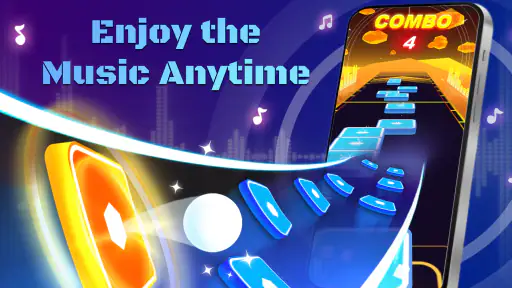
The graphics in Music Ballz Go - Hop Star are a visual delight. The colors are bright and engaging, perfectly complementing the energetic soundtrack. Each tile lights up as you hop on it, creating a mesmerizing visual effect that syncs beautifully with the music.
And speaking of music, the sound quality is top-notch. The tracks are diverse and well-chosen, making sure there's something for everyone. The music doesn't just serve as a background; it's an integral part of the experience, guiding your every move and keeping you in the zone.
Playing in short sessions
The tap-and-hop format suits small gaps in the day: waiting for a meal, taking a break between tasks, or letting a family member have a quick turn before handing over the phone. Because the timing is central, I would play somewhere I can hear the audio clearly rather than treating it like a silent background game. If sound is inconvenient, the experience may lose some of its guidance, so it is worth checking whether the visual rhythm alone feels comfortable to you before settling in for a longer session.
One useful habit is to treat a failed run as feedback instead of an invitation to tap faster. The challenge depends on timing, and rushing can make it harder to notice how the track and tile sequence fit together. I would pause briefly, reset my focus, and try again when I am ready. That makes repeated attempts feel more deliberate and helps prevent a quick game from turning into an irritating loop.
What to consider before installing
The game is free to download, while optional in-app purchases are listed at $7.99 to $12.99 per item. On a shared device, I would make sure the person responsible for purchases knows about that range and keeps purchase approval under adult control where appropriate. Free access makes it easy to try the basic experience, but it does not mean every optional item is included at no cost.
It was released on January 15, 2025, and version 1.1.2 is the current version. Moonlight Studio2025 is the developer. The game has a 4.9 average from 360 ratings, with 41 written reviews, and has passed 500K installs. Those figures suggest that plenty of players have tried it, but I would still judge it by whether its particular blend of timing, music, and repeated attempts suits the person using the device.
Compatibility is another simple check to make before a household installs it: it requires Android 7.0 or later. If the family device runs an older system, this game will not be a fit for that device. The age rating is Everyone, but the practical decision still comes down to the people sharing the screen, the music they enjoy, and whether its challenge feels fun rather than stressful.
Final Thoughts
Overall, Music Ballz Go - Hop Star is a fantastic game for anyone who loves music and rhythm-based challenges. It's easy to pick up but hard to master, providing endless fun and excitement. Whether you're looking to pass time or challenge yourself, this game hits all the right notes. So, if you haven't tried it yet, what are you waiting for? Get ready to hop, tap, and groove to the beat!
My household recommendation comes with a clear caveat: choose it for accessible, turn-based fun, not for separate family profiles, extensive multiplayer, or music lessons. I would skip it if retries frustrate you, if you want a hands-off listening experience, or if you need a game where everyone participates at once. For a quick rhythm challenge that can be passed between people, though, it is an easy one to understand and worth trying on a compatible device.
Music Ballz Go - Hop Star Pros and Cons
Pros
- Engaging music-themed gameplay.
- Bright and colorful graphics.
- Simple controls for easy play.
- Variety of music tracks available.
- Regular updates with new content.
Cons
- Ads can be disruptive.
- In-app purchases can be pricey.
- Occasional lag on older devices.
- Limited offline features.
- Repetitive gameplay over time.
Frequently Asked Questions
What is Music Ballz Go - Hop Star?
Music Ballz Go - Hop Star is an engaging rhythm-based mobile game where players guide a bouncing ball through various platforms, synchronizing with the beat of chart-topping songs. It's designed to test your reflexes and sense of rhythm, providing an immersive musical experience that combines gaming and music seamlessly.
Is Music Ballz Go - Hop Star available for both Android and iOS devices?
Yes, Music Ballz Go - Hop Star is available for download on both Android and iOS platforms. The game can be found in the Google Play Store for Android users and the Apple App Store for iOS users, ensuring a wide reach to players across different devices.
Are there in-app purchases in Music Ballz Go - Hop Star?
Music Ballz Go - Hop Star does include in-app purchases. These purchases often consist of additional features, ad removal, or exclusive songs that enhance the gameplay experience. While the game is free to download, players have the option to purchase these extras to further enjoy the game.
What age group is Music Ballz Go - Hop Star suitable for?
Music Ballz Go - Hop Star is suitable for a wide range of age groups, typically recommended for players aged 4 and above. The game is designed to be family-friendly, with simple controls and engaging gameplay that appeals to both children and adults who enjoy music and rhythm games.
Does Music Ballz Go - Hop Star require an internet connection?
Music Ballz Go - Hop Star does not require a constant internet connection to play, but some features such as song downloads or in-app purchases may need connectivity. This makes it convenient for offline play, allowing users to enjoy the game anytime and anywhere without worrying about data usage.


