

Muse Dash
- Reviews
- 4.5
- Version
- 4.10.0
- Installs
- 500,000+

Screenshots







 Analysis by Frivlyz
I like rhythm games most when they make listening an active part of play, and Muse Dash gets that balance right for me. A run asks me to react to what is happening on screen while staying close to the music, so even a short session feels more involved than simply choosing a song and letting it play. The appeal is easy to grasp, but the timing takes practice: the game rewards attention, and a missed beat is a useful nudge to try again rather than a reason to give up.
That action-and-retry loop makes it a good fit for a quick break, a commute with a suitable connection to the game, or a quiet stretch at home when I want something more hands-on than a playlist. It is less suitable when I want a calm, passive music experience, or when I would rather explore a game at my own pace without a steady stream of timing demands. Its rhythm focus is the point, but also the main thing to consider before paying for it.
What a run asks of you
The basic idea is straightforward: follow the moving action, tap in time, and deal with what crosses your path. That clarity helps newcomers get started without a long tutorial or a complicated control scheme. Yet simple controls do not make every track effortless. As the pace and pattern change, I have to read the screen early enough to act confidently instead of tapping reactively at the last second.
One practical tip is to begin by watching the rhythm and screen cues together, rather than chasing a high score immediately. If I keep missing the same section, I treat it as a timing problem: am I anticipating the beat, reacting late, or losing focus when several cues arrive close together? Changing that habit is more useful than tapping harder. The game’s quick action makes mistakes visible, so each attempt gives me a clear reason to adjust.
Why the feedback can pull you back
Successful timing feels satisfying because the music, animation, and action reinforce one another. A clean sequence gives me a sense of momentum; a slip breaks it, but it also shows exactly where the run went off track. That immediate feedback is what makes another attempt tempting. I can replay a track to improve my own performance, rather than needing a long session or a separate competitive mode to create a goal.
The trade-off is that focused play matters. If I am distracted, unfamiliar with a track, or trying to play while doing something else, the same fast feedback can feel demanding rather than fun. I would not pick it as background entertainment. It works best when I can give the screen and beat my attention for a few minutes, then stop once the challenge has become more tiring than rewarding.
Where it sits among music games
Many music games center on matching notes in lanes or tapping a sequence against a song. This one adds a side-scrolling action layer, so I am not only following musical cues; I am also reacting to enemies and obstacles. That gives each run a more kinetic feel than a traditional note-chart game, while remaining more structured than an action game with music merely playing behind it.
Gaming Stories You May Enjoy

Dancing Road Turns Short Breaks Into a Test of Rhythm and Timing

Super Stylist Makes Every Outfit a Test of Taste and Patience

Dominoes on Your Terms: Who Should Play and Who Should Pass

Pokémon GO Makes the Familiar World Feel New

Chess.com Turns Rematches Into Rivalries, but Community Has Its Costs

Archery Battle 3D Review: Sharp Aiming, Unclear Feedback
That distinction helps me decide who will enjoy it. If you like chasing cleaner timing and want the music to shape your actions, it has a strong hook. If you prefer free-form play, a broad instrument simulator, or a game where exploration takes priority over precise reactions, another music game may suit you better. Its focused format is a strength for short, repeatable attempts, but it is not an all-purpose substitute for every kind of music app or game.
Gameplay That Hits All the Right Notes
From the moment you start Muse Dash, you're greeted with an explosion of color and sound. The game cleverly merges rhythm game mechanics with side-scrolling action. It's like stepping into a world where music and adventure collide. Your mission? To guide your character through various stages, hitting the right notes and dodging obstacles, all synced to energetic soundtracks.
The controls are delightfully simple, which means you won't have to spend ages mastering the gameplay. Tap to attack enemies or dodge obstacles, and time your moves to the beat to keep your combo streak alive. It’s incredibly satisfying when you get into the groove and start chaining those perfect combos. Whether you're a seasoned rhythm game player or a complete newbie, Muse Dash is surprisingly accessible.
A Feast for the Eyes and Ears
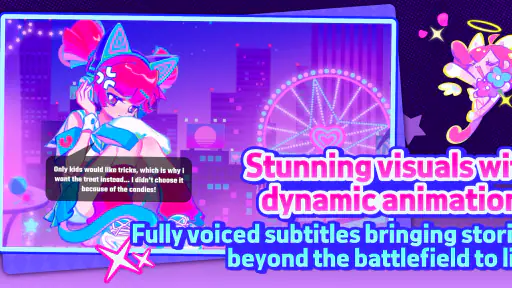
One of the game's standout features is its stunning art style. The developers have done a fantastic job with the character designs, backgrounds, and animations, making every frame a visual treat. Each level brings its own unique aesthetic, from lush forests to futuristic cityscapes, keeping the experience fresh and exciting.
And then there’s the music. Oh boy, the music! With a soundtrack that features a mix of genres, from J-pop to electronic, every track is a banger. It's impossible not to get caught up in the rhythm, and I often found myself nodding along even after I'd put my phone down. The game regularly updates its tracklist too, so there's always something new to tap your toes to.
Character Customization and Replayability
In Muse Dash, you’re not just limited to the main character. There’s a delightful array of unlockable characters, each with their own special abilities and quirks. This adds a layer of strategy, as you’ll want to pick the right character for each track to maximize your score. Plus, with different difficulty levels, the game offers plenty of replayability. You can keep coming back to beat your high score or tackle more challenging stages.
For those who love a bit of competition, the game’s global leaderboard is a fantastic feature. It lets you see how you stack up against players from around the world. There’s nothing like the thrill of climbing the ranks and seeing your name inch closer to the top.
Cost, setup, and who should play
The game is made by hasuhasu and is a paid music title, priced at $2.99, with optional in-app purchases ranging from $0.99 to $33.99 per item. I would decide whether that arrangement suits me before getting attached to a large collection of tracks or extras: the upfront cost is clear, while the optional purchases mean the total can depend on what I choose to add. The game is rated Teen, so it is worth checking that age label when choosing it for a younger player.
It has a 4.5 average from around 59,000 ratings, with about 2,400 written reviews and over 500,000 installs. Those figures suggest a sizeable audience, but they cannot tell me whether its particular timing style will click for you. I see it as a focused purchase for someone who already enjoys tapping to music or wants an arcade-like rhythm game, rather than a safe pick for someone who only wants songs to listen to.
On Android, the listed minimum operating-system requirement is version 6.0, and the current version is 4.10.0. Before buying, I would check that my device meets that requirement and that I am comfortable playing a timing-focused game on its screen. Touch controls are easy to understand, but screen size and how I hold the device can affect how naturally I react. A brief first session is a better test than assuming every phone will feel equally comfortable.
A useful way to fit it into the day
For a realistic routine, I would use it during a short break when I can focus: choose a track, play a run, notice the section that disrupted my timing, then decide whether I want one more attempt. That small loop gives a session a natural ending point. It also keeps me from turning a quick diversion into an exhausting score chase. If I have only a moment and cannot concentrate, I would rather save the game for later than play distracted and blame the controls.
Another helpful approach is to treat difficulty as a personal setting, not a measure of skill. A more demanding chart can be satisfying after I know the song’s cues, but starting there can make the action feel cluttered. I would first find a level where I can hear the pulse and read the screen comfortably, then raise the challenge when accuracy feels consistent. That makes practice more deliberate and keeps a missed run from becoming a frustrating test of reflexes.
There is a small but important distinction between enjoying a song and enjoying its chart. A track may sound great yet ask for patterns that do not suit my current timing or mood. When that happens, I switch to another selection rather than replaying out of obligation. Conversely, a song I might not choose for casual listening can become engaging once its rhythm has a physical role in the run. The game works best when I let playability, not just musical taste, guide my next choice.
How I judge its staying power
The strongest reason to return is personal improvement: recognizing a troublesome cue, keeping a combo longer, or finishing a section with more control. That is a different kind of reward from unlocking everything or simply hearing a favorite track again. Players who enjoy measurable mastery can build their own goals around cleaner attempts and tougher stages. Someone who needs a story, exploration, or a constantly changing set of objectives may find that repeating music runs loses its pull sooner.
Character abilities add another reason to experiment, but I would not treat character selection as a shortcut that replaces timing practice. Trying a different character can change how I approach a track, yet the central task remains reading the cues and responding well. A useful habit is to change one thing at a time: keep the track familiar while testing a character, or keep the character steady while learning a new track. It is easier to tell what helped when I do not change every variable at once.
The leaderboard can make a strong personal score feel more consequential, though comparing with other players is optional to the basic appeal. I would use it as a reason to revisit a track only if competition motivates me; otherwise, improving my own run is a perfectly satisfying target. That flexibility matters because global rankings can be energizing for some players and discouraging for others. The game’s core loop does not need a high placing to make a well-timed attempt feel worthwhile.
My final take on the loop
What keeps the game engaging is the compact sequence of action, feedback, and reset. I act on the beat, see whether the timing worked, take the reward of a clean stretch, and decide whether the next attempt sounds appealing. A restart is most inviting when I can name what I want to do better. If I am simply repeating a run without learning or enjoying the music, that is my cue to stop for the day.
In conclusion, Muse Dash is a delightful blend of rhythm and action that’s sure to keep you entertained for hours on end. Whether you’re in it for the music, the visuals, or the satisfying gameplay, this game delivers on all fronts. So, if you're looking for a game that's both a joy to play and a feast for the senses, give Muse Dash a whirl—you won’t be disappointed!
Muse Dash Pros and Cons
Pros
- Vibrant and engaging graphics
- Wide variety of music tracks
- Smooth and responsive controls
- Regular updates with new content
- Fun and addictive gameplay
Cons
- Limited free content
- Requires internet connection
- Some songs locked behind paywall
- Can be repetitive over time
- Occasional performance issues
This Game in Other Languages
Frequently Asked Questions
What is Muse Dash and what can I expect from its gameplay?
Muse Dash is a vibrant rhythm game that combines music and action elements to create an engaging experience. Players control characters who run through beautifully designed levels, dodging obstacles and attacking enemies to the beat of catchy songs. With its colorful graphics and diverse music selection, Muse Dash offers a unique blend of rhythm and action, promising hours of fun for both casual and hardcore gamers.
Is Muse Dash available on both Android and iOS platforms?
Yes, Muse Dash is available for download on both Android and iOS devices. Players can enjoy the game on their smartphones or tablets, making it convenient to play on the go. The game is designed to perform smoothly across different devices, ensuring a consistent and enjoyable experience regardless of the platform you choose.
Does Muse Dash require an internet connection to play?
Muse Dash can be played offline, meaning you do not need an active internet connection to enjoy the game. This makes it perfect for playing during commutes or in areas with limited internet access. However, certain features like leaderboard updates and purchasing additional content may require connectivity, so it's advisable to connect to the internet periodically.
Are there in-app purchases in Muse Dash?
Yes, Muse Dash offers in-app purchases that allow players to buy additional music packs and character skins. While the base game comes with a good selection of songs, these purchases enhance the gaming experience by adding more variety. Players can choose to enjoy the game without spending extra money, but these optional purchases can enrich the gameplay for those who wish to expand their song library.
What age group is Muse Dash suitable for?
Muse Dash is suitable for players aged 12 and above. The game features mild fantasy violence as players battle enemies in rhythm to the music, but it maintains a playful and cartoonish style that is appropriate for teenagers and older audiences. Parents can feel comfortable knowing that the game's content is designed to be fun and entertaining without inappropriate material.


