

Monument Valley 2
- Reviews
- 4.7
- Version
- 3.7.501
- Installs
- 1,000,000+

Screenshots





 Analysis by Frivlyz
My first few sessions with Monument Valley 2 were the kind that make a phone game feel like a small change of pace rather than another task to clear. I opened it when I wanted something quiet, and the striking architecture gave me an immediate reason to linger. It is a paid puzzle game from ustwo games, and its appeal is less about collecting rewards or keeping up a daily streak than about looking closely and working out how a place can be rearranged.
That distinction matters after the initial novelty. Many puzzle games build their staying power around repeated rounds, escalating scores, or a steady stream of new challenges. This one offers a more deliberate adventure: its value comes from the mood, the visual ideas, and the satisfaction of understanding a puzzle. I found it best when I treated each visit as a short, focused break instead of expecting an endless game to fill every spare moment.
The first-week appeal: an inviting kind of puzzle
In my first week, the strongest draw was how quickly the game communicates what it wants from me. I did not need to learn a complicated control scheme or prepare for a punishing challenge. I could tap around, observe how the scene responded, and try a different approach. The puzzles ask me to question what I think I am seeing, so progress often comes from changing my point of view rather than making a fast move.
The mother-and-child journey gives those shifting spaces a human thread. I appreciated having that relationship to follow, even though the main pleasure for me was still solving each visual problem. It makes the adventure feel warmer than a sequence of disconnected brainteasers, while leaving enough room for the scenery to speak for itself. If you are new to the series, you can still understand the basic appeal: this is a self-contained puzzle journey, not a test of reflexes.
The game suits a particular everyday moment well. I can imagine opening it on a quiet train ride or during a break when I have enough time to focus on one puzzle but do not want a noisy, competitive session. I would not choose it while walking, switching constantly between messages, or trying to occupy a group, because its visual puzzles reward attention. A practical tip from my own play is to pause when a scene feels confusing and inspect the whole structure before tapping repeatedly; treating the level as a picture to read can be more useful than trying random controls.
Why it holds attention—and where it asks for patience
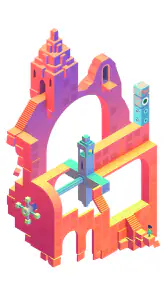
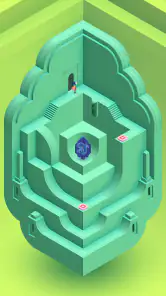
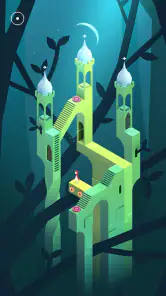
Right from the get-go, Monument Valley 2 pulls you into a world of geometric wonder and architectural beauty. The visuals are nothing short of a masterpiece, with each level meticulously crafted like a piece of art. The color palette is soothing, yet vibrant, making every screen a visual treat.
But it's not just about the looks. The sound design complements the visuals perfectly, with a hauntingly beautiful soundtrack that immerses you deeper into the game. It's like stepping into a dream where every sound is carefully orchestrated to enhance your experience. Trust me, headphones are a must to truly appreciate the auditory journey.
Gaming Stories You May Enjoy

Dancing Road Turns Short Breaks Into a Test of Rhythm and Timing

Super Stylist Makes Every Outfit a Test of Taste and Patience

Dominoes on Your Terms: Who Should Play and Who Should Pass

Pokémon GO Makes the Familiar World Feel New

Chess.com Turns Rematches Into Rivalries, but Community Has Its Costs

Archery Battle 3D Review: Sharp Aiming, Unclear Feedback
Headphones are a lovely way to settle into the atmosphere, but I would not make them a requirement for deciding whether to play. The quieter presentation works well when I want to slow down, and it is also the reason the game is less suited to someone looking for constant action or a soundtrack-led spectacle with nonstop input. Its gentleness is a strength when I am in the right mood; when I want a tougher, more demanding puzzle workout, it can feel too relaxed.
Gameplay: A Dance of Mother and Child
The narrative of Monument Valley 2 revolves around a mother and her child, guiding them through an ever-changing world of illusions. The puzzles are designed to challenge your perception and logic, yet they're incredibly satisfying to solve. Each level feels like a new chapter in their journey, and you'll find yourself emotionally invested in their story.
What's amazing about the gameplay is its simplicity and elegance. You don't need to be a hardcore gamer to enjoy it. The controls are intuitive, allowing you to effortlessly manipulate the environment and uncover hidden paths. It's a game that invites you to experiment and explore without fear of failure.
That low-pressure approach makes it an easy recommendation for people who usually avoid games with complicated controls. It also makes the experience a poor fit if you want deep systems to master, a competitive ladder, or a reason to return every day. I would choose a more replay-driven puzzle game for that kind of routine. Here, the satisfying unit is a completed scene or a new perspective, not a score to improve over and over.
One useful way to play is to give yourself a little uninterrupted time rather than opening it for a few seconds between several other tasks. The controls are approachable, but the visual logic can take a moment to register; if I keep breaking attention to check notifications, I lose the quiet rhythm that makes the puzzle click. Conversely, I do not need to reserve a whole evening. A short, calm session is enough to appreciate a section without turning it into a commitment.
Month-to-month value: a memorable visit, not an endless habit
Over the longer term, I would judge the game by how much I value its crafted journey, not by whether it becomes a daily habit. Its 4.7 average from around 72,000 ratings and more than a million installs suggest that many players have found something to enjoy, but popularity cannot tell me whether its pace suits my own routine. For me, the central trade-off is clear: I get a distinctive, carefully composed puzzle adventure, rather than an open-ended supply of repeatable rounds.
You might think that once you've completed the game, there's no reason to return. However, Monument Valley 2 offers a replayability factor that's hard to resist. Each playthrough feels slightly different as you notice new details and appreciate the intricate design even more. Plus, it's the kind of game you want to show off to friends just to see their reactions to its beauty and ingenuity.
I would temper that replay promise. Revisiting can be rewarding when I want to notice details I missed or share a striking scene with someone, but the main puzzles do not become a dependable source of fresh daily play simply because I return to them. That makes it better for a player who enjoys a polished adventure and occasional revisits than for someone who needs a game to keep generating new goals month after month. The distinction is not a flaw so much as a matter of expectations.
Maintenance, fatigue, and the right expectations
There is little routine upkeep in the way I use it: I do not need to maintain a streak, manage a collection, or check in on a schedule. That is a genuine advantage for a paid game, especially if I want to step away and return when the mood suits me. The price is $3.99, so I would think of the purchase as paying for a finite, authored experience rather than buying a long-term hobby with a constant flow of reasons to log in.
The game is rated Everyone, runs on Android 8.0 or later, and its current version is 3.7.501. Those details help with basic device and family suitability, but they do not change the key question: do you want a calm, visual puzzle adventure, or do you want an ongoing challenge? If you are buying for a younger player, the age rating is reassuring, though I would still consider whether that player enjoys patient observation more than fast action.
Fatigue is most likely if you expect every puzzle to surprise you indefinitely or if you prefer games with a strong sense of mechanical depth. The same uncluttered style that makes this approachable can leave a seasoned puzzle fan wanting more resistance. I also would not recommend it as a substitute for a quick arcade game when you have only a few distracted seconds; its pleasures depend on giving the scene your attention.
Who should make room for it?
I would recommend it to someone who likes visual design, gentle problem-solving, and stories told through a journey rather than long explanations. It is especially appealing if you want a game you can play at your own pace without pressure to compete or keep up. Compared with the usual match-and-clear or score-chasing puzzle alternatives, this feels more like moving through a sequence of designed spaces. That makes it more atmospheric, but less suited to players who want endless rounds or a measurable high-score chase.
It is also a good pick for a friend who does not consider themselves a gamer, provided they are willing to pause and look. The controls lower the barrier to entry, while the visual puzzles give a shared screen something to talk about: “What changes if we move this?” is a more natural conversation than explaining a complicated ruleset. I would skip it for someone who wants multiplayer competition, a demanding logic gauntlet, or a game that continuously supplies fresh objectives.
If you are deciding whether to buy it, ask yourself one practical question: would a short, artful puzzle journey feel satisfying even if it does not become a permanent daily routine? If yes, the paid format may suit you better than a game built around repeated prompts to return. If you need a huge stream of content or lasting progression systems to justify a purchase, I would choose another puzzle game instead. That is the clearest way I can describe its value without mistaking atmosphere for endless replay.
In conclusion, if you're looking for a game that offers more than just entertainment, Monument Valley 2 is a must-play. It's a harmonious blend of art, music, and storytelling that leaves a lasting impression. Whether you're a fan of the original or new to the series, this game promises an unforgettable experience. So go ahead, lose yourself in its magical world and enjoy the journey.
My recommendation comes with a simple qualification: make room for it when you want a thoughtful, visually distinctive experience, not because you expect it to become a permanent fixture in your daily routine. For me, its best long-term quality is that it can be left alone without guilt and revisited when I want a quiet change of pace. That is a modest kind of staying power, but a real one.
Monument Valley 2 Pros and Cons
Pros
- Stunning visual art and design.
- Engaging and challenging puzzles.
- Rich storytelling experience.
- Intuitive and smooth controls.
- Great replay value.
Cons
- Short gameplay duration.
- Limited free content.
- Lacks multiplayer mode.
- Some puzzles can be repetitive.
- Requires large storage space.
This Game in Other Languages
Frequently Asked Questions
What is Monument Valley 2 about?
Monument Valley 2 is a visually stunning puzzle game that takes players on a journey through a world filled with impossible architecture and optical illusions. Players guide a mother and her child as they navigate through intricate levels, solving puzzles to uncover the secrets of the Sacred Geometry. The game is praised for its artistic design and immersive soundtrack, providing an enchanting experience for all ages.
Is Monument Valley 2 suitable for children?
Yes, Monument Valley 2 is suitable for children. The game features intuitive controls and a peaceful narrative that is both engaging and educational. Its puzzles encourage critical thinking and problem-solving skills, making it an excellent choice for young audiences. However, children under the age of 8 may require some assistance in solving more complex puzzles.
How long does it take to complete Monument Valley 2?
The length of time it takes to complete Monument Valley 2 varies depending on the player's skill level. On average, players can expect to spend around 2 to 3 hours completing the main storyline. However, those who take the time to explore each level thoroughly and appreciate the game's stunning visuals may find themselves spending additional time in the game.
Does Monument Valley 2 require an internet connection to play?
No, Monument Valley 2 does not require an internet connection to play. Once the game is downloaded and installed on your device, you can enjoy it offline. This makes it a perfect choice for those who want to play while traveling or in areas with limited internet access. However, an internet connection may be needed for downloading updates or additional content.
Are there any in-app purchases in Monument Valley 2?
Monument Valley 2 is a premium game, which means that you need to purchase it upfront to download and play. Once purchased, the game does not contain any in-app purchases or advertisements, allowing players to enjoy the full experience without interruptions. This model ensures that players can immerse themselves fully in the game's captivating world without any unexpected costs.


