

Mini Metro
- Reviews
- 4.6
- Version
- Varies with device
- Installs
- 1,000,000+

Screenshots
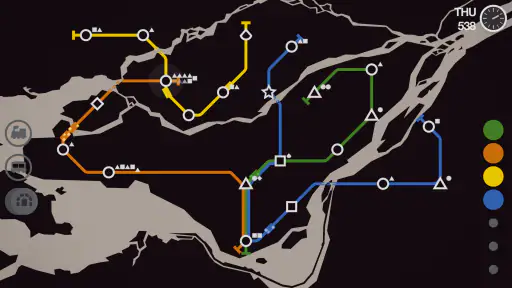
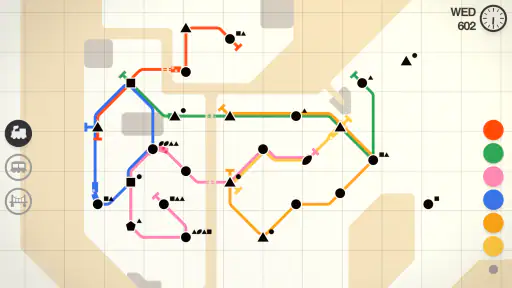
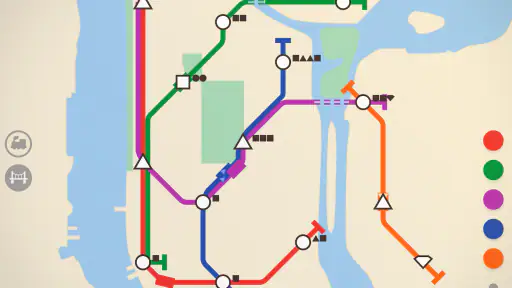
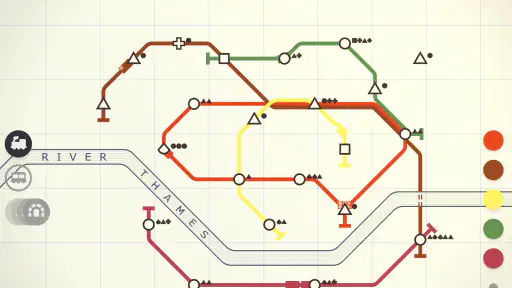
 Analysis by Frivlyz
My first few sessions with Mini Metro were easy to lose time in. A city begins as a handful of stations, and I draw lines between them to move passengers; before long, new stops appear and the neat little plan needs attention. The pleasure is immediate: the map is clean, the rules are approachable, and the pressure grows from decisions I can understand rather than a long tutorial. What surprised me was how quickly a seemingly tidy network could become a puzzle I wanted to solve one more time.
The first week: quick lessons, lively problems
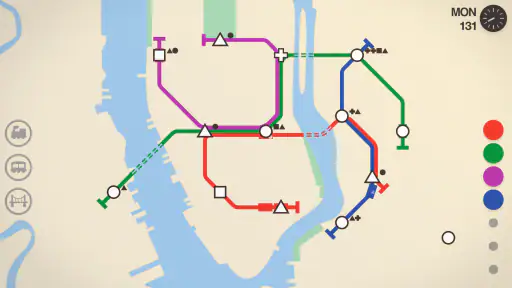
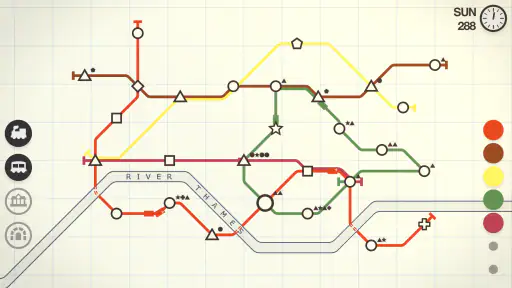
As a simulation game from Dinosaur Polo Club, Mini Metro focuses on arranging routes rather than building a city in the usual, sprawling sense. Its abstract map keeps the important question in view: how can I connect stations so passengers can reach the shapes they need without one part of the system becoming overloaded? That makes it a good fit for short breaks. I can start a run, make a few meaningful choices, and stop when the network gets too demanding.
The early appeal comes from learning to see the map as a changing whole. A line that looks sensible when there are only a few stations may become awkward as the city expands. I found it useful to resist drawing a route through every new stop automatically. Sometimes a smaller adjustment protects a busy connection better than stretching one line across the map. The game rewards attention to the shape of the network, not just the number of places connected.
Month-to-month value: returning with a different plan
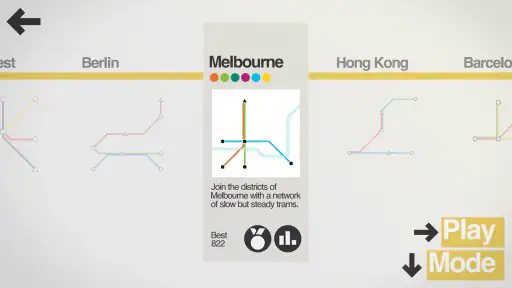
Randomly generated maps and stations give repeat sessions a fresh problem to work through, while different modes let me change the feel of a run. The lasting value is less about collecting a permanent city and more about refining my judgement: noticing a bottleneck earlier, keeping routes readable, and deciding which compromise is least harmful when the map gets crowded. I also like that a run can be satisfying even when it ends; the useful question afterward is what I would change next time.
That makes it a different sort of repeat-play game from a management title built around long-term upgrades, a campaign, or a growing catalogue of objectives. Mini Metro asks me to engage with the map in front of me, rather than maintain a large project between sessions. If I want persistent construction and a sense of gradually developing a metropolis, a conventional city builder may suit me better. If I want a compact strategic puzzle whose variables keep shifting, this is the more focused choice.
Keeping the habit without making it a chore
The maintenance here is mental, not administrative. I do not need to keep up with a daily checklist to enjoy a session; I can return when I feel like solving another routing problem. During a commute or a quiet wait, I might play until I reach a natural stopping point, then put it away rather than letting one more adjustment turn into a long stretch. That flexible rhythm is a real strength for a paid mobile game: it can fit into spare time without asking me to organize my schedule around it.
There is still a learning curve in judging when to redraw a line, add capacity, or save a limited resource for a future problem. The game’s minimal presentation keeps the map readable, but it also means the decisions carry the experience; players who want a story, character progression, or elaborate visual spectacle may find the restraint too stark. And because the core pleasure comes from managing pressure on a map, repeated sessions can feel similar once I stop enjoying that particular kind of problem.
Gaming Stories You May Enjoy

Dancing Road Turns Short Breaks Into a Test of Rhythm and Timing

Super Stylist Makes Every Outfit a Test of Taste and Patience

Dominoes on Your Terms: Who Should Play and Who Should Pass

Pokémon GO Makes the Familiar World Feel New

Chess.com Turns Rematches Into Rivalries, but Community Has Its Costs

Archery Battle 3D Review: Sharp Aiming, Unclear Feedback
On an ordinary day, I might open it while waiting for a delayed appointment. I can make a quick attempt, watch one overcrowded interchange reshape my priorities, and leave with a clearer idea of how I might route the next city. It is not a game I need to check constantly, and I would not recommend it to someone who dislikes restarting a puzzle after a run goes badly. For me, the absence of a long commitment is part of the appeal; for someone who wants a persistent world to return to, it is exactly the limitation.
How the game feels in practice
Right from the get-go, Mini Metro plunges you into the heart of city development. The objective is simple yet captivating: connect various stations on a map with transit lines, ensuring a smooth and efficient flow of passengers. But don't be fooled by its minimalist design and straightforward premise—this game requires a fair bit of brainpower!
Gameplay That Keeps You on Your Toes
The moment you dive into the game, you'll notice how the simplistic graphics are incredibly charming. Using colorful lines to connect dots representing stations, you are tasked with creating a metro system that can handle an ever-increasing number of passengers. New stations pop up randomly, and existing ones start to get crowded, pushing you to constantly rethink your strategies. It’s like playing a game of chess, only with trains and tracks instead of knights and bishops!
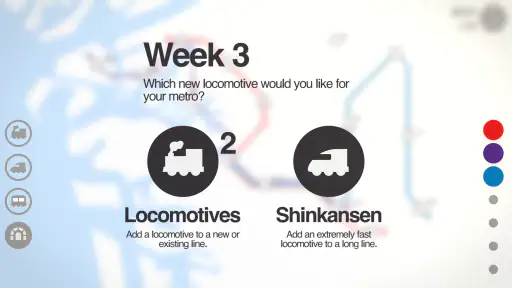
As the game progresses, you’ll need to decide how to best utilize your limited resources. Extra trains, lines, and tunnels are your best friends, but you’ll have to use them wisely. Do you expand your lines to accommodate new stations, or do you add more trains to existing lines to handle the passenger load? Decisions, decisions!
Why You’ll Keep Coming Back
One of the most delightful aspects of Mini Metro is its replayability. No two games are ever the same, thanks to the randomly generated maps and stations. Each city offers a unique challenge, and just when you think you’ve mastered the game, a new scenario will throw you for a loop. Plus, the game is available in various modes, including a "Night Mode" that’s perfect for a relaxed evening of play.
Moreover, the soundtrack is a soothing backdrop to the intense strategy, featuring ambient sounds that rise and fall with the activity of your metro system. It creates an immersive experience that keeps you hooked for hours.
Long-term verdict: does it earn a place on your device?
I’d recommend it to anyone who enjoys compact strategy, elegant maps, and the satisfaction of correcting a plan under pressure. It is a particularly good match for players who like to make decisions with limited resources and see the consequences immediately. If your preference is a relaxed decoration-focused builder, a narrative game, or a simulation where you steadily expand a permanent city, I would choose something else; Mini Metro’s appeal is the puzzle, not a sprawling sense of ownership.
There are a few practical questions worth answering before buying. It is a paid game, priced at $0.99, and its age rating is Everyone, so the purchase is easy to understand but it is still a commitment rather than a free trial. It was released on Oct 17, 2016, and its average rating is 4.6 from around 70,000 ratings, with roughly 2,700 reviews and over 1 million installs. Those figures suggest a well-established audience, but they do not change the basic question: do you enjoy repeatedly solving a focused transport puzzle?
My practical tip is to treat each route as a choice with a future cost. Before extending a line to a new station, look at whether the addition makes the rest of that route harder to manage; before spending a scarce resource, consider whether the current pressure is local or spread across the network. This small pause can make the game feel less like frantic cleanup and more like deliberate planning. It also helps explain why an early run can be enjoyable even when it ends quickly: I can identify one decision to test differently next time.
Final Whistle
In conclusion, Mini Metro is more than just a game—it's a delightful puzzle that combines strategy, creativity, and a bit of chaos. Whether you’re a casual gamer or a hardcore strategist, there’s something here for everyone. So, if you’re ready to test your skills in metro management and experience the thrill of keeping a city moving, hop on the Mini Metro train. Just be prepared to lose track of time as you get lost in this engaging and endlessly entertaining world.
My own long-term verdict is more measured: its clean design and changing maps give it genuine reasons to revisit, but the central loop stays consistent. It earns space on my phone when I want a thoughtful, self-contained challenge that asks for attention without creating upkeep between sessions. The game’s 4.6 average and million-plus installs show that many players have found that appeal, while the $0.99 price makes it a modest, one-time choice rather than an ongoing habit to manage. I would buy it for the pleasure of drawing and revising routes, not for a promise that it will keep unfolding into a different kind of game.
Mini Metro Pros and Cons
Pros
- Intuitive interface for easy navigation.
- Engaging gameplay with minimalistic design.
- Offers various challenging city maps.
- Smooth performance on most devices.
- Regular updates with new content.
Cons
- Limited tutorial for beginners.
- No multiplayer mode available.
- Graphics may seem too simplistic.
- Can become repetitive over time.
- In-app purchases can be pricey.
This Game in Other Languages
Frequently Asked Questions
What is the objective of Mini Metro?
In Mini Metro, the primary objective is to design and manage a subway map for a growing city. Players must create efficient routes to connect various stations and accommodate increasing passenger demand. The challenge is to keep the subway system running smoothly as the city expands and new stations appear.
Can I play Mini Metro offline?
Yes, Mini Metro can be played offline. This makes it a perfect game for traveling or when you're without an internet connection. The game offers a seamless experience without needing online features, allowing you to focus entirely on creating and managing your subway lines without interruptions.
Is Mini Metro suitable for all ages?
Mini Metro is suitable for a wide range of ages. Its simple yet challenging gameplay appeals to both younger audiences and adults. The game does not contain any inappropriate content, making it family-friendly and an excellent choice for parents looking for educational and entertaining games for their children.
What platforms is Mini Metro available on?
Mini Metro is available on multiple platforms, including Android, iOS, Windows, macOS, and Linux. This cross-platform availability allows players to enjoy the game on their preferred devices, whether they are at home or on the go. Each version provides the same engaging gameplay experience.
Are there any in-app purchases in Mini Metro?
Mini Metro offers a pure gameplay experience without any in-app purchases. Once you purchase the game, you have access to all its features and content without additional costs. This ensures that the gameplay is fair and balanced, with no hidden fees or pay-to-win mechanics involved.


