

MapleStory M - Fantasy MMORPG
- Reviews
- 4.5
- Version
- 2.360.5446
- Installs
- 5,000,000+

Screenshots



 Analysis by Frivlyz
I tend to enjoy mobile role-playing games most when they give me choices about how to spend a short session, while still offering goals that reward a longer commitment. MapleStory M sits between those two rhythms: its familiar side-scrolling world is easy to dip into, but character growth, equipment, and other players give me reasons to plan beyond the next quest. That balance is appealing, though it also means the game can feel busy if I want a simple, self-contained adventure.
Choosing a pace that suits you
As a mobile role-playing game from NEXON Company, MapleStory M builds its appeal around a persistent fantasy world rather than a short campaign with a clear finish. I can follow quests when I want direction, or spend time exploring the character and social sides of the game. The important choice is not only which class to pick; it is also whether I want to treat this as a relaxed routine or a project I check in on regularly.
That distinction matters for newcomers. Auto-questing can reduce the effort involved in moving through familiar objectives, which makes it useful when I have only a few minutes and do not want to navigate every step manually. I would still pay attention to what the quest is teaching rather than letting the feature carry me through everything. If I rely on automation from the start, I may reach later decisions without a clear feel for my character’s skills or the pace of combat.
When convenience has a cost
The game’s accessible controls and automatic assistance make it less demanding than a mobile RPG that expects constant manual input. That convenience is a real advantage during a commute or a quiet break, but it is not the same as a fully hands-off experience. I would approach the game as something to check and steer, especially when choosing how to develop a character or deciding whether to spend time on a particular activity.
There is also a practical difference between enjoying progression and chasing every available upgrade. Equipment, outfits, pets, and character growth all provide things to work toward, but a long list of goals can turn a relaxing session into a checklist. I find it more satisfying to pick one priority at a time—such as learning a class or improving a piece of equipment—rather than treating every system as equally urgent.
Getting more from a session
A useful routine is to decide what I want from a play session before opening the game. If I have a little time, I can focus on a quest or explore a town; with a longer window, I can spend more attention on combat, progression, or playing alongside other people. This small distinction helps the game’s many activities feel like options rather than obligations.
For example, I might check in after work, use an auto-quest to make progress through a familiar stretch, then stop and look over my character’s skills before committing to a new direction. On another evening, joining a guild or party can make the session more social and give me a reason to coordinate rather than simply follow objectives alone. I would avoid making purchases just because an upgrade looks tempting in the moment: it is better to decide what kind of progress I actually value first.
Gaming Stories You May Enjoy

Dancing Road Turns Short Breaks Into a Test of Rhythm and Timing

Super Stylist Makes Every Outfit a Test of Taste and Patience

Dominoes on Your Terms: Who Should Play and Who Should Pass

Pokémon GO Makes the Familiar World Feel New

Chess.com Turns Rematches Into Rivalries, but Community Has Its Costs

Archery Battle 3D Review: Sharp Aiming, Unclear Feedback
Who will enjoy this world?
I can see MapleStory M working especially well for players who like cheerful anime-style fantasy, side-scrolling exploration, and a character they can revisit over time. Fans of the original may appreciate the familiar visual identity, while newcomers can approach it as a mobile MMORPG with quests and social play. It also suits people who enjoy having optional layers—customization, guild activity, and trading—around the basic loop of exploring and fighting.
It is less suitable for someone who wants a tightly paced, finite story with little routine, or for a player who dislikes menus and long-term character management. If you prefer action games built around precise manual combat, a more directly skill-focused alternative may be a better fit. Likewise, someone who wants a solitary adventure without an online community should consider a single-player RPG instead; the social and ongoing nature of MapleStory M is part of its identity, not a distraction that can be ignored completely.
How it compares with other mobile RPGs
Compared with many mobile role-playing games that emphasize a sequence of short battles, MapleStory M feels more like a place to return to. Its side-scrolling presentation gives exploration a different texture from the overhead maps or arena-based encounters common elsewhere, and its towns and player interactions make the world feel less like a menu between fights. The trade-off is that this broader structure asks for more patience: people who want a quick, self-contained run may find a compact action RPG more immediately satisfying.
The game’s long-term appeal also depends on what I enjoy doing between story steps. If building a character and connecting with a guild sound rewarding, the extra systems create useful choices. If I mainly want to see a story unfold, I would keep my goals modest and use the convenient quest flow without assuming every side activity is essential. That is the clearest way I see to enjoy the game without letting its scope become a burden.
Jumping into the Maple World
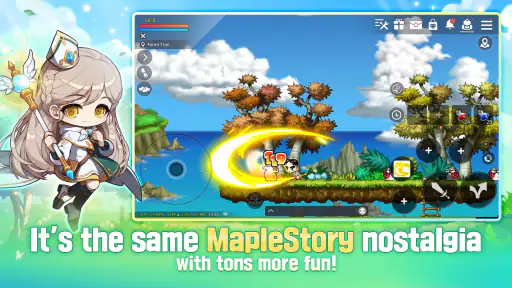
The first thing that struck me about MapleStory M is how well it captures the spirit of the original game. The vibrant, colorful graphics are just as enchanting as I remember, and the music immediately took me back to hours spent in the PC version. The game starts by letting you choose from a selection of classic classes like Dark Knight, Bow Master, and Night Lord. Each class comes with its own unique abilities and playstyles, ensuring there's something for everyone.
Gameplay and Mechanics
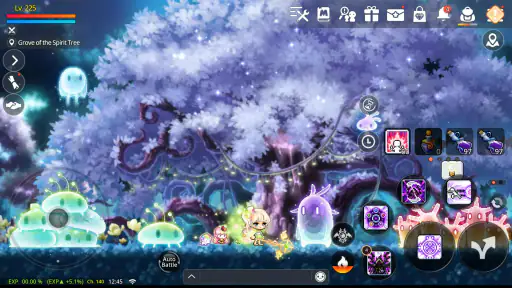
Diving into the gameplay, I was pleased to find that the controls are intuitive, especially considering the complexities of an MMORPG. The virtual joystick and skill buttons on the screen are responsive, making combat and exploration feel smooth. The auto-quest feature is a nice touch for those who prefer a more casual gaming experience, allowing you to enjoy the storyline without getting bogged down by grinding tasks.
Speaking of storylines, MapleStory M doesn’t skimp on content. There are countless quests to embark on, from main story arcs to side missions and events. The world feels alive, with bustling towns and dangerous dungeons filled with quirky enemies to defeat.
Social Features and Community
One of the biggest draws of any MMORPG is the community, and MapleStory M delivers on this front too. The game offers robust social features like guilds, parties, and even a marriage system. I joined a guild early on, and it was a great way to connect with other players, tackle challenges together, and exchange tips.
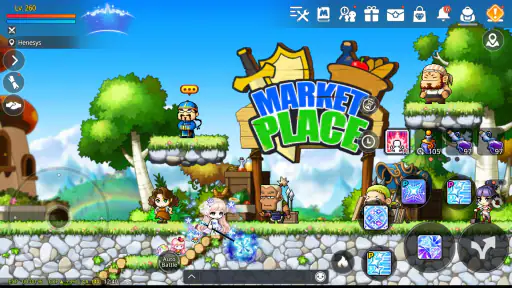
There’s also a lively marketplace for trading items, where you can buy, sell, and barter with fellow players. It’s a bustling economy that adds an extra layer of depth to the game.
Graphics and Sound
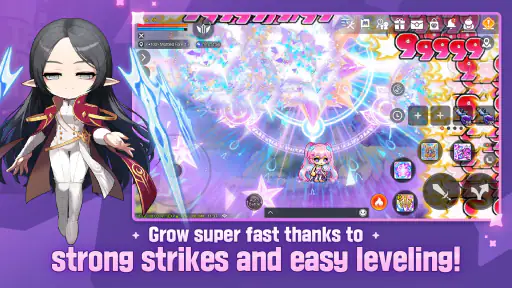
The graphics are beautifully designed to retain the charm of the original MapleStory. The anime-style visuals are crisp and vibrant, making every location a joy to explore. The character designs are detailed, and the animations during combat are fluid and satisfying.
The sound design complements the visuals perfectly. From the cheerful background music in towns to the intense battle themes, every track feels thoughtfully composed to enhance the gaming experience.
Character Progression and Customization
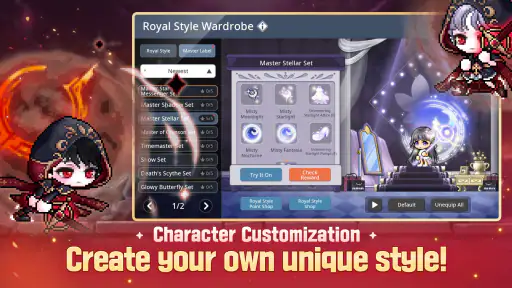
Character progression in MapleStory M is as engaging as ever. Leveling up feels rewarding, with new skills and abilities unlocking at a satisfying pace. There’s a plethora of equipment and outfits available, allowing you to customize your character’s appearance and stats.
The game also introduces a pet system, where you can adopt cute companions to aid you on your journey. These pets can be leveled up and equipped with skills, adding another layer of strategy to the gameplay.
Progress without losing your bearings
One trade-off I noticed is that convenience can blur the connection between an action and its result. When an automatic quest sequence takes over, it is easy to make progress while paying little attention to where I am or what my character is doing. I get more out of the game by pausing between objectives to check skills and equipment, then choosing a target for the next stretch. That makes progression feel like a decision rather than a stream of prompts.
For a new player, I would treat the early hours as a chance to sample the feel of a class, not as a race to collect every reward. The different class styles are a meaningful choice, so it is worth noticing whether I enjoy the way a character handles ordinary encounters before investing a long-term routine in it. A class that looks appealing on paper may not be the one I want to control repeatedly on a phone screen.
The marketplace is another reason to slow down and think. Trading adds a player-driven layer beyond simply collecting whatever appears during quests, but it also asks me to make judgments about what I need and what I am willing to part with. I would check my own goals before buying or selling: if I am focused on making one character more comfortable to play, chasing every desirable item can distract from that plan. The market is most useful when it supports a goal, not when it becomes the goal.
Costs, commitment, and expectations
The game is free to start, and its in-app purchases range from $0.99 to $304.99 per item. That is a wide span, so I would make a personal spending limit before browsing purchase options and treat optional spending as separate from deciding whether the core game suits me. A free entry point does not mean every upgrade or convenience will feel equally accessible, and players who dislike purchase prompts or monetized progression should approach cautiously.
There is enough here for a continuing hobby, but that is also a commitment. An MMORPG can reward regular attention more than a game designed to be completed in a weekend. If I only have occasional short sessions, I can still enjoy quests and the setting, but I would not judge my progress against players who spend much more time on character development or group activity. The healthier approach is to decide what a satisfying session means for me and let the rest remain optional.
On Android, the game is listed for devices running version 6.0 or later, and its current version is 2.360.5446. It is rated Everyone 10+, so it is aimed at a broad audience while still being more suited to players comfortable with fantasy combat and ongoing online play than to very young children seeking a simple offline game. The listing’s 4.5 average comes from around 125,000 ratings, with about 5.7 thousand written reviews, and it has passed 5 million installs. Those figures suggest a substantial audience, but I would still base the decision on whether its persistent, social style fits my habits.
Choosing between solo play and company
A common question for a newcomer is whether the game makes sense without friends already playing. I think it can, because quests and exploration offer a route into the world on your own, while guilds and parties give me a way to meet people when I want more company. The social layer is a bonus rather than a requirement for every moment, but players who avoid online interaction altogether may find that the game’s community-facing systems are less appealing than those in a single-player RPG.
I would also ask whether automatic questing makes the game too passive. For me, it is best treated as a convenience for routine stretches, not as a replacement for paying attention. Manual control and deliberate skill choices make more sense when I want to engage with combat or learn what my character can do. Switching between those approaches is a practical way to keep a mobile session comfortable without surrendering all involvement.
Another useful question is whether the game is worth trying if I have never played the PC original. I think so, provided I like colorful side-scrolling worlds and do not expect nostalgia to do all the work. The presentation may be familiar to returning players, but the basic appeal—questing, developing a character, exploring, and meeting other players—can stand on its own. Someone who wants a sharply directed story with a definite endpoint should still look elsewhere.
Final Thoughts
Overall, MapleStory M is a fantastic adaptation of a classic MMORPG. It’s a nostalgic trip for veteran players and a welcoming world for newcomers. Whether you’re in it for the story, the community, or just to kick back and enjoy some colorful adventures, MapleStory M has something to offer.
If you haven’t tried it yet, I highly recommend giving it a go. It’s free to download on both Android and iOS, so why not take a step into the Maple World today? You might just find yourself hooked on its whimsical charm.
My strategy verdict
I would recommend giving it a try if you want a bright, ongoing MMORPG where a short quest session can sit alongside deeper character goals and social play. The strongest reason to stay is the combination of recognizable side-scrolling charm with choices about how to build and spend time on a character. My main caution is that convenience, trading, progression, and purchases can all compete for attention; enjoying the game is easier when I set my own priorities rather than chasing every visible system.
MapleStory M was released on July 24, 2018, and the long-running nature of the game is reflected in its broad player base. I would go in expecting an evolving routine, not a brief story that neatly wraps up. If that sounds appealing, its free entry makes it easy to test whether the world and its pace suit you. If you would rather have a focused offline campaign or a game centered on precise, uninterrupted action, I would choose that instead.
MapleStory M - Fantasy MMORPG Pros and Cons
Pros
- Vibrant graphics with engaging animations.
- Diverse character classes to choose from.
- Frequent updates with new events.
- Co-op play enhances social interaction.
- Simple controls suitable for mobile.
Cons
- In-game purchases can be pricey.
- Repetitive grinding may bore some.
- Requires a stable internet connection.
- Battery consumption is quite high.
- Limited storage options for items.
Frequently Asked Questions
What is MapleStory M, and how does it differ from the original MapleStory?
MapleStory M is a mobile adaptation of the classic MMORPG MapleStory, designed for iOS and Android devices. While it retains the nostalgic 2D side-scrolling gameplay, it includes mobile-specific features like auto-battle and streamlined controls. This version is more accessible for on-the-go play, making it a convenient choice for fans of the original looking for a similar experience on mobile.
What are the main gameplay features of MapleStory M?
MapleStory M offers a rich MMORPG experience with features like character customization, various classes, real-time multiplayer battles, and engaging quests. Players can explore diverse worlds, battle monsters, and join guilds. The game also includes daily missions and events, ensuring there’s always something new to explore, keeping the gameplay fresh and exciting.
Is MapleStory M free to play, and does it include in-app purchases?
Yes, MapleStory M is free to download and play. However, it does include in-app purchases. Players can buy premium currency to acquire cosmetic items, equipment, and other conveniences. While these purchases can enhance gameplay, they are entirely optional, and players can still enjoy the game without spending money.
What devices and operating systems are compatible with MapleStory M?
MapleStory M is compatible with most modern Android and iOS devices. For optimal performance, it is recommended to have a device running Android 4.4 or higher, or iOS 9.0 or later. Ensure your device has sufficient storage and processing power to handle the game’s graphics and features for a smooth gaming experience.
How does multiplayer work in MapleStory M?
Multiplayer in MapleStory M allows players to team up with friends or other players in real-time. You can join parties to tackle difficult dungeons, participate in guilds for community events, and engage in competitive PvP battles. Communication and cooperation are key to success, providing a social and interactive experience within the game.


