

Mahjong Voyage: Tile Matching
- Reviews
- 4.8
- Version
- 1.6.1
- Installs
- 1,000,000+

Screenshots
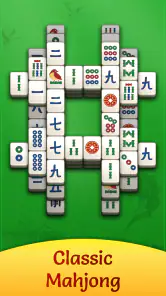

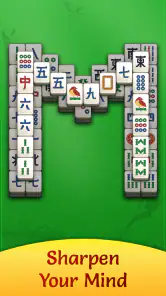
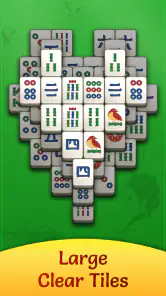



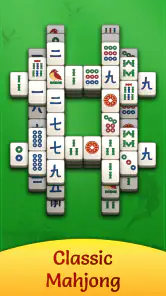
 Analysis by Frivlyz
I tend to reach for a tile puzzle when I have a few quiet minutes, but I also like having a reason to continue beyond clearing one board. That balance is what makes Mahjong Voyage: Tile Matching appealing: it pairs familiar matching play with a sense of travel and gradual discovery. I would consider it for a calm break at home or a shared device, while keeping expectations grounded: it is a casual board game, not a substitute for traditional four-player Mahjong.
A short break that can become a shared routine
In a household, this kind of game fits naturally into small gaps: someone can take a turn while waiting for dinner, then hand the phone or tablet to another person when they are done. The board-based format makes it easy to understand what is happening just by looking at the screen, so a less experienced player can follow along without a lengthy explanation. I can imagine a parent and child taking turns choosing moves, or two adults comparing how they approach a tricky layout.
That casual handoff is useful, but it is not the same as a dedicated multiplayer mode. I would treat it as a single-player puzzle that people can enjoy alongside one another, rather than assuming it offers shared progress, separate profiles, or a way to compete. If your household wants a game built around direct play together, a turn-taking board game with an explicit multiplayer structure is a better fit.
A practical approach is to agree on whose session it is before opening the game, especially if several people use one device. That avoids confusion about who is making decisions or spending any earned helpers. It also keeps the game’s progress from becoming a point of disagreement: enjoy the board together, but let one person guide the session unless everyone is comfortable taking turns.
What the journey adds to tile matching
The first time I launched the game, I was drawn in by the colorful presentation and the promise of places to discover. Its map gives the puzzle sessions a larger frame: clearing a board feels like a small step through an illustrated journey rather than an isolated task. The changing settings and tile designs help give that progression a visual identity, which can be more motivating than replaying boards in a plain, unchanging interface.
The core activity is matching available tiles to clear the layout. If you already know tile-matching Mahjong, the basic idea will be familiar; if not, it is approachable because the goal is visible on the board. The extra challenge comes from choosing which matches to remove and thinking about what those choices may uncover or leave blocked. I find that this is the part that rewards a little patience: taking the first obvious pair is not always the most useful move.
The adventure framing is a meaningful difference from a stripped-back Mahjong solitaire app, where the main attraction is simply the board and the chance to improve your solving habits. Here, themed surroundings and map progression give casual players another reason to continue. The trade-off is that anyone who wants a minimal interface, a pure traditional rules experience, or a serious competitive format may prefer a more focused alternative.
Gaming Stories You May Enjoy

Dancing Road Turns Short Breaks Into a Test of Rhythm and Timing

Super Stylist Makes Every Outfit a Test of Taste and Patience

Dominoes on Your Terms: Who Should Play and Who Should Pass

Pokémon GO Makes the Familiar World Feel New

Chess.com Turns Rematches Into Rivalries, but Community Has Its Costs

Archery Battle 3D Review: Sharp Aiming, Unclear Feedback
Setting Sail on Your Mahjong Adventure
The first time I launched Mahjong Voyage: Tile Matching, I was instantly drawn in by its vibrant graphics and the promise of an epic journey. The app opens with a beautifully designed map that teases the many destinations you’ll visit, each promising a new set of challenges and stunning backdrops. From the bustling streets of ancient China to the serene landscapes of Japan, the game’s visuals are a treat for the eyes.
Gameplay Mechanics: A Perfect Blend of Tradition and Innovation
For those familiar with traditional Mahjong, the gameplay will feel both familiar and refreshing. The core mechanic remains the same: match tiles to clear the board. However, the app spices things up with various power-ups and challenges that keep you on your toes. Whether it’s a tricky tile arrangement or a time-limited challenge, there’s always something to keep you engaged.
One feature I particularly loved is the ability to earn boosters. These little helpers can turn the tide in challenging levels, and collecting them adds an extra layer of strategy to the game. Whether you’re a seasoned Mahjong player or a newcomer, the game scales its difficulty well, ensuring that everyone finds their sweet spot.
Choosing a pace and using help wisely
Not every board needs to be treated as a race. When I play for a few minutes between chores, I focus on clearing the most constrained matches first rather than tapping quickly through pairs that are easy to reach. That habit helps me avoid leaving a board with awkward choices later. If a level becomes frustrating, a booster is best saved for a point where it can genuinely open up options, rather than used automatically at the first sign of difficulty.
The time-limited challenges mentioned in the game’s play can make a relaxed puzzle feel more urgent. I would lean into those when I want a sharper, more focused session and return to ordinary boards when I want a quieter pace. This distinction matters for households too: a child or someone playing while distracted may find a timed challenge less comfortable than a standard board. Letting the player choose the mode that suits their mood is a simple way to keep the game enjoyable.
Boosters also change the character of the puzzle. They can reduce friction, but leaning on them too readily may make the decision-making feel less satisfying. I treat them as a reserve for a genuine bottleneck, not a routine shortcut. If you enjoy solving layouts through observation, try a board without using help first; if you are playing casually and mainly want to see the next setting, using a helper can be a reasonable trade-off.
A Journey Worth Taking
The app doesn’t just stop at offering solid gameplay; it also weaves in a sense of progression that’s incredibly satisfying. As you complete levels, you unlock new areas on the map, each with its own unique theme and tile sets. This sense of adventure and discovery is what sets Mahjong Voyage: Tile Matching apart from other tile-matching games.
The background music and sound effects further enhance the experience, immersing you in the atmosphere of each setting. I found myself often pausing just to admire the scenery and soak in the ambient sounds, which is a testament to the care put into crafting this game.
Useful boundaries on a shared device
If the device is shared, I would decide in advance whether everyone is simply taking turns or whether one person is the regular player. The app’s progress can make that distinction matter: a family member who clears the next level may move the journey forward for everyone using the same session. That can be a pleasant collaborative ritual, but it may disappoint someone who expected an independent save. For personal progress, using a separate device is the straightforward option; I would not assume the game provides household profiles or account separation.
It is also worth setting a clear rule around purchases before handing the device to a younger player. The game is free to download, but it includes optional in-app purchases, with items priced from $0.99 to $2.99. I would check the device’s purchase settings and make sure the person playing understands that paid items are different from ordinary play. This is a general shared-device precaution, not a special feature of the game.
For everyday coordination, a small routine helps: keep sessions short when the device is needed by others, avoid starting a timed challenge just before handing it over, and agree on whether boosters are for everyone or for one player’s run. Those choices prevent minor disputes and make the game easier to fit into a busy household. They also avoid expecting the app itself to manage turn-taking or family rules.
Age, trust, and who will enjoy it
The game is rated Everyone, so its age category is broad. I would still make the usual distinction between a content rating and a household’s own rules: younger players may need help understanding optional purchases, while adults may care more about screen-time boundaries or who controls shared progress. For a child who enjoys visual puzzles, the clear matching goal and colorful settings make it approachable, but I would introduce it as a casual puzzle rather than as a lesson in the rules of traditional Mahjong.
Playvalve is the developer, and the game has an average rating of 4.8 from around 38,000 ratings, with more than one million installs. Those figures suggest that many players have responded positively, but they do not tell me whether its pacing or purchase options suit a particular family. I would use them as a broad signal of popularity, then judge the actual fit by whether the player likes tile layouts, map-based progression, and a gentle puzzle routine.
For a newcomer, the main question is whether the tile-matching format itself sounds enjoyable. The presentation can make the journey inviting, but it cannot turn a person who dislikes scanning a board and planning matches into a Mahjong solitaire fan. Conversely, someone who already enjoys this style may appreciate having a more decorated route through the levels than a bare-bones puzzle offers.
It is also a reasonable choice for someone who wants a game that can be picked up without arranging a group or learning a long rule set. It is less suitable for players seeking social competition, deep strategic Mahjong with opponents, or a purely meditative experience with no timed pressure. If any of those are the priority, I would choose a game designed specifically around that need rather than expecting this one to cover every version of Mahjong.
Practical details before installing
The game is free, is rated for Everyone, and runs on Android 7.0 or later. Its current version is 1.6.1, and it was released on February 7, 2025. Optional in-app purchases cost $0.99 to $2.99 per item, so the free entry point does not mean every available convenience is necessarily free. I would be comfortable trying it without paying first and only considering a purchase if I knew exactly what it would add to my own play.
Its rating and install reach make it easy to see why a casual player might give it a try, but the best reason to install is more personal: you want approachable tile-clearing puzzles with a visual journey between sessions. If you are comparing it with other board games, think of it as a solo puzzle with light progression, not a replacement for a physical Mahjong set or a game night built around several players.
Final Thoughts: A Voyage Not to Be Missed
In conclusion, Mahjong Voyage: Tile Matching offers a delightful blend of traditional Mahjong gameplay and an engaging adventure experience. The stunning visuals, coupled with innovative game mechanics and a sense of progression, make it a standout app in the crowded puzzle genre. Whether you’re in it for the love of Mahjong or the thrill of the journey, this app promises hours of entertainment.
So, pack your bags and get ready to sail through ancient worlds, one tile match at a time. Trust me, it’s a voyage you won’t want to miss!
My household verdict
I would recommend it to a friend who likes tile puzzles, enjoys seeing a map gradually open up, and wants something that works in short, flexible sessions. It is especially easy to share informally when people are happy to watch, suggest a move, or take turns on one board. The key is to agree on progress and purchases rather than assuming separate household accounts or built-in family coordination.
If your ideal Mahjong experience is a quiet, traditional solo board, a minimalist alternative may suit you better. If you want live opponents or an explicitly cooperative game, look elsewhere. But for a colorful, approachable matching game with a sense of onward travel, this is a pleasant option to keep on a shared device—as long as everyone knows whose turn it is and what kind of game they are opening.
Mahjong Voyage: Tile Matching Pros and Cons
Pros
- Engaging puzzles with increasing difficulty.
- Beautiful graphics and smooth animations.
- Frequent updates with new levels.
- Easy to learn
- hard to master gameplay.
- Offline mode available for travel.
Cons
- In-app purchases can be expensive.
- Occasional ads interrupt gameplay.
- Limited lives can hinder progress.
- Some levels feel repetitive.
- Requires strategic thinking skills.
This Game in Other Languages
Frequently Asked Questions
What is Mahjong Voyage: Tile Matching and how do you play it?
Mahjong Voyage: Tile Matching is a classic puzzle game where players match pairs of tiles to clear them from the board. The game involves strategic thinking as players must remove tiles in a specific order to progress. The aim is to clear the entire board, and it often includes various levels and themes to explore. This game is suitable for all ages and can be both relaxing and mentally stimulating.
Is Mahjong Voyage: Tile Matching free to download and play?
Yes, Mahjong Voyage: Tile Matching is free to download and play. However, like many free-to-play games, it may offer in-app purchases. These purchases can enhance gameplay by providing additional features, hints, or removing ads. While the core game is accessible without spending money, some players opt for these purchases to enrich their gaming experience.
What platforms is Mahjong Voyage: Tile Matching available on?
Mahjong Voyage: Tile Matching is available for download on both Android and iOS platforms. Players can find the game in the Google Play Store for Android devices and the Apple App Store for iOS devices. It ensures a wide accessibility so that users of different devices can enjoy the game without any issues.
Does Mahjong Voyage: Tile Matching require an internet connection?
Mahjong Voyage: Tile Matching does not require a constant internet connection to play. This makes it a great option for on-the-go gaming when you might not have access to Wi-Fi or mobile data. However, an internet connection might be required for certain features such as downloading updates or participating in online leaderboards.
Are there any age restrictions for playing Mahjong Voyage: Tile Matching?
Mahjong Voyage: Tile Matching is designed to be suitable for all ages. The game's content is family-friendly, with no inappropriate material, making it an excellent choice for both children and adults. Parents can feel comfortable allowing their children to play this game, knowing it promotes concentration and cognitive skills.


