

Mahjong Solitaire
- Reviews
- 4.6
- Version
- 2.2.1.1620
- Installs
- 5,000,000+

Screenshots
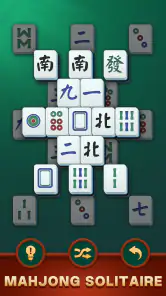
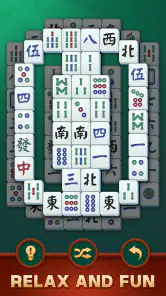
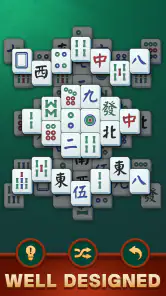
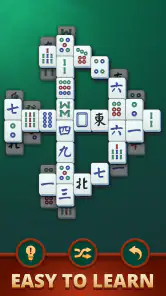
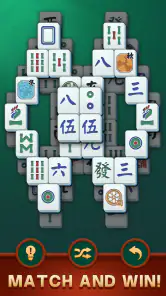
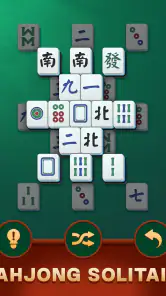
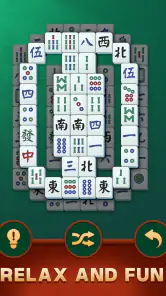
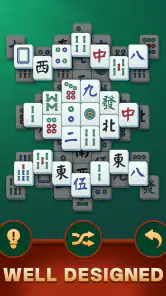
 Analysis by Frivlyz
I reach for Mahjong Solitaire when I want a quiet game that asks me to pay attention without demanding a long session. Its tile-matching format is easy to understand, but the order in which I uncover pairs gives each layout a small planning puzzle. That makes it a natural fit for a short break, a calm evening at home, or a few minutes when I would rather focus on something simple than scroll through a feed.
What the purchase details mean in practice
This is a free card game from MobilityWare, built around solitary mahjong-style tile matching rather than a multiplayer table. The game is rated Everyone, and its current version is 2.2.1.1620. It has a 4.6 average from around 99,000 ratings, with more than 5 million installs, so it has clearly found a broad audience. Those figures tell me it is widely used; they do not, by themselves, tell me whether its purchase options will suit every player.
There are in-app purchases priced from $1.99 to $29.99 per item. That is the spending context I would keep in mind before installing: the game can be started without paying, while optional purchases are available. I would not treat “free” as a promise that every convenience or item is included, nor would I assume that buying something is necessary to enjoy matching tiles. If I were trying it for the first time, I would play normally and decide whether any purchase solves a real annoyance for me rather than buying out of habit.
Why its pace works—and where pressure can intrude
The core appeal is the contrast between a calm-looking board and the need to think ahead. A pair may be visible, but removing it can uncover a useful tile or leave a more important one blocked. I get the most from the game when I pause for a moment before tapping: checking which tiles are free and considering what each match will reveal makes the puzzle feel more deliberate than simple pattern spotting.
The published description frames the game as a relaxing matching experience, and that is the mood I would expect from its basic premise. The earlier review text describes timed play, hints, shuffles, daily challenges, and a leaderboard; those are useful points to consider if they are part of the version you are playing, but I would not make a spending decision based on an assumption that every aid is always available or that every challenge works the same way. A timer, when present, can turn a meditative board into a race, so I would use a slower mode or take breaks if the clock makes the game less enjoyable.
There is a small strategic trade-off that is easy to miss: clearing an obvious pair immediately is not always the best move. If several pairs are available, I look for the match that opens the most useful section of the layout, while avoiding a move that exposes a tile I cannot use. That habit can reduce dead ends and makes hints more informative: I try to solve the next step myself first, then use help as a nudge rather than tapping it automatically.
Fair play, personal goals, and other tile games
For a solo puzzle, “competitive fairness” is less about beating an opponent and more about whether the game lets me enjoy the board without turning progress into a spending contest. There is no reason to assume purchases affect a shared match, and the purchase range alone does not establish what any item does. I would judge the experience on the puzzle in front of me: whether I can make sensible moves, whether I can stop when I want, and whether optional spending remains optional for my own play.
Gaming Stories You May Enjoy

Dancing Road Turns Short Breaks Into a Test of Rhythm and Timing

Super Stylist Makes Every Outfit a Test of Taste and Patience

Dominoes on Your Terms: Who Should Play and Who Should Pass

Pokémon GO Makes the Familiar World Feel New

Chess.com Turns Rematches Into Rivalries, but Community Has Its Costs

Archery Battle 3D Review: Sharp Aiming, Unclear Feedback
Compared with a traditional mahjong table game, this is a different kind of activity. It is designed around matching exposed tile pairs in a layout, not the turn-taking and hand-building decisions of a multiplayer mahjong game. Compared with other solitaire tile-matching apps, the basic loop will feel familiar; the deciding factors are the particular board presentation, pace, and any extra modes you find engaging. If I wanted social competition or the rules of full mahjong, I would choose a different game. If I wanted a compact, single-player pattern puzzle, this format makes more sense.
A practical way to play is to treat one board as a complete little break instead of chasing a long streak. For example, while waiting for a kettle to boil, I can start a layout, scan for pairs that open blocked areas, and stop after the round rather than letting a quick pause become an unplanned session. If I am tired, I avoid making rapid taps: a moment spent checking the board is often more relaxing than undoing a hurried choice.
Who should install it—and who may prefer something else
I would recommend this style of game to someone who likes visual puzzles, wants a solo activity with clear rules, and enjoys improving through observation. It is especially suitable for casual play because I can understand the central task without studying a rulebook. The Everyone rating also makes it broadly approachable, though the best fit still depends on whether the player enjoys tile layouts and repeated matching.
I would steer away from it if I wanted a story, a deep campaign, constant variety in the form of new mechanics, or direct competition against other people. Repeatedly clearing pairs is the point, so anyone who tires quickly of a familiar loop may find it too samey. Likewise, players who dislike clocks should be cautious about any timed mode, and anyone sensitive to optional purchase prompts should decide their spending limits before exploring them.
One useful question is whether the game can work as a low-pressure habit. I would keep it in that role by choosing a comfortable session length, using any assistance only when I am genuinely stuck, and not treating daily goals or score comparisons as obligations. If a challenge makes me tense, skipping it is a perfectly good way to preserve the reason I opened the game in the first place.
Getting Started with Ease
Right off the bat, Mahjong Solitaire welcomes you with a clean and intuitive interface. No need to fumble around trying to figure out what to do – it’s all laid out for you. The game is based on the classic Chinese tile game, but here, it's tailored for solo play. All you have to do is match the tiles, but there's a catch – you can only match free tiles. Simple, right? But don't let that fool you. As you progress, the levels get trickier, and that’s where the fun really begins.
Graphics and Sound
Let’s talk graphics. The visuals in Mahjong Solitaire are nothing short of stunning. The tiles are beautifully designed, each with intricate details that make the game feel like a piece of art. The backgrounds are equally mesmerizing and change as you move through different stages, keeping the experience fresh and engaging.
And the sound? Oh, it's like a cherry on top! The soothing music paired with gentle sound effects makes for a relaxing experience. It's almost like the app is gently whispering, "Relax, take your time."
Gameplay and Features
As far as gameplay goes, Mahjong Solitaire is straightforward and incredibly addictive. You start with a stack of tiles laid out in various formations, and your job is to clear them by matching pairs. The challenge kicks in as you try to clear the stack within a limited time. However, there’s no need to stress. The app offers hints and shuffles to help you out if you get stuck. Trust me, those features have saved me more times than I can count!
What’s more, the game offers daily challenges and a leaderboard. So, if you’re feeling competitive, you can always aim to beat your previous scores or challenge friends. It keeps things lively and gives you something to look forward to every day.
Why You’ll Love It
Now, you might be wondering, "Why should I choose this game over others?" Well, for starters, it’s perfect for a quick escape. Whether you’re on a short break at work or winding down before bed, Mahjong Solitaire offers a perfect balance between challenge and relaxation. Plus, it’s free! There are in-app purchases, but they’re entirely optional. You can enjoy the full experience without spending a dime.
So, if you’re in the market for a game that’s both engaging and soothing, give Mahjong Solitaire a try. It’s like a digital spa day for your mind. You’ll find it hard to put down once you start.
In conclusion, Mahjong Solitaire is more than just a game; it’s a delightful companion for those moments when you need a little mental getaway. With its stunning visuals, calming sound, and engaging gameplay, it’s a must-try for anyone looking to unwind while keeping their mind sharp.
My final take on spending and trust
The game was released on July 8, 2019, and lists Android 5.1 as its minimum operating system requirement. That gives Android users a straightforward compatibility check before downloading. I would still review the purchase choices in context and avoid assuming that a listed price tells me what an item unlocks. The available facts establish that purchases range from $1.99 to $29.99 per item, but not what each one contains, so I would make any decision only after seeing the specific offer in the game.
My overall recommendation is measured: I would try it if the simple pleasure of clearing a tile layout sounds appealing, and I would keep expectations focused on that puzzle rather than on a larger progression or social experience. MobilityWare’s game has the basic ingredients for an accessible, relaxing solo pastime, with enough room for thought to reward careful moves. Its strongest case is also its limitation: it stays centered on matching tiles. If that loop suits you, the free starting point makes it easy to see for yourself; if it does not, no amount of optional spending is likely to change the kind of game it is.
Mahjong Solitaire Pros and Cons
Pros
- Engaging and challenging gameplay.
- Visually appealing tile designs.
- Simple and intuitive controls.
- Numerous levels for extended play.
- Offline play available.
Cons
- Limited free levels available.
- In-app purchases can be pricey.
- Ads may interrupt gameplay.
- No multiplayer mode.
- Requires frequent updates.
Frequently Asked Questions
What is Mahjong Solitaire and how does it differ from traditional Mahjong?
Mahjong Solitaire is a single-player tile matching game that differs from traditional Mahjong, which is typically played by four players. In Mahjong Solitaire, the goal is to clear a board by matching pairs of identical tiles. It’s a strategic puzzle game where players must plan their moves carefully to avoid running out of options, unlike the more social and competitive nature of traditional Mahjong.
Is Mahjong Solitaire available for both Android and iOS devices?
Yes, Mahjong Solitaire is available for both Android and iOS devices. Users can download the app from the Google Play Store for Android devices or the Apple App Store for iOS devices. The game is designed to work on a wide range of smartphones and tablets, providing a seamless experience across different platforms.
Are there in-app purchases or ads in Mahjong Solitaire?
Mahjong Solitaire typically includes both in-app purchases and ads. Players can often choose to purchase additional features, such as hints or special tile sets, to enhance their gaming experience. Additionally, the game may display ads to support its free-to-play model, though players can often opt for an ad-free experience through a one-time purchase.
Can I play Mahjong Solitaire offline, or do I need an internet connection?
Mahjong Solitaire can usually be played offline, allowing players to enjoy the game without needing an internet connection. This makes it a great option for passing the time during commutes or in areas with limited connectivity. However, some features, such as leaderboards or daily challenges, may require an internet connection to access.
Does Mahjong Solitaire offer different difficulty levels?
Yes, Mahjong Solitaire often provides various difficulty levels to cater to players of all skill levels. Beginners can start with simpler boards that have fewer tiles, while more experienced players can challenge themselves with complex layouts. This range of difficulty levels ensures that both new and seasoned players can enjoy the game and improve their skills over time.


