

Magic: The Gathering Arena
- Reviews
- 4.3
- Version
- 2025.48.50.4042
- Installs
- 5,000,000+

Screenshots
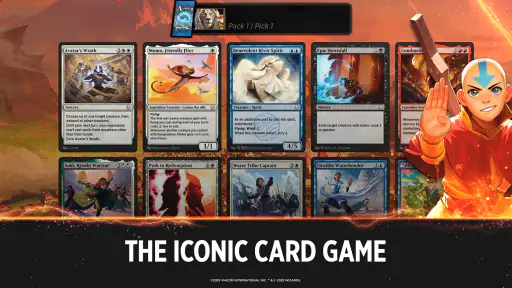
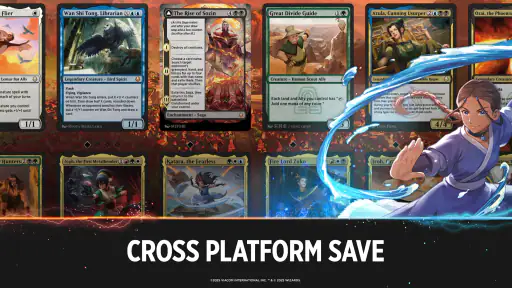
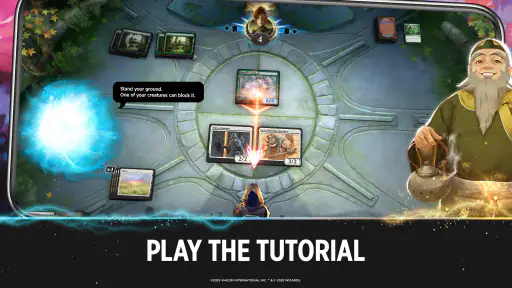

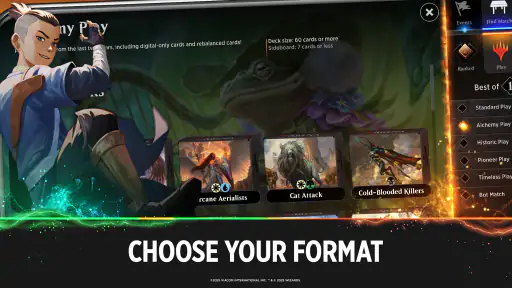
 Analysis by Frivlyz
When it comes to the world of digital card games, Magic: The Gathering Arena takes center stage with a flourish. For those who remember the thrill of playing Magic with a deck of physical cards, this app brings that same excitement to your screen, but with a modern twist. It's like having a whole deck of cards right in your pocket, minus the shuffling hassle!
Readable cards, busy boards
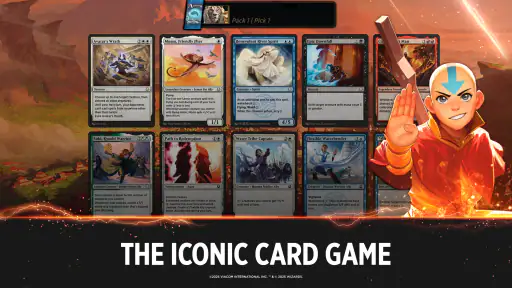
That pocket-sized convenience is a real draw, but the game’s visual style also asks for attention. Card art and animated effects make matches lively; during a complicated turn, though, a lot can happen on one screen. I find it easier to follow the action when I pause to read each card and trace what it does before choosing a response, rather than tapping quickly through a crowded board. New players should give themselves room to learn the symbols and the rhythm of turns instead of expecting every detail to make sense at a glance.
The tutorial helps establish the basics, but it cannot remove the learning curve of a game with a large vocabulary of cards and interactions. When a play seems surprising, taking a moment to inspect the relevant card is more useful than guessing. That slower habit can make a match feel less hectic and helps me understand why a decision worked or failed. If you prefer games whose rules stay obvious without much reading, this one may feel demanding even when the interface looks polished.
Navigation and the learning curve
The opening guidance gives newcomers a place to start, and deck building provides a natural reason to explore beyond the first lessons. I recommend changing one thing at a time when learning a deck: play a few matches, notice which cards sit unused or which situations feel awkward, then adjust your choices. Reworking everything at once makes it harder to tell what improved the deck. This is a small, practical way to make the collection and strategy side feel more manageable.
There is also a useful distinction between learning the game and learning a particular deck. A familiar strategy can make the rules easier to apply, while a new deck may introduce unfamiliar interactions even after the tutorial. I would not treat an early loss as proof that the game is unsuitable; it may simply mean that the deck needs practice. On the other hand, if you want a quick match with almost no planning between turns, the amount of reading and decision-making may be more than you want from a phone game.
Unleashing the Magic
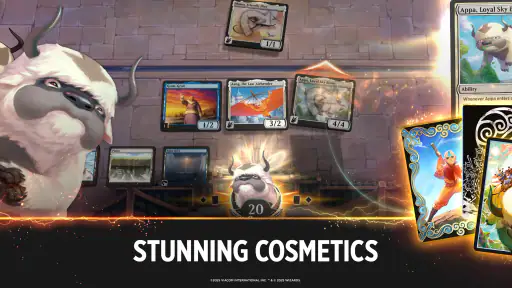
Let's dive into what makes Magic: The Gathering Arena a standout. Upon launching the app, the first thing that hits you is the stunning graphics. The colors are vibrant, and the animations are slick, making every card battle feel like a high-stakes showdown. It's clear that a lot of love and attention to detail went into crafting this digital version, and it pays off in spades.
Getting Started
Starting your journey in Magic: The Gathering Arena is a breeze, even if you’re a newbie. The app guides you smoothly through the basics with an interactive tutorial. It’s like having a buddy sit down with you and patiently explain the rules. And trust me, this is a game with a deep well of strategy, so having a helping hand at the start is a godsend.
Gaming Stories You May Enjoy

Dancing Road Turns Short Breaks Into a Test of Rhythm and Timing

Super Stylist Makes Every Outfit a Test of Taste and Patience

Dominoes on Your Terms: Who Should Play and Who Should Pass

Pokémon GO Makes the Familiar World Feel New

Chess.com Turns Rematches Into Rivalries, but Community Has Its Costs

Archery Battle 3D Review: Sharp Aiming, Unclear Feedback
Once you’re through the initial stages, you’re free to dive into the real meat of the game. You can build your own decks, which is where the real fun begins. There’s something incredibly satisfying about crafting a deck that reflects your own style and strategy. Whether you’re into a more aggressive playstyle or prefer to lay low and strike when the moment is right, there’s a deck for you.
Building a deck around real life
Deck construction is where I would spend a little time before a longer play session. It gives you a chance to think through a plan without the pressure of responding to an opponent, and it makes the next match more informative: you can watch for whether your cards support the strategy you intended. If a particular idea keeps falling short, make a modest change and test again. That approach is more useful than chasing every new option as soon as you see it.
For someone who already plays the physical card game, the digital version is a convenient way to enjoy matches without carrying cards or arranging a table. It is not a replacement for every part of tabletop play: face-to-face conversation and handling a physical deck are their own pleasures. For a newcomer, meanwhile, the tutorial and the ability to build decks make it a more hands-on introduction than a simple matching game, but the depth that rewards curiosity can also be a barrier if you dislike reading rules text.
Motor and sensory comfort
Card games generally leave more time for deliberate choices than action games, and that makes this a reasonable format for players who do not want to rely on rapid button sequences. Still, matches involve frequent taps and careful selections, so a small screen or imprecise touch can make play less comfortable. I would try a short session first and see whether the cards and controls feel manageable on your device. The bright colors and animated presentation add energy, but players who are sensitive to visual motion or prefer a calmer display may find the spectacle tiring over a longer stretch.
A practical way to reduce strain is to play somewhere you can hold the phone steadily and give the board your attention. I would avoid squeezing a match into a moment when I need to watch for a stop or split my focus between several tasks. The game’s strategic pauses can make it feel suitable for a brief break, but a turn that involves several effects is not always a good fit for distracted play. Choosing a comfortable setting matters more here than trying to rush through decisions.
Features Galore
One of the things that I absolutely love about this app is the variety of modes it offers. From casual matches to ranked games, there’s always something to keep you on your toes. Plus, the regular events mean there’s always a new way to test your skills or earn some sweet rewards. It’s like a never-ending buffet of magic goodness!
The range matters because not every session needs to feel like a test. Casual play is the sensible place to experiment with a deck or get comfortable with unfamiliar choices; ranked games make more sense when you are ready for a competitive goal. Events offer another reason to return, although the stream of new things to try can make the game feel like an ongoing hobby rather than a quick one-off download. I would pick the mode that matches my available attention, not simply the one that looks most rewarding.
Choosing it over other card games
Compared with lightweight card battlers that keep rules and decisions simple, this game asks for more concentration and rewards learning the details. That complexity is the point for many Magic fans, but it is not automatically an advantage for everyone. If your main goal is a fast, low-effort pastime, a simpler card game may suit you better. If you enjoy tuning a deck, learning interactions, and gradually improving through repeated matches, the extra depth gives you more to work with than a basic casual alternative.
It also occupies a different space from paper Magic. The app removes the need to shuffle, carry a collection, or find someone nearby for a game, which is useful when you have a spare window at home or while travelling. Physical play is still the better choice if the social ritual around a table is what you value most. I see the two formats as complementary: one is easy to fit into a solo screen-based session, while the other makes the people and physical cards part of the experience.
Cost, commitment, and who should try it
The game is free to start, while optional in-app purchases range from $4.99 to $199.99 per item. I would treat spending as a personal choice rather than a requirement for enjoying the strategic core: first find out whether you like the pace, the interface, and the deck-building loop. The wide price range also makes it sensible to decide on a budget before browsing purchases, especially if collecting cards is part of what keeps you playing. Players who prefer a game with no optional spending decisions may be more comfortable elsewhere.
It is a strong fit for people who already enjoy Magic, want to learn it at their own pace, or like card games where preparation matters as much as the match itself. It is less suitable for someone who wants every round to be instantly understandable, avoids reading, or finds bright animation tiring. The game is rated Teen, and Wizards of the Coast LLC develops it. It has a 4.3 average from around 246,000 ratings and more than 5 million installs, which gives a sense of how widely it has found an audience without telling you whether its particular style will suit you.
Situational access and everyday play
A realistic use case is a quiet break at home: I can open the game, choose a mode that fits my mood, and focus on a match rather than needing a physical setup. It can also work during travel when I have a stable place to sit and enough time to finish a game. I would not start a match when I am about to board, need to answer someone immediately, or have only a fleeting moment free; card decisions deserve attention, and interruptions can make the experience frustrating.
Because it is a digital game, a reliable connection is a practical consideration for playing, and mobile play also depends on having a device that feels comfortable for reading and tapping. I would check that the game runs well on my phone before planning to use it as my regular way to play. Its listed minimum operating system is Android 7.0, and the current version is 2025.48.50.4042. Those details are useful when checking compatibility, but a supported operating system alone cannot guarantee that every screen size or device will feel equally comfortable.
Remaining barriers and my verdict
The biggest barrier is not a single tricky control; it is the combination of dense card text, layered strategy, visual activity, and the time needed to learn. The app offers an inviting entry point, yet a tutorial is only the beginning when decks and match decisions keep changing. I would approach it in short, focused sessions, read cards rather than rush, and use casual matches to get comfortable before treating ranked play as a goal. Those habits will not suit everyone, but they make the learning process feel less intimidating to me.
My overall recommendation is for curious players who want a substantial card game on a phone and are happy to give it attention. It is not my first pick for a quiet, low-reading game, or for anyone who wants the social warmth of a table without a screen. The graphics and variety make a memorable digital version of Magic, while the strategic demands, touch-based play, optional spending, and busy presentation are real trade-offs. If those sound acceptable, I think it is worth trying free and deciding after a few deliberate matches whether its depth feels absorbing or simply like too much work.
Final Thoughts
In conclusion, Magic: The Gathering Arena is a must-have for any card game enthusiast. It brings the classic tabletop experience to life with modern graphics and gameplay that keeps you engaged for hours on end. Whether you’re a veteran of the series or a curious newcomer, this app has something for everyone.
So, if you’ve been on the fence about diving into the world of Magic, there’s no better time than now. The app is free to download, so why not give it a whirl? Who knows, you might just find yourself caught in the spellbinding world of Magic: The Gathering Arena!
Magic: The Gathering Arena Pros and Cons
Pros
- Stunning graphics and animations.
- Regular updates with new content.
- Cross-platform play available.
- Free-to-play with in-app purchases.
- Wide variety of cards and strategies.
Cons
- Requires a stable internet connection.
- Steep learning curve for beginners.
- In-app purchases can be costly.
- Occasional bugs and glitches.
- High storage space requirement.
This Game in Other Languages
Frequently Asked Questions
What is Magic: The Gathering Arena?
Magic: The Gathering Arena is a digital adaptation of the popular collectible card game, Magic: The Gathering, developed by Wizards of the Coast. It allows players to build decks, engage in strategic gameplay, and compete against others in a variety of formats. The app brings the rich history and mechanics of the tabletop game to the digital world, offering a robust online experience for both new and seasoned players.
Is Magic: The Gathering Arena free to play?
Yes, Magic: The Gathering Arena is free to play. Players can download the app and start building decks without any initial cost. However, there are optional in-app purchases available, such as booster packs and cosmetic items, which can enhance the gaming experience. Players can also earn rewards and cards through gameplay, providing opportunities to grow their collection for free.
What platforms is Magic: The Gathering Arena available on?
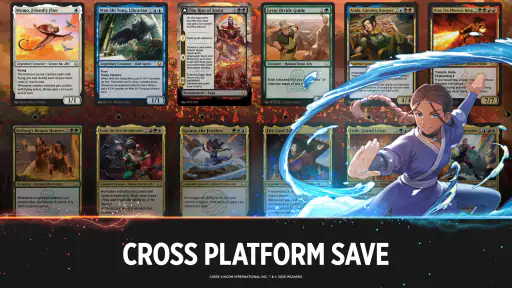
Magic: The Gathering Arena is available on multiple platforms, including Windows PC, macOS, iOS, and Android devices. This cross-platform availability allows players to enjoy the game on their preferred devices, whether they are at home or on the go. The app is designed to provide a seamless experience across all supported platforms, ensuring accessibility for all players.
Do I need a Magic: The Gathering account to play Arena?
Yes, players need to create a Wizards of the Coast account to play Magic: The Gathering Arena. This account is used to track progress, manage collections, and participate in events. Creating an account is simple and free, and it ensures that players' data and purchases are securely stored. Existing Magic: The Gathering players can link their Wizards account for a cohesive experience across products.
Can I play Magic: The Gathering Arena offline?
No, Magic: The Gathering Arena requires an internet connection to play. The game is designed to be an online multiplayer experience, allowing players to compete against others from around the world. Regular updates and events also necessitate an online connection to ensure players have access to the latest content and features. An internet connection is essential for a complete gaming experience.


