

Lowriders Comeback 2: Cruising
- Reviews
- 4.3
- Version
- 3.3.4
- Installs
- 50,000+

Screenshots
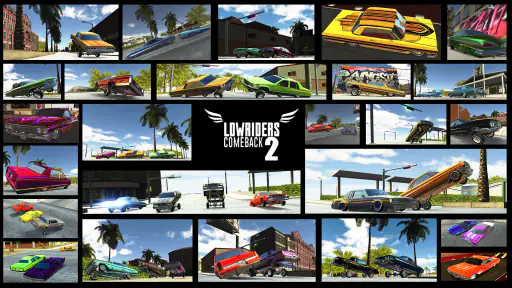
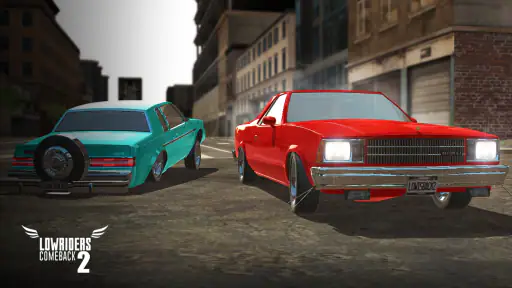
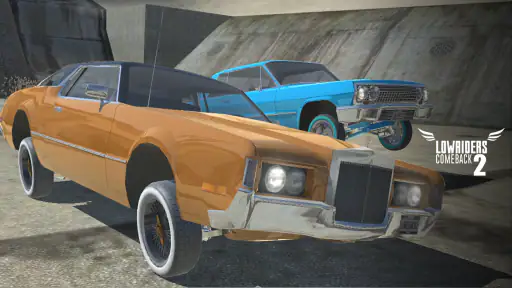
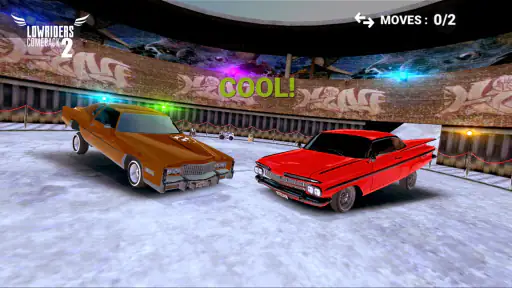
 Analysis by Frivlyz
I tend to enjoy music games most when they give me more to do than chase a perfect score. Lowriders Comeback 2: Cruising takes a different route: its appeal is the car culture, the chance to shape a ride, and the laid-back pleasure of showing it off. That makes it a more specific choice than a typical rhythm game, but a potentially satisfying one if you like lowriders as much as musical play.
Where the game stands now
Beast Bros. Games released this music game on November 6, 2016, and its current version is 3.3.4. It has an average rating of 4.3 from around 2,300 ratings, with more than 50,000 installs. Those figures suggest that it has found a modest audience, though they do not tell me whether its particular blend of cruising and music will suit you. I would judge it by whether you want a focused car-themed pastime, not by expecting the broad song library or score-chasing structure of a mainstream rhythm title.
The game costs $0.49, and optional in-app purchases range from $1.49 to $43.99 per item. I’d treat the purchase price and those optional extras as two separate decisions: first decide whether the core idea appeals to you, then consider whether any additional spending would genuinely improve your own play. It is rated Everyone, and the listed minimum operating-system requirement is version 12, so it is aimed at a broad audience but still needs a compatible device.
Making a car feel like yours
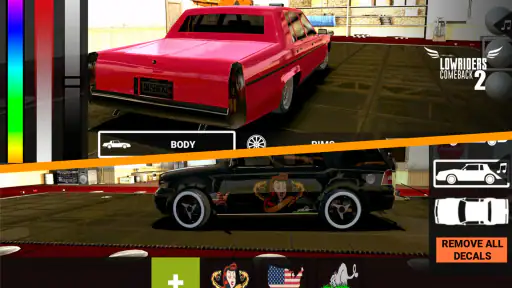
The first draw is the focus on personalizing classic cars. A lowrider is as much about the look and the statement as it is about getting from one place to another, and the customization angle gives players a reason to spend time with the vehicle before heading out. Paint, upholstery patterns, decals, neon, and the bouncing effect are all described as part of the experience. I would approach those options as a creative process rather than a checklist: settle on a look you like, try a contrasting detail, and stop when the car feels coherent instead of simply adding every available flourish.
There is a useful trade-off here. Players who enjoy tinkering can make the car itself the main project, while anyone who wants to unlock a new challenge every few minutes may find customization slower than a conventional music game’s quick song-and-score loop. I’d also avoid assuming that more decoration automatically makes a better design. A restrained paint scheme with one distinctive accent can be more memorable than piling on every visual option, especially if your aim is to give the car a recognizable identity.
Taking the ride out
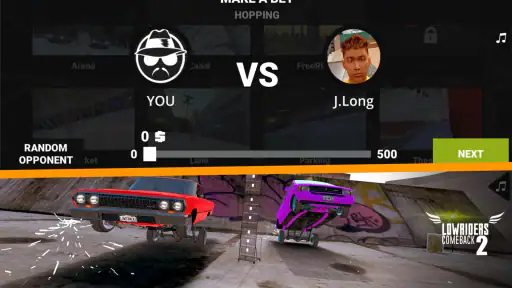
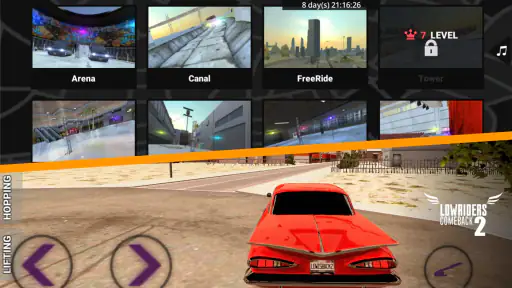
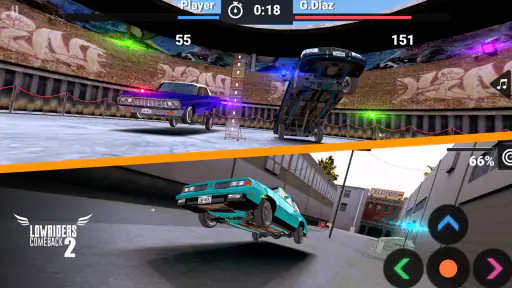
After working on a car, you can take it cruising through city environments, use the controls to move around, and enjoy the game’s hopping and dancing side. The description also points to freeride cruising, so the experience is not framed only as a sequence of score-focused music tests. That difference matters if you want to spend a short session exploring and showing your build rather than replaying a track until you improve a result.
A practical way to try it is to begin with a brief session and focus on one thing at a time: first get comfortable moving the car, then experiment with the lowrider action, and only after that spend longer adjusting its appearance. Splitting those activities makes it easier to tell whether you enjoy the driving feel or are mainly drawn to customization. If the controls do not click for you, a more traditional rhythm game may be a better fit; if the visual identity and casual cruising are what you want, the less score-centred structure may be a welcome change.
Gaming Stories You May Enjoy

Dancing Road Turns Short Breaks Into a Test of Rhythm and Timing

Super Stylist Makes Every Outfit a Test of Taste and Patience

Dominoes on Your Terms: Who Should Play and Who Should Pass

Pokémon GO Makes the Familiar World Feel New

Chess.com Turns Rematches Into Rivalries, but Community Has Its Costs

Archery Battle 3D Review: Sharp Aiming, Unclear Feedback
Who will enjoy the pace
I can see this working well for someone who likes car styling, wants a music-themed game that does not feel like a straight-up instrument simulator, or enjoys returning to a vehicle to make small visual changes. It also suits a player who wants a casual diversion rather than a demanding session that requires full concentration from start to finish. The lowrider theme gives it a clear personality, which is more appealing to me than a generic music game that could be swapped for dozens of similar titles without changing the mood.
For example, if you have a few minutes while waiting for a friend, you could open the game, choose a detail to adjust, and take the car out for a short cruise. That is a more realistic use than expecting it to fill a long commute or replace a carefully curated music playlist. The value comes from doing something with the lowrider aesthetic, not from treating the game as a music player. If you mainly want to listen to songs, use a music app; if you want tight timing challenges and a large catalogue of tracks, look for a rhythm game built around those priorities.
How it differs from familiar music games
Most music games put the song first: you follow prompts, keep time, and measure progress through a score or a performance grade. This one gives the car and its presentation a larger role, with cruising and customization shaping the experience. That makes it an unusual alternative for players who like music games but are tired of tapping notes against a track. It is not automatically a better choice, though. If precise rhythm input is the main reason you play, a conventional rhythm title is likely to offer a clearer match for that need.
It also differs from a pure driving game. The attraction is not simply getting from point A to point B as quickly as possible; the lowrider look and movement are part of the fantasy. I would not choose it as a substitute for a realistic driving simulator or a serious racing game. Instead, think of it as a themed, casual hybrid: it lets you enjoy the identity of a customized ride while keeping music and playful movement in the picture.
Small choices that make a session better
One useful approach is to give each session a narrow goal. On one visit, focus on the car’s appearance; on another, spend your time cruising and getting comfortable with the controls. This avoids turning every play session into a long hunt for the perfect combination of upgrades and decorations. It also helps you decide what you actually value before considering any optional purchase. Since the game has in-app items, I’d make that decision only after I know which part of the experience I keep coming back for.
Another tip is to think of customization as a way to express a theme. Pick a main color, then choose a small number of details that support it rather than treating each option as something that must be used. This is a personal design choice, not a gameplay advantage, but it gives the car a more deliberate look and makes experimenting feel purposeful. If your interest is mainly in seeing different styles, try changing one element at a time so you can tell what actually improves the overall design.
The other trade-off is that the game’s distinctive theme will not appeal equally to everyone. Someone with no interest in lowriders may see the customization as busywork, while a fan of the culture may find it central to the fun. The best way to set expectations is to decide whether you want a relaxed, visual car experience with musical elements or a demanding game built around rhythm accuracy. Those are different kinds of entertainment, and choosing the right one matters more than chasing a high rating.
What to expect from its evolution
The version number shows that the game has reached 3.3.4, but a version label by itself does not explain which features changed or how the game has evolved. I would not read it as a promise of a particular new mode or a guarantee that every part of the experience has been refreshed. For someone who has played before, the sensible approach is to check the current build on their device and see whether the familiar cruising and customization still feel enjoyable, rather than assuming a specific update transformed the game.
For a new player, that same distinction keeps expectations grounded: the current version is the one to evaluate, while future improvements are only something to watch for, not a reason to buy today. I’d pay attention to whether the controls remain comfortable, whether the customization choices keep me interested, and whether cruising feels like a satisfying activity after the novelty wears off. Those are the details that will determine the game’s staying power for me more than a version number alone.
Where it may not be the right choice
I would skip it if I wanted a deep racing career, realistic vehicle handling, a large track-based song challenge, or a game whose main point is competing for precise scores. It is also a poor fit if I dislike spending time on visual choices or prefer games that explain their appeal through a straightforward sequence of levels. Its niche is a strength when you like the lowrider theme, but it narrows the audience compared with broad rhythm games.
The price is low, but the optional purchases deserve a little thought because their listed range is wide. I would not spend extra just because an item is available; first see whether the base experience holds your attention and whether a purchase addresses something you personally want. That simple rule helps keep the game’s casual appeal from turning into pressure to collect everything. For a younger player, the Everyone age rating is reassuring, while an adult can still decide whether optional spending should be restricted on the device.
A personal verdict on the ride
What I like about Lowriders Comeback 2: Cruising is that it has a recognizable point of view. It is not trying to be every kind of music game at once; it leans into lowrider styling, cruising, and a relaxed sense of performance. The strongest reason to try it is that combination. The main reason to pass is equally clear: if the cars and the culture do not interest you, the central attraction may not be enough to hold your attention.
For me, it makes the most sense as an occasional pick-up-and-play game: spend a little time refining a car, take it out, and enjoy the mood without expecting a full driving simulation or a conventional rhythm challenge. Beast Bros. Games has a focused concept here, and the modest entry price makes trying that concept fairly approachable, provided your device meets the operating-system requirement and you keep optional purchases in perspective. If the idea of shaping a distinctive lowrider and cruising with music sounds appealing, I’d give it a try; if you want speed, realism, or demanding beat-matching, I’d choose a different game.
The Heart of Lowriding
When you first dive into Lowriders Comeback 2: Cruising, you’re immediately met with a selection of classic cars that you can customize to your heart's content. The attention to detail is astounding, from the glossy paint jobs to the intricate patterns on the upholstery. It’s all about expressing yourself and making sure your ride stands out in the most spectacular way possible.
Customization Galore
One of the standout features of this app is the sheer depth of customization available. Want a car that bounces higher than your neighbor's? You got it. Feel like adding some flashy decals or neon lights? No problem. The game offers a plethora of options to ensure your car is uniquely yours. It’s easy to lose track of time while tweaking every detail to perfection.
Hitting the Streets
Once your car is decked out, it’s time to hit the streets. The game lets you cruise through beautifully rendered cityscapes, each filled with other players who are eager to show off their rides. The controls are intuitive, allowing for smooth navigation as you join in on impromptu car meet-ups or take part in competitions to see whose lowrider reigns supreme.
Community Vibes
What really sets this game apart is its community. Players are friendly and there's a real sense of camaraderie. Whether you're a veteran or a newcomer to the lowrider scene, you’ll find people ready to help you out or just have a good time. It’s like being part of a virtual car club, complete with all the fun and none of the drama.
In conclusion, if you're looking for a game that's both visually stunning and deeply engaging, Lowriders Comeback 2: Cruising should be at the top of your list. With its rich customization options, beautiful graphics, and a welcoming community, it's more than just a game; it's an experience. So hop in, crank up the tunes, and enjoy the ride!
Lowriders Comeback 2: Cruising Pros and Cons
Pros
- Realistic car physics enhance gameplay.
- Wide range of customization options.
- Active community for multiplayer challenges.
- Regular updates with new content.
- Immersive graphics and sound effects.
Cons
- In-app purchases can be costly.
- Requires stable internet connection.
- Occasional bugs affecting gameplay.
- High battery consumption on devices.
- Limited offline game features.
Frequently Asked Questions
What is Lowriders Comeback 2: Cruising and what can I expect from this game?
Lowriders Comeback 2: Cruising is a car simulation game that celebrates the culture of lowrider cars. Players can expect to customize their vehicles extensively, participate in various missions, and compete in hopping and dancing car contests. The game offers a realistic experience with detailed graphics and physics, making it a must-try for car enthusiasts.
How can I customize my car in Lowriders Comeback 2: Cruising?
In Lowriders Comeback 2: Cruising, customization is a key feature. Players can personalize their cars by choosing from a variety of paint jobs, wheels, and hydraulic setups. The game offers a wide range of options to modify both the appearance and performance of the vehicles, allowing players to create unique lowriders that reflect their style.
Is Lowriders Comeback 2: Cruising suitable for all age groups?
Lowriders Comeback 2: Cruising is generally suitable for a wide range of age groups, primarily targeting teenagers and adults who have an interest in car culture. The game does not contain explicit content but involves competitive elements and car customization, which might be more appealing to older players. Parents should consider the interest level and maturity of younger players.
Does Lowriders Comeback 2: Cruising require an internet connection to play?
While Lowriders Comeback 2: Cruising offers offline play, an internet connection is recommended to access all features, such as online competitions and updates. Playing offline may limit certain interactive elements and social features, but players can still enjoy the core gameplay and car customization without connectivity.
What platforms is Lowriders Comeback 2: Cruising available on?
Lowriders Comeback 2: Cruising is available on both Android and iOS platforms, making it accessible to a wide audience of mobile gamers. Players can download the game from the Google Play Store for Android devices or the Apple App Store for iOS devices, ensuring compatibility with most modern smartphones and tablets.


