

Like A Dino!
- Reviews
- 4.9
- Version
- 2.6.5
- Installs
- 10,000,000+

Screenshots
 Analysis by Frivlyz
If you’re on the hunt for a quirky, fun, and utterly delightful game to brighten up your day, then let me introduce you to Like A Dino!. I stumbled upon this gem while browsing through the app store, and boy, am I glad I did! This game is like a burst of sunshine, perfect for those moments when you just need a little pick-me-up.
Why this small rhythm game works in short bursts
I find the appeal easiest to understand when I think of the moments that usually turn into aimless phone scrolling: waiting for someone to arrive, taking a brief break between tasks, or settling down when I want something light rather than a demanding game. Like A Dino! fits that mood because its musical play and simple central action are easy to grasp. I can focus on the tune and the moving notes without first learning a complicated set of rules.
That simplicity is also a useful expectation to set. This is a music game, not a full music-learning tool or a deep strategy game. I would choose it for a cheerful change of pace, not to practise an instrument, build a playlist, or compete in a long session that requires careful planning. The fun comes from following the beat and seeing the dinosaur respond, so it works best when I let it be a small diversion rather than asking it to provide a different kind of experience.
A realistic way I would use it is during a short wait when I have enough attention to follow a song but not enough time to start a larger game. I can open it, play for a little while, and put it away without needing to remember a complicated campaign or pick up a long story later. If I am somewhere that needs quiet, though, I would be considerate about sound and use the game only in a way that suits the setting; a musical game is not automatically a good fit for every waiting room or shared space.
Where players may get stuck
The main point of friction is likely to be the timing. The idea is straightforward, but a player still has to watch where the notes are falling and move the dino to catch them. If I tap without paying attention to the rhythm, I can lose the comfortable flow that makes the game enjoyable. When a run feels messy, I would first slow down mentally and follow the notes on screen rather than trying to make quick, repeated movements.
It is also worth remembering that a simple control scheme does not mean every moment will feel identical. The music gives the play its pace, and a person who prefers games with detailed instructions, many strategic choices, or a long progression may find this one too slight. That is not a defect for the kind of quick musical game it is; it is a trade-off. I would recommend it to someone who wants an uncomplicated rhythm-led break, but not to a player looking for an elaborate challenge with lots of systems to master.
For younger players, the friendly presentation makes the game easy to approach, but I would still keep ordinary device habits in mind: set a reasonable play break, keep the volume appropriate, and make sure a child knows how to leave the game when it is time to stop. The game’s Everyone age rating makes it broadly suitable, but a family’s screen-time preferences and the situation still matter. A pleasant game can be a good shared choice without needing to become the default activity for every spare moment.
Gaming Stories You May Enjoy

Dancing Road Turns Short Breaks Into a Test of Rhythm and Timing

Super Stylist Makes Every Outfit a Test of Taste and Patience

Dominoes on Your Terms: Who Should Play and Who Should Pass

Pokémon GO Makes the Familiar World Feel New

Chess.com Turns Rematches Into Rivalries, but Community Has Its Costs

Archery Battle 3D Review: Sharp Aiming, Unclear Feedback
Simple setup checks before playing
The game is free and is listed for devices running Android 5.0 or later. If it will not install or open as expected, I would start with the basics: check that the device has enough available storage, confirm that its operating system meets that requirement, and make sure the download has completed. These are ordinary checks rather than special tricks, but they can prevent a player from blaming the gameplay for a problem that began before the first song.
Like A Dino! is made by super_toki, and version 2.6.5 is the current version named here. If the game behaves oddly, I would check whether an update is available through the usual app store on the device and then try opening it again. I would avoid assuming that every slowdown means the game itself is at fault: a busy device, a temporary interruption, or limited storage can affect many apps. Starting with the simplest checks is less frustrating than changing several settings at once and then not knowing what helped.
Because the game relies on music, the listening setup can shape the experience as much as the screen does. Before deciding that the timing feels wrong, I would check the device’s volume and make sure sound is coming through the intended speaker or headphones. If I am playing in a noisy place, I may simply be missing part of the musical cue; moving somewhere quieter or waiting until I can hear clearly is a better test than repeatedly tapping faster. That small distinction matters: the controls may be simple, but the rhythm is part of how the game feels.
Playing well without turning it into a chore
I find the best way to enjoy a short rhythm game is to make each session intentional: choose a moment when I can listen, focus on the screen, and stop when the break is over. That keeps a playful round from becoming a frustrating test of persistence. It also makes it easier to tell whether I’m enjoying the music and timing themselves, which is the useful question to consider next.
A practical way to recover a disrupted session
If a session is interrupted, I would treat the next attempt as a fresh short play rather than trying to force my way back into the same rhythm immediately. Put the phone down for a moment, check that the game is still responding, then resume when I can give the screen and music a little attention. If the app has stopped responding, closing it and reopening it is a reasonable first step; if that does not help, I would restart the device before considering more disruptive troubleshooting.
I would also change only one thing at a time. For example, if the sound seems off, check the volume first and test again before changing other settings. If the display or response seems sluggish, close other demanding apps and try again. This makes it easier to tell whether the issue was a temporary device slowdown or something specific to the game. I would not clear app data or uninstall immediately, especially if I care about preserving local progress; those steps can have consequences, so they are better treated as later options after simpler checks.
There is a useful distinction between a difficult run and a technical problem. Missing notes because I was distracted, playing in a noisy place, or trying to do something else at the same time is not evidence that the controls failed. I would replay when I can focus instead of making a string of rushed attempts. For a casual rhythm game, that is often the most practical reset: return to the music, let the pace settle, and decide whether the experience is enjoyable at that moment.
When the problem may be outside the game
If the game will not download, opens slowly, or behaves differently from one attempt to another, I would check the device and connection before drawing conclusions about the app. A weak or interrupted internet connection can affect downloads and other online activity, while low free storage or many open apps can make a phone feel generally sluggish. Trying again after the connection is stable, freeing a little space, or restarting the device can help narrow down the cause without guessing at a hidden setting.
For an issue that continues, I would note what happened and when: for example, whether it occurred during installation, on launch, or while playing. Then I would check the app’s store page for a newer version and use the store’s normal support options if needed. That is more useful than repeatedly reinstalling or changing unrelated settings. I would not assume that a particular permission, account, or network feature is required unless the device itself clearly asks for it; keeping troubleshooting grounded in what I can see avoids creating extra problems.
One trade-off with a music-focused game is that the best moment to play depends on the environment. If I cannot hear the tune or need to keep my attention on a conversation, a rhythm session may be a poor fit even when the app is working perfectly. In that situation, I would save it for a quieter break rather than treating the surroundings as a technical fault. For someone who wants a game that can be played entirely by glancing at the screen with no attention to sound, a different casual game may suit better.
How it compares with other ways to pass the time
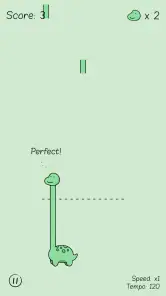
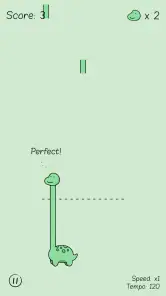
Compared with a larger mobile game, this one asks for less commitment and gives me a more immediate musical focus. I do not need to approach it as a long project; the appeal is the straightforward loop of watching notes, following the rhythm, and seeing the long-necked dinosaur grow as notes are collected. That makes it a good alternative to a more demanding game when I want a lighter mood, although anyone seeking a story, complex progression, or a broad set of strategic decisions should look elsewhere.
Compared with a conventional rhythm game built around intense precision or a serious attempt to practise music, Like A Dino! feels more playful than instructional. Its cartoon dinosaur and cheerful presentation are central to its charm. I would not use it as a substitute for music lessons, and I would not expect a relaxing visual style to remove the need to pay attention to the beat. The useful middle ground is that it gives me a musical activity without asking me to treat every session like training.
It also differs from simply listening to music. Listening is better when I want to relax without interacting; this game is better when I want a small task to accompany the tune. That interaction is the reason to choose it, but it also means it is not ideal for multitasking. If I am working, walking through a busy area, or having a conversation that needs my attention, I would leave the game closed. In a quiet pause, its focused little loop makes more sense than another app competing for my attention.
Who is likely to enjoy it—and who may not
I would point casual players toward it if they like cute character art, simple musical play, and games that can fit naturally into spare minutes. It is also an approachable choice for someone who does not identify as a gamer but wants something more interactive than watching a video. The age rating is Everyone, and the accessible premise makes it easy to imagine sharing the game with younger family members, while still using normal judgment about device time and the place where it is played.
I would hesitate to recommend it to someone who needs a demanding challenge, extensive options, or a strong reason to return over a long period. A player who wants to practise reading music or improve an instrument skill should choose a dedicated learning tool instead. Likewise, if repetitive timing games quickly lose their appeal, the core idea may not offer enough variety for that person. Knowing this before downloading is helpful: its charm comes from doing one simple thing pleasantly, not from trying to be every kind of game at once.
The game has a 4.9 average from around 594,000 ratings, with roughly 45,000 written reviews and more than 10 million installs. Those figures suggest that it has found a sizable audience, but I would still judge it by whether its particular rhythm-and-dinosaur combination suits my taste. A popular casual game can be a lovely fit for one person and too slight for another; the best reason to try it is the promise of a cheerful, uncomplicated musical break, not popularity by itself.
The Gameplay Experience
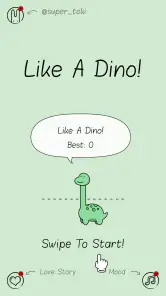
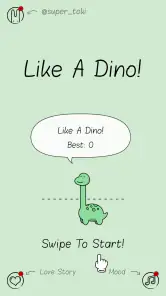
From the moment you launch the app, you’re greeted with vibrant colors and cheerful tunes. The interface is straightforward, making it easy for anyone to pick up and play. As the music plays, notes fall from the top of the screen, and your job is to move the dino to catch them. The more notes you catch, the longer your dino’s neck grows. It’s hilarious and adorable to watch your dino’s neck stretch to impossible lengths!
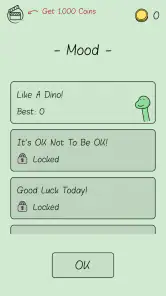
What I love about this game is that it’s not just about the points or the score; it’s about enjoying the music and the playful graphics. Each level features a different song, each one as catchy as the last. The developers have done a fantastic job of selecting tunes that are both engaging and fun.
Why You’ll Love It
This game is a perfect blend of entertainment and relaxation. Whether you’re waiting for a friend or just chilling at home, it’s a great way to pass the time. Plus, it’s one of those games that’s suitable for all ages. Kids will love the cute dinosaurs and cheerful music, while adults will appreciate the simplicity and stress-free gameplay. It’s like having a little escape right in your pocket.
Another thing to highlight is the game’s design. It’s clear that a lot of thought went into making everything aesthetically pleasing. The dinosaurs are adorably animated, and the color palette is pleasing to the eyes. It’s hard not to smile when playing!
Final Thoughts
Overall, Like A Dino! is a delightful addition to any game library. It’s one of those rare finds that manages to be both entertaining and soothing. Whether you’re a seasoned gamer or someone who just dabbles in mobile games, this is one app you’ll want to try. So, give it a download, and let yourself be charmed by the cheerful tunes and those endearing dinos. Trust me; it’ll be a hit with both you and your little ones!
In a world where apps often complicate life, it’s refreshing to find a game that reminds us of the simple joys. So go ahead, tap that download button, and enjoy the ride. Happy gaming!
Like A Dino! Pros and Cons
Pros
- Adorable dinosaur graphics.
- Simple and engaging gameplay.
- Great for all ages.
- Offline play available.
- Free to download.
Cons
- Limited level variety.
- Lacks multiplayer options.
- Ads can be intrusive.
- No in-app purchases.
- Minimal sound effects.
Frequently Asked Questions
What is Like A Dino! and how does it work?
Like A Dino! is a rhythm-based music game where players control a cute dinosaur character. The main objective is to catch falling notes in sync with the music, allowing players to earn points and progress through various levels. The game's mechanics are simple yet engaging, making it suitable for players of all ages who enjoy music and rhythm challenges.
Is Like A Dino! free to play or does it require in-app purchases?
Like A Dino! is free to download and play, providing access to a variety of levels and songs. However, the game may include optional in-app purchases, such as additional songs or cosmetic upgrades for your dinosaur character. These purchases are not necessary to enjoy the core gameplay but can enhance the overall experience for those who wish to expand their options.
What devices are compatible with Like A Dino!?
Like A Dino! is available on both Android and iOS platforms, ensuring broad compatibility with a wide range of devices. Players can download the game from the Google Play Store and Apple App Store. It's recommended to have a device with an updated operating system to ensure smooth gameplay and access to the latest features and updates.
Does Like A Dino! require an internet connection to play?
While Like A Dino! can be played offline, an internet connection is recommended to access certain features, such as downloading new songs or syncing progress across devices. Playing online also allows players to participate in occasional events and updates that enhance the gaming experience, although the core gameplay remains accessible offline.
How can I improve my skills in Like A Dino!?
Improving your skills in Like A Dino! involves regular practice and familiarizing yourself with the rhythm of different songs. Players can start with easier levels to build their sense of timing and gradually move on to more challenging tracks. Additionally, paying attention to the visual cues and staying focused during gameplay can help improve accuracy and performance over time.


