

Legendary Tales 1
- Reviews
- 4.7
- Version
- 2.0.8.1597.257
- Installs
- 1,000,000+

Screenshots
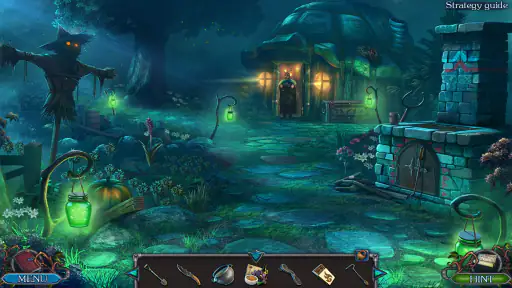
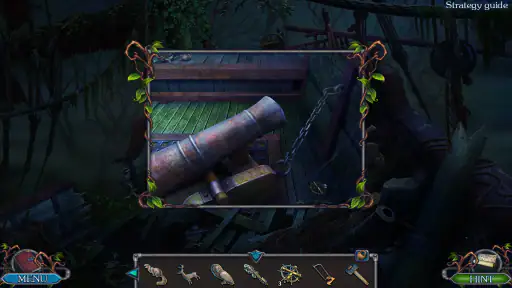
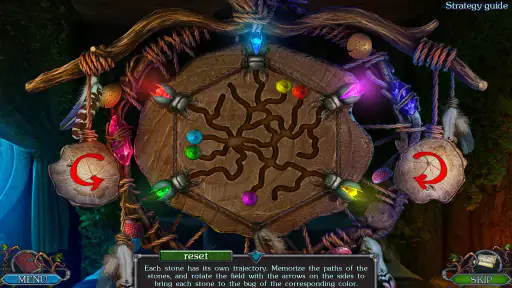
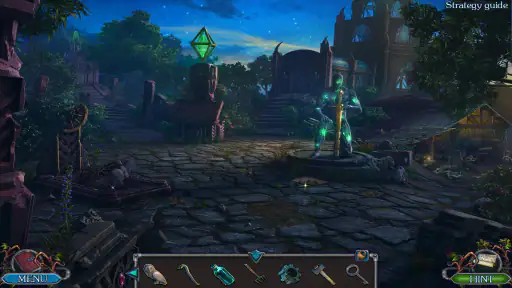
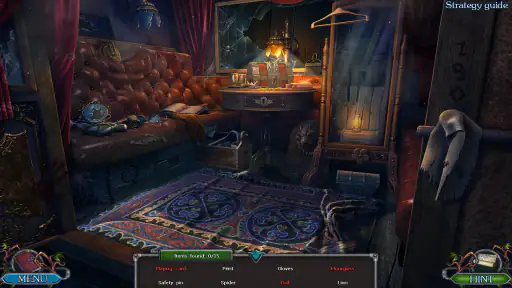
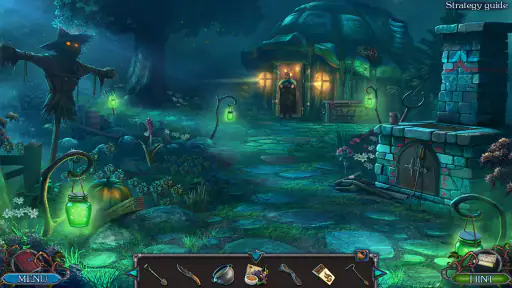
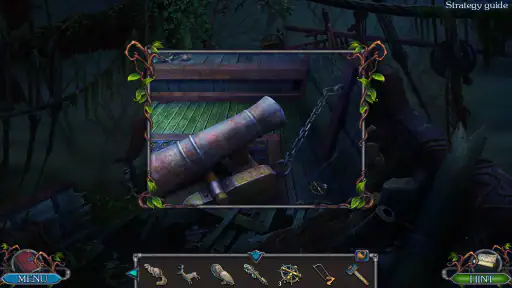
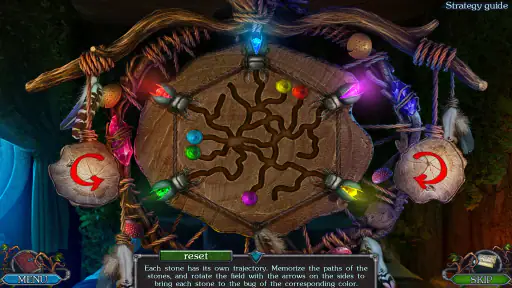
 Analysis by Frivlyz
Some adventure games grab me with constant action, while others work by making me curious about the next room, clue, or conversation. Legendary Tales 1 belongs firmly in the second group. I approached it as a story-led mystery adventure from FIVE-BN GAMES, and what stayed with me was its ability to make a damaged family history feel like a place I wanted to investigate rather than a plot I simply watched.
The central premise begins with a peaceful family life being destroyed, but the game does not rely on that sentence alone to create interest. Its real appeal comes from the way it turns that personal disaster into a chain of exploration, observation, and problem-solving. I spent much of my time looking closely at scenes, testing objects, connecting clues, and deciding which detail might matter later. That makes it a good fit for players who enjoy a calm, visual adventure with a serious story underneath.
It is free to start, carries an Everyone age rating, and has reached over one million installs. Its average rating is 4.7 from around 56 thousand ratings, which matches my overall impression: this is a polished choice for the right kind of player, especially someone who prefers atmosphere and discovery over reflexes. It is not a quick arcade diversion, and it is not the best pick if you want combat, competitive play, or a constantly changing challenge.
A first look at the mystery and its playable mood
My first impression was shaped less by a single spectacular mechanic and more by the confidence of the presentation. The game wants me to slow down. Its scenes are arranged as places to inspect, not just backgrounds between action sequences, and the family-centered story gives each location an emotional reason to exist. I was not merely searching for a random key; I was trying to understand what had happened and what the characters had lost.
That distinction matters. Many mobile adventure games present a string of puzzles with a thin story connecting them. Here, the narrative gives the investigation a stronger purpose. Even when I was working through a small obstacle, I had a sense that the solution belonged to the world rather than being placed there only to delay progress. The result is a more coherent experience, although it also means the game asks for patience when the next step is not immediately obvious.
The game is free, but optional in-app items range from $0.99 to $14.99 per item. I would approach that arrangement with a simple rule: enjoy the opening and decide whether the pacing suits you before spending anything. A story-driven puzzle adventure can lose much of its satisfaction if every difficult moment is treated as a reason to make a purchase. For me, the better experience is to investigate carefully first, use the environment intelligently, and treat optional spending as a convenience rather than a substitute for attention.
One practical habit helped me from the beginning: when I entered a new location, I looked at the whole scene before tapping repeatedly. I noted unusual shapes, incomplete objects, doors that seemed important, and anything visually separated from the background. This reduced random tapping and made the investigation feel more deliberate. It also helped me remember where an item might belong, which is useful in an adventure game where progress often depends on recognizing relationships rather than simply collecting everything in sight.
Gaming Stories You May Enjoy

Dancing Road Turns Short Breaks Into a Test of Rhythm and Timing

Super Stylist Makes Every Outfit a Test of Taste and Patience

Dominoes on Your Terms: Who Should Play and Who Should Pass

Pokémon GO Makes the Familiar World Feel New

Chess.com Turns Rematches Into Rivalries, but Community Has Its Costs

Archery Battle 3D Review: Sharp Aiming, Unclear Feedback
Why the family story gives exploration weight
The story's strongest contribution is emotional direction. A peaceful household has been broken, so the setting is not neutral. Rooms, paths, and objects carry the suggestion of a before and an after. I found myself reading ordinary details as evidence of a life that once had structure. That is more effective than a mystery built only from dramatic announcements because the player discovers the damage through the environment.
I also appreciated that the game does not need frantic pacing to make the situation feel urgent. The tension comes from questions: what caused the collapse, who was affected, and which apparently small clue might change the picture? This is a slower form of suspense, but it suits the investigative format. If you usually skip dialogue and rush toward the next puzzle, some of the emotional context may pass you by.
How the visual language builds a world to examine
The art direction is doing practical work, not merely decorating the screen. The locations are composed so that I can search them for meaning. Objects need to stand out enough to invite inspection while still belonging naturally to the setting. When that balance works, I feel like I am investigating a real place rather than scanning a flat list of clickable items.
What I liked most was the connection between mood and readability. The game can present a troubled world without turning every scene into visual noise. The atmosphere remains serious, but the important details are still approachable on a phone screen. That makes it easier to play in short sessions, provided I am willing to pause and observe rather than treating the screen like a rapid-fire puzzle board.
This is also where the setting separates the game from more generic hidden-object alternatives. In a typical casual search game, the main pleasure may be finding a set of unrelated objects as quickly as possible. Here, I was more interested in why an object was present, what it suggested about the location, and how it might connect to the family story. The visual design turns searching into interpretation.
A useful technique is to distinguish between visual decoration and narrative emphasis. I first examine anything that looks unusually positioned, damaged, incomplete, or repeated. Then I return to broader scenery only if the game gives me a reason. This approach is faster than tapping every corner, but it also preserves the feeling of discovery. The best solutions often come from noticing a relationship between two details, not from finding the brightest object on the screen.
Setting as a playable clue rather than a backdrop
The setting works because it creates a consistent emotional vocabulary. Peace, loss, uncertainty, and investigation are reflected in the places I move through. I never felt that the story and the scenery were pulling in completely different directions. Even when a puzzle is self-contained, it belongs to the same world of consequences and unanswered questions.
That coherence is especially valuable on a mobile device. I can play for a while, stop, and return later without feeling that I have switched between unrelated mini-games. The visual identity helps me remember the tone and the broad purpose of the investigation. For players who enjoy narrative continuity, this is a meaningful advantage over collections of disconnected puzzles.
There is a trade-off, though. A visually rich adventure scene can make it harder to know what deserves attention, particularly when I am tired or playing on a smaller display. I found that increasing focus through slower examination worked better than tapping faster. If you dislike inspecting scenery or revisiting locations, the same design choice may feel like unnecessary friction.
Sound, silence, and the rhythm of investigation
The audio contributes to the game's mood by supporting its quiet tension rather than competing with it. I experienced the sound as part of the environment: something that helps a location feel inhabited, mysterious, or unsettled while leaving room for the visual clues to lead. That restraint suits the subject matter. A louder, more dramatic presentation would have pushed the game toward action, while its real strength is patient investigation.
The rhythm is similarly controlled. Progress tends to come in small discoveries: inspect a place, understand an obstacle, find a useful connection, and then see the story move forward. I enjoyed that cycle because it gave ordinary actions narrative value. The game does not need a constant stream of explosions or timed reactions to make me feel that I am advancing.
This pacing makes it easy to fit into an everyday routine. I could play during a quiet break, complete a small section of investigation, and put the phone down without feeling that I had abandoned a competitive match. On the other hand, players looking for instant rewards may find the opening too measured. The game expects attention, and its atmosphere is less effective when played while distracted by other tasks.
One of my better habits was to stop after a major discovery instead of immediately opening another session. That gave me time to remember the new information and made the next play period feel more focused. In a mystery adventure, remembering context is part of the challenge. Treating each session like a short reading chapter worked better for me than trying to rush through several locations at once.
When the pacing helps and when it gets in the way
The slow rhythm is a strength when I want a thoughtful evening game. It gives the setting space to breathe and lets the family story develop through observation. It is less suitable when I have only a minute or two and want a clear, self-contained challenge. Although a short session is possible, the emotional payoff depends on remembering what I was investigating.
I also noticed that the game rewards persistence more than speed. If I became stuck, randomly tapping was rarely satisfying. Returning to the scene with a fresh question worked better: what object has not been used, what location has changed, and which clue has not yet been interpreted? This is a genuine trade-off. The game feels more rewarding when I solve a problem through reasoning, but it can feel slower than a more guided casual puzzle app.
For someone who plays with sound muted, the adventure remains understandable because the visual investigation and story carry the experience. Still, the mood loses some of its texture. I would recommend headphones when I want the most immersive session, not because the game becomes unplayable without them, but because the quieter presentation is part of what makes the world feel unified.
Do the mechanics support the story?
The mechanics fit the narrative because they make me behave like an investigator. I search, inspect, combine ideas, and return to places with a better understanding of what I am looking for. That is a stronger match than adding unrelated action mechanics to a family mystery. The game asks me to pay attention to the world, and the world gives me reasons to do so.
The main mechanical appeal is the relationship between observation and progress. A clue is not valuable only because it unlocks a door; it can also clarify the situation. That makes the act of solving feel meaningful. I prefer this approach to puzzles that exist purely as abstract locks, although it depends on the player accepting that some answers may require patience and a willingness to reconsider earlier scenes.
Compared with a traditional action adventure, this is much more relaxed. There is no reason to choose it if your priority is combat, fast movement, or a high-pressure challenge. Compared with a basic hidden-object game, it offers a more connected narrative purpose. Compared with a purely linear visual story, it gives me more agency because I have to notice and interpret the path forward.
That middle position is the game's clearest identity. It is not just a picture book, but it is also not a mechanically demanding adventure in the console sense. I would recommend it to someone who wants to participate in a mystery without needing quick reflexes. I would steer a competitive player, a platforming fan, or anyone seeking multiplayer interaction toward a different type of game.
Practical ways to avoid frustration
I found three approaches particularly useful. First, I kept track of unresolved locations mentally instead of assuming that every new clue belonged to the room where I found it. Adventure games often build progress through connections across areas, and this one is more enjoyable when I think in terms of the whole investigation.
Second, I avoided spending optional items simply because a puzzle took longer than expected. The satisfaction comes from recognizing the solution, so I would only consider a purchase if I had already decided that convenience mattered more than solving everything independently. The free entry point makes it reasonable to test my patience and preferences before making that choice.
Third, I treated visual changes as information. If an area looks slightly different after a story event, I revisit it with purpose. This is more efficient than repeatedly checking every location without a question in mind. It also highlights one of the game's less obvious strengths: the environment is not just a container for objects; it is part of the progression system.
The current version is 2.0.8.1597.257, and it supports devices running Android 7.1 or later. That makes the game accessible to a broad range of Android users, although the exact comfort of playing will still depend on screen size and how easily I can inspect details. On a smaller phone, I prefer playing when I have enough light and time to look carefully rather than squeezing it into a rushed commute.
Who should play it and who should pass?
I think this is a strong choice for players who enjoy atmospheric adventure stories, visual clues, family mysteries, and puzzles that reward careful attention. It also suits people who want a game that can be played in calm sessions without demanding rapid reactions. The Everyone rating makes it approachable for a broad audience, but the serious subject matter may still appeal most to players who like emotionally shaded mysteries rather than cheerful casual games.
It is especially good for a player who enjoys discussing possible solutions, remembering details, and revisiting earlier assumptions. I can imagine playing it with a friend or family member nearby, taking turns examining a scene and explaining why a clue might matter. That kind of shared detective work is more rewarding here than simply handing the phone over for someone else to complete a timed challenge.
I would skip it if I want a game that explains every next move clearly, delivers constant action, or provides a quick reward in every minute of play. I would also be cautious if I dislike optional purchase systems in free games, even though the game can be approached as an investigation rather than a shopping exercise. Players who prefer open-ended exploration may find its story-led structure too directed, while players who want a tightly authored mystery may appreciate exactly that focus.
The audience response is encouraging, with around 1.7 thousand written reviews alongside its broad rating history. I do not treat popularity as proof that every player will enjoy it, but it does support my view that the game has found a clear audience. Its appeal is specific: it is for people who want a coherent mood, a visual world worth examining, and a measured story rather than a collection of unrelated mobile challenges.
My atmosphere verdict
After spending time with it, I see the game's greatest achievement as its unity. The art direction encourages observation, the setting gives clues emotional meaning, the sound supports quiet tension, and the pacing allows discoveries to land. The mechanics are not flashy, but they belong to the story. That is why the experience feels more memorable than a standard object-finding exercise.
There is friction, and I do not want to hide it. The measured pace can feel slow, visual searching can become demanding when I am distracted, and a stuck puzzle may tempt some players toward optional spending. The game also asks me to remember context instead of constantly spelling out the next task. Those are not defects for everyone, but they define the kind of attention the adventure expects.
For me, the best way to play is in quiet sessions, with sound available, a willingness to inspect scenes carefully, and enough patience to solve problems without immediately looking for shortcuts. I would start free, learn whether the family mystery and deliberate rhythm hold my interest, and only then decide whether any optional purchase is worthwhile.
Legendary Tales 1 is worth trying if you want an atmospheric Android adventure that treats its world as part of the mystery. I would recommend it to a friend who enjoys thoughtful exploration and story-connected puzzles. I would not recommend it to someone seeking speed or action. Within its chosen lane, however, it creates a convincing playable mood and gives the act of looking closely a genuine purpose.
Legendary Tales 1 Pros and Cons
Pros
- Atmospheric fantasy setting with detailed environments and eerie sound design.
- Puzzles are varied enough to keep exploration engaging without feeling repetitive.
- Hidden-object scenes offer optional hints when progress becomes difficult.
- Hand-drawn artwork gives characters and locations a distinctive visual style.
- Offline play makes it convenient for travel or areas with limited connectivity.
Cons
- Some puzzles rely on trial and error rather than clear visual clues.
- The story can feel brief if you complete it quickly.
- Certain item interactions are easy to miss on smaller phone screens.
- Movement between locations may feel slow during backtracking.
- Extra content and features may require an in-app purchase.
Frequently Asked Questions
What is Legendary Tales 1 about?
Legendary Tales 1 is a story-driven fantasy adventure game focused on exploration, mystery, and puzzle solving. You follow a compelling narrative through atmospheric locations, interact with characters, collect useful objects, and investigate clues to uncover what is really happening. The game is designed for players who enjoy immersive point-and-click adventures more than fast-paced combat or competitive gameplay.
Is Legendary Tales 1 free to download and play?
The game can generally be downloaded for free, but access to the complete adventure may depend on the version available through your platform. Some editions include an initial section at no cost and offer the remaining content through an in-app purchase. Before downloading, check the current store listing for pricing, included chapters, optional purchases, and whether the complete experience is available in your region.
Does Legendary Tales 1 work offline?
Most of the main gameplay in Legendary Tales 1 can be enjoyed without a constant internet connection once the required files have been installed. This makes it suitable for playing while traveling or in places with limited connectivity. However, an internet connection may still be needed for the first download, updates, purchases, license verification, advertisements, or restoring previously purchased content.
Is Legendary Tales 1 suitable for children?
Legendary Tales 1 is generally appropriate for players who enjoy fantasy mysteries, but parents should review the store age rating before allowing younger children to play. The game may include tense scenes, supernatural themes, dangerous situations, and story elements that could be unsettling for very young players. Its puzzles can also be challenging, so older children and adults may appreciate it most.
What devices are compatible with Legendary Tales 1?
Compatibility depends on the Android or iOS version available from the official app store, as well as your device’s operating system and available storage. The game may run well on many modern phones and tablets, but older hardware can experience slower loading, reduced performance, or installation problems. It is best to check the listing for supported system requirements and keep enough free space for updates.


