

Kpop Piano Star - Music Game
- Reviews
- 4.6
- Version
- 4.3.0
- Installs
- 10,000,000+

Screenshots


 Analysis by Frivlyz
I usually reach for a rhythm game when I have a few spare minutes and want something more active than putting on a playlist. Kpop Piano Star - Music Game is aimed at that quick, focused kind of play: it brings K-pop into a piano-tile format where listening and tapping have to happen together. I found the basic appeal easy to understand, especially if you already enjoy following a song closely rather than letting it play in the background.
It is a music game from Sonata Studio, and its focus is narrower than a general rhythm-game collection: K-pop songs and tile-tapping are the draw. That focus makes it a natural fit for fans who want their music interest built directly into the play, but it also sets expectations. If what you want is a broad music library, instrument practice, or a game built around story and exploration, this is not trying to be those things.
Small goals make the first sessions easy to approach
The most useful way to start is to treat each available song as a short practice goal instead of worrying about perfect runs right away. You can learn how the tiles arrive, how closely your taps need to match the beat, and which parts of a track demand the most attention. That makes the opening sessions approachable even if you are new to piano-tile games. For a K-pop listener, recognizing a song’s rhythm can make the first attempt feel familiar, though knowing a track does not automatically make its tile pattern easy.
The game’s appeal is also reflected in its reach: it has passed 10 million installs and holds an average rating of 4.6 from around 93,000 ratings. Those figures suggest that the simple music-and-tapping premise has found a sizable audience, but they do not tell me whether every song or session will suit a particular player. I would use them as a sign that the format is well established, not as a promise that the game will match every K-pop fan’s taste.
Progress is easiest to judge by your own consistency
In a tile game, a useful progress signal is not just whether you unlock another track; it is whether you can keep your timing steady through a section that used to catch you out. I recommend replaying a song after a short break rather than immediately repeating it on autopilot. A fresh attempt makes it easier to notice whether you are reacting to the beat or simply guessing from the tile pattern. That small change in how you practise can make the game feel less like a reflex test and more like a skill you are building.
The published description points to collecting idol songs and tapping tiles, while the game’s progression can give play a sense of direction. I would avoid assuming that unlocks alone measure improvement. A new track can be a welcome reason to keep going, but it may also introduce a rhythm or sequence that feels less comfortable than the one you have been practising. If you hit a rough patch, returning to a familiar song is a sensible way to reset rather than treating every difficult attempt as a reason to spend or stop.
Challenge works best in short, attentive bursts
Rhythm games ask for more concentration than their simple controls suggest. The tile-tapping format is easy to understand, but staying accurate as a song moves along takes attention, especially when you are playing on a small screen or while distracted. I would play with the sound on and give the screen your full focus. Trying to tap while chatting, walking, or watching something else can turn a manageable sequence into a frustrating one, and it makes it harder to tell whether a miss came from timing or divided attention.
Gaming Stories You May Enjoy

Dancing Road Turns Short Breaks Into a Test of Rhythm and Timing

Super Stylist Makes Every Outfit a Test of Taste and Patience

Dominoes on Your Terms: Who Should Play and Who Should Pass

Pokémon GO Makes the Familiar World Feel New

Chess.com Turns Rematches Into Rivalries, but Community Has Its Costs

Archery Battle 3D Review: Sharp Aiming, Unclear Feedback
The game is free to download, with optional in-app purchases priced from $0.99 to $2.99 per item. I see that as a reason to decide early what kind of player you are: if earning progress through play is part of the fun, take your time and see how the free experience feels before buying anything. If your enjoyment depends on immediately accessing a wider selection, the purchase options may be relevant, but I would not spend simply to push past a difficult section. Practising a song and learning its rhythm is the more satisfying test of whether this format suits you.
Dance to the Beat of Your Favorite K-pop Hits
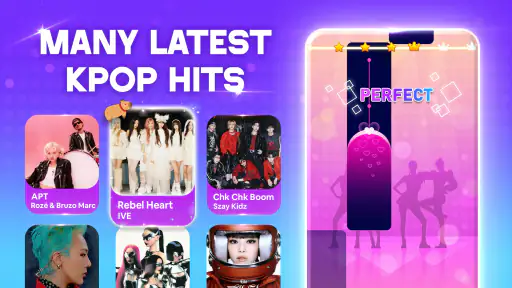
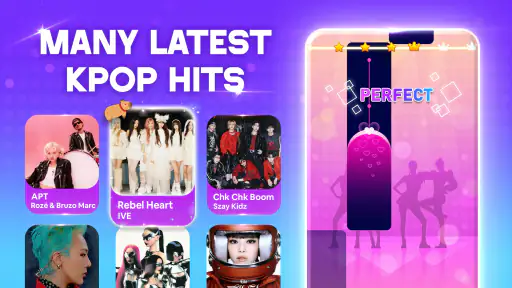
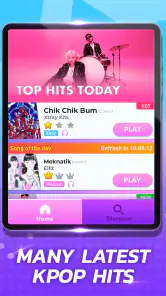
What caught my attention right off the bat is the app’s impressive library of K-pop songs. You get to play along with your favorite tracks from iconic groups like BTS, BLACKPINK, and TWICE. The game’s interface is vibrant and lively, much like the K-pop genre itself, making you feel as though you’re part of a concert right at your fingertips. Each song is a new challenge, and the game does a fantastic job of syncing the piano tiles with the rhythm of the music.
That music-first approach separates it from the usual alternatives. A general piano-tile game may offer a wider mix of musical styles, while a conventional K-pop playlist lets you listen without having to react to anything. Here, the appeal is the middle ground: you engage with the beat by tapping, but you are not taking lessons or playing a full instrument. I would pick it when I want to do something with a K-pop track; I would choose a playlist when I mainly want to relax or hear a song without interruption.
For an everyday example, I can see this working during a short break between tasks. I would choose one track, put the phone somewhere steady, and play a focused round rather than trying to fit in a long session. If I missed a run, I would take a moment before restarting and listen for the section that caused trouble. That is a more useful routine than tapping repeatedly in a hurry, because it keeps the game casual while still giving each attempt a purpose.
Gameplay That Keeps You Hooked
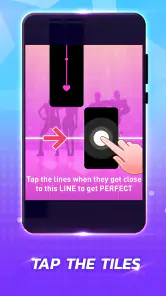
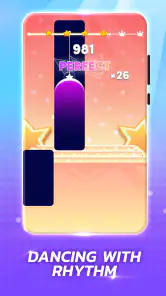
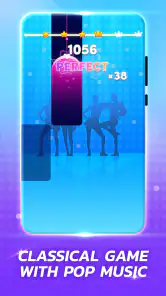
The mechanics of Kpop Piano Star are simple yet addictive. As the piano tiles descend, your job is to tap them in time with the music. It sounds easy, but as you progress, the speed and complexity ramp up, challenging even seasoned rhythm game players. The satisfaction of hitting the notes perfectly is immensely rewarding, and the game’s difficulty ensures you’re always pushing your limits.
For me, the best way to handle that challenge is to treat accuracy as more important than speed. When a run starts to feel frantic, I focus on the beat instead of trying to chase every tile with tense, last-second taps. That will not make every hard section easy, but it gives me a clearer sense of whether the issue is my timing or my attention. It also makes each restart feel like a deliberate attempt rather than a reflexive one.
One thing to keep in mind is that familiarity with K-pop can help you anticipate the feel of a song, but it cannot replace watching the tiles. A chorus you know by heart may still demand close attention when the pattern gets busy. Conversely, someone who is not a dedicated fan can still enjoy the rhythmic challenge if they like tap-based games. The strongest fit is someone who wants both: recognisable K-pop energy and an active task that rewards concentration.
One of the aspects I particularly enjoyed is the game’s progression system. You start with a few unlocked songs, and as you play, you earn coins which can be used to unlock more tracks. This system provides a sense of achievement and keeps you motivated to improve your skills.
That gives early play a clear loop: choose a song, work on your timing, and use continued play to move toward more music. The trade-off is that a progression loop can make a player focus on unlocking the next item instead of enjoying the current track. I find it more rewarding to set a small goal for a session—such as completing a song more consistently—then let unlocks be a bonus. That approach keeps progress from feeling like a chore and helps the challenge stay connected to the music.
A Visual and Auditory Treat
Visually, the app is a feast for the eyes. The backgrounds are dynamic and change with the beat of the song, adding an extra layer of engagement. The sound quality is top-notch, ensuring that every beat and note sounds crisp and clear. The combination of stunning visuals and high-quality audio makes for an immersive experience that music lovers will appreciate.
That presentation is most enjoyable when the screen and sound are both easy to follow. I would avoid playing in a noisy place if I want to use the music as a timing cue, and I would not treat the moving background as the main attraction when a difficult passage needs my eyes. The visuals add personality, but they can also compete for attention in any rhythm game. Keeping the phone still and looking at the tiles rather than the decoration is a practical way to make a focused attempt.
It is also worth being realistic about what this kind of game can offer. The piano-tile format is about timing and pattern recognition, not learning piano technique, reading sheet music, or practising a song on an instrument. If your goal is to improve as a musician, a dedicated learning app or instrument practice will be a better choice. If your goal is a quick, music-led game, the simpler controls are a strength rather than a shortcoming.
Who will enjoy the rhythm, and who may not
I would recommend trying it if you like K-pop, enjoy quick challenges, and do not mind replaying a track to improve your timing. It is particularly suited to people who want a compact game they can return to for a short session, rather than a long campaign that demands a regular schedule. The Everyone age rating makes it broadly accessible, while the music-and-tapping focus gives younger players and adult fans a straightforward idea of what they will be doing.
I would be more cautious if you dislike repeated attempts, want full control over a song selection from the start, or find fast visual patterns tiring. The same goes for players who prefer relaxing music games with little pressure: tile tapping asks you to stay alert, and a difficult run can feel demanding rather than soothing. If you are unsure, trying the free game before considering any purchase is the sensible route. The current version is 4.3.0 and requires Android 8.0 or later, details that matter when checking whether it can run on your device.
One practical question is whether you need to be a serious K-pop fan to get something out of it. I do not think so; liking the style will make the songs more personal, but the core activity is still a rhythm challenge. Another is whether it suits a very short break. It can, provided you are comfortable focusing on a complete attempt rather than expecting a passive, background experience. If you want a game you can play without sound or attention, a less timing-dependent option will probably fit better.
Final Thoughts
In conclusion, Kpop Piano Star - Music Game is a beautifully crafted rhythm game that celebrates the vibrant world of K-pop. Its extensive song library, engaging gameplay, and stunning visuals make it a standout in the genre. Whether you’re a die-hard K-pop fan or just someone who enjoys a good rhythm game, this app is sure to provide hours of entertainment. So, if you’re ready to tap to the beat and test your reflexes, give this app a try. Trust me, you won’t be disappointed!
My more measured verdict is that the progression works best when it supports the music rather than becoming the only reason to play. The game has a clear entry point, an understandable challenge, and the appeal of connecting familiar songs with active timing. Its free download makes it easy to see whether that loop clicks for you, while optional purchases are worth approaching as a choice, not a requirement for enjoying a session. If K-pop and quick rhythm challenges are your thing, I would give it a try; if you want a broad song catalogue, instrument training, or a low-attention way to listen, another kind of music app will serve you better.
Kpop Piano Star - Music Game Pros and Cons
Pros
- Engaging and addictive gameplay experience.
- Wide variety of Kpop songs to choose from.
- User-friendly interface for easy navigation.
- Regular updates with new songs and features.
- Offline mode available for uninterrupted play.
Cons
- Contains ads that can disrupt gameplay.
- In-app purchases for premium features.
- Limited free songs available initially.
- Some songs may be locked behind paywalls.
- Occasional bugs in song synchronization.
This Game in Other Languages
Frequently Asked Questions
What is Kpop Piano Star - Music Game?
Kpop Piano Star - Music Game is a music rhythm game designed for fans of K-pop music. The game allows players to tap tiles to the rhythm of popular K-pop songs, offering an immersive musical experience. It's available on both Android and iOS platforms, providing a fun way to engage with your favorite K-pop hits.
How do you play Kpop Piano Star - Music Game?
To play Kpop Piano Star - Music Game, you need to tap the black tiles as they scroll down the screen to the rhythm of the music. The game requires both precision and timing, and you must avoid tapping the white tiles. The goal is to achieve the highest score possible by maintaining a streak of correctly tapped tiles.
Is Kpop Piano Star - Music Game free to download?
Yes, Kpop Piano Star - Music Game is free to download on both the Google Play Store and the Apple App Store. However, it may offer in-app purchases for additional features, songs, or to remove ads, which can enhance the gaming experience. Users can enjoy a range of K-pop songs without any initial cost.
What features does Kpop Piano Star - Music Game offer?
Kpop Piano Star - Music Game features a wide selection of popular K-pop songs, a user-friendly interface, and various difficulty levels to challenge players of all skill levels. It includes leaderboards to compete with friends, and regular updates add new songs to keep the gameplay fresh and exciting. The game also supports offline play, allowing users to enjoy the game without an internet connection.
Can I play Kpop Piano Star - Music Game offline?
Yes, one of the convenient features of Kpop Piano Star - Music Game is its offline play capability. This means you can enjoy playing your favorite K-pop songs and tapping along to the rhythm without needing an active internet connection. This feature makes it an excellent option for entertainment during travel or in areas with limited connectivity.


