

Knights of Pen and Paper 3
- Reviews
- 4.1
- Version
- 1.3.5.3
- Installs
- 100,000+

Screenshots

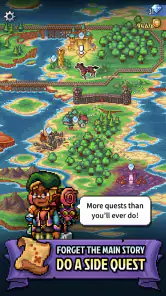



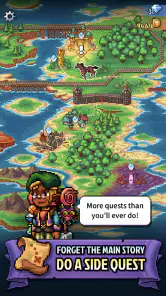


 Analysis by Frivlyz
I like the idea of a game that makes the tabletop role-playing setup part of the adventure: you are not only guiding a party, but also taking the role of the person shaping what happens around it. That framing gives Knights of Pen and Paper 3 a playful identity that stands apart from fantasy RPGs built around a single hero and a fixed storyline. I would consider it for a relaxed session at home, especially when people want to take turns watching or discussing choices rather than passively sharing a screen.
A tabletop mood that suits a shared room
The pixel-art presentation and light tone make it easy to follow what is happening at a glance. In a household where one person is playing and someone else is nearby, the game’s tabletop premise gives the onlooker a natural way to join the conversation: suggest a party choice, react to a story beat, or simply enjoy the jokes. That is different from handing around a phone for a quick arcade round; the appeal is more about following an unfolding role-playing session.
For example, I can imagine opening it after dinner, playing for a while, and letting a family member or housemate weigh in on the next decision. It works best when everyone understands that one person is steering the session and others are offering ideas, rather than expecting a true local pass-and-play setup. That small distinction helps avoid disappointment: a shared room can make the experience more social, but it should not be mistaken for a dedicated family multiplayer mode.
Keep play and purchases on the right account
The game is free to start, with optional in-app purchases priced from under a dollar to just under one hundred and twenty dollars per item. That wide range is worth keeping in mind if a device is shared. Before letting someone else play, I would check which store account is active and whether purchase approval is configured on the device. Those are practical household habits, not special features of the game, and they help keep an accidental tap from becoming an unwanted charge.
I would also agree on whose save or play session is being used before passing over a shared device. Even when the game is being enjoyed casually, a person who has been making party and story choices may not want another player to change the direction of that run. A simple handoff rule—ask before continuing someone else’s session—can prevent a small disagreement. If several people want separate progress, check how the game handles profiles or saves before relying on it for that purpose; I would not assume that a shared device automatically means separate player histories.
Coordination matters more than fast reactions
This is a better fit for people who enjoy talking through a party than for a group looking for simultaneous, rapid-fire competition. The original article’s description of multiplayer points toward playing with friends, but household players should still agree on how they want to coordinate: who makes the final call, whether everyone is joining the same session, and whether a player who is not present should wait for the next opportunity. That is especially useful when different people have different levels of familiarity with role-playing games.
One practical approach is to let each person contribute in a distinct way. A more experienced player can keep track of party balance, while a newcomer can choose a character or react to the story. This avoids turning every choice into a debate and gives a first-time player a meaningful role without asking them to learn everything at once. If the group wants independent progress or a competitive contest, a conventional multiplayer RPG designed around those goals will likely be a better match.
Gaming Stories You May Enjoy

Dancing Road Turns Short Breaks Into a Test of Rhythm and Timing

Super Stylist Makes Every Outfit a Test of Taste and Patience

Dominoes on Your Terms: Who Should Play and Who Should Pass

Pokémon GO Makes the Familiar World Feel New

Chess.com Turns Rematches Into Rivalries, but Community Has Its Costs

Archery Battle 3D Review: Sharp Aiming, Unclear Feedback
Immersive Retro Role-Playing Experience
First off, let’s talk about the game’s vibe. Knights of Pen and Paper 3 stays true to its retro, pixel-art roots, which is honestly one of its most charming features. It’s like a throwback to the good old days, but with a modern twist. The graphics are simple yet delightful, providing just the right amount of nostalgia while keeping you engaged with its quirky animations and vibrant settings.
Gameplay Mechanics and Features
Diving into the gameplay, you’ll find yourself in charge of both the characters and the story. You get to assemble a party of different character classes, each with its unique skills and abilities. The strategic element of balancing your party’s strengths and weaknesses adds a layer of depth that keeps the game interesting. Whether you’re a seasoned RPG veteran or a newbie, the game is accessible yet challenging enough to keep you on your toes.
One of the standout features is the ability to control the narrative. You are, quite literally, the master of your own game. Want to throw in a dragon in the middle of a village raid? Go for it! The freedom to craft and tweak your adventure is a refreshing change from the linear storytelling of other RPGs. Plus, the game’s humor is on point. Expect plenty of tongue-in-cheek references and witty banter that’ll have you chuckling more often than not.
How its choices change the pace
The party-building element rewards a little thought before charging ahead. I would treat character selection as a small planning puzzle: consider what each class brings, then avoid building a group around the same strength while leaving an obvious weakness unattended. That habit makes the strategic side more satisfying and gives a less experienced player a clear way to contribute: ask what the party lacks, rather than trying to memorize every ability at once.
The freedom to shape the adventure also changes the feel compared with a more scripted role-playing game. A linear RPG is often better when I want a carefully paced plot with fewer decisions to manage. Here, the appeal is the sense of participating in the setup as well as the action. The trade-off is that players who prefer a tightly directed story may find the playful, self-aware approach less absorbing. I would pick this when I want a looser session with room for jokes and choices, not when I am specifically after a serious fantasy narrative.
Good for short visits, with a patience caveat
For everyday use, I would treat it as a game to dip into when I have enough attention to make choices, rather than as something to launch while distracted by several other tasks. A short quiet window can be a good time to check in on the party or continue a story, but the role-playing decisions are more rewarding when I can follow their consequences. If I only have a moment and want instant action, a simple arcade game is likely to suit me better.
That distinction also helps set expectations for younger or newer players. The pixel look may seem immediately approachable, but the party and narrative elements still ask the player to think and follow what is going on. I would introduce it by playing together and talking through one choice at a time, rather than assuming that colorful visuals alone make it a perfect fit for every child. The game’s content rating is Everyone, and it is published by Northica, but adults sharing a device should still make their own judgment about how and when a child plays.
Multiplayer and Social Features
Another highlight is the game’s multiplayer mode. While the single-player experience is immersive on its own, teaming up with friends adds a whole new dimension. You can strategize together, share resources, and tackle more formidable foes, making victories all the sweeter. It’s perfect for those long weekend gaming sessions.
Moreover, the developers have done a fantastic job of fostering a community around the game. Regular updates and events keep the content fresh and exciting, ensuring there’s always something new to explore or a challenge to conquer.
Choosing between solo play and a group
I would choose solo play when I want to set my own pace and make decisions without coordinating with anyone. It is the simplest way to learn the game’s rhythm and decide whether its humor and party management suit me. Playing with friends makes more sense when the group enjoys discussing tactics and can agree on how to share decisions. It is less suitable for a household where everyone expects to pick up exactly where they left off independently on the same device.
Compared with the usual role-playing alternatives, this game’s distinctive draw is the playful tabletop framing and the ability to influence the adventure, not a promise of a sprawling, solemn epic. Players who want a deep, continuous story with a strong focus on one protagonist may prefer a more traditional narrative RPG. Those who like party composition, lighthearted fantasy, and a sense of directing the session will find a clearer reason to try this one. I would also keep the optional purchases in mind when choosing it for a shared device, since “free” does not mean every item is free.
Age, trust, and expectations
The Everyone age rating makes it broadly accessible, but age suitability is only one part of a sensible household decision. I would explain that the game includes optional purchases before handing over a device, and I would keep purchase approval and store-account boundaries in mind. Those safeguards belong to the device and account setup rather than to assumptions about the game. If a child is playing, an adult can also help with party choices and clarify that the story’s playful tone is meant to be taken lightly.
For older players, the humor and retro presentation may be a welcome change from heavier RPGs. For players who dislike pixel art, prefer realistic visuals, or want a more serious tone, those same qualities could be a reason to skip it. That is a genuine preference difference, not a flaw that can be solved by playing longer. I would recommend trying it only if the tabletop joke and deliberately light presentation sound appealing in the first place.
What to expect before installing
Northica’s role-playing game is free, has an average rating of 4.1 from around 3.9 thousand ratings, and has passed 100 thousand installs. It was released on October 17, 2024, and version 1.3.5.3 requires Android 9 or later. Those details make it straightforward to check basic compatibility before installing, but they do not tell me whether its particular style will suit a player; the more useful question is whether they enjoy building a party and taking part in a humorous, flexible adventure.
If you are deciding whether to try it, I would start with a solo session to see how the character choices and narrative control feel, then bring in friends if you enjoy discussing tactics. If you are choosing it for a shared household device, settle the account, purchase, and handoff expectations first. And if what you want is a fast game that needs no planning, or an independently managed experience for several people sharing one phone, I would look elsewhere rather than expecting this role-playing format to solve that need.
Final Thoughts
All in all, Knights of Pen and Paper 3 is a delightful blend of classic RPG elements with modern-day humor and creativity. It’s a game that doesn’t take itself too seriously but still delivers a solid role-playing experience. Whether you’re in it for the strategy, the laughs, or the nostalgia, there’s something for everyone. So grab your dice, gather your party, and dive into this whimsical world. Trust me, you won’t regret it!
Knights of Pen and Paper 3 Pros and Cons
Pros
- Engaging turn-based combat system.
- Rich
- humorous storyline.
- Customizable characters and party.
- Nostalgic pixel art graphics.
- Offline play available.
Cons
- In-app purchases can be pricey.
- Limited character classes.
- Repetitive missions.
- Occasional bugs and glitches.
- Requires frequent updates.
Frequently Asked Questions
What is Knights of Pen and Paper 3 about?
Knights of Pen and Paper 3 is a turn-based role-playing game that offers a unique meta-experience by simulating a tabletop RPG session. Players take on the roles of both the party and the game master, navigating through whimsical quests, upgrading characters, and exploring various dungeons. The game combines humor and nostalgia, making it a delightful experience for RPG enthusiasts.
Is Knights of Pen and Paper 3 free to play?
Knights of Pen and Paper 3 is available for both Android and iOS platforms with a free-to-play model. However, players can expect in-app purchases that enhance gameplay, such as additional in-game currency, cosmetic items, and other premium features. These purchases are optional and not necessary to enjoy the core experience.
What are the system requirements to play Knights of Pen and Paper 3?
For Android users, Knights of Pen and Paper 3 typically requires Android version 4.4 or higher and at least 2GB of RAM for a smooth gaming experience. iOS users need iOS 9.0 or later. The game is lightweight and optimized for a wide range of devices, ensuring accessibility for most modern smartphones and tablets.
Does Knights of Pen and Paper 3 require an internet connection?
While Knights of Pen and Paper 3 can be played offline, certain features, such as online events, leaderboards, and cloud saving, require an internet connection. Playing online can enhance the gaming experience by allowing players to participate in special events and compete with others globally.
How does character progression work in Knights of Pen and Paper 3?
In Knights of Pen and Paper 3, character progression is achieved through gaining experience points from quests and battles, which allows characters to level up and unlock new abilities. Players can customize their party with various classes and equipment, tailoring strategies to fit their playstyle. Progression is balanced to keep players engaged throughout the adventure.


