

Knighthood - RPG Knights
- Reviews
- 4.5
- Version
- 2.7.0
- Installs
- 5,000,000+

Screenshots


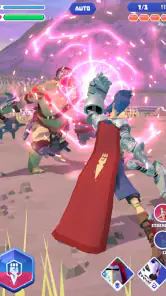


 Analysis by Frivlyz
I first approached Knighthood - RPG Knights as a game for short breaks, but it quickly showed a more specific personality. It is a medieval fantasy role-playing game built around the idea of developing a knight, improving equipment, and gradually becoming more capable in combat. That sounds familiar, yet the appeal is less about pretending to be a huge open-world hero and more about making a series of focused decisions during repeated play sessions.
That distinction matters when deciding whether it belongs on a shared phone or tablet. In my experience, this is easy to pick up when someone has a few minutes, but it also encourages a personal progression path that should not be casually mixed between players. I would happily recommend it to one person who enjoys character growth, equipment choices, and fantasy battles. I would be more careful recommending it as a game for several people using one profile.
How it feels when played in an ordinary household
A realistic example is a household where one person uses a tablet after dinner, while another occasionally wants to try the same game. The first player may have already developed a knight, collected useful gear, and formed habits about how to approach battles. A second person opening that same progress is not simply starting a separate round; they are entering an existing character journey. That makes the game feel personal rather than naturally communal.
For solo use, this is a strength. I found it easier to care about upgrades when they belonged to one continuous adventure. A short session could focus on a battle, a reward, or an equipment decision, while a longer session allowed more time to explore the available role-playing loop. The game works best when I treat the knight as my own project instead of something everyone in the home edits casually.
It is also worth separating shared-device use from shared progress. A family member borrowing the device for another purpose is one thing. Two people taking turns with the same in-game journey is another. The latter can create confusion over which equipment to keep, which improvements to prioritize, and whether a difficult encounter was attempted for practice or as a serious push forward.
That does not make it unsuitable for a household. It simply means the most comfortable arrangement is one main player per progression path. If several people want to experience the game, I would agree beforehand on who owns the active save and avoid treating the profile like a communal sandbox.
The first sessions: what drew me in
The strongest early attraction is the knight-building fantasy. The premise is not just about tapping through isolated fights; it gives ordinary rewards a purpose because they contribute to the image and effectiveness of a medieval hero. I enjoyed the feeling that a new piece of gear or a successful improvement could change how I thought about the next encounter.
Gaming Stories You May Enjoy

Dancing Road Turns Short Breaks Into a Test of Rhythm and Timing

Super Stylist Makes Every Outfit a Test of Taste and Patience

Dominoes on Your Terms: Who Should Play and Who Should Pass

Pokémon GO Makes the Familiar World Feel New

Chess.com Turns Rematches Into Rivalries, but Community Has Its Costs

Archery Battle 3D Review: Sharp Aiming, Unclear Feedback
Combat is approachable, which helps when I want a role-playing game that does not demand a long tutorial before becoming enjoyable. At the same time, the decisions around preparation and improvement give the battles more meaning than a completely disposable arcade encounter. I was usually thinking about what I had available and whether a challenge deserved another attempt, rather than acting without a plan.
The fantasy presentation does much of the emotional work. The knight theme gives the progression a clear direction, while the role-playing structure provides a reason to return. Players who enjoy inventing a detailed personal backstory may find the experience more guided than a tabletop campaign, but people who like watching a hero become stronger should understand the appeal quickly.
Boundaries that make shared play less frustrating
If I were setting this up on a household device, I would establish a few simple boundaries before anyone starts. First, I would decide whether the game belongs to one person or whether everyone is only observing and discussing it. Second, I would avoid letting a younger or less experienced player spend resources without asking if those resources are part of a longer upgrade plan.
This is especially important because role-playing games often make small choices feel harmless until several choices have accumulated. A piece of equipment may look attractive immediately, while a more patient player may prefer to save materials or currency for a larger improvement. Even without complicated rules, different playing styles can pull the same character in opposite directions.
I would also avoid handing the device to someone during a battle or reward screen unless both players understand what is happening. In a shared setting, interruptions can turn a deliberate choice into an accidental one. The practical solution is not elaborate coordination; it is simply treating the active character like a personal notebook that should not be edited without permission.
For a parent or guardian, this is a useful distinction. The game can be discussed openly, and an adult can watch or help with decisions, but supervision should not be confused with handing over control of the same progression. The best household routine is one where the player knows when advice is welcome and when the session is meant to remain their own.
Progression choices that reward patience
One of the less obvious lessons I took from the game is that improvement decisions are more satisfying when I stop judging them one screen at a time. The tempting option is often the one that produces an immediate visible change. A better approach is to ask what kind of knight I am currently building and whether the next reward supports that direction.
That does not mean there is one correct build. It means I get more value from the role-playing layer when I make choices with a short plan. For example, I might focus on becoming more dependable in regular encounters before chasing a more specialized advantage. The useful habit is to compare the next upgrade with the challenges I am actually facing, not with an imagined perfect character.
I also found it helpful to pause after a difficult loss rather than immediately repeating the same approach. A failed attempt can reveal that I need better preparation, a different equipment choice, or simply more progression. Repeating without changing anything can make the game feel harsher than it really is. A short review of what went wrong turns frustration into a practical next step.
This is where the game differs from simpler casual alternatives. A casual battle game may give me instant action with little commitment, while this title asks me to care about the relationship between rewards and future encounters. On the other hand, a larger role-playing game may offer deeper party management, broader exploration, or more freedom in character creation. Knighthood sits comfortably between those extremes: more involved than a quick arcade diversion, but more focused than a sprawling role-playing adventure.
Playing around real schedules
I think it suits people who prefer returning to one ongoing character rather than finishing everything in one sitting. A weekday session can be used to deal with a few immediate tasks, while a quieter weekend session can be reserved for more deliberate progression. That rhythm makes the game easier to fit around work, school, or household responsibilities than a game that expects a long uninterrupted campaign.
Still, “easy to pick up” does not mean every session feels equally rewarding. If I only have enough time to open the game and make a rushed decision, I may not get the same satisfaction as when I can think through equipment and combat. My advice is to use very short sessions for straightforward progress and save more important choices for a moment when I am not distracted.
This is another reason I would not present it as a perfect family party game. It is not built around everyone laughing at the same screen or taking equal turns in a shared match. Its natural use is individual and continuous. A household can share the device, but the experience itself is strongest when one player maintains ownership of the decisions.
Purchases, trust, and age context
The game is free to download, which makes trying it straightforward, but it includes optional in-app purchases ranging from under a dollar to amounts approaching one hundred dollars per item. That range deserves attention in any shared-device situation. Even when a player understands the game well, a younger user may not think about the real-world value behind an attractive in-game option.
I would therefore agree on a purchase rule before playing. The simplest rule is that no purchase happens without the account holder’s permission. This is not a criticism of the fantasy or role-playing design; it is basic household coordination when a free game contains paid choices. A clear conversation is more useful than assuming everyone will interpret a purchase screen in the same way.
The Teen content rating also gives families a helpful starting point for discussion. I would not treat that label as a complete substitute for knowing the player, but it does signal that the game is aimed beyond very young children. Parents should consider the child’s maturity, comfort with fantasy conflict, and ability to understand progression and purchase boundaries.
For older players, the age context is unlikely to be a major obstacle. For a younger player, I would prefer an adult to be nearby during the first sessions, not because the game is automatically inappropriate, but because the combination of combat, character advancement, and optional spending benefits from guidance. Trust works best when expectations are explained before the game becomes exciting.
What the current version means for a new player
The version I reviewed is 2.7.0, and the game supports devices running Android 6.0 or later. That makes it accessible to people who are not using a brand-new phone, although practical comfort will still depend on the device and how much storage and battery capacity are available for other apps. I would check compatibility before planning to use an older shared tablet as the household gaming device.
The developer is listed as RPG Raid Roleplaying Games. The game has built a substantial audience, with more than five million installs, an average rating of 4.5 from roughly one hundred sixty-eight thousand ratings, and around eleven thousand written reviews. Those figures suggest that the core concept has reached many players, but popularity should not replace personal fit. Someone who dislikes gear management or repeated character development may still find it less appealing than the audience size implies.
For a new player, I recommend resisting the urge to judge the entire experience by the first reward cycle. The point is not merely to collect the next item; it is to see whether the loop of battle, improvement, and renewed challenge feels satisfying. If that loop feels motivating after several sessions, the game has probably found its audience in you. If it already feels like maintenance, a more direct action game may be a better choice.
Where it stands beside other role-playing choices
Compared with a traditional console-style role-playing game, this is a more concentrated experience. I would not choose it when I want a long narrative with extensive exploration, a large party, or the freedom to solve every problem in several radically different ways. A dedicated single-player adventure can offer more atmosphere and a stronger sense of place.
Compared with a simple mobile action game, however, it gives my decisions more staying power. Equipment and character improvement make each session part of a longer arc. That is the main reason I return to it instead of treating every battle as disposable. The trade-off is that progression can make the game feel less immediately carefree, especially when I am trying to decide whether a resource should be used now or saved.
It also differs from multiplayer role-playing games that depend on constant coordination with a team. I would choose those alternatives when the social relationship is the main attraction. Here, coordination is mostly something the household does around the game: agreeing who plays, discussing upgrades, and respecting the active player’s progress. The game itself is better understood as a personal fantasy journey than as a shared family activity.
Who should install it, and who should skip it
I would recommend it to someone who likes medieval themes, gradual hero development, and combat that benefits from paying attention to preparation. It is particularly suitable for players who enjoy checking how a new reward changes their options and who do not need a giant open world to feel involved.
I would also recommend it to a person who wants a mobile role-playing game that can be revisited in manageable sessions. The game gives a clear reason to return without requiring me to remember a huge cast of characters or a complicated political story every time I open it. That focus makes it approachable for someone moving from casual games toward deeper role-playing.
I would skip it if my priority were a completely purchase-free experience, a cooperative household game, or a highly flexible role-playing system with extensive narrative branching. I would also look elsewhere if I dislike repeating encounters while strengthening a character. The knight-building loop is the center of the experience, so avoiding that loop means avoiding much of what makes the game distinctive.
My household verdict
After spending time with it, I see Knighthood - RPG Knights as a focused mobile role-playing game that works best when one person owns the progression and others respect that boundary. It can live on a shared device, but it should not be treated like a communal save unless everyone is comfortable with the possibility of mixed decisions.
Its strongest qualities are the clear medieval identity, the satisfying connection between battles and character improvement, and the ability to fit into a routine without becoming a full-scale console commitment. Its main friction points are the need for patience, the possibility of resource choices feeling consequential, and the presence of optional purchases that require sensible household rules.
My practical recommendation is to try it as a personal game first. Play enough sessions to decide whether improving the knight feels rewarding, set a firm rule around spending, and agree on who controls the active character if the device is shared. If those conditions suit your household, this free fantasy RPG is easy to recommend. If what you really want is a family game with equal turns and instant group interaction, I would choose a different kind of mobile experience.
For me, the final appeal is straightforward: it turns small pockets of time into a continuing medieval adventure without pretending to be something it is not. The game asks for attention to progression, not endless commitment. That balance makes it a good fit for a patient solo player and a less natural fit for a shared, anything-goes device.
Knighthood - RPG Knights Pros and Cons
Pros
- Stylish comic-book visuals make battles and characters stand out.
- Turn-based combat is easy to learn but offers useful tactical choices.
- Frequent quests and events provide plenty of content for regular players.
- Equipment upgrades let you customize your knight’s strengths and playstyle.
- Guild features add social goals and cooperative progression.
Cons
- Energy limits can interrupt longer play sessions.
- Progression may feel grindy without regular resource management.
- Random gear and chest rewards can make upgrades unpredictable.
- Some battles become repetitive after the initial learning curve.
- Online features require a stable internet connection to function properly.
This Game in Other Languages
Frequently Asked Questions
What is Knighthood – RPG Knights about?
Knighthood – RPG Knights is a mobile role-playing game focused on collecting heroes, upgrading equipment, and battling enemies in turn-based combat. You play as a customizable Rage Knight who travels through a fantasy world, completes quests, fights monsters and rival warriors, and unlocks new abilities. The game combines story missions, hero collection, equipment management, and competitive activities.
Is Knighthood – RPG Knights free to download and play?
Yes, Knighthood – RPG Knights is free to download and play on supported Android and iOS devices. However, it includes optional in-app purchases for premium currency, resources, equipment-related items, and progression boosts. You can advance without paying, but progress may require more time, especially when upgrading heroes, opening chests, or participating in events. An internet connection is generally required.
How does combat work in Knighthood – RPG Knights?
Combat uses a turn-based system that combines tapping, swiping, hero abilities, and equipment effects. You attack enemies by interacting with the screen, build up your Rage meter, and activate powerful attacks at the right moment. Choosing suitable heroes and matching their abilities to enemy weaknesses is important. Timing, team composition, and equipment upgrades often matter more than simply tapping quickly.
Can Knighthood – RPG Knights be played offline?
Knighthood – RPG Knights is primarily designed as an online game, so you should not expect the full experience to work without an internet connection. Online access is needed for account features, events, updates, multiplayer-related content, and synchronization of progress. Some previously loaded parts may appear accessible temporarily, but reliable gameplay requires a stable connection, particularly when moving between menus or starting battles.
Does Knighthood – RPG Knights support multiplayer features?
Yes, the game includes multiplayer-oriented features in addition to its single-player campaign. Players can join or create guilds, cooperate with other members, and take part in competitive or event-based activities. These systems add long-term goals beyond the main story. Multiplayer content may become more important as you progress, although you can still enjoy a substantial portion of the adventure independently.


