

Kingshot
- Reviews
- 4.4
- Version
- 1.4.9
- Installs
- 5,000,000+

Screenshots
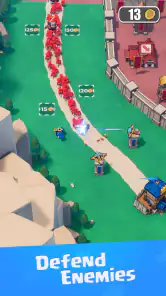
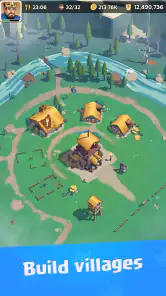
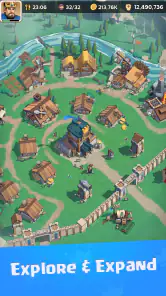
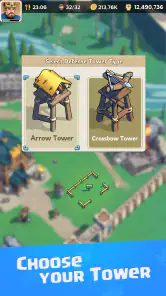
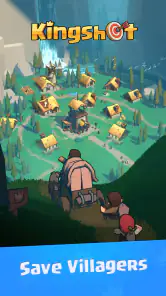
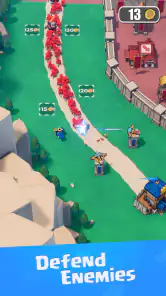
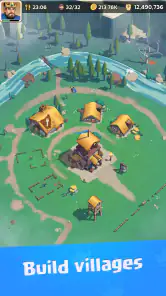
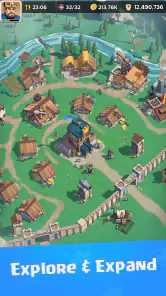
 Analysis by Frivlyz
When I first opened Kingshot, I expected the kind of medieval strategy game where progress comes from making a few thoughtful choices, then letting the settlement develop while I’m away. That expectation matters: this is a strategy game from Century Games PTE. LTD., not an archery simulator. Its medieval setting may suggest bows and targets, but the practical question for a new player is whether the mix of planning and idle progress suits the way they like to play.
What to expect from the strategy loop
I’d approach the opening as a guided introduction rather than a test of strategic skill. Early on, focus on understanding what the game asks you to build, improve, or collect before worrying about an ideal long-term plan. In an idle strategy game, the satisfying rhythm is usually a short session of decisions followed by time away and another check-in. That makes it easier to fit around a commute, a break, or a quiet moment at home than a game that expects uninterrupted attention.
The trade-off is that idle progress can feel less hands-on than a strategy game built around constant tactical choices. If you want every minute to involve active combat or precise battlefield control, this may not be the right fit. I’d give the opening enough time to show you its routine before deciding: the appeal is likely to come from seeing several small decisions add up, not from a single dramatic action.
Your first session: take it one decision at a time
For a first-time player, my advice is to follow the game’s immediate prompts and learn what each action changes before spending resources simply because an upgrade is available. The useful habit is to pause briefly at each choice: does this move the current objective forward, or is it just a tempting improvement? That small check helps you understand the game’s priorities and makes your progress feel intentional rather than like a string of taps.
In an everyday scenario, I’d open it during a short lunch break, collect whatever progress is ready, complete the next clear objective, and leave once the game has given me a sensible stopping point. Later, I’d return to see what has changed and decide what to work on next. That is a more comfortable way to enjoy an idle strategy game than trying to turn every check-in into a long session.
A good first success is understanding why your next upgrade matters. Rather than trying to optimize everything at once, pick one visible goal and make the decisions that support it. If you can explain to yourself what you’re working toward, you’re already getting more out of the strategy layer than you would by tapping every available option without a plan.
What can feel confusing, and how I’d handle it
New players can easily mistake a busy interface for a need to do everything immediately. I wouldn’t. A new notification or upgrade prompt is a reason to look, not proof that it should outrank the task you’re already pursuing. Take a moment to identify the current objective, then decide whether the new option helps with it. This keeps early play from becoming a scattered tour of menus.
Gaming Stories You May Enjoy

Dancing Road Turns Short Breaks Into a Test of Rhythm and Timing

Super Stylist Makes Every Outfit a Test of Taste and Patience

Dominoes on Your Terms: Who Should Play and Who Should Pass

Pokémon GO Makes the Familiar World Feel New

Chess.com Turns Rematches Into Rivalries, but Community Has Its Costs

Archery Battle 3D Review: Sharp Aiming, Unclear Feedback
Another point to watch is the difference between waiting and being stuck. Idle games intentionally make some progress happen over time, so a pause in immediate action does not automatically mean you chose badly. If there is a clear next step, take it; if the game is asking you to wait, it may be better to close it and come back later instead of repeatedly checking for a change. That is also a useful way to decide whether the pace works for you.
Like many free-to-play strategy games, it includes in-app purchases, with items ranging from $0.99 to $99.99. I’d treat spending as optional and make a personal limit before buying anything, especially if the appeal is simply to speed up a wait. You can start without paying, and the key question is whether the ordinary pace remains enjoyable to you. If progress only feels satisfying when accelerated, a different strategy game with less emphasis on waiting may be a better match.
Who will enjoy it—and who may prefer another game
I think Kingshot is best suited to players who like checking in, making a handful of decisions, and watching a longer plan take shape. It can also work for someone who wants a medieval theme without committing to a long, uninterrupted session every time they play. The game is free to download, rated Everyone 10+, and has reached over 5 million installs. Its average rating is 4.4 from around 233,000 ratings, which gives newcomers a useful sense of its broad reception without guaranteeing that its pace will suit every player.
If you prefer deep, continuous tactical battles, a turn-based game with deliberate encounters, or a city builder where you control every detail minute by minute, I’d compare those options before settling here. Kingshot’s idle framing is the deciding distinction: it favors a routine of planning and returning over constant direct involvement. A player who finds waiting relaxing may enjoy that structure; someone who sees it as friction may not.
Compared with the usual alternatives in mobile strategy, I’d judge it less by how much it lets me do in a single sitting and more by whether the next check-in gives me a meaningful choice. That is a practical test for the first few sessions. If you repeatedly return with a clear goal and enjoy choosing what to prioritize, the format is working. If you open it and feel there is little to do beyond waiting, an active tactics game is probably a better use of your time.
A sensible way to build a repeatable routine
Once the opening makes sense, keep your sessions focused. Before you leave, identify one thing you want to do next time; when you return, check whether the game has made that action possible and reassess if a more useful objective is now available. This simple loop prevents aimless menu-hopping and helps you notice which decisions actually improve your position. It is especially useful if you play in short bursts rather than sitting down for a long session.
I’d also avoid treating every available upgrade as equally urgent. In strategy games, spending resources broadly can make it harder to see the effect of any one decision. Concentrating on a clear, immediate objective gives you a better feel for cause and effect. Once you understand the game’s rhythm, you can experiment with less obvious choices instead of trying to copy a plan before you know what it is meant to accomplish.
The game’s current version is 1.4.9, and it requires Android 7.0 or later. It was released on March 3, 2025, so the experience sits within a relatively recent mobile release rather than a long-established classic. Those details may help if you are checking whether your device can run it, but they don’t change the more personal question: whether you enjoy making gradual progress between brief visits.
Where it sits among medieval games
The medieval theme can make players expect a conventional kingdom-management game, a real-time battle game, or a character-focused adventure. I’d avoid judging it by those expectations alone. Its central promise is an idle strategy experience, so the best comparison is with mobile games that let plans continue between sessions. If you want a game that rewards regular, low-pressure check-ins, that distinction is a strength. If you want to steer every encounter yourself, it is a meaningful limitation.
That difference also affects when I’d recommend playing. It makes more sense as a companion to small pockets of free time than as the only game you open for an evening of uninterrupted play. A person who likes returning to a developing game may find the loop satisfying; a person who wants a complete, self-contained match each time may prefer a tactical title with shorter, more decisive rounds.
What I would check before committing
If you are deciding whether to install it, I’d use the first few sessions to answer three practical questions. Do the game’s prompts make your next action understandable? Does returning after a break feel rewarding rather than like another chore? And are you comfortable with the pace without paying to accelerate it? Those questions tell you more about personal fit than a quick glance at the medieval setting or a rating does.
It is also worth remembering that “free” describes the download, not every optional purchase. With purchases available from $0.99 to $99.99 per item, it is sensible to keep spending intentional. I’d first learn what ordinary play feels like and only consider a purchase if I can name exactly what I want from it. If you are looking for a game with no in-app spending at all, this is not the clearest choice.
Gameplay & Features
First off, let me just say that the gameplay of Kingshot is incredibly intuitive. The controls are smooth, and the graphics are top-notch. You start as an amateur archer with a simple bow and work your way up through various challenges. What I love most about this game is the level of detail in each mission. From shooting stationary targets to moving ones, and even hitting targets while on the move, it keeps you on your toes!
The game offers a wide range of bows and arrows to choose from, each with its own unique attributes. You can upgrade and customize your gear as you advance, making the experience highly personalized. The sound effects are spot-on, adding an extra layer of immersion. I found myself getting lost in the game for hours!
Challenges & Rewards
Kingshot doesn’t just stop at solo missions. It also offers multiplayer modes where you can compete against friends or other players globally. The leaderboard is a great motivation to keep improving your skills. Plus, the rewards system is generous, offering plenty of opportunities to earn coins and unlock new equipment.
One thing that stands out is the daily challenges. These are a great way to earn extra rewards and keep the game fresh. You never know what challenge will pop up next, which adds an element of surprise and excitement.
Graphics & Sound
The graphics in Kingshot are nothing short of stunning. The attention to detail in the environments and the fluid animations make it a visual treat. Whether you’re in a dense forest or an ancient castle, the backgrounds are rich and vibrant.
As for the sound, it complements the gameplay perfectly. The twang of the bowstring and the satisfying thud of an arrow hitting its target make for an immersive experience. Trust me, you’ll want to play with the sound on.
Final Thoughts
In conclusion, Kingshot is a must-try for any gaming enthusiast, especially those with a penchant for archery. It offers a perfect blend of challenging gameplay, stunning visuals, and rewarding progression. Whether you’re looking to kill time or become the next archery legend, Kingshot has something for everyone. So, go ahead, download the game, and let the arrows fly!
Kingshot Pros and Cons
Pros
- Intuitive gameplay for all ages
- Stunning graphics and visuals
- Smooth performance on most devices
- Engaging storyline and missions
- Regular updates with new features
Cons
- In-app purchases can be costly
- Requires constant internet connection
- Ads may disrupt gameplay
- Limited customization options
- Battery drain on older devices
This Game in Other Languages
Frequently Asked Questions
What is Kingshot and how does it work?
Kingshot is an action-packed mobile game available for both Android and iOS devices. Players embark on a thrilling journey, mastering shooting skills and strategizing to defeat various enemies. The game features intuitive controls, diverse missions, and multiplayer modes to engage users in competitive and cooperative gameplay. Players can customize their characters and weapons to enhance their gaming experience.
Is Kingshot free to play or does it require purchases?
Kingshot is free to download and play, offering a wide range of levels and missions without any cost. However, the game includes in-app purchases that allow players to buy virtual currency, premium weapons, and character upgrades. While these purchases can enhance the gameplay experience, they are optional and players can still enjoy the game without spending money.
What are the device requirements for Kingshot?
To enjoy Kingshot, your device needs to meet certain specifications. For Android users, a device running Android 5.0 or later is recommended with at least 2GB RAM for optimal performance. iOS users should have an iPhone or iPad with iOS 11.0 or later. The game is designed to run smoothly on mid to high-end devices.
Does Kingshot offer multiplayer modes?
Yes, Kingshot includes several multiplayer modes that allow players to compete or team up with friends and other players worldwide. These modes include team-based battles and free-for-all matches, providing a dynamic and engaging experience. The game supports real-time voice chat, making it easier for players to coordinate strategies and improve their teamwork during battles.
How can players ensure their progress is saved in Kingshot?
Kingshot offers a reliable way to save your progress by linking the game to your social media accounts or game center. This ensures that your achievements, unlocked levels, and purchases remain intact even if you switch devices. Additionally, the game offers cloud-saving functionality, providing peace of mind that your hard-earned progress is secure and retrievable at any time.


